
Selecting a climbing carabiner is one of the most critical safety decisions you will make as a climber. To ensure your gear is safe, you must verify internationally recognized safety certifications and choose a locking mechanism that directly matches your specific climbing application. However, no piece of equipment can ever replace professional hands-on instruction, routine gear inspections, and sound personal judgment. Before tying into a rope, you must understand your own technical limits, perform thorough partner checks, and be prepared to stop climbing if environmental conditions or gear integrity become compromised.
Every carabiner in your safety chain must be rated specifically for climbing. Using unrated utility clips or failing to understand how different locking gates behave under load can lead to catastrophic system failures. By learning how to read the physical markings on your gear and matching the right gate type to your venue, you can significantly minimize the risks inherent to vertical sports.
Understanding Climbing Carabiner Safety Certifications
When evaluating a climbing carabiner, your first step is to look for physical stamps on the spine that prove the gear has undergone rigorous structural testing. Legitimate climbing equipment must carry certification marks from recognized standards bodies. The two most common markings you will see are the CE mark (followed by a four-digit identification number of the certifying laboratory) and the UIAA logo. The CE mark indicates compliance with European standard EN 12275, which governs mountaineering equipment and connectors, while the UIAA (International Climbing and Mountaineering Federation) safety label indicates the gear meets even stricter voluntary global standards.
Products mentioned in this guide
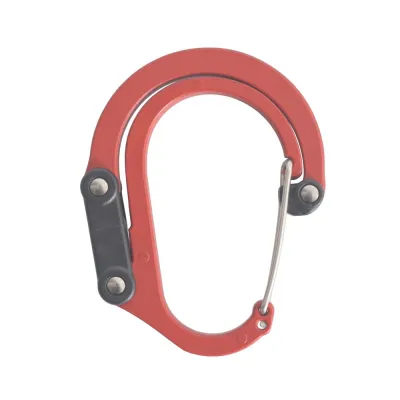
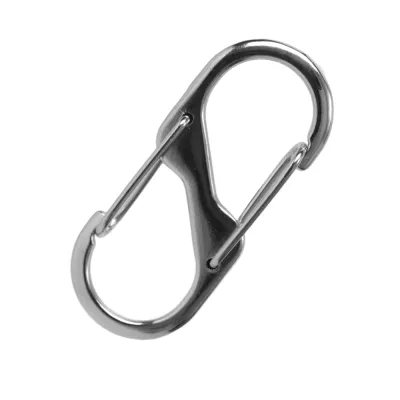


Prices are valid at publication and may change. Please refer to the product page for the latest price.
These stamps are typically engraved or laser-etched directly onto the aluminum spine of the carabiner. If you encounter a carabiner that lacks these markings, or if the markings are blurry, uneven, or easily scratched off, do not use it for climbing. Uncertified gear is often manufactured for static utility purposes, such as securing keys, hanging hammocks, or rigging light loads, and is not designed to absorb the dynamic forces generated during a climbing fall.
To protect yourself from counterfeit equipment, avoid purchasing climbing gear from unverified online marketplaces or generic ecommerce platforms. Instead, source your equipment from reputable, specialty outdoor retailers. Once you purchase a carabiner, you can verify its legitimacy by cross-referencing the batch number stamped on the spine with the manufacturer’s official declaration of conformity, which is typically hosted on their website. This step ensures that the specific production run of your gear has successfully passed all required safety and quality control protocols.
Choosing the Right Locking Mechanism for Your Climb
Carabiners are broadly categorized into non-locking and locking varieties, each designed for specific roles within a climbing system. Non-locking carabiners, which feature simple spring-loaded gates, are further divided into straight-gate, bent-gate, and wire-gate designs. Straight gates are highly durable and commonly used on the bolt-end of quickdraws, while bent gates curve slightly inward to make clipping the rope easier at the climber’s end. Wire gates use a loop of stainless steel wire instead of a solid bar, which reduces overall weight and minimizes “gate flutter”—a phenomenon where the inertia of a fall causes a heavy gate to swing open momentarily.

Locking carabiners are mandatory at any critical safety junction where an accidental gate opening could result in a system failure. This includes attaching your belay device to your harness, building anchors, and securing yourself to a personal anchor system. Manual locking carabiners, commonly known as screwgates, require you to manually thread a sleeve over the gate to lock it. They are highly reliable, easy to operate in cold or dirty environments, and allow you to visually verify if they are locked. However, they carry the risk of user error if you forget to thread the sleeve, and constant rope vibration can occasionally unscrew them over time.
Auto-locking carabiners use spring-loaded sleeves that automatically twist and lock the moment the gate snaps shut. These are excellent for belaying because they eliminate the risk of forgetting to lock the gate. Double-action auto-locks require you to twist the sleeve and then open the gate, while triple-action models require you to slide the sleeve up or down, twist it, and then open the gate. While triple-action gates offer the highest level of security against accidental rubbing on rock edges, they can be challenging to operate one-handed, especially when wearing gloves or when your hands are fatigued.
Innovative designs like magnetic locking systems use small magnetic tabs in the gate nose to keep the gate securely closed until you pinch the sides. These offer excellent one-handed usability for both left- and right-handed climbers. However, in outdoor environments with high concentrations of magnetic dust or iron filings, the magnets can attract debris, which may prevent the gate from closing fully. Always match your locking mechanism to your venue, weather conditions, and personal comfort level with one-handed operation.
Inspecting Carabiner Load Ratings and Structural Marks
Every certified climbing carabiner features load rating markings stamped onto its spine, expressed in kilonewtons (kN). One kilonewton represents approximately 100 kilograms of static force, but during a dynamic climbing fall, the forces generated can easily exceed several kilonewtons. Carabiners are designed to be exceptionally strong when loaded along their major axis—meaning end-to-end with the gate fully closed. A typical climbing carabiner will have a major-axis rating of 20 kN to 25 kN or more.
However, a carabiner’s strength drops drastically if it is loaded incorrectly. The spine will display two other critical ratings: the minor-axis (cross-loaded) rating and the open-gate rating. Cross-loading occurs when the carabiner rotates and the force is applied sideways across the gate rather than along the spine. An open-gate scenario can happen if the rope rubs against the gate or if gate flutter occurs. In both of these compromised configurations, the strength of the carabiner often drops to a mere 7 kN to 10 kN, which is dangerously close to the peak forces that can be generated during a severe lead fall.
It is vital to understand that these stamped ratings represent the ultimate breaking strength of the gear under pristine laboratory conditions, not a safe working load limit. Because real-world climbing involves unpredictable factors like rope drag, sharp rock edges, and dynamic fall factors, you must maintain a strict safety margin. Always monitor your gear configurations during a climb to ensure that carabiners remain aligned along their major axis and that locking sleeves are fully engaged to prevent accidental open-gate loading.
Safety Boundaries: When to Retire or Stop Using a Carabiner
Regular gear inspections are a non-negotiable part of climbing safety. Before and after every climbing session, perform a thorough visual and tactile check of each carabiner. Run your fingers along the metal body to feel for deep grooves, sharp edges, or significant wear caused by rope friction. If a rope has worn a groove deeper than one millimeter into the metal, or if the wear exceeds ten percent of the carabiner’s original thickness, the gear must be retired immediately, as these grooves can develop sharp edges that can damage or cut your climbing rope.
Inspect the gate action closely. The gate must snap shut quickly, smoothly, and completely on its own from any open position. If the gate is sluggish, sticks open, or if the locking sleeve does not thread smoothly, the carabiner is unsafe to use. In highly humid tropical environments, such as Singapore, salt air and persistent moisture can accelerate oxidation and cause gate springs to corrode or seize. Store your gear in a cool, dry, well-ventilated space away from direct sunlight, and never leave damp gear packed tightly inside a gear bag.
There are several mandatory retirement conditions that require you to take a carabiner out of service immediately, regardless of its visual appearance. If a carabiner is dropped from a significant height onto a hard surface, such as a concrete gym floor or a rocky ledge, it must be retired. Such impacts can cause internal micro-fractures that are invisible to the naked eye but severely compromise the structural integrity of the aluminum. Additionally, any exposure to corrosive chemicals—such as battery acid, harsh household bleach, or strong solvents—or exposure to extreme heat sources requires immediate retirement. When retiring a carabiner, physically destroy it or bend the gate with a tool so that it cannot be accidentally salvaged and used for climbing again.
Frequently Asked Questions (FAQ)
Can I use a hardware store carabiner for climbing?
No, you must never use a hardware store carabiner for climbing. Hardware store carabiners are designed for basic utility tasks, such as securing loads on vehicles or hanging tools, and they lack the dynamic strength, rigorous testing, and safety certifications required to hold a human fall. They are typically made from low-grade metals that can fail catastrophically under minimal dynamic force, and they do not feature the standardized major-axis, minor-axis, or open-gate load ratings found on certified climbing gear.
Do I need a locking carabiner for every piece of my climbing gear?
No, you do not need a locking carabiner for every single connection point in your climbing system. Non-locking carabiners are standard on quickdraws and gear racks because they allow you to clip the rope and place protection quickly and efficiently while moving on the wall. Locking carabiners are reserved for critical safety points where an accidental gate opening would be catastrophic, such as your belay device attachment, the master point of an anchor, or your personal tether connection.
How do I clean and maintain my carabiners to ensure safety?
To clean your carabiners, wash them thoroughly in warm, clean water to remove any accumulated salt, sand, or grit. If they are particularly dirty, you can use a mild, non-detergent soap, followed by a thorough rinse. Dry them completely with a clean towel and allow them to air dry away from direct heat. Once dry, apply a small drop of a dry, wax-based or PTFE-based lubricant specifically recommended by the manufacturer to the gate hinge, spring, and locking sleeve, then wipe away any excess lubricant to prevent it from attracting dirt.

Community discussion
Share your experience or ask a question. Comments are reviewed before publication.