
To ensure your safety during a climb, every component in your safety chain must handle extreme dynamic forces. The primary link connecting you to your protection is the climbing carabiner clip. You cannot determine a carabiner’s structural integrity or load capacity simply by looking at its shape, color, or material. The only reliable way to know a carabiner can support your weight and absorb the shock of a fall is to verify its safety certifications. Specifically, any carabiner you trust with your life must carry certified markings from recognized testing bodies, including the European Committee for Standardization (EN) and the International Climbing and Mountaineering Federation (UIAA).
Understanding these safety standards is not just a theoretical exercise; it is a fundamental safety practice for climbers of all levels. This guide details the essential safety certifications you must look for, explains how to read the technical markings stamped onto the metal spine, and outlines how to inspect your gear to ensure it remains safe for use over time.
The Hidden Dangers of Uncertified Carabiner Clips
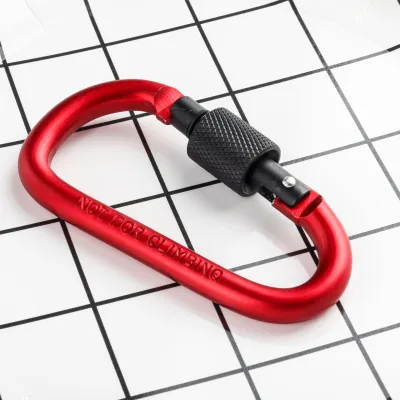
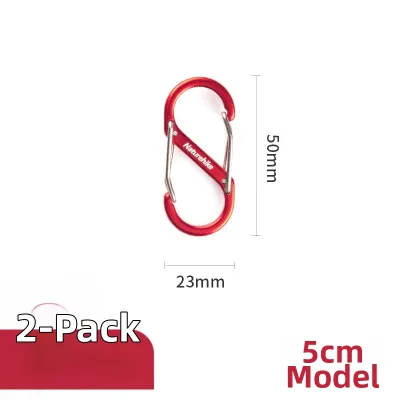
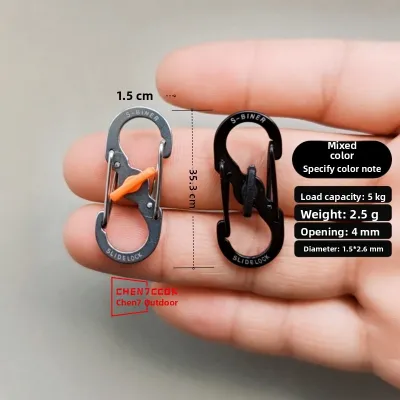
A common mistake among beginners is assuming that any metal clip resembling a climbing carabiner is safe for load-bearing activities. The market is flooded with inexpensive aluminum and steel clips designed solely for holding keys, securing water bottles to backpacks, or hanging hammocks. These items are often labeled as “carabiners” or “carabiner clips” on online marketplaces, yet they lack the metallurgical refinement, heat treatment, and rigorous quality-control testing required for life-support equipment. Relying on an uncertified utility clip for climbing introduces immediate, catastrophic failure risks to your safety system.
Products mentioned in this guide
Prices are valid at publication and may change. Please refer to the product page for the latest price.
The physical consequences of gear failure under dynamic climbing loads are severe. When a climber falls, the force generated is not merely the static weight of their body; it is a dynamic shock load that can easily reach several kilonewtons (kN) of force in a fraction of a second. Certified climbing carabiners are specifically engineered to deform slightly and absorb this energy without snapping. In contrast, an uncertified or decorative clip will often fail catastrophically under a fraction of these forces, snapping at the gate or shearing at the hinge, which instantly breaks the safety chain and results in a ground fall.
Visual similarity can be incredibly deceptive. An uncertified accessory clip may feature an anodized finish, a locking screw gate, and a heavy-duty aesthetic that mimics a genuine climbing tool. However, internal structural defects such as micro-voids in the cast metal, weak gate pins, or substandard alloys are invisible to the naked eye. Reputable manufacturers use high-grade forged aluminum (such as 7075 aluminum) and subject every batch to destructive testing to guarantee structural consistency, a process that uncertified manufacturers bypass to reduce production costs.
Using uncertified gear invalidates the entire safety chain in climbing. The rope, harness, belay device, and anchors are only as strong as the weakest link connecting them. If you introduce a single uncertified component into this system, you shift the entire risk of catastrophic gear failure onto yourself and your belaying partner. No level of climbing skill, physical strength, or experience can compensate for a structural failure at the critical point of connection, making certified gear an absolute prerequisite before you ever leave the ground.
Essential Safety Standards: CE, EN 12275, and UIAA Explained
To navigate the climbing gear market safely, you must understand the specific testing frameworks and standards that govern life-support equipment. In the outdoor industry, two primary certification systems provide the assurance of structural reliability: the European Union’s CE/EN standards and the international UIAA safety labels. These certifications are not marketing badges; they represent rigorous, standardized testing protocols that every climbing connector must pass before it can be legally sold as personal protective equipment (PPE).

CE Marking and EN 12275
The CE (Conformité Européenne) mark indicates that a product complies with the essential health and safety requirements established by European Union regulations. For climbing equipment, carabiners are classified as Category III Personal Protective Equipment (PPE), which covers gear designed to protect against irreversible damage or fatal risks. To obtain the CE mark, a manufacturer must submit their carabiners to an independent, accredited third-party laboratory (a notified body) for testing and continuous production audits.
The specific standard governing climbing carabiners is EN 12275 (Mountaineering equipment – Connectors – Safety requirements and test methods). This standard defines the precise structural requirements, dimensions, and testing protocols for different classes of carabiners based on their intended use. For instance, it categorizes connectors into distinct types, such as Type B (basic connectors), Type H (HMS or pear-shaped connectors designed for dynamic belaying), and Type K (via ferrata connectors). Each type must meet specific minimum strength thresholds under three distinct testing conditions:
- Major Axis (Gate Closed): The carabiner must withstand a minimum force, typically 20 kN to 24 kN depending on the type, when loaded along its longest dimension with the gate fully closed and locked.
- Minor Axis (Cross-Loaded): Because a carabiner can accidentally rotate during use, it must withstand a minimum force (usually 7 kN to 10 kN) when loaded sideways across its shorter dimension.
- Open Gate: If a rope or rock edge forces the gate open during a fall, the carabiner must still meet a minimum open-gate strength standard, which is typically 7 kN to 9 kN.
When you see a CE mark followed by a four-digit number (such as CE 0082 or CE 0333) on a carabiner, the number identifies the specific notified body responsible for auditing the manufacturer’s quality assurance system. This ensures that the product you hold is not just a prototype that passed a one-time test, but a representative sample of a consistently monitored production line.
UIAA Safety Label
The UIAA (Union Internationale des Associations d’Alpinisme, or the International Climbing and Mountaineering Federation) is the global governing body for climbing and mountaineering. The UIAA Safety Commission develops and maintains some of the strictest safety standards for climbing equipment in the world. While CE standards are legally mandatory for selling gear within the European Economic Area, the UIAA safety label is a voluntary international benchmark that manufacturers pursue to demonstrate superior safety performance.
UIAA standards are built upon the foundation of European EN standards but are frequently updated to address real-world climbing risks more dynamically. In several instances, the UIAA requirements for load capacity, impact absorption, or cyclic loading tests exceed the baseline CE requirements. For example, the UIAA may require more stringent testing protocols for gate action durability or corrosion resistance to ensure the gear performs reliably in harsh alpine environments, high humidity, or coastal marine cliffs.
When a manufacturer secures the UIAA Safety Label for a carabiner, it means the gear has been tested in UIAA-approved laboratories and complies fully with UIAA Standard 121. For climbers, this label provides an extra layer of international validation. It signals that the gear is optimized specifically for the unique, unpredictable forces of mountaineering and rock climbing, rather than just meeting the baseline legal requirements for industrial safety.
How to Read and Verify Certification Markings on Your Gear
Before clipping any carabiner into a bolt, anchor, or harness, you must physically inspect its body to verify its certification markings and strength ratings. Genuine climbing carabiners have these critical details permanently stamped, forged, or laser-etched onto their metal spine. If the spine of a carabiner is smooth, completely blank, or only features a brand name without technical data, do not use it for climbing under any circumstances.
When examining the spine of a certified climbing carabiner, you should look for the following specific markings:
- The Manufacturer's Name or Logo: This identifies the brand responsible for the gear's design and warranty.
- The CE Mark and Notified Body Number: Look for the letters "CE" followed by a four-digit code (e.g., CE 0120), indicating compliance with European PPE regulations.
- The EN Standard: The text "EN 12275" should be clearly visible, confirming the gear is rated specifically for mountaineering and climbing use.
- The UIAA Logo: A stylized mountain icon containing the letters "UIAA" indicates compliance with international standards.
- The Strength Ratings: These are expressed in kilonewtons (kN) and are typically accompanied by small icons indicating the direction of force. You will see a vertical double-headed arrow representing the major axis (e.g., major axis 24 kN), a horizontal double-headed arrow representing the minor axis (e.g., minor axis 8 kN), and an icon of a carabiner with an open gate (e.g., open gate 9 kN).
- Traceability Code: A unique batch number or serial number that allows the manufacturer to trace the exact production date, raw material batch, and quality control records.
To protect yourself against counterfeit or mislabeled gear, always purchase your climbing equipment from authorized specialty outdoor retailers or directly from reputable brands. The rise of global online marketplaces and third-party seller platforms has made it easier for uncertified, counterfeit, or look-alike products to enter the market. These products may feature forged CE or UIAA stamps that have not undergone any legitimate laboratory testing.
If you encounter a carabiner with markings that are missing, illegible, or look suspicious—such as poorly aligned laser etching, spelling mistakes, or unrealistic strength ratings (e.g., an ultra-lightweight accessory clip claiming a 50 kN rating)—stop using the gear immediately. Do not attempt to test its strength yourself. Instead, contact the manufacturer’s customer service team or a qualified climbing professional to verify the authenticity of the product using the serial number.
When to Retire a Certified Carabiner: Inspection and Safety Boundaries
Even the most rigorously certified carabiner will not last forever. A safety certification only guarantees that the product met all structural standards when it left the factory; it cannot protect you if the gear has been damaged, worn down, or compromised through improper use. To maintain a safe climbing system, you must perform routine visual and tactile inspections of all your connectors before, during, and after every climbing session.
When inspecting your carabiners, establish a systematic checklist to identify potential failure points:
- Check for Physical Damage: Run your fingers along the entire body of the carabiner. Look and feel for deep scratches, gouges, dents, or sharp burrs. Sharp edges can easily slice or abrade your climbing rope under tension.
- Evaluate Rope Wear: Over time, the friction of running ropes will wear grooves into the metal, particularly on the basket of the carabiner. If a groove becomes deep enough to show a distinct lip or if it exceeds the maximum wear depth specified in the manufacturer's instructions (typically 1 mm), the carabiner must be retired immediately.
- Inspect the Gate and Hinge: The gate must open smoothly and snap shut completely under its own spring tension. If the gate is sticky, sluggish, or fails to align perfectly with the nose, try cleaning it according to the manufacturer's care instructions. If the malfunction persists, retire the gear. For locking carabiners, ensure the screw sleeve or auto-locking mechanism moves freely and locks securely without binding.
- Look for Corrosion: Check for signs of oxidation, rust, or pitting, which are particularly common if you climb near coastal areas or in high-humidity environments. Severe corrosion compromises the structural integrity of the aluminum alloy.
A critical safety consideration is the impact of dropping a carabiner. If you drop a carabiner from a significant height (such as from a multi-pitch route or onto a hard concrete gym floor), the metal can sustain micro-fractures. These internal cracks are completely invisible to the naked eye but can cause the carabiner to fail catastrophically under normal climbing loads. While modern metallurgical studies suggest that minor drops on dirt rarely cause complete failure, any high-velocity impact on a hard surface introduces an unacceptable level of uncertainty. The safest practice is to retire any carabiner that has experienced a severe drop or high-impact event.
Always prioritize safety boundaries over cost. If you are ever in doubt about the structural integrity of a carabiner, retire it immediately. You can mark retired carabiners with tape or deform them with a hammer so they cannot be accidentally used for climbing again, repurposing them solely for non-safety-critical tasks like holding keys or organizing non-load-bearing gear. Always refer to the manufacturer’s specific care, maintenance, and retirement guidelines for your exact model, and consult a certified climbing instructor or qualified professional if you need assistance evaluating your gear.
Frequently Asked Questions (FAQ)
Can I use a keylock or specialty carabiner for climbing if it lacks a CE or UIAA mark?
No, you should never use any carabiner for climbing if it lacks a valid CE or UIAA certification, regardless of its design features. Specialty designs like keylock noses, ergonomic shapes, or advanced locking mechanisms are excellent for convenience and preventing rope snags, but they do not substitute for certified structural strength. Without formal certification markings, there is no proof that the connector can withstand the extreme dynamic forces of a climbing fall, meaning it must be treated strictly as a non-load-bearing utility clip.
Do certified climbing carabiners have a strict expiration date?
Unlike soft goods such as climbing ropes and harnesses, which have a strict maximum lifespan (typically up to 10 years from the manufacture date, even if unused), solid metal carabiners do not have a mandatory calendar-based expiration date. An unused, properly stored certified metal carabiner can theoretically last indefinitely. However, its actual service life is determined entirely by physical wear, environmental exposure, and inspection results. You must evaluate the gear’s safety based on its physical condition—checking for wear grooves, gate action, corrosion, and impact history—rather than its age alone, while always adhering to the manufacturer’s specific retirement instructions.
Safety Disclaimer: Climbing and mountaineering are inherently high-risk activities. Equipment certifications and inspections are critical components of safety, but they cannot replace professional instruction, proper technique, and sound climbing judgment. Always seek qualified training before attempting to climb.

Community discussion
Share your experience or ask a question. Comments are reviewed before publication.