
Climbing a multi-pitch route or spending a long day at a crowded crag requires a reliable way to carry hydration. A dropped water bottle is more than just an inconvenience that leaves you thirsty; it is a serious safety hazard for anyone standing or belaying below. When selecting a water bottle hanger for climbing, you must look beyond basic everyday-carry designs and focus on load-rated materials, secure attachment mechanisms, and robust construction that can withstand dynamic movement against abrasive rock surfaces.
Securing your bottle properly ensures that your focus remains entirely on your movements and gear placements rather than worrying about a sudden drop. By understanding the specific forces, materials, and clipping mechanisms involved, you can select a hanger system that integrates seamlessly into your climbing kit without compromising safety.
Understanding How and Why Hydration Hangers Fail
To choose a reliable water bottle hanger, you must first understand how these systems typically fail under real-world climbing conditions. Failures generally fall into two categories: catastrophic structural failure and functional failure. Structural failure occurs when the material of the hanger itself snaps, tears, or breaks under the weight of a full bottle. A standard one-liter bottle filled with water weighs approximately one kilogram, which exerts a constant downward force that increases significantly when you jump, fall, or make dynamic climbing movements.
Products mentioned in this guide
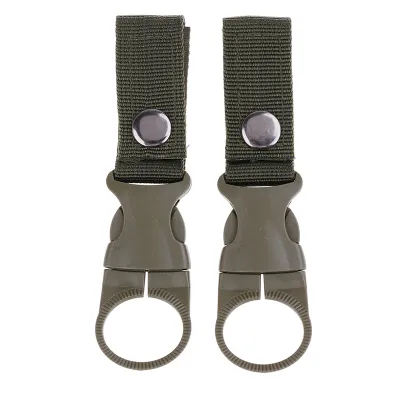
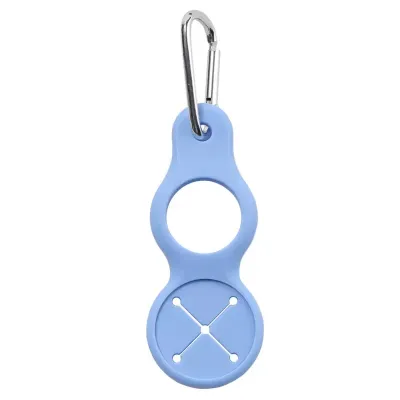
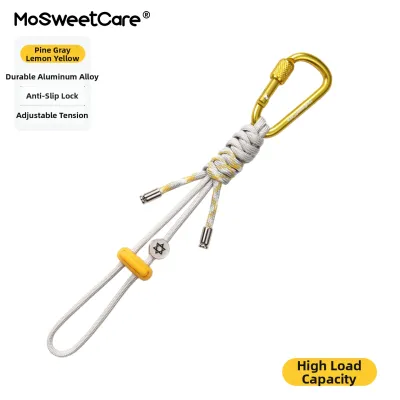
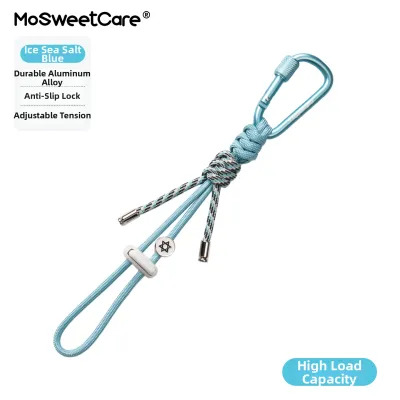

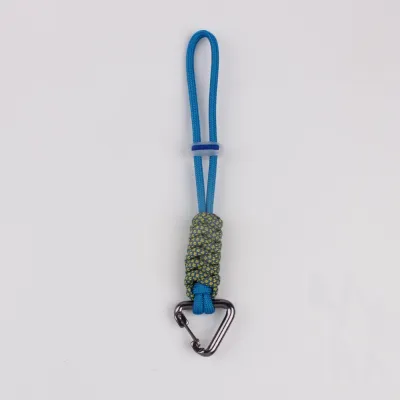
Prices are valid at publication and may change. Please refer to the product page for the latest price.
Functional failure, on the other hand, happens when the hanger remains intact but the bottle slips out of its sleeve, or the attachment clip accidentally opens. This often occurs when the bottle rubs against the rock face during a climb, causing the gate of an unsecured carabiner to push open. Alternatively, flexible silicone bands or poorly fitted webbing sleeves can stretch or slide off the neck of the bottle when subjected to sudden upward or sideways forces.
The consequences of these failures extend far beyond losing your hydration. A one-kilogram bottle falling from a height of twenty meters carries enough kinetic energy to cause severe injury or death to a belayer or climber below. In a sport where safety is paramount, treating your water bottle hanger with the same level of scrutiny as your active climbing gear is essential for protecting everyone at the crag.
It is also vital to distinguish between life-safety climbing equipment and general-purpose accessory gear. While your harness, ropes, and carabiners are engineered and certified to hold human falls, accessory hangers are designed solely to manage convenience items. However, because these accessories are carried on the same harness and exposed to the same harsh environments, they must still meet rigorous standards of durability and retention to prevent accidental drops.
Verifying Load Ratings and Material Strength
When evaluating a water bottle hanger, the first step is to verify its load rating and material composition. Many everyday-carry bottle holders are designed for casual walking or commuting and lack the structural integrity required for climbing. You should always check the manufacturer’s documentation or product labels for an explicit weight limit, typically specified in kilograms or pounds, rather than assuming a product is strong simply because it looks rugged.

High-quality climbing accessory hangers often feature hardware made from anodized aluminum, stainless steel, or heavy-duty nylon webbing. Anodized aluminum offers an excellent strength-to-weight ratio and resists corrosion, making it highly suitable for outdoor environments. In contrast, molded plastic hangers or thin elastic bands are prone to stress cracking and rapid degradation when exposed to friction, impact, and outdoor elements.
You must verify whether the product is explicitly engineered and tested as a load-bearing outdoor accessory or merely marketed as a lifestyle item. True outdoor-grade hangers will often state their maximum static load capacity clearly. If a product lacks any specified weight limit or relies on vague marketing terms like “heavy-duty” or “tactical” without providing concrete metrics, this is a major red flag.
Avoid hangers that rely entirely on friction fits over the bottle neck without a secondary mechanical lock or a fully enclosed sleeve. A secure hanger should feature reinforced stitching on all webbing joints, with heavy-duty bar-tack patterns similar to those found on climbing slings. Inspecting these construction details before purchase allows you to identify potential weak points where the fabric could unravel under tension.
Choosing Secure Attachment Mechanisms and Carabiners
The method you use to clip the water bottle hanger to your harness or haul bag is just as important as the hanger itself. Many commercial bottle holders come packaged with cheap, unrated accessory clips. These flimsy aluminum or plastic clips can easily deform under a sudden tug or open accidentally when dragged against a rock feature.
For maximum security, replace any unrated accessory clips with a genuine, load-rated climbing carabiner. These carabiners are marked with specific kilonewton (kN) ratings on the spine, indicating their strength along the major axis, minor axis, and with the gate open. While you do not need a full-strength climbing carabiner to hold a one-kilogram bottle, using a rated carabiner guarantees that the gate and hinge mechanism are built to withstand real-world abuse.
The type of carabiner gate you choose significantly affects security. Straight-gate and wire-gate carabiners offer quick access but are susceptible to “gate flutter” or accidental opening when rubbed against the rock. A locking carabiner—whether a screw-gate or a twist-lock mechanism—provides the highest level of security, ensuring that the gate cannot be forced open by external friction during a climb.
You must also evaluate the physical connection point between the bottle sleeve and the carabiner. Look for a dedicated, reinforced loop or a solid metal ring that prevents the carabiner from shifting or cross-loading. If the connection point is a simple plastic D-ring or a single-stitched fabric tab, it represents a critical failure point that can easily tear under the dynamic forces of climbing.
Consider the trade-off between ease of use and security when selecting your setup. While a quick-release buckle or a simple clip allows you to take a drink with one hand while hanging from a belay, it also introduces more moving parts that can fail. A streamlined system that requires two hands to detach but offers a completely secure, locked connection is generally the safer choice for multi-pitch environments.
Pre-Climb Inspections and Gear Retirement Criteria
Like all climbing equipment, water bottle hangers require regular inspection and maintenance to ensure they remain safe to use. Before every climb, perform a thorough visual and tactile check of the entire hanger assembly. Look closely for frayed edges, fuzzy fibers, or broken stitches on any webbing or fabric components, as these indicate that the material has lost its structural integrity.
If your hanger utilizes plastic components or silicone bands, inspect them for stress discoloration, micro-cracks, or loss of elasticity. Bend the material gently to check for brittleness, which is a common sign of age and environmental wear. Any plastic part that shows signs of deformation or cracking should be retired immediately.
Test the action of the carabiner gate and any locking mechanisms to ensure they operate smoothly. The gate should snap shut instantly when released; if it sticks, hangs open, or feels gritty, clean it thoroughly with warm water and a dry lubricant. If the spring tension remains weak or the locking sleeve fails to engage fully, the carabiner must be retired from service.
Establish clear stop-use conditions for your hydration accessories. Exposure to harsh chemicals, such as battery acid, gasoline, or certain solvents, can silently degrade synthetic webbing without leaving visible marks. Similarly, if a hanger has been subjected to a severe impact—such as dropping a full bottle from a high pitch onto a hard ledge—the hardware may have developed internal micro-fractures that compromise its strength.
When retiring a piece of gear, ensure it is disposed of in a way that prevents accidental reuse. Cut through webbing loops, destroy plastic sleeves, or permanently deface compromised hardware before throwing them away. This ensures that neither you nor anyone else will mistakenly grab a degraded accessory for a future climb, keeping your gear kit safe and reliable.
Frequently Asked Questions (FAQ)
Can I use a standard keychain carabiner for my climbing water bottle?
No, you should never use a standard keychain carabiner to secure a water bottle while climbing. These decorative clips are made from low-grade metals or plastics and are not rated for any significant load. The dynamic forces generated by a swinging, water-filled bottle during climbing movements can easily snap the spine or force the gate open, resulting in a dropped bottle and a severe hazard for anyone below.
Does a locking carabiner guarantee the bottle won't drop?
While a locking carabiner prevents the gate from opening accidentally, it does not guarantee that your bottle will not drop. The bottle can still fall if the fabric sleeve tears, the stitching unravels, or the plastic neck-holder cracks. A locking carabiner only secures the connection to your harness; you must still ensure that the rest of the hanger assembly is robust and in good condition.
How does cold weather or UV exposure affect hanger materials?
Prolonged exposure to ultraviolet (UV) radiation from the sun degrades synthetic materials like nylon, polyester, and plastics, making them weak and brittle over time. Similarly, freezing alpine temperatures can cause certain plastics and silicone bands to lose their flexibility, increasing the risk of sudden cracking under load. Store your gear in a cool, dry place away from direct sunlight, and inspect non-metallic components more frequently when climbing in extreme weather.

Community discussion
Share your experience or ask a question. Comments are reviewed before publication.