
Finding the right home exercise equipment for a compact Housing & Development Board (HDB) flat requires balancing your fitness goals with the physical realities of limited floor space. To keep your walkways clear and maintain a comfortable living environment, the choice between a treadmill and an elliptical comes down to how each machine stores and operates within your layout. While a fold-flat treadmill can slide under a bed or stand upright in a utility closet, a compact elliptical provides a fixed but highly predictable footprint that does not require daily setup. Ultimately, the best fit is one that respects both your active stride and the daily foot traffic of your household.
Assessing Your HDB Floor Plan and Walkway Clearance
Before browsing online marketplaces or visiting a showroom, you must map out the exact zone where your machine will live and operate. Start by measuring the static footprint, which is the physical space the machine occupies when turned off. However, the dynamic footprint—the actual space required when you are actively using the machine—is far more critical for safety. For a treadmill, this includes the rear safety clearance zone in case of a fall, while for an elliptical, you must account for the forward and backward extension of the pedal arms and handlebars.
Walkway clearance is another non-negotiable factor in a typical HDB flat, where corridors and living areas are often multi-functional. As a general rule, maintain at least 60 centimeters of clear walkway space around the machine when it is in use to allow other household members to pass safely. If the machine blocks a primary path to the kitchen, bathroom, or main entrance, it can quickly become a daily frustration and a safety hazard during an emergency.
Products mentioned in this guide
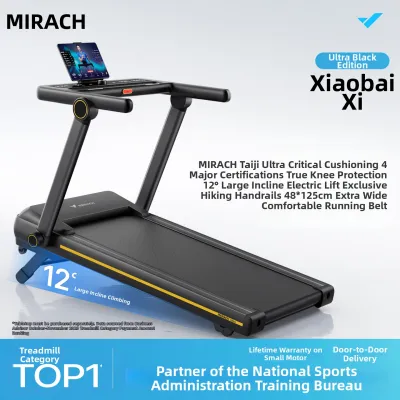
Prices are valid at publication and may change. Please refer to the product page for the latest price.
Ceiling height is a frequently overlooked dimension, particularly in modern HDB flats where standard ceilings hover around 2.6 meters. When using an elliptical, your body is elevated by the height of the pedals at their peak rotation. Add your own height to the machine’s maximum pedal deck height, and ensure you still have at least 15 to 20 centimeters of clearance above your head to prevent injuries during high-intensity workouts. For treadmills, consider the deck height and any incline features that will raise your position during use.
Finally, map out the surrounding environment to avoid spatial conflicts. Check the swing paths of nearby doors, wardrobe panels, and cabinet doors to ensure they can open fully even when the equipment is set up. Note the locations of wall outlets, as cardio machines should plug directly into a dedicated socket rather than running long, hazardous extension cords across high-traffic walkways.
Treadmill vs. Elliptical: Space Footprint and Dynamic Clearance
When comparing these two popular home exercise options, their spatial demands during storage and operation differ significantly. A treadmill’s static footprint is essentially a flat rectangle, but its active operational footprint requires a clear zone behind the belt. If you lose your footing, you need sufficient space behind the machine to prevent being pinned against a wall. This safety buffer can add up to 1.2 meters of required length behind the treadmill during use.

In contrast, an elliptical’s footprint remains relatively constant, but its moving parts extend beyond its base frame. The handlebars swing outward, and the pedal linkages extend past the rear or front of the main chassis depending on the drive design. Front-drive ellipticals tend to have a more compact, vertical design but may require more forward clearance, while rear-drive models are typically longer and demand more horizontal floor space.
Stride length also plays a major role in determining the physical size of the machine. A comfortable running stride on a treadmill requires a longer belt, which naturally increases the machine’s overall length and the size of its motor housing. For an elliptical, a longer stride length translates directly to a longer frame to accommodate the mechanical path of the pedals. If you are taller, you will need to verify that a compact model’s stride length is ergonomically comfortable without forcing you to compromise your natural posture.
Folding mechanisms represent the biggest divergence in how these machines impact your daily living space. Many modern treadmills feature hydraulic folding decks that lift the running surface vertically, reducing the floor footprint by more than half when stored. Some ultra-compact models fold completely flat, allowing them to be tucked away out of sight. Ellipticals, due to their complex jointed linkages and upright consoles, rarely fold as compactly, meaning they will likely remain a permanent visual and physical fixture in your room.
Key Space-Saving Features to Look For
If you are working with tight space constraints, prioritizing specific design features can make a substantial difference in how easily a machine integrates into your home. Look for robust folding mechanisms that feature gas-assist shocks, which make lifting and lowering the deck manageable and safe for a single user. Additionally, high-quality transport wheels are essential; look for multi-directional wheels that allow you to maneuver the machine sideways into tight corners rather than just forward and backward.
Always verify the manufacturer’s exact dimensions for both the fully extended and folded states. Do not rely on promotional images, which can often make equipment look smaller than it is in a real-world setting. Compare these specifications directly against your measured floor plan, keeping in mind that you need to access the folding release levers and power switches easily.
For those with extreme space limitations, under-desk walking pads or fold-flat treadmills offer a practical alternative to full-sized running machines. These models typically omit the bulky upright console in favor of a minimalist handlebar or remote-control operation, making them easy to store under a sofa. However, be aware of the trade-offs: ultra-lightweight and highly compact frames often have lower maximum weight capacities and may feel less stable during high-speed runs compared to heavier, non-folding units.
HDB-Specific Placement and Safety Checks
Operating fitness equipment in an HDB flat requires careful consideration of the indoor climate and your immediate environment. Singapore’s warm, humid climate means that exercising in a small, enclosed spare room can quickly lead to overheating. Ensure your workout zone has adequate ventilation, either by placing the machine near a window with a safety grille or positioning a standing fan to maintain consistent airflow during intense cardio sessions.
Floor protection and noise mitigation are critical for maintaining good relations with your downstairs neighbors. The repetitive impact of running on a treadmill or the mechanical hum of an elliptical can transmit low-frequency vibrations through the concrete floor slab of an HDB block. Placing a high-density, specialized rubber equipment mat under your machine is highly recommended to absorb these vibrations, protect your vinyl or tile flooring from scratches, and dampen operational noise.
Electrical safety is another key consideration. Treadmills, in particular, draw a significant amount of power when the motor is under load. Always plug your machine directly into a wall outlet rather than a multi-way adapter or extension cord, which can overheat and pose a fire hazard. Ensure the power cord is routed away from walkways where it could become a tripping hazard or get pinched under the machine’s frame.
Lastly, establish a safe clearance zone around the machine. Keep a minimum distance of 0.5 meters from walls, windows, and glass doors. This space is necessary not only for emergency dismounts but also to allow easy access for routine maintenance, such as lubricating the treadmill belt or tightening the bolts on your elliptical’s joints.
Frequently Asked Questions (FAQ)
Can I place a treadmill or elliptical on a balcony or service yard?
It is generally not recommended to place electronic fitness equipment on an HDB balcony or service yard. Singapore’s high humidity, heavy rainfall, and intense direct sunlight can rapidly degrade sensitive electronic consoles, rust metal frames, and damage drive belts, which typically voids the manufacturer’s warranty. Additionally, outdoor tiles can become slippery when wet, creating a safety hazard, and the structural weight limits of cantilevered balconies must be carefully respected. If you must use these spaces, ensure the area is fully enclosed, shielded from the elements, and that the manufacturer explicitly approves semi-outdoor use.
How do I manage noise and vibration for downstairs HDB neighbors?
To minimize the transmission of impact noise to your neighbors below, always use a thick, high-density anti-vibration mat designed specifically for heavy gym equipment. You can also reduce disturbance by scheduling your workouts during reasonable hours, avoiding early mornings or late nights when ambient noise levels are low. Regularly inspect your equipment to tighten any loose bolts, hinges, or pedals, as loose components can cause squeaking and rattling that amplifies the noise. Choosing a machine with built-in shock absorption or a magnetic resistance system will also significantly lower operational sound.

Community discussion
Share your experience or ask a question. Comments are reviewed before publication.