
Running in hot and humid conditions presents a unique challenge for gear selection. A running belt must hold essentials securely without turning into a heavy, sweat-soaked band around your waist. While the tubular “flip” design is highly popular for its bounce-free storage, breathability varies significantly across different brands and models. Choosing the right belt requires looking past brand names and focusing on the science of fabric construction, fiber blends, and structural ventilation.
In tropical climates like Singapore, where humidity levels regularly exceed 80 percent, sweat evaporation is severely compromised. A poorly ventilated belt acts as a thermal barrier, trapping body heat and moisture against your lower back and abdomen. This not only causes discomfort but can also lead to skin irritation, chafing, and heat rashes. Understanding how different materials and designs manage moisture is essential for maintaining comfort and performance during your runs.
Key Factors That Determine Flip Belt Breathability
The breathability of a tubular running belt is governed by the physical laws of moisture transfer and thermodynamics. When you run, your body releases heat and sweat to regulate its core temperature. For a running belt to remain comfortable, it must facilitate two distinct processes: moisture wicking and air permeability. Moisture wicking is the movement of liquid sweat away from your skin through the fabric, while air permeability is the ability of air to flow through the fabric to evaporate that moisture.
Products mentioned in this guide
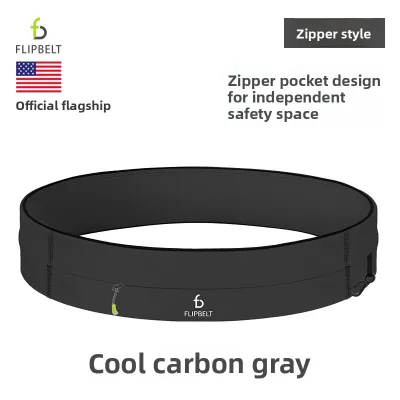
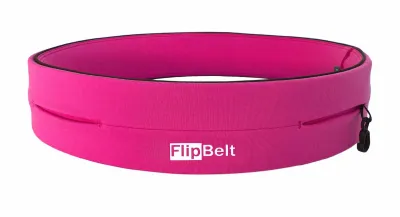
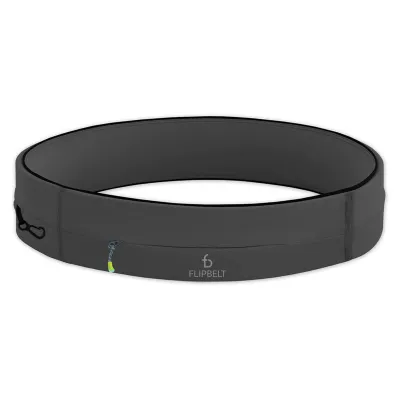
Prices are valid at publication and may change. Please refer to the product page for the latest price.
Fabric composition is the primary driver of moisture wicking. Synthetic fibers like polyester and nylon are naturally hydrophobic, meaning they absorb very little water into their actual structure. Instead, they rely on capillary action to draw sweat along the outer surface of the fibers and push it to the exterior of the belt, where it can evaporate. Elastane, also known as spandex, is added to provide the necessary stretch and compression to keep your items secure. However, elastane is highly retentive of heat and moisture; therefore, a belt with an excessively high percentage of elastane will feel warmer and dry slower than one with a higher ratio of polyester or nylon.
The knit structure of the fabric also plays a critical role in heat dissipation. Seamless tubular knits are created using circular knitting machines, resulting in a continuous band of fabric without irritating seams. While highly comfortable, these knits are often dense to ensure adequate compression, which can restrict airflow. Conversely, fabrics with engineered knit patterns or laser-cut perforations feature microscopic or macroscopic openings that allow air to pass directly through the material. This direct ventilation significantly enhances cooling, especially when running in breezy conditions or at higher speeds.
Finally, the physical fit and compression level of the belt influence how air circulates around your waist. A belt must fit snugly to prevent your phone, keys, and hydration flasks from bouncing. However, excessive compression flattens the fabric fibers against your skin, eliminating the micro-gaps of air that normally facilitate evaporation. This creates a saturated boundary layer between your skin and the belt. A well-designed belt balances compression with structural loft, ensuring that the fabric can still breathe even when stretched tight over your hips.
Comparing Common Flip Belt Material Profiles
To choose the right belt, it is helpful to categorize mainstream designs into distinct material profiles, each offering unique trade-offs in terms of stretch, security, and moisture management.

High-stretch synthetic blends are the most common profile found in standard tubular designs. Typically composed of a high percentage of polyester or nylon blended with elastane, these belts offer a smooth, soft texture and excellent compression. Nylon-based blends tend to feel softer and more premium against the skin, but nylon absorbs slightly more moisture than polyester, which can make the belt feel heavier as your run progresses. Polyester-based blends are highly efficient at moving moisture and drying quickly, making them excellent for high-sweat workouts, though they may feel slightly less supple. Both types rely entirely on the capillary action of the fibers, meaning they perform best in dry, breezy conditions where evaporation is rapid.
Perforated or mesh-panel variants are designed specifically for maximum airflow. These belts incorporate zones of open-mesh fabric or feature laser-cut ventilation holes throughout the band. By reducing the physical mass of the fabric, these designs allow heat to escape directly from the skin. The primary trade-off with mesh is durability and skin comfort. Coarser mesh fabrics can act like sandpaper against bare skin when saturated with sweat and subjected to the constant micro-movements of running. Additionally, mesh panels often have less elastic recovery than solid knits, which can reduce the belt’s overall carrying capacity and increase the likelihood of items bouncing if the belt is loaded to its limit.
The thickness of the fabric also dictates how a belt handles sweat. Thicker, heavy-duty fabrics are highly durable and can absorb a significant volume of sweat before feeling completely saturated. This makes them suitable for shorter, high-intensity runs where you want to keep sweat from dripping down your legs, and where the belt will be removed before it becomes uncomfortably heavy. Micro-thin fabrics, on the other hand, have very low moisture absorption capacity. They saturate quickly but also dry at an accelerated rate under a light breeze. For long-distance runners, micro-thin belts are often preferred because they minimize the total weight carried and do not retain water weight over hours of running.
How to Evaluate Brand Specifications and Labels
When shopping for a running belt, navigating marketing jargon can be challenging. Brands frequently use proprietary names to describe their fabrics, which can obscure the actual material properties. To make an informed decision, you must learn to read care labels and product specifications critically.
Always check the fiber content breakdown on the care label or product description. Look for high percentages of polyester or nylon (typically 80% to 90%) combined with a moderate amount of elastane (10% to 20%). Avoid any belts that contain natural fibers like cotton, or semi-synthetic fibers like rayon, viscose, or modal. While these materials feel incredibly soft and comfortable when dry, they are highly hydrophilic. They will absorb sweat, expand, lose their elasticity, sag, and remain wet for the duration of your run, leading to severe chafing.
Distinguish between proprietary marketing terms and actual textile technologies. Terms like “moisture-wicking,” “dry-tech,” or “cool-weave” are often just brand-specific names for standard polyester or nylon blends. Instead of relying on these claims, look for physical design features that back them up. For example, check if the product description mentions “interlock knit” (which is denser and more durable but warmer) or “mesh mapping” (which indicates targeted ventilation zones). If a brand claims a belt is “ultra-lightweight,” verify this by checking the actual product weight in the specifications; a standard tubular belt typically weighs between 60 and 100 grams, so anything significantly lighter indicates a thinner, more breathable construction.
Additionally, consider the physical dimensions of the belt. A wider belt distributes the weight of your items more evenly across your hips, reducing bounce and pressure points. However, a wider belt also covers a larger surface area of your skin, effectively acting as a wider thermal wrap. If you run in exceptionally hot conditions, a narrower belt with high-stretch capabilities may be preferable to minimize skin coverage, provided it can still securely hold your essential gear.
Decision Framework: Choosing the Right Belt for Your Run
Selecting the ideal running belt requires matching the belt’s material profile to your specific running environment, distance, and physiological needs. No single belt is perfect for every scenario, and understanding these trade-offs will help you avoid discomfort.
Choose a high-stretch synthetic tubular belt if your primary goal is secure, bounce-free storage for multiple items on short to moderate runs. If you need to carry a heavy smartphone, keys, and nutrition gels, the compression and structural integrity of a solid polyester or nylon blend will keep these items locked against your body. While these belts may feel warmer in high humidity, their superior hold prevents the friction and bouncing that can disrupt your running stride.
Choose a perforated or ultra-thin mesh variant if you prioritize maximum airflow and are planning long-distance runs in hot, humid weather. When running for several hours in tropical conditions, keeping your core temperature down and minimizing water weight accumulation are critical. The direct ventilation offered by mesh panels or laser-cut holes will facilitate whatever evaporation is possible in high humidity, keeping you cooler and reducing the risk of heat-related skin irritation.
Before making your final choice, always verify your skin sensitivity and fit requirements. If you are prone to chafing, look for seamless constructions and avoid wearing mesh belts directly against bare skin; instead, wear them over a moisture-wicking running shirt. Ensure you test the fit of the belt with your typical carrying load before embarking on a long training run. If a belt requires you to pull it excessively tight to prevent bouncing, it will compress your abdominal muscles, restrict your breathing, and trap a layer of hot sweat against your skin, defeating the purpose of its breathable design.
Frequently Asked Questions (FAQ)
Does Washing Affect a Flip Belt's Moisture-Wicking Ability?
Yes, how you wash and care for your running belt directly impacts its long-term breathability and moisture-wicking performance. Over time, sweat, body oils, and skin cells can accumulate within the microscopic spaces between the synthetic fibers, clogging the channels that facilitate capillary action. Furthermore, using standard laundry detergents with fabric softeners is highly detrimental. Fabric softeners leave a thin, waxy chemical coating over the fibers, which is designed to make fabrics feel soft but actually repels water. This coating prevents the fabric from absorbing and wicking sweat, turning a high-performance running belt into a non-breathable, moisture-retaining band.
To preserve the wicking capabilities and elasticity of your belt, always wash it in cold water using a mild, liquid detergent. Avoid fabric softeners, bleach, and heavy powdered detergents that may not dissolve completely. It is highly recommended to air dry the belt rather than putting it in a tumble dryer. The high heat of a dryer can degrade the elastane fibers, causing them to lose their elasticity and recovery strength. Once the elastane is damaged, the belt will sag, bounce during runs, and lose its ability to hold your items securely against your body.

Community discussion
Share your experience or ask a question. Comments are reviewed before publication.