
Choosing the right portable air pump in Singapore depends entirely on your primary inflation tasks, whether you are topping up high-pressure road bicycle tires along the East Coast Park or inflating high-volume camping mattresses in the outdoors. While ToPump has entered the market as a versatile contender, no single brand serves as a universal solution for every inflation scenario. To determine if ToPump is the right choice for you, it is essential to match its labeled specifications and included accessories directly against your specific gear before purchasing. Ultimately, the true value of any portable pump lies in how well it balances physical portability, accurate pressure control, and long-term durability for your specific activities.
Key Dimensions for Comparing Air Pump Brands
When evaluating ToPump against other established air pump brands, relying on marketing buzzwords can lead to mismatched gear and poor performance. Instead, you should focus on objective technical and physical specifications that can be verified directly on the product packaging or the manufacturer’s official specification sheet. By breaking down your comparison into three main pillars—physical handling, inflation performance, and accessory versatility—you can make an informed decision that aligns with your active lifestyle.
Portability, Weight, and Build Materials
The physical footprint and weight of an air pump dictate how easily you can carry it during your outdoor adventures. Pocket-sized pumps are highly favored by road cyclists who need to minimize weight in their jersey pockets, whereas heavier, robust units are better suited for car trunks or camping setups. When comparing ToPump to alternative brands, check the exact weight in grams and the dimensions to ensure the device fits comfortably into your planned carrying system, such as a bicycle frame bag or a running vest.
Products mentioned in this guide
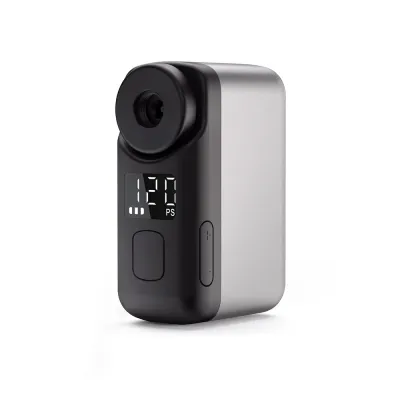
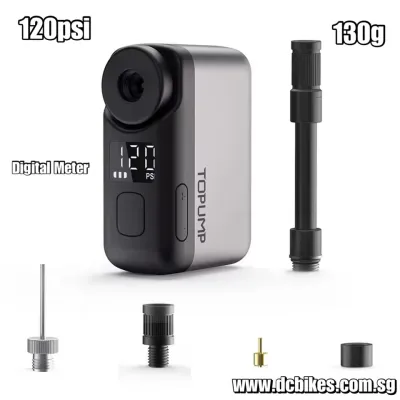
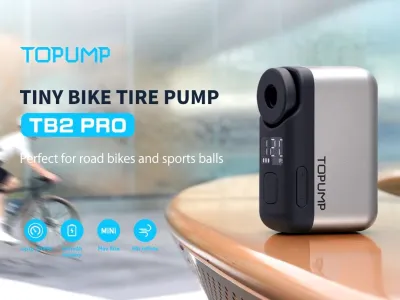
Prices are valid at publication and may change. Please refer to the product page for the latest price.
The casing material of the pump plays a dual role in durability and thermal management. High-grade aluminum alloy casings generally offer superior heat dissipation during extended inflation cycles and provide better resistance to accidental drops on concrete paths. Conversely, ABS plastic casings are typically lighter and more budget-friendly, though they may feel warmer to the touch and require more careful handling to prevent cracking.
Ergonomic design elements and storage solutions should also influence your choice. Look for models that feature integrated mounting brackets for bicycle frames, secure strap attachment points, or dedicated carrying pouches that keep the hose and main unit protected from dust and moisture. A well-designed pump should feel secure in your hand and remain stable on the ground or flat surfaces during operation.
Pressure Range, Flow Rate, and Inflation Speed
Air pumps are generally optimized for either high-pressure/low-volume tasks or low-pressure/high-volume tasks, and using the wrong type can lead to slow inflation or damaged equipment. High-pressure tasks, such as inflating road bike tires to over 100 PSI or topping up car tires, require a pump motor capable of pushing against significant resistance. Low-pressure tasks, such as inflating camping sleeping pads, pool floats, or inflatable kayaks, require a high volume of air delivered quickly at very low pressure, typically under 5 PSI.
Before purchasing, verify the maximum PSI or bar rating and the liters-per-minute (L/min) flow rate listed on the product packaging. A high maximum PSI rating does not automatically mean the pump can inflate a large camping mattress quickly; if the L/min flow rate is low, inflating a high-volume item will take an impractical amount of time and may cause the motor to overheat. Conversely, a high-flow pump designed for air mattresses may lack the mechanical power to inflate a high-pressure bicycle tire.
Safety is paramount when dealing with pressurized vessels, making accurate auto-shutoff features a critical verification point. Ensure the pump you choose allows you to pre-set your target pressure and automatically stops when that limit is reached. This feature prevents overinflation, which can rupture delicate bicycle inner tubes or damage the internal seams of expensive sports equipment.
Nozzle Adapters and Multi-Purpose Versatility
An air pump is only as useful as its physical connection to your gear, making nozzle compatibility a primary consideration. You must verify which valve types your equipment uses—such as Schrader valves common on cars and mountain bikes, Presta valves standard on road bikes, or Dunlop valves found on some classic city bicycles. Check whether the pump package includes these adapters natively or if you will need to purchase third-party brass or plastic adapters separately.
If you intend to use the pump for multi-purpose activities, look for specialized attachments in the box, such as narrow needle adapters for basketballs and footballs, or wide-mouthed plastic nozzles for inflatable beach toys and camping pillows. Having these adapters included saves you the hassle of sourcing compatible parts later and ensures an airtight seal during inflation.
The storage design for these small adapters is a frequently overlooked detail that affects long-term usability. Some brands feature built-in compartments within the pump body to store nozzles securely, while others provide loose fabric bags. Built-in storage minimizes the risk of losing small adapters while in transit, ensuring you always have the correct nozzle on hand when you reach your destination.
Power Options and Battery Performance
For cordless electric air pumps, battery performance determines whether you can complete your inflation tasks in the field or find yourself stranded with a dead device. When comparing ToPump to other cordless brands, inspect the battery capacity stated in milliampere-hours (mAh) or watt-hours (Wh). However, do not rely solely on the battery size; look for the manufacturer’s stated inflation cycles per charge, which indicate how many tires or sports balls the pump can realistically inflate from flat on a single charge under standard conditions.

Charging convenience is another critical factor, especially for multi-day camping trips or long cycling tours. Modern pumps utilizing a USB-C charging interface offer the greatest flexibility, allowing you to recharge the unit using standard phone chargers, car USB ports, or portable power banks. Check the recommended charging input (such as 5V/2A) and the estimated time required to reach a full charge, as some high-capacity batteries can take several hours to replenish on slow chargers.
Additionally, evaluate whether the pump offers secondary power features that add utility to your outdoor kit. Some models can function as emergency power banks, allowing you to draw power from the pump’s internal battery to charge your mobile phone or GPS device in a pinch. You should also verify if the pump supports pass-through charging—the ability to operate while plugged into a power source—which can be a lifesaver if the internal battery runs dry mid-task.
Assessing Price, Warranty, and Long-Term Value
When shopping in Singapore, comparing the upfront S$ price of ToPump against competing brands is only the first step in determining true value. You must look at the completeness of the accessory kit included in that price; a lower-priced pump that requires you to buy a separate carrying case, charging brick, and specialized valve adapters may end up costing more than a premium bundle. Weigh the total cost of ownership by calculating what is included in the box versus what you must source independently.
Post-purchase support is a vital consideration for electronic devices exposed to the outdoor elements. Check the warranty duration offered by the seller or manufacturer, and verify if there is a local service center or authorized repair agent in Singapore. Having a local point of contact means you can resolve potential defects or warranty claims quickly, without the high shipping costs and long wait times associated with sending the device back to an overseas warehouse.
Finally, consider the long-term sustainability of the product. Ask yourself if the manufacturer offers replacement parts, such as replacement hoses, proprietary battery packs, or specific nozzle attachments. If a single damaged seal or lost adapter forces you to discard the entire unit because replacements are unavailable, the long-term value of the pump drops significantly, regardless of how low the initial purchase price was.
Decision Framework: Choosing the Right Air Pump
To finalize your decision between ToPump and alternative air pump brands, apply this conditional framework based on your primary activities, gear requirements, and carrying preferences.
- Choose ToPump if: Its labeled pressure range, flow rate, and included accessory kit perfectly match the specifications of your specific sports or outdoor equipment. It is an excellent fit if you prioritize a balanced form factor that fits easily into your existing carrying setup, and you prefer an all-in-one package that includes the specific valve adapters you use most frequently.
- Choose an alternative brand if: Your primary use case involves heavy-duty tasks, such as inflating large vehicle tires from completely flat, which require high-volume continuous operation that standard portable pumps cannot sustain without overheating. You should also look elsewhere if you require ultra-fast inflation for high-volume camping gear, or if you need specific smart-home integrations or advanced digital pressure logging features not supported by ToPump.
- Verify first if: You are purchasing a pump for high-risk, specialized, or highly sensitive equipment where exact pressure tolerances are critical for safety or performance. Always cross-reference the pump's auto-shutoff accuracy and sensor calibration limits with your gear's official user manual, and never rely solely on automated sensors without manual verification using a dedicated, calibrated pressure gauge.
Frequently Asked Questions (FAQ)
Can I use a portable air pump for both car tires and bicycle tires?
Yes, many portable air pumps can handle both, but you must verify their technical limits. Car tires require a high volume of air at relatively low pressure (typically 30 to 35 PSI), while road bicycle tires require a very low volume of air at high pressure (often 80 to 100+ PSI). Check the pump’s maximum pressure rating and flow rate to ensure it can handle high-pressure bicycle tires without stalling, and verify that its thermal management can sustain the continuous run time needed to fill a large car tire without overheating.
How do I know if an air pump will overinflate my sports equipment?
To prevent damage to delicate sports equipment like basketballs, footballs, or thin-walled inflatable toys, you must actively monitor the inflation process. Many portable pumps feature digital pressure displays and auto-shutoff functions, but these sensors may have lower accuracy at very low pressures (under 10 PSI). Always check the manufacturer’s stated sensor tolerance, use gentle or low-flow modes if available, and perform physical checks by hand during inflation rather than relying entirely on automated shutoff mechanisms.

Community discussion
Share your experience or ask a question. Comments are reviewed before publication.