
No single brand dominates every thickness category when shopping for a yoga mat in Singapore. The ideal thickness is not a universal standard; instead, it depends entirely on your primary yoga style, joint sensitivity, and how often you commute to local studios. Finding the right balance between cushioning and stability requires matching your personal practice requirements to the specific design philosophies of different brands.
A condition-based decision framework simplifies this process. If you prioritize balance, grounding, or a highly portable option for traveling and commuting on the MRT, brands specializing in thin mats (1mm to 3mm) are highly suitable. For those seeking a versatile option for standard studio classes, mainstream brands offering standard-thickness mats (4mm to 5mm) provide the most balanced performance. If you require deep joint cushioning for restorative practices, or if you experience discomfort in your knees and wrists, brands specializing in thick mats (6mm and above) are the appropriate choice.
Because manufacturers frequently update their product lines and material compositions, it is essential to verify the exact millimeter specifications on product labels before making a purchase. Relying solely on a brand’s general reputation is often insufficient, as a single brand may offer vastly different experiences across its various product tiers.
Products mentioned in this guide
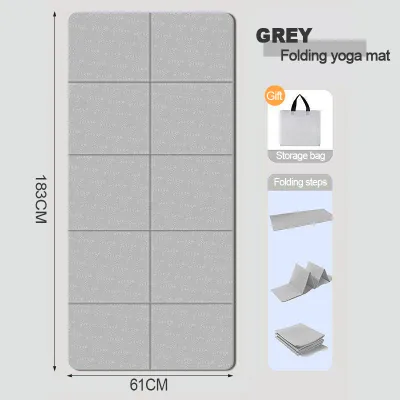
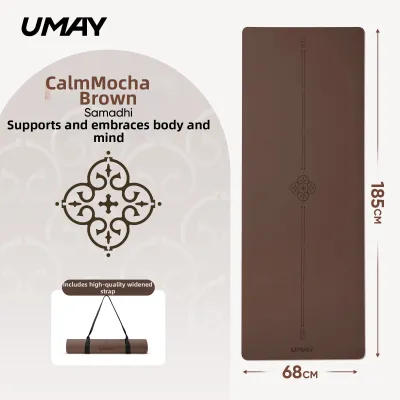
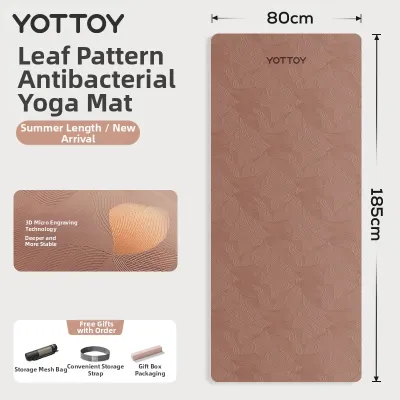
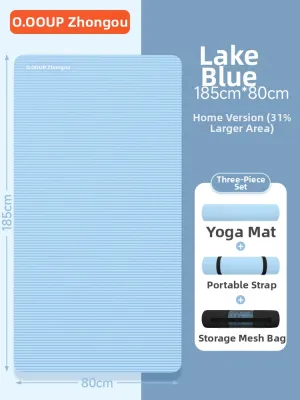
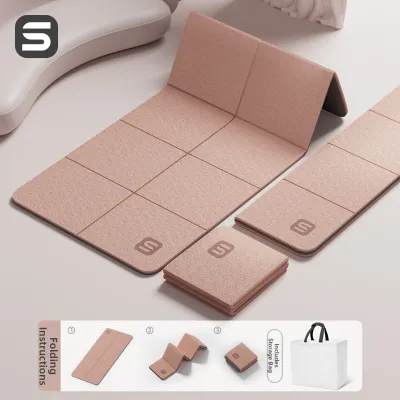
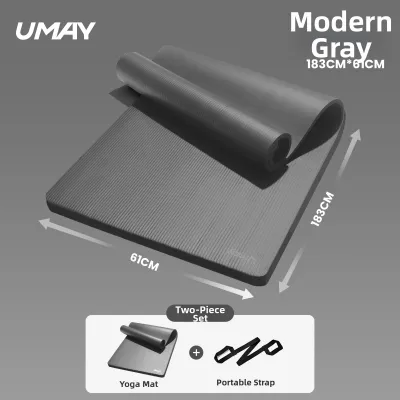

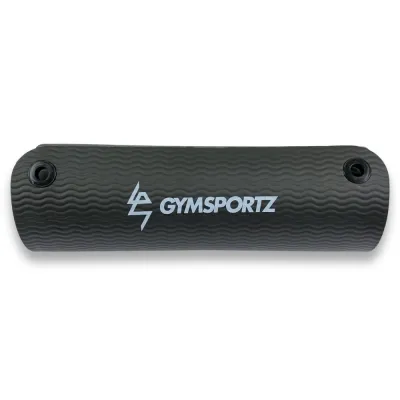
Prices are valid at publication and may change. Please refer to the product page for the latest price.
How Yoga Mat Thickness Impacts Stability and Comfort
Yoga mat thickness directly influences how your body interacts with the floor, affecting both physical comfort and your ability to maintain alignment. The distance between your body and the hard ground determines the level of impact absorption, but it also dictates the sensory feedback your feet and hands receive during complex poses. Understanding these physical dynamics helps you choose a thickness that supports your practice rather than hindering it.
Thin Mats (1mm – 3mm) for Grounding and Travel
Thin yoga mats, ranging from 1mm to 3mm, are designed with a primary focus on grounding and portability. These mats allow your hands and feet to remain in close contact with the subfloor, which provides a highly stable base for balance-heavy practices such as Ashtanga, Vinyasa, and standing poses. In these active styles, a thin surface prevents your joints from sinking, allowing for micro-adjustments that keep you steady.
Portability is another major advantage of this thickness range. Many mats in the 1mm to 1.5mm range are specifically engineered to be foldable, fitting easily into a standard backpack or tote bag. This makes them highly convenient for Singaporeans who commute directly from offices in the Central Business District to evening yoga sessions. Additionally, these ultra-thin mats serve as excellent hygienic barriers when layered directly over rental mats provided by local commercial studios.
However, the primary trade-off of thin mats is their lack of physical cushioning. When practicing on hard studio floors, such as polished concrete or hardwood, a thin mat provides minimal impact absorption. Practitioners who spend significant time in poses that place direct pressure on the knees, elbows, or wrists—such as Low Lunge or Tabletop—may find this range uncomfortable without additional support.
Standard Mats (4mm – 5mm) for Versatile Studio Practice
The 4mm to 5mm range represents the industry standard for versatile studio practice, offering a balanced compromise between joint protection and physical stability. This intermediate thickness provides enough compression to cushion the joints during floor poses, while remaining firm enough to prevent the loss of balance during standing sequences. It is widely considered the most adaptable option for Hatha, slower Vinyasa flows, and general multi-level yoga classes.
Most mainstream premium brands focus their primary engineering efforts on this specific thickness range. Because it is the most popular segment of the market, manufacturers utilize a wide variety of materials to fine-tune the performance of these mats. For example, a 5mm mat made of natural rubber will feel remarkably solid and grounded, whereas a 5mm mat made of thermoplastic elastomer (TPE) will feel lighter and slightly springier.
This versatility makes standard mats the default recommendation for practitioners who participate in a variety of yoga styles. Whether you are holding static stretches in a Yin class or moving through rapid transitions in a power flow, a standard-thickness mat adapts well to both environments. It is light enough to carry in a standard mat bag while offering sufficient comfort for most body types.
Thick Mats (6mm and Above) for Joint Cushioning
Thick yoga mats, measuring 6mm and above, are engineered specifically to maximize joint cushioning and comfort. This category is highly beneficial for restorative yoga, Yin yoga, prenatal practices, and individuals recovering from joint injuries or managing chronic sensitivity in the knees, spine, or wrists. The extra material creates a substantial barrier that absorbs body weight and minimizes pressure points during long-held floor poses.
While the added comfort is highly beneficial for floor-based practices, thick mats introduce a significant trade-off in terms of physical stability. When standing on a thick, soft surface, your feet sink into the material, which can destabilize your ankles and make balancing poses like Tree Pose or Warrior III much more difficult to execute. The lack of a firm, predictable base forces your stabilizing muscles to work harder, which can lead to fatigue or misalignment.
Furthermore, mats in this thickness category are inherently bulkier and heavier, especially if constructed from high-density materials. Carrying a 6mm natural rubber mat on public transport can be physically demanding due to its weight. Consequently, these mats are often best suited for home practices or for storage at a dedicated local studio where commuting with heavy gear is not required.
Comparing Thickness Ranges Across Brand Categories
Different categories of brands approach the design and manufacturing of yoga mats with distinct priorities, resulting in varied thickness offerings and material selections. Understanding how these brand categories operate helps you narrow down your search based on whether you prioritize premium performance, portability, or budget-friendly comfort.

Premium and Alignment-Focused Yoga Brands
Premium, yoga-specific brands typically offer a carefully curated range of thicknesses, usually focusing on the 3mm to 6mm spectrum. Rather than offering a massive variety of random dimensions, these manufacturers design specific models tailored to precise athletic standards. They prioritize high-density materials, such as natural rubber, polyurethane (PU), or specialized dense polyvinyl chloride (PVC), which maintain structural integrity under heavy use.
In this premium category, even the thicker options (typically 5mm to 6mm) are engineered to avoid the soft, spongy feel associated with cheaper mats. By utilizing high-density compounds, these brands ensure that the mat provides excellent joint support without allowing the user to sink through to the floor. The result is a firm, predictable base that supports proper skeletal alignment and joint safety during advanced poses. If you are looking for a highly durable, high-performance mat that balances cushioning with professional-grade stability, these specialized brands are the most reliable starting point.
Travel and Eco-Conscious Specialists
Brands that focus on travel and eco-conscious designs dominate the thin mat category, with a product selection concentrated heavily in the 1mm to 3mm range. These manufacturers prioritize sustainability and portability, frequently utilizing natural materials such as sustainably harvested tree rubber, organic cork, or recycled microfiber. Their thin mats are often designed to be highly flexible, allowing them to be folded flat into suitcases or compact travel bags.
It is important to note that natural materials like rubber and cork are inherently denser and heavier than synthetic foams. Consequently, a 3mm natural rubber travel mat may feel significantly heavier than a 3mm synthetic mat, though it will also provide superior traction and a more grounded feel. If your practice involves frequent travel, outdoor sessions in Singapore’s parks, or commuting between multiple studios, these eco-conscious specialists offer the most sophisticated lightweight solutions.
Budget and General Fitness Brands
Budget-friendly brands and general fitness manufacturers often focus on the thicker end of the spectrum, frequently offering mats that range from 6mm to 10mm or even thicker. These products are typically constructed from lower-density, inexpensive synthetic foams such as nitrile butadiene rubber (NBR) or basic thermoplastic elastomer (TPE). These materials are highly cost-effective to produce and provide a very soft, pillowy sensation upon initial contact.
However, buyers must distinguish between a thick yoga mat and a thick general fitness or Pilates mat. Many budget mats sold under general fitness labels are designed for floor exercises like sit-ups or stretching, where standing balance is not a factor. Because these mats utilize low-density foam, they compress completely under concentrated weight, meaning your knees may still press through to the floor despite the mat’s apparent thickness. Additionally, the highly soft, squishy texture can cause ankle instability during standing yoga poses, increasing the risk of slips or joint strain. When considering budget options, it is vital to evaluate the density of the material rather than relying solely on the thickness measurement.
Why Density and Material Matter Just as Much as Thickness
Focusing exclusively on the millimeter measurement of a yoga mat can lead to an unsatisfactory purchase, as the material and density of the mat play an equally critical role in how it performs. Two mats with the exact same thickness of 5mm can provide completely different physical experiences depending on their composition. The material dictates how much the mat compresses under your body weight, how heavy it is to carry, and how well it grips the floor.
For instance, a 5mm high-density natural rubber mat offers a solid, firm foundation. When you place your hands and feet on it, the material resists deep compression, distributing your weight evenly and maintaining a stable connection to the subfloor. In contrast, a 5mm low-density PVC or basic TPE mat will feel much softer and lighter, compressing easily under localized pressure. While the softer mat may feel comfortable when lying down, it will not provide the same level of joint protection or stability during active standing poses, as your joints can easily bottom out against the hard floor.
To evaluate density, a reliable rule of thumb is to check the physical weight of the mat. Heavier mats of the same thickness almost always indicate a higher density of material. High-density mats offer superior longevity, as they resist permanent creasing and compression divots over time. When comparing options, always check the material composition listed on product labels or online specifications:
- Natural Rubber: Offers exceptional grip, high density, and excellent joint support, but is heavy and requires careful maintenance.
- Polyurethane (PU): Often paired with a rubber base; provides a smooth, highly grippy surface and firm cushioning.
- Thermoplastic Elastomer (TPE): Lightweight, moderately dense, and PVC-free, making it easy to carry but less durable under intense daily use.
- Polyvinyl Chloride (PVC): Highly durable and offers good density variations, but cheaper versions can lack grip and environmental sustainability.
Furthermore, the surface texture and construction type (open-cell versus closed-cell) affect the overall feel. Open-cell mats absorb moisture to maintain grip during sweaty practices, which can slightly alter the perceived firmness of the mat when wet. Closed-cell mats repel moisture, keeping the interior dry but requiring a textured surface or a towel to prevent slipping if you sweat heavily. Therefore, thickness should always be evaluated as just one component of a larger material and density matrix.
How to Test and Verify Mat Specifications in Singapore
Selecting the perfect yoga mat thickness is highly personal, and taking steps to physically verify specifications before buying can prevent costly purchasing mistakes. In Singapore, there are several practical ways to evaluate mats firsthand rather than relying solely on online descriptions.
Visiting physical retail locations is the most effective way to judge a mat’s physical properties. Many specialized yoga studios, wellness boutiques, and major sporting goods retailers across Singapore display sample mats for customers to examine. When visiting these stores, you can perform two simple physical tests:
- The Press Test: Place the mat on a hard floor surface and press your thumb firmly into the material. If your thumb easily presses straight through to the floor with minimal resistance, the mat is low-density and may not provide adequate joint protection, regardless of its thickness. If the material resists your pressure and quickly springs back into shape, it is high-density and will offer superior support.
- The Standing Balance Test: If the retailer permits, step onto the sample mat barefoot and attempt a basic one-legged balance pose, such as Tree Pose. Observe whether your ankle feels stable or if you experience a rolling, unstable sensation. If you feel like you are sinking into a soft cushion, the mat is likely too thick or too low-density for active vinyasa or balance-heavy practices.
If you prefer to shop online, you must look beyond the promotional photos and carefully review the technical specifications. Always verify the exact millimeter thickness and the total physical weight of the mat on the official brand website or authorized online listings. A high weight-to-thickness ratio is a strong indicator of high-density material. Additionally, review the seller’s return and exchange policies to ensure you can return the mat if it does not meet your expectations upon delivery.
Finally, Singapore’s hot and humid tropical climate must be factored into your decision. High humidity levels can affect how certain materials wear and how easily they dry. If you opt for a thick, open-cell mat that absorbs sweat, it will require regular, thorough cleaning and a well-ventilated drying space to prevent the accumulation of moisture, bacteria, and unpleasant odors. Closed-cell mats are generally easier to wipe down and dry in humid conditions, making them a practical choice for local practitioners who do not have access to air-conditioned storage areas.
Frequently Asked Questions (FAQ)
Is a thicker yoga mat always better for beginners?
No, a thicker yoga mat is not always the best choice for beginners. While new practitioners often seek extra cushioning to alleviate discomfort in their knees and wrists, an overly thick or soft mat can hinder their progress. Beginners need to develop ankle stability, core strength, and proper alignment, all of which require a firm, predictable connection to the floor. A soft, squishy mat can cause the feet to sink, making balancing poses exceptionally difficult and potentially straining the joints. For most beginners, a standard 4mm to 5mm high-density mat provides the ideal balance of comfort and stability, allowing them to learn proper alignment safely.
Can I use a thick fitness mat for yoga?
You should avoid using a thick fitness or Pilates mat for yoga practice. General fitness mats, which often range from 8mm to 15mm in thickness, are specifically designed for high-impact floor exercises, core workouts, or Pilates. These mats are typically made from low-density, highly compressible foams that lack the surface traction and firm density required for yoga. Utilizing a soft, thick fitness mat for standing yoga poses can cause severe ankle instability, making it difficult to maintain balance and significantly increasing the risk of slipping, falling, or straining your joints during active sequences.

Community discussion
Share your experience or ask a question. Comments are reviewed before publication.