
The Cycplus AS2 portable air pump is an ultra-compact, battery-powered emergency inflation tool designed primarily for cyclists seeking a lightweight alternative to hand pumps or CO2 canisters. When riding along local park connector networks or tackling long road routes, carrying a reliable tool to handle unexpected punctures is essential. To determine if this pocket-sized device fits your gear setup, you must evaluate its technical specifications—including maximum pressure limits, battery capacity, physical dimensions, and valve compatibility—against your typical riding conditions.
Decoding Pressure and Airflow Ratings
Understanding the relationship between pressure (measured in PSI) and airflow rate (measured in L/min) is crucial when selecting a portable pump. High-pressure road bike tires require a pump that can reliably reach 80 to 100 PSI, whereas mountain bikes and e-scooters operate at lower pressures but require a higher volume of air. Before purchasing, check the Cycplus AS2’s product label to verify its maximum rated PSI. A pump rated for high maximum pressure allows you to inflate road tires to their recommended stiffness, but you must ensure the device can sustain that pressure without overheating.
Airflow speed dictates how quickly your tire will inflate. Pocket-sized pumps naturally have smaller internal motors and pistons than garage-style floor pumps, resulting in lower L/min ratings. This means inflating a high-volume mountain bike tire from flat will take longer than topping up a narrow road tire.
Products mentioned in this guide
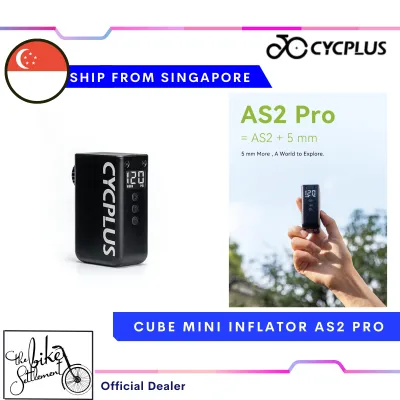
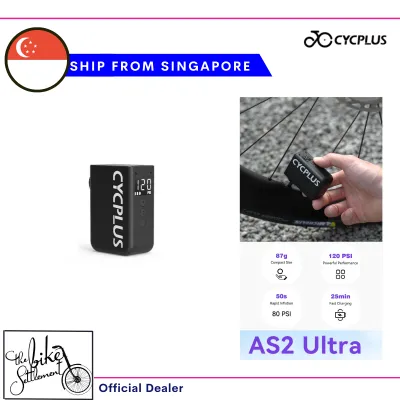
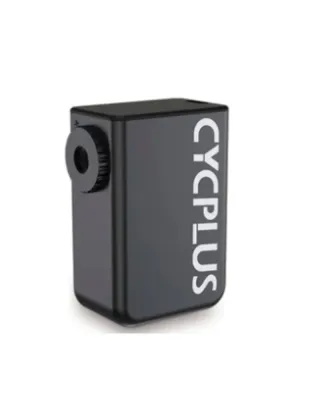
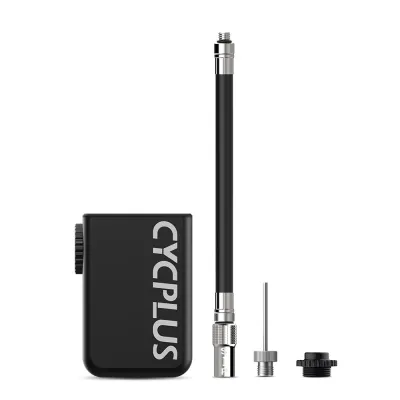
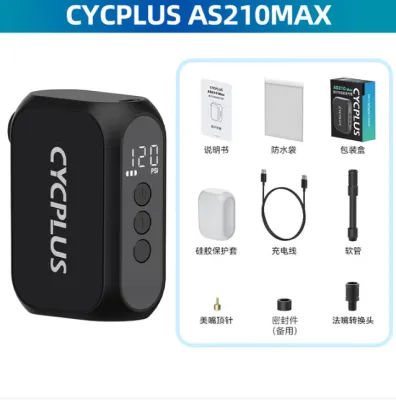
Prices are valid at publication and may change. Please refer to the product page for the latest price.
It is also vital to distinguish between peak pressure claims and sustained working pressure. Running a miniature pump at its absolute limit for extended periods can strain the motor and deplete the battery rapidly. For daily commuting or group rides, choose a pump whose recommended working pressure sits comfortably below its maximum rating to ensure long-term reliability.
Battery Capacity and Charging Realities
The battery capacity of a portable pump, typically measured in milliampere-hours (mAh), determines how many tires you can inflate on a single charge. For a miniature pump like the Cycplus AS2, the battery is optimized for weight savings, meaning its capacity is designed for quick top-ups or one to two full inflations rather than continuous multi-bike servicing. Check the manufacturer’s specification sheet to confirm the exact battery capacity and compare it to the volume of your tires.

Charging convenience is another critical factor. The AS2 utilizes a modern USB-C charging interface, allowing you to recharge it using standard phone chargers, power banks, or even laptop ports. Verify the required input power (such as 5V/1.5A or 5V/2A) on the device’s regulatory label to avoid sluggish charging times.
Real-world battery performance often diverges from controlled laboratory tests due to environmental factors. In warm, humid climates, heat buildup during operation can trigger thermal protection circuits, temporarily halting the pump. Additionally, all lithium-ion batteries experience gradual degradation over time, which reduces their overall capacity. Regularly testing your pump’s battery health before embarking on long, isolated rides is a necessary safety practice.
Portability, Weight, and Build Quality
For cyclists and outdoor sports enthusiasts, every gram matters. The primary appeal of the Cycplus AS2 is its highly compact form factor, which is engineered to fit easily into a jersey pocket, saddle bag, or small backpack. When evaluating its physical specifications, compare its weight and dimensions to common items like a standard smartphone or a multi-tool to visualize its footprint.
The build quality of a portable pump directly influences its durability and safety. A metal casing, often made of aluminum alloy, helps protect the internal components from drops while acting as a heatsink to dissipate the intense heat generated during rapid compression. Because miniature pumps lack large cooling fans, they rely heavily on their material design to manage thermal energy. Check the user manual for recommended cooling intervals between inflation cycles to prevent internal damage.
While exact millimeter measurements are helpful for planning storage space, practical ergonomics are equally important. Consider how the pump feels in your hand during operation, whether it features a secure grip, and how the hose or nozzle storage is integrated. A well-designed, integrated nozzle system reduces the risk of losing small adapters while on the trail.
Valve Compatibility and Included Adapters
Before committing to a portable pump, you must ensure it connects securely to your gear’s valve stems. Bicycle tires primarily use either Presta valves (common on road and high-end gravel bikes) or Schrader valves (standard on mountain bikes, e-scooters, and utility bicycles). The Cycplus AS2 typically features a convertible nozzle head or includes specific adapters to accommodate both types. Check the product packaging to confirm which adapters are included in the standard retail box.
The connection mechanism—whether it is a screw-on thread or a press-fit clamp—affects both ease of use and air retention. Screw-on connections provide a highly secure seal that minimizes air leakage under high pressure, but they require care when detaching to avoid accidentally unscrewing the valve core. Press-fit mechanisms are faster to attach but may require more physical effort to hold steady during high-PSI inflation.
If you plan to use the pump for gear beyond bicycles, such as inflating sports balls, verify if the package includes specialized ball needles. Relying on third-party adapters can sometimes lead to poor seals and inaccurate pressure readings, so utilizing the manufacturer’s official accessories is always recommended.
Decision Checklist: Matching Specs to Your Inflation Needs
To help you decide if the Cycplus AS2 aligns with your outdoor gear, use the following specification matching framework. Compare your primary equipment against the critical performance requirements to identify potential compatibility issues.
| Equipment Type | Typical Valve | Pressure Requirement | Volume Demand | Suitability Check |
|---|---|---|---|---|
| Road Bicycle | Presta | High (80–110 PSI) | Low | Excellent for quick emergency top-ups |
| Mountain Bike | Presta / Schrader | Low (20–45 PSI) | High | Suitable, but requires more battery capacity per fill |
| E-Scooter / Commuter | Schrader | Medium (40–60 PSI) | Low to Medium | Highly suitable for portable maintenance |
| Sports Balls | Ball Needle | Low (4–12 PSI) | Low | Suitable with correct needle adapter |
| Camping Mats | Large Plastic | Very Low (<2 PSI) | Very High | Not recommended; high volume may overheat the motor |
Be aware of spec limitations that serve as red flags. If your primary activity involves inflating high-volume fat-bike tires or multiple tubeless tires that require a sudden burst of air to seat the bead, a miniature pocket pump will not suffice. In these scenarios, you should look for a high-capacity, heavy-duty floor pump or a dedicated CO2 inflator. Always consult the latest digital manual from the manufacturer to check for any regional specification updates or safety warnings before finalizing your purchase.
Frequently Asked Questions (FAQ)
Can the Cycplus AS2 inflate car tires?
No, the Cycplus AS2 is not designed to inflate automotive tires. Car tires require a massive volume of air compared to bicycle tires, even though they operate at lower pressures (typically 30 to 35 PSI). The small motor and limited battery capacity of a pocket pump like the AS2 are optimized for low-volume, high-pressure applications. Attempting to inflate a car tire from flat would deplete the battery rapidly and likely cause the pump to overheat and shut down due to thermal overload. For automotive needs, always carry a dedicated high-volume 12V tire inflator.
Does the pump automatically stop when the target pressure is reached?
You must verify the specific model variant of the Cycplus AS2 you are purchasing, as some entry-level versions do not feature a digital screen or an automatic shutoff sensor. Models equipped with a digital display allow you to preset your target PSI, and the internal pressure sensor will automatically halt the motor once that threshold is met. When detaching the pump from the valve, expect a minor, audible hiss of air escaping; this is normal pressure bleed from the pump’s internal hose and does not significantly impact the overall tire pressure.

Community discussion
Share your experience or ask a question. Comments are reviewed before publication.