
Selecting the right Decathlon kettlebell requires matching the weight and design of the implement to your current physical capabilities, movement familiarity, and specific training objectives. Because kettlebell exercises are highly dynamic, choosing an inappropriate weight can compromise your lifting mechanics or increase the risk of strain. By systematically evaluating your baseline strength, understanding how different exercises demand different loads, and inspecting the physical characteristics of cast iron versus rubber-coated models, you can select a tool that supports safe and steady progression. Whether you are training in a high-rise apartment in Singapore where floor protection is paramount, or setting up a dedicated home gym, a methodical approach to selection ensures your equipment matches your environment and your fitness journey.
Assess Your Current Fitness Level and Training Goals
Before browsing any equipment rack, you must objectively evaluate your current physical baseline and familiarity with ballistic weight training. Kettlebell training differs significantly from traditional dumbbell or barbell exercises because it frequently involves offset loads and explosive, multi-joint movements. A beginner who has never performed a hip hinge should approach weight selection differently than an intermediate lifter who is already comfortable with deadlifts and overhead presses. Assessing your baseline honestly prevents the common mistake of purchasing a weight that is either too heavy to control safely or too light to stimulate muscular adaptation.
Your primary training intentions dictate the type of kettlebell and the weight progression you will need over time. If your goal is cardiovascular conditioning and muscular endurance, you will generally benefit from moderate weights that allow for high-repetition sets of swings, cleans, and snatches. Conversely, if your focus is building raw strength or explosive power, you will eventually require heavier loads that challenge your posterior chain during lower-body movements. Clarifying these goals early helps you decide whether to invest in a single versatile weight or plan for a multi-kettlebell setup that accommodates different training modalities.
Products mentioned in this guide
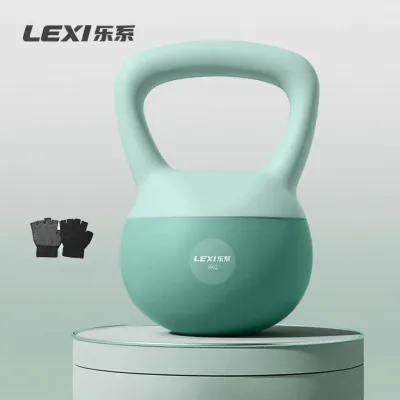

Prices are valid at publication and may change. Please refer to the product page for the latest price.
For those new to kettlebell training, prioritizing movement mastery over load is the most effective path to long-term success. Foundational patterns like the kettlebell deadlift, goblet squat, and basic two-handed swing must be mastered with a manageable weight before you attempt complex, single-arm variations like the snatch or the Turkish get-up. Starting with a conservative weight allows your nervous system, tendons, and stabilizing muscles to adapt to the unique rotational forces of the kettlebell. This disciplined approach builds a solid foundation of joint stability and core control, ensuring that when you do progress to heavier weights, your form remains excellent and your joints remain protected.
Kettlebell Weight Guidelines by Experience Level
While individual strength levels vary, establishing baseline weight ranges provides a practical starting point for your selection process. For individuals who are new to strength training or kettlebell movements, a starting weight range of 4 kg to 8 kg is typically recommended for upper-body exercises and single-arm movements, while 8 kg to 12 kg serves as a manageable baseline for two-handed lower-body exercises. Intermediate trainees who have consistent experience with resistance training can often begin with 12 kg to 16 kg for general movements. Advanced lifters who have mastered hip-hinge mechanics and overhead stability may require 20 kg, 24 kg, or heavier loads to adequately challenge their posterior chain.

It is crucial to understand that a single kettlebell weight is rarely optimal for every exercise in a workout routine. Movement patterns dictate the appropriate load because different muscle groups possess vastly different force-production capabilities. Large, powerful muscle groups utilized in lower-body movements, such as the glutes and hamstrings during deadlifts and swings, can safely handle significantly heavier loads than the smaller stabilizing muscles of the shoulder complex used in overhead presses or windmills. Consequently, a weight that is challenging for a goblet squat might be too heavy for a single-arm overhead press, while a weight suited for a press might feel virtually weightless during a swing.
To address these varying physical demands, acquiring two different kettlebell weights is often the most practical strategy for a balanced home workout. Purchasing a lighter kettlebell allows you to safely learn complex overhead movements, perform high-repetition endurance work, and focus on unilateral stability without straining your joints. A second, heavier kettlebell can then be dedicated to bilateral lower-body movements like deadlifts, squats, and two-handed swings where greater resistance is required to stimulate muscle growth and power. This dual-weight approach ensures that you are neither under-challenging your lower body nor over-exerting your upper body during comprehensive full-body training sessions.
Kettlebell Types and Material Considerations
Decathlon offers kettlebells in different designs and materials, primarily distinguishing between standard cast iron models and competition-style options. Standard cast iron kettlebells feature physical dimensions that scale up as the weight increases; a 4 kg bell is physically much smaller than a 20 kg bell. This scaling affects the handle diameter and the window size, meaning your grip and forearm contact points will change as you move up in weight. In contrast, competition kettlebells maintain uniform external dimensions, handle diameters, and shape across all weight increments, with the internal hollow core adjusted to alter the weight. This uniformity ensures that your lifting technique, rack position, and forearm contact remain identical regardless of whether you are lifting 8 kg or 24 kg.
For home fitness enthusiasts, particularly those living in apartments or shared spaces, the base coating of the kettlebell is a critical consideration. Many standard kettlebells feature a rubberized or polyvinyl chloride (PVC) outer base coating designed to protect indoor flooring from scratches, dents, and impact damage. This protective layer also serves to dampen noise when placing the weight on the floor, which is highly beneficial for maintaining a quiet training environment. If you plan to train on tiled, laminate, or hardwood floors, selecting a model with a durable rubber base can prevent costly floor damage, though using a dedicated training mat is still highly recommended for optimal safety.
The surface treatment of the kettlebell handle directly influences your grip security and overall comfort, especially during high-repetition ballistic movements. Powder-coated cast iron handles offer a slightly textured surface that holds gym chalk exceptionally well, providing a secure grip even when your hands become sweaty in humid climates. Bare steel or polished handles, often found on competition models, are smoother and allow the handle to rotate easily within your palm during cleans and snatches, reducing the friction that can lead to torn calluses. When selecting a kettlebell, consider your local climate, sweat output, and whether you prefer a high-friction grip or a smooth, rotating handle for dynamic movements.
Pre-Purchase Checklist and In-Store Verification
If you have the opportunity to visit a retail store or inspect your purchase upon delivery, performing a physical quality check is highly recommended to ensure comfort and safety. Begin by closely examining the handle diameter and surface texture to ensure it fits comfortably within your grip. Run your hand along the underside of the handle to check for any sharp casting seams, rough burrs, or paint imperfections that could cause friction blisters or skin tears during high-repetition sets. A smooth, consistent handle surface is essential for comfortable training, and any noticeable manufacturing defects should be addressed before finalizing your selection.
Next, place the kettlebell on a completely flat, level surface to verify the stability and flatness of its base. The bottom of the kettlebell must be completely flat and free from wobbling to ensure safety during floor-supported exercises such as renegade rows, push-ups on the handles, or the initial setup of a Turkish get-up. A kettlebell with an uneven or rounded base can tip over unexpectedly under load, posing a significant risk of wrist strain or hand injury. Ensuring the base sits flush against the floor provides a stable platform for both storage and advanced floor-based movements.
Finally, assess the overall balance, weight distribution, and grip comfort by physically holding the kettlebell in various training positions. Clean the bell into the rack position to observe how the body of the kettlebell rests against your forearm; it should sit comfortably on the meaty part of your arm without pressing directly against the wrist bone. Press the kettlebell overhead to verify that you can maintain a neutral wrist alignment without excessive strain. Confirming that the weight markings are clearly visible and permanently molded or engraved into the bell will also ensure easy identification in your training space as your collection grows.
Frequently Asked Questions (FAQ)
How do I maintain and clean my kettlebell?
To maintain your kettlebell and prevent premature wear, wipe down the handle and body with a damp cloth after every training session to remove sweat, skin oils, and chalk residue. If you use gym chalk, a soft-bristled brush can be used to gently clear buildup from the textured handle surfaces without scratching the protective coating. Regularly inspect the kettlebell for any chips in the paint or rubber coating, as exposed cast iron can quickly develop surface rust when exposed to moisture or high humidity. Store your kettlebells in a dry, indoor environment away from direct sunlight and moisture to preserve the integrity of the materials.
When should I upgrade to a heavier kettlebell?
You should consider upgrading to a heavier kettlebell only when you can complete all prescribed sets and repetitions of an exercise with impeccable form, controlled tempo, and zero joint discomfort. A reliable benchmark is the ability to perform high-quality repetitions beyond your target range while maintaining complete core stability and shoulder packing. If you can execute your movements smoothly without losing balance, experiencing lower back strain, or compromising your posture, your body has adapted to the current load. When transitioning to a heavier weight, introduce the new load gradually on basic bilateral movements before attempting complex unilateral exercises.

Community discussion
Share your experience or ask a question. Comments are reviewed before publication.