
Selecting a badminton racket involves looking past flashy paint jobs and professional endorsements to understand how physical specifications affect your performance on the court. Weight, balance, string tension, and shaft stiffness are not just numbers on a frame; they are the mechanical variables that determine how a racket moves through the air and transfers energy to the shuttlecock. Choosing the wrong combination can lead to sluggish defense, weak clears, or even physical strain.
By understanding these specifications, you can align your equipment with your physical capabilities and playing style. Whether you are playing casual weekend games at a local community club court or competing in structured amateur leagues, matching your racket to your actual swing speed and wrist strength is the most effective way to improve your consistency and protect your joints from injury.
Decoding Weight and Balance
The weight of a badminton racket is standardized by manufacturers using a “U” classification system, which you will typically find printed on the cone or shaft. This system operates in reverse: a lower number indicates a heavier racket. For example, a 3U racket generally weighs between 85 and 89 grams, a 4U racket ranges from 80 to 84 grams, and a 5U racket is lighter, usually between 75 and 79 grams. It is important to treat these categories as manufacturing ranges rather than absolute guarantees, as slight variations can occur during production. Heavier rackets (3U) offer more mass behind each hit, which can assist in generating deep clears, but they require more physical stamina to swing repeatedly over a long session.
Products mentioned in this guide
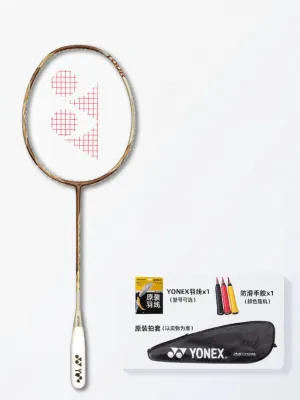
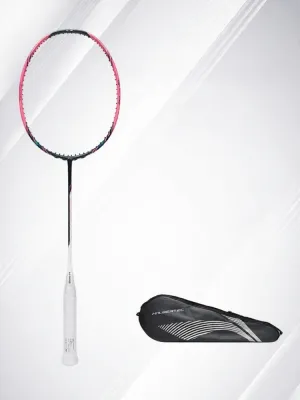

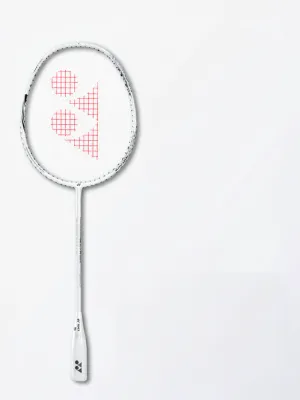
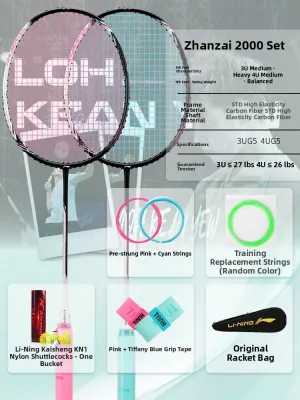
Prices are valid at publication and may change. Please refer to the product page for the latest price.
Equally important is how that weight is distributed, which is defined by the balance point. Measured in millimeters from the bottom of the handle, the balance point categorizes rackets into head-heavy, head-light, or even-balance. A head-heavy racket concentrates mass toward the top of the frame, shifting the center of gravity forward. This design maximizes momentum during overhead swings, making it easier to produce powerful smashes. Conversely, a head-light racket shifts the weight toward the handle, reducing swing resistance and allowing for rapid defensive blocks and quick net play. Even-balance rackets attempt to split the difference, offering a middle ground for all-around players.
Choosing between these configurations involves a direct trade-off between maneuverability and power. A head-heavy, heavy racket can feel sluggish during fast-paced doubles rallies where quick reactions are vital. On the other hand, an ultra-light, head-light racket may require you to exert excessive physical effort to push the shuttlecock to the opponent’s baseline. Evaluating your physical endurance and the speed of your typical rallies will help you decide which side of this trade-off suits you best.
Understanding String Tension and Shaft Stiffness
String tension and shaft stiffness are the primary factors governing how a racket interacts with the shuttlecock at the moment of impact. String tension is measured in pounds (lbs), and finding the right level is a balance between control and repulsion. Lower tensions, typically between 20 and 24 lbs, create a “trampoline effect” where the string bed flexes deeply, offering high repulsion power and a larger sweet spot. This setup is highly forgiving for developing players who may not always hit the exact center of the racket. Higher tensions, ranging from 26 to 30 lbs or more, create a rigid string bed that offers precise control and placement, but the sweet spot shrinks significantly.

Shaft stiffness dictates how much the racket bends during your swing. Rackets range from flexible to extra stiff. A flexible shaft bends easily, storing energy during the backswing and releasing it as it whips forward, which helps players with slower swing speeds generate depth. A stiff shaft, however, does not bend easily; it requires a highly explosive swing and precise timing to load and release energy effectively. If your swing speed is fast enough to flex a stiff shaft, you will experience highly direct energy transfer and excellent control over the shuttlecock’s trajectory.
A common mistake among developing players is assuming that higher tension or a stiffer shaft will automatically yield more power. In reality, these advanced specifications demand exceptional technique, wrist speed, and physical conditioning. If you play with a racket that is too stiff or strung at a tension beyond your capability, the racket will not flex, resulting in weak clears and a high risk of shoulder or elbow strain. It is generally safer to start with a medium-flex shaft and moderate tension, gradually increasing these specs as your physical strength and hitting technique mature.
Matching Specs to Your Playing Style
To find the right racket, you must match these technical specifications to your typical court positioning and physical strengths. If you are an aggressive baseline attacker who prefers singles or plays the rear-court role in doubles, a head-heavy racket with a 3U or 4U weight and a medium-to-stiff shaft can help you maximize your smash potential. If you prefer a fast-paced, defensive game focused on quick drives, net drops, and rapid interceptions at the front court, a head-light or even-balanced 4U or 5U racket with a medium-flex shaft will serve you much better.
Your physical health and wrist speed should always take priority over professional endorsements or marketing trends. Professional players possess highly conditioned forearm muscles and refined techniques that allow them to swing heavy, extra-stiff rackets strung at high tensions for hours. For recreational players, prioritizing joint health and comfort is essential. If you experience persistent wrist or elbow fatigue after playing, switching to a lighter racket or a more flexible shaft can reduce the physical toll of your games. Always check the manufacturer’s official spec sheets, as naming conventions and weight tolerances can vary slightly between different brands.
How to Verify Racket Specs Before Buying
Before making a purchase, take practical steps to confirm that a racket matches its advertised specifications. Start by consulting the manufacturer’s official specification chart, which is often printed on the shaft or available on their official website, to verify the exact weight range and balance point. If you are shopping at a physical sports retailer, you can perform a simple check by balancing the racket on your index finger at its designated balance point to feel how the weight is distributed. You should also inspect the shaft flex label to ensure it matches your preference.
Keep in mind that factory-strung rackets are usually strung at a low, generic tension using basic strings that lose tension quickly. To get the best performance out of your new racket, plan to have it re-strung by a professional stringer to match your specific tension preferences. This allows you to select a string type and tension that complement your playing style from your very first session on the court.
Frequently Asked Questions (FAQ)
Does a more expensive racket always have better specs?
Not necessarily. Premium rackets often feature advanced carbon fiber composites and specialized frame geometries designed for extreme stiffness or specific weight distributions. While these high-end materials offer excellent performance for advanced players, they do not make a racket universally better. If your technique and swing speed do not match the demanding specifications of a premium, extra-stiff racket, you may find it harder to play with than a more affordable, flexible model.
Can I change my racket's balance point after buying it?
Yes, you can make minor adjustments to your racket’s balance point and overall weight, though you cannot alter its inherent shaft stiffness. Adding lead tape to the top of the frame will increase head weight, shifting the balance point forward for more smash momentum. Conversely, adding a thicker replacement grip or an extra overgrip will add weight to the handle, shifting the balance point downward to make the racket feel more head-light.

Community discussion
Share your experience or ask a question. Comments are reviewed before publication.