
Elastic hooks, such as common bungee cord attachments or utility tie-downs, are entirely unsafe for any life-safety, load-bearing, or fall-protection applications in climbing. Under no circumstances should these items be used to support human weight, secure anchors, or connect critical safety systems. Their mechanical design and material composition are fundamentally incapable of handling the dynamic forces generated during a fall. While they may occasionally serve minor, non-load-bearing utility roles—such as bundling loose apparel or securing a lightweight chalk bag—even these uses must be managed with extreme care to avoid interfering with primary safety gear.
Are Elastic Hooks Safe for Climbing Applications?
When preparing gear for an outdoor climb or a session at a local climbing gym in Singapore, distinguishing between life-safety equipment and general utility accessories is a matter of survival. Life-safety gear is designed, tested, and certified to hold human weight and absorb the massive dynamic forces of a fall. Elastic hooks, commonly found on bungee cords or cargo nets, belong strictly to the category of light utility tools and have no place in a climbing safety chain.
Using a standard elastic hook for anchoring, belaying, or fall protection carries an immediate risk of catastrophic failure. These hooks are typically made of thin wire, plastic, or low-grade stamped metals that can easily bend, snap, or unclip under minimal tension. They are designed to hold static, low-weight loads like luggage or bicycle cargo, not the dynamic, high-impact forces of a falling climber.
Products mentioned in this guide

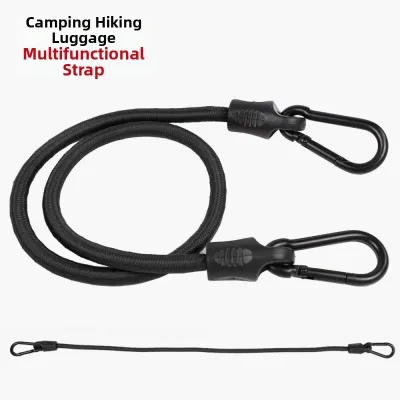
Prices are valid at publication and may change. Please refer to the product page for the latest price.
The primary danger lies in the fundamental difference between static tensioning and dynamic load-bearing. Climbing gear must withstand forces measured in kilonewtons (kN), where one kilonewton represents roughly 100 kilograms of force. A typical elastic hook or bungee cord is rated only for light loads, often failing under a fraction of a single kilonewton.
There are, however, highly restricted, non-load-bearing scenarios where elastic elements are integrated into climbing systems. For example, some specialized climbing harnesses feature thin elastic straps at the rear to keep the leg loops positioned correctly, and some gear slings use elastic cords to keep accessories organized. These components are explicitly designed by climbing manufacturers and are never used to secure a climber to the wall or anchor.
If you choose to use a small elastic loop or utility hook to secure a lightweight accessory—such as a water bottle or a camera—to your harness gear loop, you must ensure it cannot be mistaken for a load-bearing connector. The accessory must be positioned so that it does not interfere with your belay loop, climbing rope, or active protection. Even in these minor roles, any failure of the elastic hook could result in dropped gear, posing a severe hazard to climbers below you.
How to Verify Safety Standards for Climbing Gear
To ensure your climbing gear is capable of keeping you safe, you must learn to identify legitimate safety certifications. Any connector, sling, or device that forms part of your safety system must carry recognized climbing-specific certification marks. The two most critical standards to look for are the CE (Conformité Européenne) mark and the UIAA (Union Internationale des Associations d’Alpinisme) watermarked label.

The CE mark indicates that the equipment complies with European safety standards for Personal Protective Equipment (PPE). For climbing connectors like carabiners, the relevant standard is EN 12275, which defines the safety requirements and testing methods for mountaineering connectors. When inspecting a carabiner, look for the CE logo followed by a four-digit number, which identifies the independent testing laboratory that certified the product.
The UIAA standard is often even more stringent, developed specifically by climbers and safety experts to address the unique demands of mountain sports. A UIAA certified piece of gear has undergone rigorous testing to ensure it can withstand real-world climbing forces and environmental conditions. If a connector or sling does not display either a CE or UIAA mark, it should never be used for climbing.
In contrast, general cargo straps, tie-downs, and elastic cords are manufactured to entirely different standards, if any at all. These utility items are often rated only for working load limits under static conditions, with no consideration for dynamic impact, drop testing, or edge-loading. Relying on a utility rating for climbing applications is a critical error, as these ratings do not guarantee the structural integrity required to arrest a fall.
Before using any new piece of gear, always read the manufacturer’s explicit instructions and verify the load ratings stamped directly onto the body of the equipment. Legitimate climbing carabiners will have their minimum breaking strength marked in kilonewtons (kN) for three distinct loading scenarios: the major axis (gate closed), the minor axis (cross-loaded), and with the gate open. If these markings are missing, illegible, or replaced by vague terms like “not for climbing,” the item must be kept far away from your climbing kit.
Mechanical Risks of Using Elastic Hooks on the Crag
The physical environment of an outdoor crag or an indoor climbing wall exposes gear to unpredictable movements, vibrations, and surface contact. Elastic hooks possess several mechanical vulnerabilities that make them highly dangerous in these settings. The most prominent risk is the complete lack of a secure locking mechanism on standard elastic hooks.
Without a locking gate, an elastic hook is highly susceptible to accidental unclipping. As a climber moves, the elastic cord can stretch, twist, or bounce, causing the hook to shift against the rock face, a bolt hanger, or a harness loop. This movement can easily force the hook open, leading to an immediate detachment of whatever it was holding.
Furthermore, elastic hooks are prone to a phenomenon known as gate flutter or dynamic unclipping. When gear experiences sudden vibrations or impacts—such as when a climber falls or the rope snaps taut—the gate of an un-stabilized hook can vibrate open due to inertia. If a load is applied at the exact millisecond the gate is open, the strength of the connector drops dramatically, leading to sudden failure.
The materials used in elastic hooks also present severe safety concerns. Unlike forged aluminum or steel climbing carabiners, which are engineered to resist abrasion and structural fatigue, elastic hooks often utilize cheap plastics or low-grade wire. These materials degrade rapidly when exposed to the intense UV radiation and high humidity typical of tropical climbing environments like Singapore. Over time, the elastic core loses its elasticity, and the hook itself becomes brittle and prone to snapping without warning.
Finally, elastic materials are completely incapable of absorbing or managing dynamic shock forces. When a climber falls, the safety system must absorb a massive surge of kinetic energy. A climbing rope is designed to stretch dynamically to reduce this force, but an elastic hook will simply stretch to its limit and snap, or recoil violently, potentially causing severe injury to the climber or belayer from the rebounding metal or plastic hook.
Safe Alternatives for Gear Attachment and Management
For every task where you might be tempted to use an elastic hook, there is a safer, purpose-built climbing alternative. When it comes to load-bearing connections, you must rely exclusively on certified climbing carabiners. Non-locking carabiners are suitable for quickdraws where fast clipping is required, while locking carabiners (screw-gate, twist-lock, or magnetic) must be used for anchors, belay devices, and critical master points.
For managing and securing lightweight accessories, tools, or water bottles, you should select purpose-built gear leashes or retractable tool tethers. These accessories are designed specifically for outdoor use, featuring secure screw-gate accessory carabiners or high-strength cord loops that prevent accidental drops without risking entanglement. They are engineered to break away under a specific, low threshold if they become caught on a rock feature, preventing the climber from being pulled off balance.
Harness gear loops are the standard, engineered solution for organizing your equipment while climbing. Most modern harnesses feature rigid, molded gear loops designed to keep your quickdraws, cams, and nuts easily accessible and clear of your active safety system. Utilizing these loops correctly eliminates the need for makeshift elastic cords or hardware store hooks.
If you are ever unsure about the safety, application, or certification of a specific piece of gear, you must stop and seek professional guidance. Consult a certified climbing instructor, an experienced guide, or a reputable gear specialist at a dedicated climbing shop. Equipment cannot replace proper training, sound judgment, and a thorough understanding of climbing safety systems.
Frequently Asked Questions (FAQ)
Can I use a bungee cord to secure my climbing rope in a bag?
Yes, using a bungee cord or an elastic strap to compress and secure your climbing rope inside a rope bag or backpack is perfectly acceptable. During transport, the rope is not under active tension, and the elastic cord simply serves to keep your gear organized and compact. However, you must ensure that the hooks of the bungee cord are never clipped to your harness, gear loops, or any part of the active climbing system. Once you arrive at the crag or gym and prepare to climb, the bungee cord should be removed entirely and stored safely inside your bag to prevent any accidental confusion with your load-bearing gear.
How do I read the strength ratings on climbing carabiners?
Certified climbing carabiners feature specific strength ratings stamped directly onto their spine, measured in kilonewtons (kN). You will typically see three distinct numbers alongside icons representing different loading directions. The first number, usually the highest (often 20 kN or more), represents the major axis strength when the gate is fully closed and locked. The second number represents the minor axis or cross-loaded strength, which occurs when the carabiner is pulled sideways (typically around 7 to 10 kN). The third number indicates the open-gate strength, which is significantly lower (often 7 to 9 kN). Always rely strictly on these stamped ratings and official CE or UIAA certifications, and never attempt to estimate the strength of unrated utility hooks.

Community discussion
Share your experience or ask a question. Comments are reviewed before publication.