
A retractable hook intended for climbing, via ferrata, or personal fall protection must carry specific, verifiable safety certifications explicitly rated for human fall arrest. Relying on uncertified hardware or tool-rated tethers for climbing is extremely dangerous, as only human-rated personal protective equipment (PPE) is designed and tested to withstand and dissipate the dynamic forces generated during a human fall. To ensure your safety on the rock or at height, you must verify that the device complies with rigorous international standards, such as those established by the European Committee for Standardization (CEN) and the International Climbing and Mountaineering Federation (UIAA). Equipment alone cannot replace proper training and sound judgment, but using certified gear is the baseline requirement for any vertical activity.
Key Safety Standards to Look For on Your Gear
To guarantee that a retractable hook is safe for human suspension and fall arrest, it must display specific certification marks and standard numbers. The most widely recognized standard for retractable fall arresters is EN 360 (European Standard for personal protective equipment against falls from a height – retractable type fall arresters). When a retractable hook is integrated into a lanyard or lifeline system, this standard ensures the device will lock automatically during a sudden acceleration, limiting the fall distance and reducing the impact force transmitted to the user’s body.
Additionally, the connector or hook itself must comply with EN 362 (European Standard for connectors used for protection against falls from a height). This certification guarantees that the gate, hinge, and body of the hook can withstand specific static loads—typically at least 20 kilonewtons (kN) with the gate closed—without breaking or opening under tension.
Products mentioned in this guide
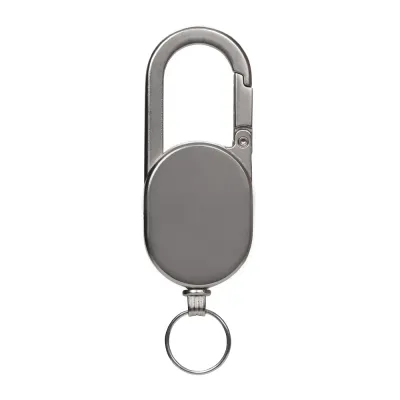
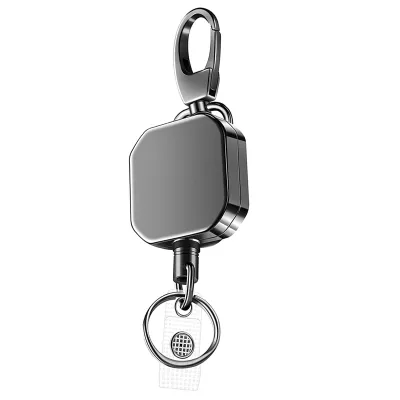
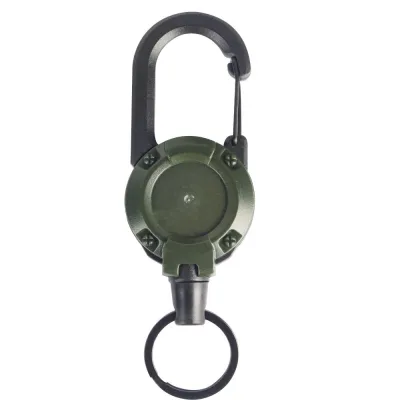
Prices are valid at publication and may change. Please refer to the product page for the latest price.
For recreational climbing and mountaineering, look for the UIAA safety label. The UIAA harmonizes international standards and often adds stricter dynamic testing requirements than standard European Norms. A UIAA 121 certification, for example, applies specifically to connectors and carabiners, ensuring they are optimized for the dynamic environments of rock climbing, where ropes and hardware must slide and pivot smoothly under unpredictable angles.
When examining your gear, you should also look for a four-digit number adjacent to the CE mark (for example, CE 0123 or CE 0082). This number identifies the “notified body,” which is the independent, accredited testing laboratory responsible for auditing the manufacturer’s quality control and production processes. In North America, look for compliance with ANSI/ASSP Z359.14 (safety requirements for self-retracting devices for personal fall arrest), which categorizes devices based on their arrest distance and suitability for leading-edge work.
Risks of Using Uncertified or Misapplied Retractable Hooks
Using uncertified hardware or misapplying a device designed for another purpose can lead to catastrophic equipment failure. A common and highly dangerous mistake is confusing a retractable tool lanyard with a personal retractable fall arrester. Tool lanyards are engineered solely to prevent dropped objects from injuring workers below; they are typically rated for loads under 10 kilograms and lack any mechanism to absorb the massive kinetic energy of a falling human.

During a dynamic climbing fall, a human body can easily generate forces exceeding 12 kN depending on the fall factor and rope stretch. If you use an uncertified retractable hook or a tool-rated device, the internal components—such as the spring, the locking pawls, or the textile webbing—will likely shear or snap instantly. Uncertified hooks often use low-grade alloys or plastic housings that cannot survive the rapid deceleration forces of a fall.
Furthermore, generic marketing claims like “heavy-duty,” “tactical grade,” or “climbing-style” carry no legal or technical weight. Manufacturers of non-climbing hardware often use these terms to appeal to outdoor enthusiasts, but without a specific EN, UIAA, or ANSI standard printed on the device, the hook is not rated for human load. Relying on uncertified gear introduces an unacceptable point of failure into your safety chain, where a single structural weakness can result in a ground fall.
How to Verify Certifications and Inspect Your Gear Before Use
Before trusting your life to a retractable hook, you must perform a systematic pre-use inspection and verify its certification credentials. Start by locating the physical label or laser etching on the device’s body or the stitched sleeve of the webbing. This label must be completely legible and contain the manufacturer’s name, the model number, a unique serial number, the year of manufacture, and the specific standards met (such as EN 360 or EN 362). If the label is missing, painted over, or worn away, the gear must be treated as uncertified.
Next, conduct a thorough physical inspection of the entire unit. Pull the webbing or cable out slowly to its full extension, checking every centimeter for signs of wear, abrasion, cuts, chemical staining, or heat damage. For textile webbing, look closely for frayed edges or broken stitching. For steel cables, inspect for kinks, broken strands, or corrosion.
Test the retraction mechanism by pulling out a short length of line and letting it retract. It should pull back smoothly and completely without any hesitation, sticking, or slack. To test the locking mechanism, pull the line sharply; the internal brake or pawls should engage instantly, stopping the line from paying out.
Finally, inspect the hook and its gate mechanism. The gate must open smoothly and close automatically under spring tension. For climbing and fall protection, the hook must feature a self-locking gate that requires at least two distinct manual actions to open (such as twisting and pressing). Check for any cracks, deep gouges, or deformation in the metal body of the hook. Cross-reference the serial number on the device with the manufacturer’s official user manual or digital registry to confirm its authenticity and check for any active product recalls.
When to Stop Using and Retire Your Retractable Hook
Even the highest-quality, fully certified retractable hook has a limited operational lifespan and must be retired immediately under specific conditions. The most critical rule is the “single-fall” retirement policy: if the device has arrested a single fall or experienced a severe shock load, it must be removed from service immediately. Many retractable fall arresters feature a built-in impact indicator—often a red band or a stitched fold near the hook that ruptures under high tension. If this indicator is visible, the device is no longer safe to use.
You must also retire the gear if the certification label becomes illegible, detached, or faded beyond recognition. Without a clear serial number and standard marking, it is impossible to verify the age, history, or compliance of the device during routine safety audits. Most manufacturers specify a maximum lifespan for textile-based components (typically 5 to 10 years from the date of manufacture, even if stored unused), after which the materials degrade naturally and lose their rated strength.
Mechanical red flags are another immediate trigger for retirement. If you notice sluggish retraction, a sticking gate, unusual grinding noises from the internal spring, or any visible deformation of the metal hook, stop using the device immediately. Do not attempt to lubricate, disassemble, or repair the internal braking mechanism yourself; any maintenance must be performed by the manufacturer or an authorized service center. When in doubt about the integrity of your gear, always err on the side of caution and destroy the device to prevent anyone else from using it.
Frequently Asked Questions (FAQ)
Can I use a retractable tool lanyard for climbing fall protection?
No, you must never use a retractable tool lanyard for climbing or human fall protection. Tool lanyards are designed exclusively to prevent lightweight equipment from falling and do not possess the structural strength or the energy-absorbing mechanisms required to safely arrest a human body. Using a tool lanyard for climbing will result in catastrophic gear failure or severe, life-threatening impact forces on your body during a fall.
Does a CE mark alone guarantee the hook is safe for climbing?
No, a standalone CE mark is not sufficient proof of safety for climbing. The CE mark simply indicates compliance with European Union directives, which can apply to toys, electronics, or general hardware. For climbing and fall protection, the CE mark must be accompanied by the specific standard number for personal protective equipment—such as EN 360 for retractable fall arresters or EN 362 for connectors—along with a four-digit notified body number that identifies the independent testing laboratory.

Community discussion
Share your experience or ask a question. Comments are reviewed before publication.