
When your hands begin to slip during a heavy set of deadlifts or rows, your workout shifts from targeting your back and legs to a desperate battle against gravity. To solve this grip bottleneck, lifters often look to gym accessories, but choosing the right tool requires understanding their fundamentally different mechanics. Lifting straps directly bypass your grip limits by mechanically looping your wrists to the barbell, allowing you to pull heavy loads even when your hands are fatigued. In contrast, exercise bands do not secure your hands to the weight; instead, they alter the total load of the movement through elastic tension, either assisting your body weight or adding variable resistance. Choosing between them depends entirely on whether your primary bottleneck is a failing hand grip or the overall muscular strength required to complete the movement.
How Lifting Straps and Exercise Bands Actually Work
Lifting straps are simple, non-elastic accessories typically made of heavy-duty cotton, nylon, or leather. They wrap securely around your wrists and loop tightly around the barbell, dumbbell, or handle. By creating a physical bridge between your arm and the bar, they transfer the pulling force directly from the weight to your wrists and forearms. This mechanical connection reduces the active muscular effort required by your fingers and hands to hold onto the bar, allowing you to focus entirely on the target muscle groups during heavy pulling exercises.
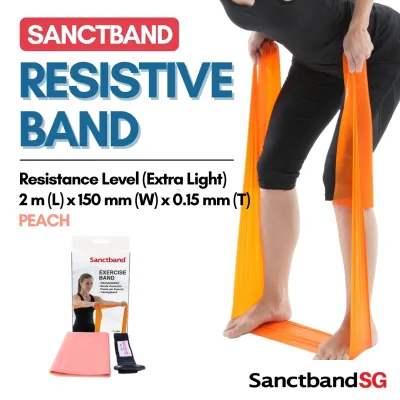
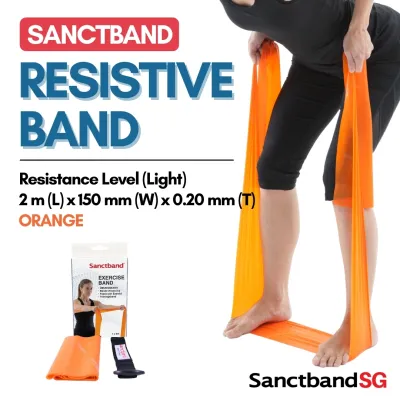
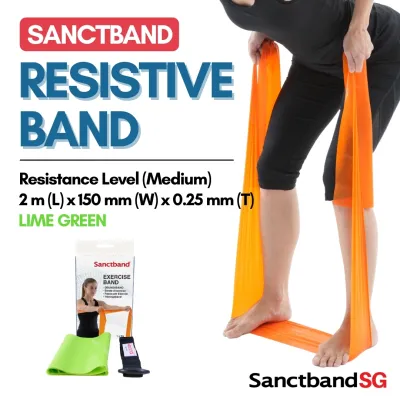
Exercise bands, on the other hand, operate on the principle of progressive elastic tension. Made of latex or synthetic rubber, these loops stretch to provide a continuous, variable force throughout an exercise’s range of motion. When used for assistance, such as in a pull-up, the band is anchored above you and placed under your feet or knees, providing an upward pull that lightens the load at the bottom of the movement. When used for resistance, the band is anchored below or behind you, increasing the pulling difficulty as the band stretches.
Products mentioned in this guide


![[RECEIVE IN 3 DAYS] Looped Resistance Exercise Yoga Bands](https://img.lazcdn.com/g/p/478c71011ff76f1dc2636e7c42012a8d.jpg_400x400q80.jpg_.webp)
![[Ships From SG] Resistance Band Power Stretch Band Sports Fitness Recovery Warm-Up Muscle Strength Pull Up Gym Yoga](https://img.lazcdn.com/g/p/41f91314a296be8807bf5f66c3355de4.jpg_400x400q80.jpg_.webp)
Prices are valid at publication and may change. Please refer to the product page for the latest price.
The fundamental difference lies in how they interact with your hands. Lifting straps act as a mechanical extension of your hands, locking you onto the weight so that grip fatigue is no longer the limiting factor. Exercise bands do not secure your hands to any object; they simply change the resistance profile of the exercise. If you use an exercise band to add resistance to a row, your hands must still grip the handle or the band itself, which actually increases the demand on your grip rather than supporting it.
When to Use Lifting Straps for Heavy Pulls
Lifting straps are highly effective tools when your target muscles, such as the latissimus dorsi, trapezius, or hamstrings, are capable of moving more weight than your hands can physically hold. This discrepancy is common in heavy compound movements like deadlifts, barbell rows, Romanian deadlifts, and heavy shrugs. Using straps in these scenarios ensures that your back and posterior chain receive a sufficient training stimulus without being cut short by a premature loss of hand strength.

To use lifting straps safely, you must master the proper wrapping technique. Loop the strap around your wrist, feed the tail end under the bar from back to front, and wrap it securely around the steel. Once wrapped, rotate the bar toward you to tighten the slack, ensuring a snug fit. It is critical to wrap the strap in a way that allows for a quick release; you should be able to let go of the bar instantly by simply opening your hand. Never wrap the strap in a complex knot that could trap your wrists to a falling barbell, as this can lead to severe wrist or shoulder injuries during a failed lift.
While straps are invaluable for overloading target muscles, there are specific conditions where you should stop using them. If your training goal is to build raw, unassisted grip strength, relying on straps for every set will hinder your forearm development. Additionally, if you are preparing for powerlifting competitions, you must train without straps on your main lifts, as competitive federations strictly prohibit their use. A balanced approach involves performing your warm-up and moderate sets with a raw grip, reserving straps only for your heaviest working sets.
When to Use Exercise Bands for Pulling Movements
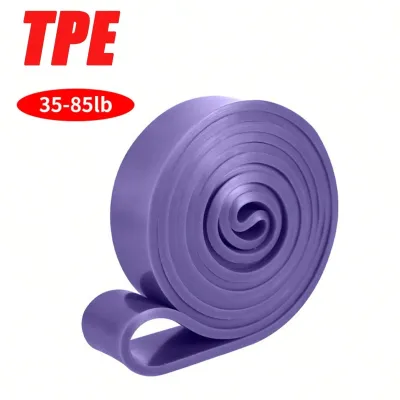
Exercise bands serve a completely different purpose in pulling routines, focusing on load modification rather than grip reinforcement. One of their most common applications is providing assistance during bodyweight pull-ups and chin-ups. For lifters who cannot yet pull their own body weight, looping a band over the pull-up bar and placing their feet in the loop reduces the effective load at the bottom of the movement, where the body is mechanically weakest. This allows you to build the necessary vertical pulling strength and movement patterns without your grip or upper body strength failing immediately.
Conversely, you can use exercise bands to introduce variable resistance to traditional pulling exercises like rows. By anchoring a band to the floor and wrapping it around a barbell, the resistance increases dynamically as you pull the bar toward your torso. This matches the natural strength curve of a row, where you are stronger at the start of the pull and weaker at the top contraction. However, because the band adds tension as it stretches, this setup actually increases the demand on your grip, requiring your hands to squeeze harder to maintain control at the peak of the movement.
It is vital to recognize that exercise bands are not a substitute for lifting straps when it comes to securing heavy weights. Because bands do not mechanically lock your hands to the barbell, they cannot prevent the bar from slipping out of your hands during a heavy deadlift. Attempting to use bands to somehow support your grip on a heavy barbell is highly unsafe and ineffective. Bands are designed to modify the resistance curve or assist your body weight, not to reinforce a failing hand grip on heavy metal objects.
Key Factors to Check Before You Buy
Before purchasing either accessory, you should carefully evaluate their physical specifications and safety features to ensure they match your training level and body size. For lifting straps, inspect the material and construction quality. Cotton straps are generally softer and more comfortable on the skin, while nylon straps are highly durable but can be slicker and harsher on the wrists. Leather straps offer a premium, molded fit over time but require a break-in period. Check the stitching along the loops and edges; look for reinforced, double-stitched seams that can withstand high tension without fraying.
Sizing is another critical factor for lifting straps. Ensure the strap length is sufficient to wrap around the bar at least once or twice, depending on the style (such as lasso, single-loop, or figure-8). The width should be comfortable across your wrist, distributing the weight evenly without cutting off blood circulation or pinching the skin. If you have smaller wrists, excessively wide or thick straps can feel bulky and make it difficult to get a tight wrap around standard barbell shafts.
When selecting exercise bands, pay close attention to the manufacturer’s labeled tension ranges, which are typically color-coded. Always inspect the bands before use for any signs of wear, such as micro-tears, discoloration, or dry rot caused by UV exposure. A compromised band can snap violently under tension, posing a severe risk of injury to your eyes or skin. Additionally, verify the manufacturer’s weight limits and specific safety warnings, ensuring the bands are rated for the dynamic loads you plan to apply during your workouts.
Decision Framework: Which Should You Add to Your Gym Bag?
To decide which accessory deserves a spot in your gym bag, you must evaluate your specific training goals, current physical limitations, and safety requirements. If your primary bottleneck is that your hands slip during heavy deadlifts, rows, or shrugs, lifting straps are the correct choice. They will allow you to continue overloading your target muscles safely without your grip strength acting as a limiting factor.
Choose exercise bands if your training focus is on bodyweight progression, joint mobility, or adding variable resistance to your lifts. They are ideal for assisting with pull-ups or performing high-repetition, low-impact pulling movements that build muscular endurance and shoulder health. If you budget for these accessories, expect to invest around S$15 to S$30 for a durable pair of lifting straps, while a high-quality set of multi-resistance exercise bands typically ranges from S$25 to S$60.
However, neither tool may be suitable if you are training for competitive powerlifting or Olympic weightlifting, where strict rules govern equipment use, or where quick-release safety is paramount. Furthermore, if you have pre-existing wrist, hand, or shoulder injuries, you must exercise caution. Always consult a physical therapist or qualified sports professional to verify if using straps or bands is safe for your joints, and carefully check the manufacturer’s safety instructions to avoid aggravating any underlying physical conditions.
Frequently Asked Questions (FAQ)
Can I use both lifting straps and exercise bands in the same workout?
Yes, you can safely integrate both tools into a single training session, provided you use them for their intended purposes. For example, you might start your workout with heavy barbell deadlifts or rows using lifting straps to maximize back stimulation. Afterward, you can transition to assisted pull-ups or high-repetition band rows using exercise bands to focus on muscular endurance and volume. Ensure you clear your lifting area of any loose bands before performing heavy barbell lifts to prevent tripping hazards.
Do lifting straps weaken your grip over time?
Lifting straps will only weaken your grip if you rely on them excessively for every exercise and set. If you use straps for light warm-ups, bicep curls, and moderate pulls, your forearms will miss out on the active stimulation needed to build natural grip strength. To prevent this, perform as many sets as possible with a raw grip, and only apply straps when the weight becomes too heavy for your hands to hold securely. Incorporating dedicated grip training, such as farmer’s walks or plate pinches, can also help maintain balanced forearm development.

Community discussion
Share your experience or ask a question. Comments are reviewed before publication.