
Choosing between fabric and latex resistance bands can completely alter your yoga practice, affecting how securely you hold poses and how comfortable your stretches feel. Fabric bands excel in providing a secure, non-slip grip and exceptional comfort against bare skin, making them highly suitable for restorative poses, deep stretches, and static holds. On the other hand, latex bands offer highly elastic, multi-directional stretch that accommodates dynamic flows, mobility work, and upper-body movements. The ideal choice depends on your specific yoga style, skin sensitivity, and the level of support your practice demands.
Core Differences in Grip and Skin Comfort
When selecting gear for your yoga practice, matching the material to your environment and skin contact is essential. Fabric bands are woven with a blend of cotton or polyester and elastic fibers. This creates a textured, wide surface that naturally clings to skin or clothing without sliding, making them highly reliable for home practices or air-conditioned studios. When holding a pose like the Reclining Hand-to-Big-Toe Pose (Supta Padangusthasana), a fabric band stays flat against your foot or leg. It distributes pressure evenly, preventing the painful pinching or digging that often occurs with thin materials, which is especially beneficial for beginners who are still developing their flexibility and skin tolerance to tension.
Latex bands, by contrast, have a smooth, rubbery surface. While this provides excellent tension, it can easily slip on sweaty skin, making them less ideal for high-humidity environments or intense hot yoga sessions unless you use a towel. Under tension, latex bands also have a tendency to roll up into tight, rope-like bands. This rolling concentrates the pressure on a narrow strip of skin, which can disrupt your focus during balancing poses. To mitigate slipping, some fabric bands feature inner silicone strips woven into the fabric. You should check the manufacturer’s product specifications to verify if these non-slip elements are present, especially if you sweat heavily during your practice. For latex bands, some manufacturers apply a light powder coating to reduce stickiness and rolling. If you prefer latex, look for powder-coated options or consider wearing full-length leggings and long sleeves to act as a protective barrier.
Products mentioned in this guide



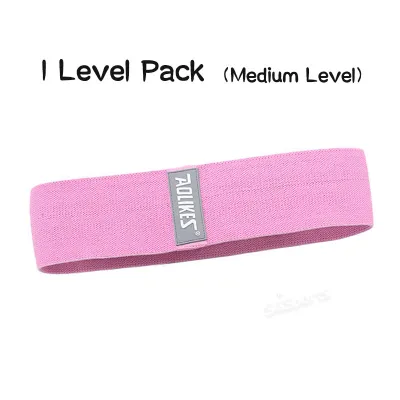
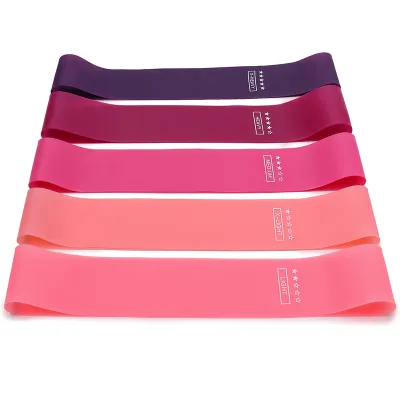


Prices are valid at publication and may change. Please refer to the product page for the latest price.
Support, Tension, and Stretch Dynamics
The physical structure of fabric limits its maximum elongation, which fundamentally changes how it supports your body. This rigidity is highly beneficial when you need a stable, unyielding anchor to assist with deep, passive stretches or to stabilize your joints. In restorative or Yin yoga, a fabric band acts more like a flexible yoga strap, providing a firm limit that helps you maintain alignment without requiring active muscular effort to keep the band from over-stretching. This makes fabric bands excellent for beginners who need reliable structural feedback to avoid over-extending their joints.

Latex bands offer a highly elastic, progressive resistance profile. The further you stretch the band, the more resistance it generates, allowing for smooth, multi-directional movements. This high elasticity makes latex ideal for dynamic vinyasa flows or mobility exercises where you want to transition smoothly between poses. For example, during shoulder flossing or upper-body opening sequences, the band stretches easily to accommodate your full range of motion. However, because latex stretches so far, it offers less structural support for heavy weight-bearing or deep static holds. If you rely on the band to support the weight of your torso or limbs, a latex band may stretch too much, causing you to lose your alignment. Before starting your practice, always verify the stated resistance levels and maximum elongation limits printed on the product packaging. Over-stretching any band beyond its designed limit can lead to sudden snapping, which poses a safety risk during delicate balancing poses.
Durability, Maintenance, and Lifespan
Fabric bands are exceptionally durable and highly resistant to sudden snapping. The woven outer layer protects the internal elastic threads from external cuts, making them a safer choice for high-tension stretches. Maintaining fabric bands is relatively straightforward, as most can be machine washed. However, you must check the care label first; washing them in hot water or drying them on high heat can degrade the internal rubber or elastane strands, causing the band to lose its elasticity prematurely.
Latex bands are much more sensitive to environmental factors, particularly when practicing outdoors or in sunny spaces. Exposure to sweat, body oils, and ultraviolet (UV) light can cause the natural rubber to degrade, dry out, and become brittle. Over time, a neglected latex band can develop micro-tears that are difficult to see at a glance. These tiny tears compromise the structural integrity of the band, making it highly susceptible to snapping unexpectedly during use. To prolong the lifespan of a latex band, you should wipe it down with a damp cloth after every session to remove sweat and oils. Store it in a cool, dark place away from direct sunlight, and consider applying a small amount of talcum powder occasionally to prevent the sides from sticking together. Regardless of the material you choose, establish a habit of inspecting your equipment before every yoga session. Look for fraying threads or loose stitching on fabric bands, and check latex bands for discoloration, stickiness, or tiny cracks along the edges.
Comparison Matrix: Fabric vs. Latex for Yoga
| Feature | Fabric Bands | Latex Bands |
|---|---|---|
| Grip on Bare Skin | High; textured surface prevents slipping and rolling | Low to moderate; can stick, pinch, or roll on sweaty skin |
| Stretch Range | Limited; provides rigid, stable resistance | High; offers progressive, multi-directional elasticity |
| Best Yoga Styles | Yin, Restorative, Hatha, and deep static stretching | Vinyasa, dynamic flows, and upper-body mobility work |
| Maintenance Routine | Machine washable (cool water); air dry away from heat | Wipe with damp cloth; air dry; store away from UV light |
| Primary Durability Risks | Fraying seams, gradual loss of elasticity from heat | Snapping, micro-tears, UV degradation, sweat corrosion |
Please note that these comparisons serve as a general baseline for evaluation. The exact performance, durability, and skin comfort of any yoga resistance band will depend on the specific manufacturing quality, material blends, and care practices you follow.
How to Choose the Right Yoga Resistance Band
To finalize your decision, consider your primary yoga style, your practice environment, and how you plan to transport your gear. Choose a fabric resistance band if your routine focuses on restorative, Yin, or Hatha yoga, where you need a stable anchor for deep, static stretches. Fabric is also the superior choice if you prefer practicing in shorts or tank tops, as the soft texture will not pinch or irritate your bare skin. It is highly suited for static home practices where weight and packability are not primary concerns.
Choose a latex resistance band if you frequently practice dynamic vinyasa flows, mobility drills, or upper-body opening sequences that require a wide, fluid range of motion. Latex is also highly packable and lightweight, making it convenient for travel, outdoor sessions in the park, or carrying in a small gym bag. Before purchasing, always verify if you have any material sensitivities. If you have a known latex allergy, fabric bands are the safest alternative, though you must still check the product label to ensure the internal elastic threads do not contain natural rubber latex. Finally, if you are using resistance bands as part of a physical therapy or rehabilitation routine, consult your therapist’s guidelines. They can help you verify the exact resistance levels required, ensuring you select a band that matches your recovery goals safely.
Frequently Asked Questions (FAQ)
Can I use latex resistance bands if I have sensitive skin?
Yes, but you should take specific precautions to avoid irritation. The friction of latex rubbing against bare skin during repetitive movements can cause chafing, redness, or mild rashes, even if you do not have a formal latex allergy. To protect your skin, consider wearing full-length leggings and long-sleeved tops to create a physical barrier between your skin and the band. Alternatively, switching to a fabric resistance band completely eliminates the rubber-on-skin friction, providing a much softer and more comfortable experience for sensitive skin.
Do fabric resistance bands lose their stretch over time?
Like all elastic fitness equipment, fabric resistance bands will eventually lose some of their elasticity with regular use. The internal elastic or rubber threads woven into the fabric gradually degrade and stretch out over time, especially when subjected to repeated high-tension stretches. To maximize the lifespan of your fabric band, always wash it in cold water on a gentle cycle and let it air dry completely. Avoid using bleach, fabric softeners, or high-heat dryers, as these harsh treatments accelerate the breakdown of the elastic core. Replace the band if you notice it no longer returns to its original shape or feels excessively loose.
Are loop bands or tube bands better for yoga?
For traditional yoga practices, flat loop bands are generally much better suited than tube bands with handles. Flat loop bands lie flat against your limbs, feet, or torso, distributing pressure evenly and allowing you to maintain proper alignment during static holds and stretches. They easily mimic the function of a traditional yoga strap while adding gentle resistance. Tube bands with handles are designed primarily for heavy pulling and pushing strength exercises; their bulky handles and round profiles make them awkward to wrap around feet or grip comfortably during standard yoga poses.

Community discussion
Share your experience or ask a question. Comments are reviewed before publication.