
Quick Answer: Can a Standard Yoga Mat Handle Running Drills?
A standard yoga mat is generally not designed to handle the intense, repetitive shear forces of running drills and high-impact workouts. Yoga mats prioritize static grip and light cushioning for bodyweight poses, whereas dynamic running drills require rapid force dispersion and high-density lateral stability. If you attempt to perform high-intensity intervals or running drills on a soft, thin yoga mat, you risk bottoming out against the hard floor or tearing the mat material.
To protect your joints and maintain stability, a dedicated running mat or a high-density fitness mat with a thickness profile of 6mm to 10mm is typically recommended, provided the material density is sufficient to prevent complete compression. Always verify the manufacturer’s specifications regarding high-impact suitability and weight-bearing limits before starting dynamic exercises on any mat. Equipment cannot replace proper training form and joint preparation; if you experience persistent joint discomfort, stop the exercise immediately.
How Thickness and Density Affect Joint Protection
Thickness alone does not guarantee joint protection during dynamic workouts. A thick but low-density mat, such as one made of soft Nitrile Butadiene Rubber (NBR) foam, might feel comfortable under your knees during static stretches, but it will compress completely under the concentrated force of a running stride or jump. This complete compression, known as bottoming out, transfers the full impact force directly back into your ankles, knees, and hips, rendering the mat’s thickness ineffective.
Products mentioned in this guide
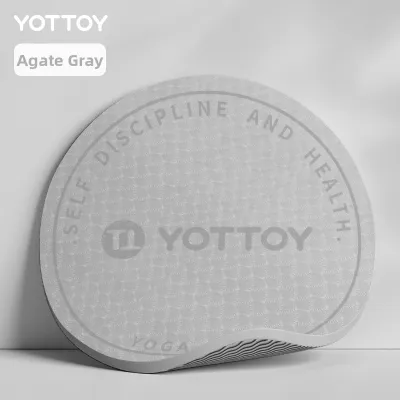
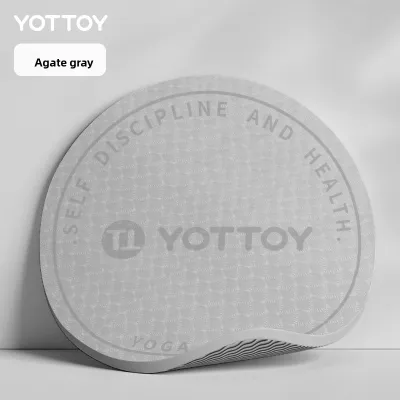
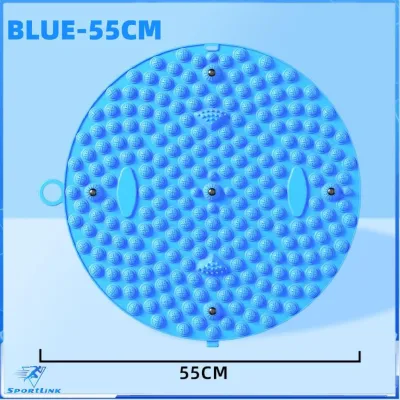
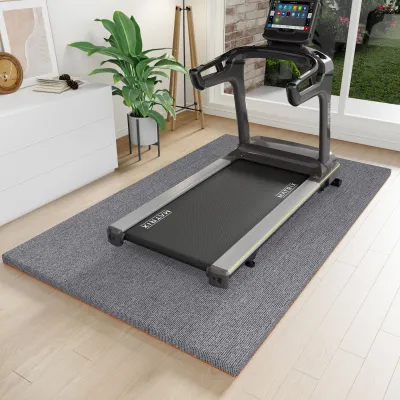
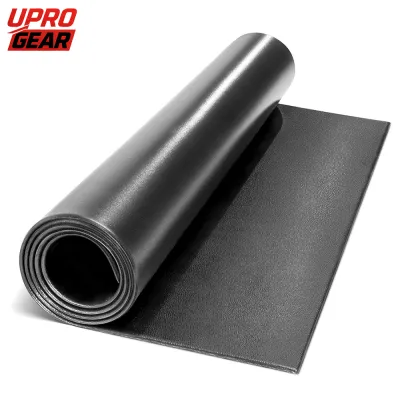
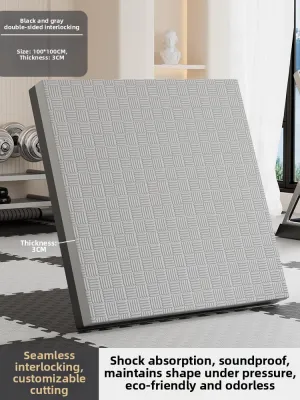
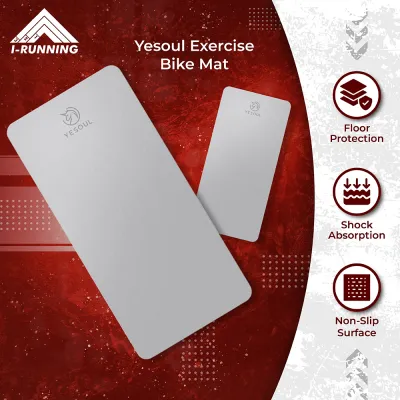
Prices are valid at publication and may change. Please refer to the product page for the latest price.

Conversely, a thinner mat made of high-density material—such as natural rubber, dense polyvinyl chloride (PVC), or specialized polyurethane (PU)—can offer superior shock absorption. The dense molecular structure resists collapsing under sudden loads, dispersing the kinetic energy laterally across the mat’s surface. This structural resilience is essential for protecting your joints when training on hard surfaces, such as the concrete, tiled, or vinyl floors common in Singapore homes.
However, there is a distinct trade-off between maximum cushioning and ground stability. While a highly cushioned surface reduces immediate joint impact, it also reduces ground feedback. During rapid foot strikes, lateral shuffles, or sudden directional changes, an overly soft surface can cause your foot to sink unevenly, leading to ankle instability and potential strain.
To evaluate a mat’s protective capabilities before purchasing, use this verification checklist:
- Check the weight: A heavier mat of the same thickness almost always indicates higher density and better structural resilience.
- Look for density ratings: Search product specifications for density metrics, often listed as weight per unit area or specific gravity.
- Verify material composition: Look for terms like "high-density closed-cell foam" or "impact-resistant composite" on the product label.
- Perform a compression test: If evaluating in person, press your thumb firmly into the mat; a high-density mat will resist deep compression and spring back immediately.
Comparing Thickness Profiles for High-Impact Exercises
Thin Profiles (1mm to 4mm)
Thin mats are highly portable and excellent for maintaining a solid connection to the ground. They are ideal for pure agility drills, such as ladder work or quick lateral hops, where ankle stability and rapid ground feedback are paramount. However, they offer virtually no impact cushioning. If you are performing repetitive jumping, high-knees, or running in place on a hard surface, a thin profile will quickly lead to joint fatigue and discomfort.
Medium Profiles (5mm to 8mm)
This range represents the optimal balance for mixed-modality workouts that combine running drills with strength training or core work. A high-density 6mm or 8mm mat provides enough cushioning to take the edge off repetitive impacts while remaining firm enough to support quick lateral movements without compressing unevenly. It keeps your feet stable during explosive movements like burpees or split jumps, making it a highly versatile option for home workouts.
Thick Profiles (9mm to 15mm+)
Thick mats offer the highest level of absolute cushioning, making them appealing for individuals with sensitive joints. However, for dynamic running drills, this thickness introduces significant risks. The deep compression can cause your ankles to roll during lateral movements, and the soft material is highly susceptible to tearing under the shear force of athletic shoes.
Decision Framework
To choose the right thickness profile for your training space, consider the following conditional guidelines:
- Choose a thin profile (1mm to 4mm) if your workouts consist primarily of low-impact agility drills, you always wear supportive athletic footwear, and you prioritize portability and easy storage.
- Choose a medium profile (5mm to 8mm) if you perform a mix of running drills, plyometrics, and strength training, require a balance of joint protection and ankle stability, and prefer to train either barefoot or with lightweight trainers.
- Choose a thick profile (9mm to 15mm+) only if you are performing low-velocity, linear movements, have high joint sensitivity, and can verify that the mat is made of ultra-high-density rubber that will not bottom out or cause lateral instability.
Material Durability and Surface Grip for Running Drills
Running drills place unique mechanical demands on a mat. Unlike static yoga poses, dynamic footwork involves high shear forces—the lateral friction generated when you push off, pivot, or stop suddenly. Standard yoga mats, particularly those made of eco-friendly thermoplastic elastomer (TPE) or low-density foam, can easily flake, tear, or develop permanent indentations under the friction of athletic shoes.
When selecting a running mat, inspect the material composition for durability indicators. Look for reinforced layers, such as an internal fiberglass or polyester mesh, which prevents the mat from stretching or tearing when subjected to lateral forces. High-density natural rubber and heavy-duty PVC are highly resilient materials that can withstand the abrasive contact of shoe treads over long periods.
Surface grip is equally critical, especially during high-intensity intervals where sweat is inevitable. In humid climates like Singapore, moisture can quickly turn a smooth mat surface into a slipping hazard. Look for mats with textured non-slip surfaces on both sides—a high-traction top surface to keep your shoes planted, and a textured bottom surface (such as a ribbed or suction-patterned design) to prevent the mat from sliding across your floor. Verify whether the manufacturer specifies dry and wet traction ratings to ensure safety during intense, sweaty sessions.
When to Switch to a Dedicated Fitness or Running Mat
If you are currently using a standard yoga mat for your high-impact workouts, it is important to recognize the signs of failure before they lead to injury. If you notice the mat sliding across the floor during mountain climbers, if your feet sink completely to the hard floor during jumping jacks, or if the surface is beginning to flake and shed small particles, your mat is no longer providing adequate protection or stability.
A dedicated running mat or heavy-duty fitness mat differs structurally from a yoga mat. These specialized mats are engineered specifically for high-impact loads. They are typically much heavier, wider, and constructed from dense composite rubber similar to commercial gym flooring. They are designed to absorb the drop-shock of heavy movements and distribute the load across a wider surface area.
Before purchasing a dedicated running mat, review the manufacturer’s specifications using this checklist:
- Verify load capacity: Ensure the mat can support your body weight plus the dynamic force of jumping.
- Check for drop-shock ratings: Look for explicit impact-absorption ratings or suitability for high-impact athletic training.
- Confirm non-slip backing: Ensure the bottom surface is designed to grip your specific floor type (e.g., tile, vinyl, or hardwood) without sliding.
- Review the warranty: Check if the manufacturer's warranty covers high-impact use with athletic footwear, as many standard yoga mat warranties are voided by shoe use.
Frequently Asked Questions (FAQ)
Can I use a thick yoga mat for jumping rope?
Using a thick, soft yoga mat for jumping rope is generally not recommended. The highly compressible surface increases the risk of ankle rolling and makes it difficult to maintain a consistent jumping rhythm. Additionally, the repetitive friction of the jump rope striking the mat will quickly wear down and damage soft foam materials. If you prefer to jump rope on a mat to protect your joints and floor, opt for a thin, high-density utility mat or a dedicated jump rope mat made of dense vinyl or rubber.
Does a running mat need to be extra long or wide?
Yes, running drills and dynamic workouts typically require more space than standard stationary yoga practices. Your stride length during forward lunges, lateral shuffles, and wide-stance movements can easily exceed the boundaries of a standard 180cm by 60cm yoga mat. A wider and longer mat (such as 200cm by 100cm or larger) provides a safe, continuous non-slip surface, preventing you from stepping off the mat onto hard or slippery flooring. Always measure your intended workout area and check the spatial requirements of your dynamic exercises before purchasing an oversized fitness mat.

Community discussion
Share your experience or ask a question. Comments are reviewed before publication.