
Finding the right cycling machine for a typical HDB flat requires balancing your fitness goals with the realities of compact urban living. To keep your walkways completely clear, a stationary bike should ideally occupy a footprint of no more than 120 cm in length and 60 cm in width. This compact size allows the machine to sit comfortably in a living room corner, study, or bedroom without encroaching on the 90 cm of clear walkway space typically needed for comfortable foot traffic. Choosing the right machine is not just about the static dimensions of the frame; it also involves accounting for your body’s movement during a workout and the physical path required to bring the equipment into your home.
Measure Your Available Space and Walkway Clearances
Before browsing online marketplaces or visiting a showroom, you must map out the exact zone where the cycling machine will sit. Use a measuring tape to mark out the floor area, but do not stop at the physical dimensions of the machine itself. You must account for dynamic clearance, which is the extra space your body occupies while actively exercising. For example, your elbows may flare out, or your body might lean forward and backward during intense pedaling, requiring an additional 15 cm to 20 cm of clearance on all sides.
Next, trace the delivery route from the lift lobby to your front door and into the designated room. Measure the width of your main gate, front door frame, and any tight corridor turns inside your flat. Standard HDB bedroom doors often measure around 80 cm to 85 cm in width, which easily accommodates most disassembled bikes but can pose a challenge for fully assembled, heavy-duty models. If your flat has a narrow entryway or a built-in shoe cabinet near the door, ensure there is enough turning radius to maneuver a long box or an assembled frame.
Products mentioned in this guide
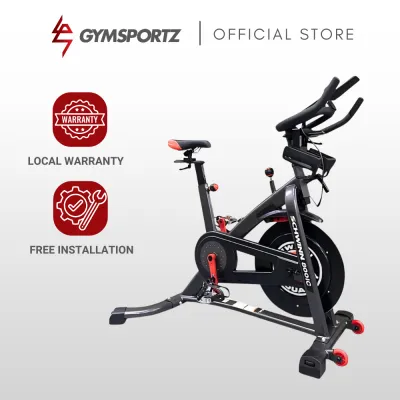
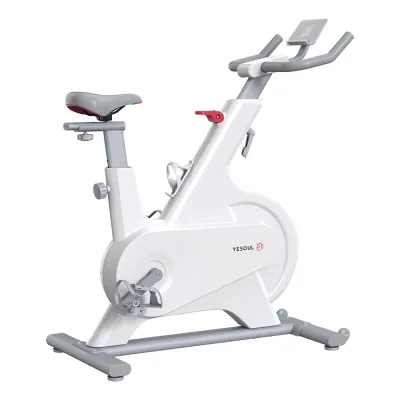
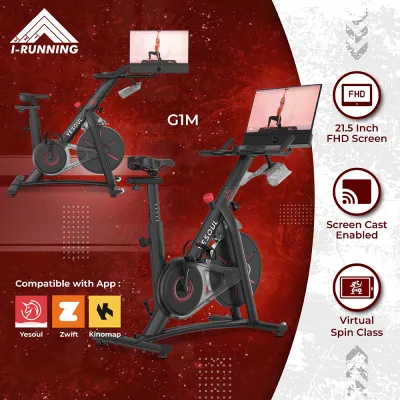
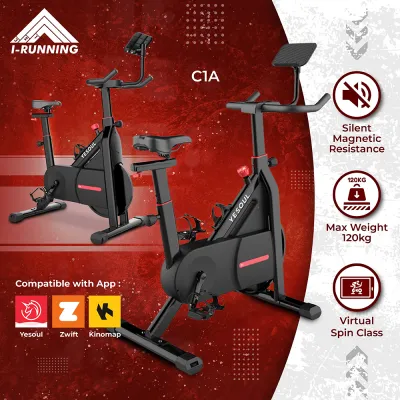
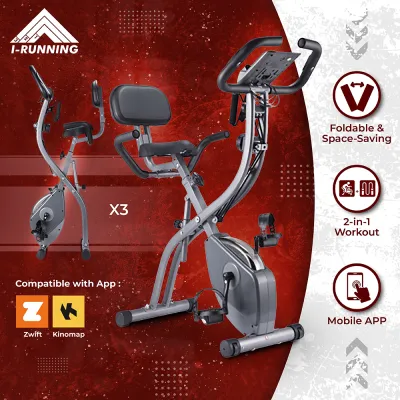
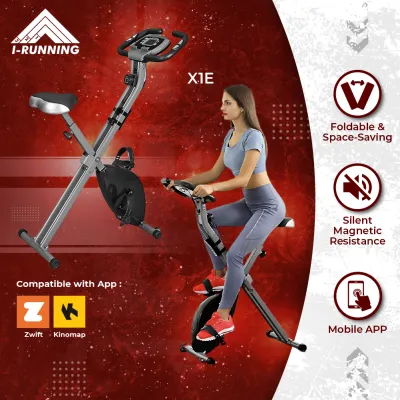
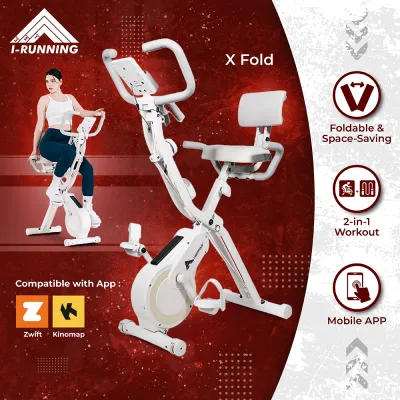
Prices are valid at publication and may change. Please refer to the product page for the latest price.
Finally, establish a dedicated safety buffer around the machine to prevent accidents and maintain a comfortable home environment. A minimum buffer of 50 cm of open space around the sides and rear of the bike is highly recommended. This buffer prevents your pedals or handlebars from scraping against walls, knocking over home decor, or blocking access to built-in wardrobes. Proper clearance also ensures adequate ventilation around your body, preventing the workout area from feeling overly cramped and humid during intense sessions.
Compare Cycling Machine Form Factors and Footprints
Stationary bikes come in several distinct form factors, each presenting unique spatial footprints and design trade-offs. Upright bikes are generally the most space-efficient option for HDB flats, typically requiring a floor area of about 80 cm to 100 cm in length and 50 cm in width. Because the rider sits in a vertical position directly over the pedals, the frame remains compact and fits neatly into tight corners or beside a television console.

Indoor cycling bikes, often referred to as spin bikes, have a slightly larger footprint, usually measuring around 110 cm to 130 cm in length. These machines feature a heavier flywheel and a sturdier frame designed to support standing climbs and high-intensity interval training. While they take up more floor space than basic upright models, their streamlined profiles make them highly suitable for multi-purpose living areas where they can be aligned parallel to a wall when not in use.
Recumbent bikes, which feature a reclined seat with back support and front-mounted pedals, have the largest footprint of all, often exceeding 140 cm to 160 cm in length. While they offer excellent lumbar support and are highly comfortable for longer, low-impact sessions, their elongated frames can easily block walkways in smaller flat layouts. If you choose a recumbent model, it is usually best suited for a dedicated spare room or a spacious master bedroom rather than a shared living room corridor.
When choosing between these designs, you must weigh the trade-off between a compact frame and structural stability. Lightweight, ultra-compact bikes are easy to tuck away, but they may wobble or slide on the floor when you pedal at high speeds or stand up on the pedals. Heavier, wider frames offer a rock-solid foundation for intense workouts but require a permanent, non-obstructive spot in your home.
Evaluate Foldable and Compact Storage Options
For homes where floor space is at an absolute premium, foldable cycling machines seem like an ideal solution. These models typically feature an X-frame design that allows the bike to fold vertically, cutting its floor footprint nearly in half when stored. However, before choosing a folding model, you must carefully evaluate its structural limitations. Folding mechanisms inherently introduce pivot points, which can feel less rigid than a solid, welded fixed frame, especially for users approaching the machine’s maximum weight capacity.
If you plan to move your cycling machine frequently, pay close attention to the design and placement of the transport wheels. Most modern stationary bikes include small wheels integrated into the front stabilizer bar. To use them, you must tilt the bike forward to engage the wheels and roll it to a storage spot. Check that the wheels are made of a non-marking material like polyurethane to avoid scratching your vinyl or laminate flooring, and ensure the machine’s total weight is manageable for you to tilt safely.
Storing a folded machine vertically also introduces specific safety considerations that must not be overlooked. A folded bike has a higher center of gravity, making it susceptible to tipping over if bumped by children or pets. Always verify the manufacturer’s instructions regarding vertical storage. Some brands require the use of safety pins, locking straps, or even wall-anchored tether straps to secure the machine firmly against a wall when it is not in use.
Check Manufacturer Specifications Before Buying
To avoid costly return shipping fees or delivery disappointments, always cross-reference the official product manual rather than relying on promotional lifestyle photos. Marketing images often feature spacious, minimalist rooms that can make fitness equipment look deceptively small. Look for the exact “assembled dimensions” and compare them directly to your physical measurements, keeping in mind that you must add the operational clearance buffers to these numbers.
Ceiling height is another critical dimension to verify, particularly if you are tall or considering a machine with an elevated console. While standard HDB ceiling heights of around 2.6 meters provide ample clearance for most users, models with high-reaching handlebars or large, integrated tablet screens can feel imposing in a low-ceilinged room. Ensure that when you are seated at your maximum saddle height, your head remains a safe distance from ceiling fans, light fixtures, or overhead storage units.
Finally, plan for floor protection and noise mitigation before your new equipment arrives. Stationary bikes generate vibrations that can travel through concrete floors, potentially disturbing neighbors living directly below you. Placing a high-density PVC or rubber equipment mat beneath the bike helps dampen these vibrations, prevents the machine from slipping during workouts, and protects your tiles or vinyl planks from sweat and indentation marks. Check the manufacturer’s recommendations to ensure the mat material is compatible with your specific flooring type.
Frequently Asked Questions (FAQ)
Can I keep a cycling machine on an HDB balcony or common corridor?
Keeping a cycling machine on an open balcony exposes the sensitive electronic consoles, wiring, and metal components to high humidity, rain splashes, and direct sunlight, which can lead to rapid rusting and electrical failure. If your balcony is fully enclosed and protected from the elements, ensure the machine is kept away from direct sunlight to prevent plastic degradation. Placing any fitness equipment in a common corridor is highly discouraged and often violates local fire safety regulations. Corridors must remain completely unobstructed to ensure safe evacuation routes for all residents during an emergency.
Do I need an equipment mat for my cycling machine on typical apartment flooring?
Yes, using a dedicated equipment mat is highly recommended for protecting typical apartment flooring like ceramic tiles, vinyl, or laminate. The mat serves multiple practical purposes: it absorbs the vibrations and mechanical noise generated during high-speed pedaling, preventing sound from transferring through the floor slabs to your neighbors. Additionally, it acts as a barrier against sweat, which can be highly corrosive to metal frames and can seep into floor joints, causing laminate or vinyl to warp over time. A textured mat also increases friction, keeping the machine firmly in place during vigorous workouts.

Community discussion
Share your experience or ask a question. Comments are reviewed before publication.