
Finding the right Xiaomi WalkingPad for your HDB flat depends on matching the machine’s physical footprint and folding mechanism to your home’s layout. Because space is at a premium in modern flats, selecting a model requires looking beyond basic speed settings. You must evaluate how the unit integrates into your daily living space when in use, and where it disappears to when stored.
A successful integration ensures you can exercise safely without blocking essential walkways or disturbing your family and neighbors. By focusing on precise spatial measurements, folding designs, and structural dampening, you can find a compact cardio solution that fits seamlessly into your household routine.
Assessing Your HDB Flat's Available Space
Before browsing specific equipment models, you must establish the physical boundaries of your designated workout zone. HDB living rooms, bedrooms, and study rooms often serve multiple purposes, meaning your walking pad will likely share space with sofas, desks, or dining sets. Start by clearing the intended exercise area and measuring the floor space with a standard tape measure.
Products mentioned in this guide
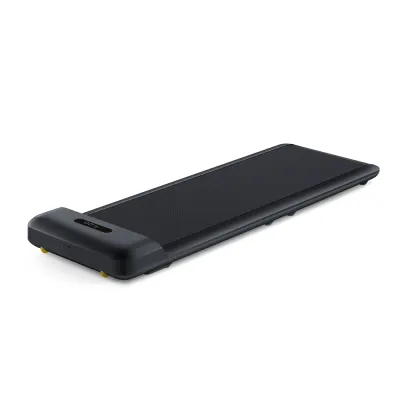
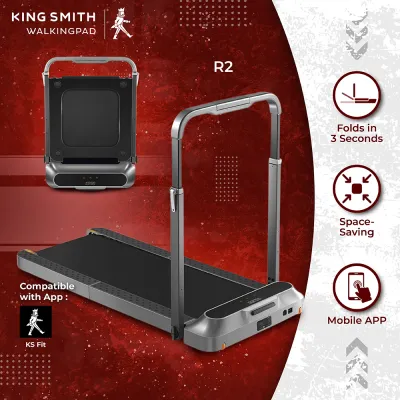
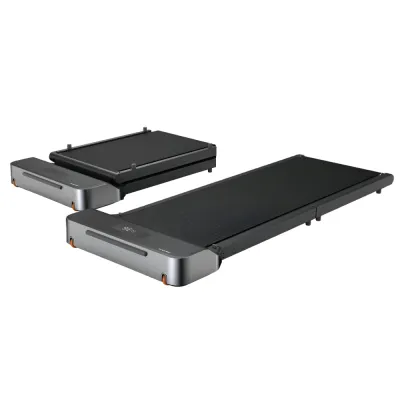
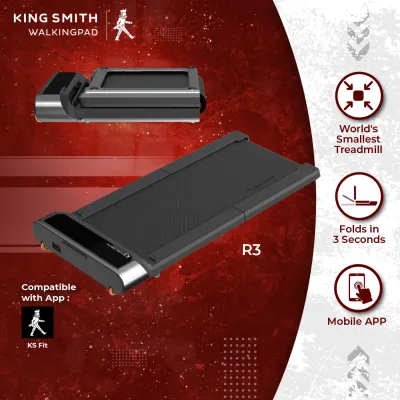
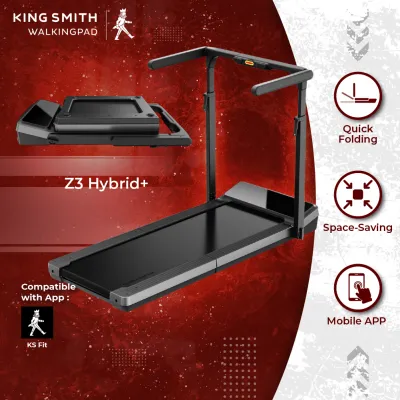
Prices are valid at publication and may change. Please refer to the product page for the latest price.
Safety clearance is the most critical factor when planning your workout zone. You must ensure there is a clear, unobstructed safety margin behind the walking pad—ideally at least 1 to 1.5 meters—to prevent injury in the event of a slip or fall. Additionally, allow for at least 0.5 meters of clearance on both sides of the belt to accommodate natural arm swings and to make mounting and dismounting the machine effortless.
Next, map out the transit path from your main entrance to the final storage or usage location. HDB corridors, lift lobbies, and household shelters often feature tight corners and narrow doorways that can make moving heavy boxes difficult. Measure the width of your doorways and any tight turns in your hallway to ensure the packaged box or the unfolded unit can pass through without scraping your walls or door frames.
Finally, consider the environmental conditions of the room, particularly ventilation and heat dissipation. Electric motors generate heat during operation, and placing a walking pad in a tight, unventilated corner or directly against a wall can restrict airflow, potentially leading to premature motor wear. Ensure there is a small gap around the motor housing—typically located at the front of the deck—to allow warm air to escape freely during your workout sessions.
Key Dimensions and Folding Mechanisms to Check
When comparing different Xiaomi WalkingPad models, the primary distinction lies in their folding mechanisms and physical dimensions. Some models are designed strictly for walking and feature a flat, low-profile deck without handrails, while others are dual-mode machines equipped with foldable handrails for running. Understanding these structural differences is key to determining how much space the machine will occupy in your flat.

The first specification to analyze is the operational footprint versus the folded footprint. An under-desk walking pad typically has a highly compact operational footprint, making it ideal for placing under a standing desk or in a narrow bedroom walkway. Dual-mode running models generally require a longer and wider deck to accommodate faster strides, which increases the overall space required during use.
Folded thickness and weight are critical metrics if you plan to store the machine under existing furniture. Many HDB residents prefer to slide their walking pad under a sofa, bed frame, or TV console to keep it out of sight. Measure the clearance height of your furniture legs before purchasing; some ultra-slim models fold down to a thickness of around 13 to 15 centimeters, whereas heavy-duty running models with integrated handrails may require 20 centimeters or more of vertical clearance.
The folding mechanism itself varies significantly across the product lineup. Certain models utilize a patented 180-degree double-fold design, where the running deck folds completely in half, reducing the storage length by 50 percent. Other models rely on a 90-degree upright fold, where the deck remains flat but stands vertically against a wall or inside a closet. If you choose a model designed for vertical storage, verify whether it includes built-in standing feet or if it requires a dedicated wall mount to prevent tipping.
Matching WalkingPad Features to HDB Living Constraints
Living in a high-density HDB estate introduces unique environmental challenges, particularly regarding noise and vibration transmission. Because flats share concrete floors and walls, the mechanical hum of a motor and the rhythmic impact of your footsteps can easily travel downstairs or next door. Selecting a model with a quiet brushless motor and utilizing proper dampening accessories is essential for maintaining neighborly harmony.
Brushless motors generally operate with less friction and noise than traditional brushed motors, making them highly suitable for early morning or late-night workouts in quiet residential blocks. However, even the quietest motor will transfer impact vibrations through the floor. To mitigate this, you should plan to place a high-density rubber or foam equipment mat beneath the walking pad to absorb structural vibrations and protect your flooring from scratches.
Floor protection is especially important if your HDB flat features laminate, vinyl, or polished tile flooring. The constant friction, weight, and occasional sweat during workouts can cause scuffs, discoloration, or moisture damage over time. A dedicated fitness mat not only dampens sound but also provides a non-slip surface that keeps the walking pad from shifting during use.
Another practical constraint is the proximity of your workout zone to electrical outlets. Walking pads require a stable power source, and using long, unrated extension cords can pose a tripping hazard in compact spaces and may affect the machine’s electrical performance. Check the length of the integrated power cord on your chosen model and plan your layout so that the machine can plug directly into a wall socket safely away from high-traffic walkways.
Step-by-Step Selection Checklist
To simplify your decision-making process, follow this structured checklist to verify that your chosen Xiaomi WalkingPad model is a perfect match for your HDB flat:
- Step 1: Verify the Unfolded Footprint and Safety Margins. Measure your designated workout area and confirm that the machine's fully extended length and width fit comfortably within the space, leaving at least 1 meter of clear space behind the belt and 0.5 meters on either side.
- Step 2: Measure Your Storage Clearance. Determine exactly where the machine will be stored when not in use. If storing horizontally, measure the height gap under your bed or sofa; if storing vertically, check the available depth in your wardrobe or utility closet and ensure the ceiling height accommodates the folded length.
- Step 3: Check the Machine's Weight and Portability. Review the total weight of the unit and verify that it features built-in transport wheels. Ensure you can comfortably lift and maneuver the folded machine on your own, especially if you need to move it across different rooms.
- Step 4: Assess User Compatibility and Belt Dimensions. Cross-reference the walking belt's width and length with your height and stride. Ensure the belt is wide enough to prevent stepping off the edge during workouts, and check that the maximum weight capacity safely accommodates all intended users in your household.
Frequently Asked Questions (FAQ)
Can I store a folded WalkingPad upright against an HDB wall?
Yes, but only if the specific model is designed and certified for vertical storage. Some models feature integrated support stands and front rollers that allow them to stand securely at a 90-degree angle without leaning directly on the wall. If your model does not have these built-in safety features, storing it upright poses a significant tipping hazard, particularly in households with children or pets. Always consult the manufacturer’s manual to verify vertical storage compatibility and use a dedicated wall anchor or strap if recommended.
Do I need a special mat for using a WalkingPad on HDB laminate flooring?
Using a high-density equipment mat is highly recommended when operating a walking pad on HDB laminate or vinyl flooring. The mat serves three critical purposes: it prevents the machine from sliding during use, protects the delicate floor surface from friction scratches and sweat stains, and significantly dampens the impact noise and vibrations that travel through the concrete slab to the flat below. Look for a water-resistant, non-slip mat that is slightly larger than the unfolded footprint of your walking pad.

Community discussion
Share your experience or ask a question. Comments are reviewed before publication.