
The choice between a floor pump, a mini pump, and a CO2 inflator depends on where you plan to inflate your tires, your tolerance for manual effort, and your storage space. A floor pump is the essential tool for home maintenance and pre-ride checks, offering high volume and stable leverage. A mini pump serves as a reliable, manual self-rescue tool that fits on your bike frame or in a jersey pocket for emergency trailside repairs. A CO2 inflator provides near-instant inflation using pressurized gas cartridges, making it the choice for racers and fast-paced group riders who want to minimize downtime. For most cyclists, a combination of a floor pump at home and a portable option on the road provides the most practical setup.
Understanding the Core Mechanics and Trade-offs
Bicycle air pumps operate on distinct mechanical principles designed for different environments. Floor pumps utilize a large, vertical chamber and a long piston, allowing you to use your body weight to push a high volume of air with each stroke. This design minimizes physical exertion and fills tires rapidly, but the bulky frame makes it strictly a stationary tool.
In contrast, mini pumps rely on a much smaller cylinder that you must compress repeatedly using arm strength alone. Because each stroke moves a fraction of the air volume of a floor pump, inflating a tire to riding pressure requires hundreds of strokes and significant physical effort. However, their compact size allows them to be carried easily on a frame mount or inside a saddlebag.
Products mentioned in this guide
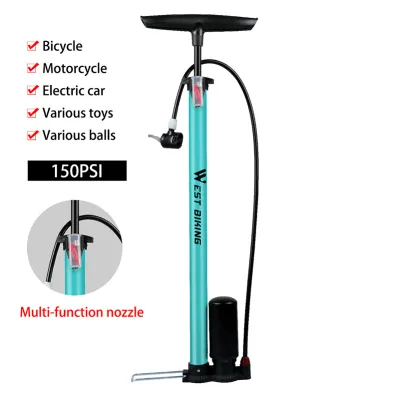
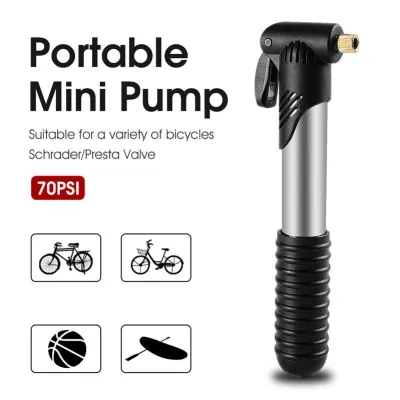
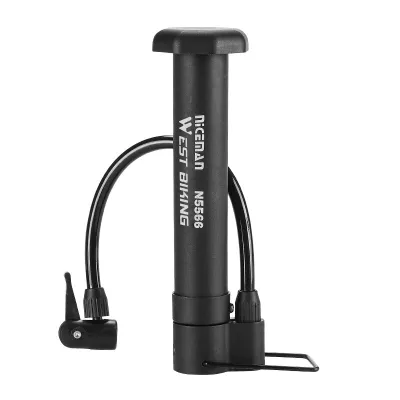
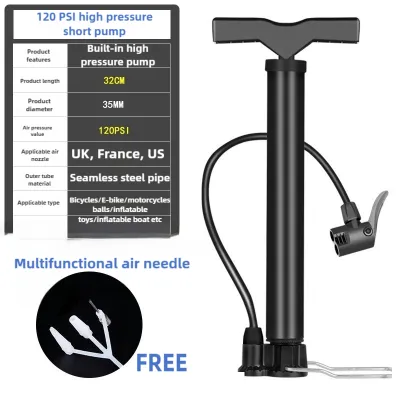
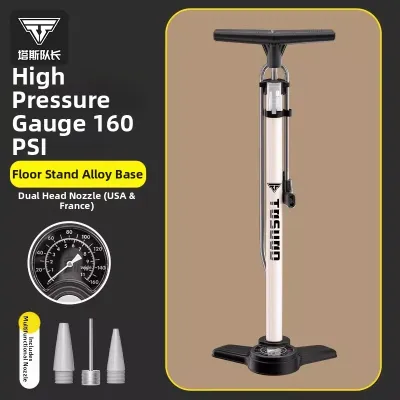
Prices are valid at publication and may change. Please refer to the product page for the latest price.
CO2 inflators bypass manual pumping entirely by utilizing pressurized liquefied carbon dioxide stored in small, single-use steel cartridges. When connected to an inflator head, the gas expands rapidly into the tire, achieving full inflation in seconds. While this offers unmatched speed, it introduces ongoing consumable costs and requires careful handling to avoid freeze burns during discharge.
Before purchasing any bicycle air pump, you must verify its valve compatibility and pressure limits against your specific tires. Most modern bicycle inner tubes and tubeless valves use either Presta (narrow, threaded valves common on road and gravel bikes) or Schrader (wider valves identical to car tires). Many pumps feature dual-purpose heads or reversible internal parts, but you should always check the manufacturer’s specifications to ensure a secure, airtight seal.
Floor Pumps: Evaluating Home Maintenance and High-Volume Needs
A floor pump is the foundation of any home bicycle maintenance setup. Checking your tire pressure before every ride is crucial for optimal traction, rolling resistance, and puncture prevention. The stable base and long hose of a floor pump allow you to stand upright while inflating, making routine top-ups quick and effortless.

For riders using tubeless tire systems, a high-volume floor pump is often necessary to seat the tire bead against the rim. The sudden rush of air from a large-cylinder pump helps pop the tire into place, a task that is nearly impossible with a standard mini pump. If you frequently service high-volume tires, such as those on gravel or mountain bikes, look for a pump with a larger barrel diameter designed to move more air per stroke.
When shopping for a floor pump, inspect the physical build quality and specifications listed on the packaging. A wide, heavy base made of steel or composite material prevents the pump from tipping over during high-pressure strokes. A long, flexible hose ensures you can reach the valves even when the bicycle is mounted on a workstand. Additionally, verify that the integrated pressure gauge is easy to read and covers the pressure range your tires require.
The primary limitation of a floor pump is its complete lack of portability. These units are heavy, bulky, and designed to remain in your garage, apartment, or vehicle trunk. Attempting to carry one on a ride is impractical, meaning you will still need a secondary solution for punctures that occur away from home.
Mini Pumps: Assessing Portability and Trailside Self-Rescue
For daily commuters, bikepackers, and trail riders, a mini pump is an indispensable self-rescue tool. When you experience a flat tire miles from home, a manual hand pump provides a guaranteed source of air that will never run out of charge. It is a highly reliable option for those who prioritize self-sufficiency over speed.
When evaluating mini pumps, pay close attention to the stroke volume and handle ergonomics. Some models are optimized for high volume, which moves more air per stroke at lower pressures, making them ideal for mountain and gravel tires. Others are designed for high pressure, which uses a narrower barrel to make pumping easier at higher pressures, suitable for narrow road tires. A folding handle design can significantly improve your grip and reduce hand fatigue during the hundreds of strokes required to fill a tire.
Mounting options are another critical factor to verify before purchase. Most mini pumps include a bracket that mounts directly beneath your water bottle cage, keeping the pump secure and accessible without taking up valuable space inside your frame bag or jersey pockets. Alternatively, some compact models are short enough to fit entirely within a standard saddlebag.
However, mini pumps require substantial physical effort and patience. Because of the small chamber size, inflating a tire can take several minutes of continuous pumping. Reaching high pressures on traditional road setups becomes increasingly difficult as the pressure inside the tire resists the manual stroke, which can strain the valve stem if the pump is not held perfectly steady.
CO2 Inflators: Weighing Speed Against Ongoing Cartridge Costs
CO2 inflators are designed for cyclists who prioritize speed and minimal weight above all else. During a road race, time trial, or fast group ride, spending several minutes manually pumping a tire can ruin your performance or leave you stranded behind the pack. A CO2 system can inflate a completely flat tire to riding pressure in a matter of seconds, allowing you to rejoin the ride almost immediately.
The system consists of a small, lightweight inflator head and a pressurized steel cartridge. When selecting an inflator, verify whether the head requires threaded or non-threaded cartridges, as these two styles are not interchangeable. Threaded cartridges are more common and screw directly into the inflator head, providing a secure connection that allows you to control the gas flow via a trigger or dial.
You must also consider environmental and operational limitations. Each steel cartridge is a single-use item that must be recycled properly after use, representing an ongoing financial cost and environmental footprint. While a basic inflator head is relatively inexpensive, purchasing replacement cartridges at local bike shops in Singapore can add up over time, so you should factor these ongoing costs into your cycling budget. Furthermore, the rapid expansion of CO2 gas causes the cartridge and inflator head to freeze instantly, requiring the use of protective gloves or an insulating sleeve to prevent skin damage.
Additionally, CO2 gas behaves differently than atmospheric air. Carbon dioxide molecules escape through inner tube rubber much faster than oxygen and nitrogen, meaning a tire inflated with CO2 will typically lose significant pressure within 24 hours. You will need to deflate the tire at home and pump it back up with a standard bicycle air pump before your next ride. CO2 is also less effective for seating tubeless tires on the trail, as the extreme cold can freeze tubeless sealant, rendering it useless.
How to Choose the Right Pump for Your Riding Habits
Selecting the right bicycle air pump setup requires matching the tool to your riding environment and bicycle type. If your primary concern is maintaining correct tire pressures before you leave the house, a floor pump is an essential purchase. It is the most practical tool for households with multiple bicycles, allowing you to quickly adjust pressures for different riders and tire volumes without physical strain.
For riders who venture into remote areas, go bikepacking, or commute daily, a mini pump is the safest choice. It provides an unlimited supply of air, ensuring you can recover from multiple punctures on a single trip without worrying about running out of cartridges. It is the ultimate insurance policy for self-sufficiency.
If you participate in competitive events where every second counts, a CO2 inflator is the most efficient choice for trailside or roadside repairs. However, experienced riders often carry a compact mini pump alongside their CO2 setup. This dual approach ensures you have the speed of gas for quick fixes, but still possess a manual backup if you misfire a cartridge or suffer multiple punctures.
Before finalizing your purchase, verify your specific bicycle requirements against the pump’s specifications. For example, ultra-high-volume fat bike tires require a pump that can move massive amounts of air, while high-pressure road tires require a pump rated for higher pressure limits. Always consult your tire manufacturer’s guidelines printed on the sidewall to ensure your chosen pump can safely achieve and measure the recommended pressure range.
Frequently Asked Questions (FAQ)
Can I use one pump for both Presta and Schrader valves?
Most modern bicycle air pumps are designed to accommodate both Presta and Schrader valves. Many models feature a dual-sided head with separate ports for each valve type, while others use a smart head that automatically adjusts to fit either valve. Some compact mini pumps require you to unscrew the collar and reverse the internal rubber seal and plastic pin to switch compatibility. Always check the product packaging or manufacturer specifications to confirm how the pump handles different valve types before making your purchase.
Do CO2 cartridges expire or lose pressure over time?
Sealed steel CO2 cartridges do not have a formal expiration date and can remain usable for years if stored in a dry, stable environment. However, they can lose pressure or fail if the metal body corrodes or if the thin seal at the neck is damaged. Before heading out on a ride, inspect your cartridges for any signs of rust, deep scratches, or physical deformation. You can also verify their integrity by checking the manufacturer’s printed weight specifications on a kitchen scale to ensure no gas has leaked.
Is a pressure gauge necessary on a mini pump?
A pressure gauge is not strictly necessary on a mini pump, but it adds significant convenience for riders who are sensitive to tire performance. Gaugeless mini pumps are lighter, more compact, and less susceptible to damage if dropped on the trail. However, if you ride tubeless tires or low-pressure gravel setups where a variance of a few PSI alters traction and rim protection, a built-in gauge is highly beneficial. If you choose a model with an integrated gauge, verify its accuracy and readability in the manufacturer’s specifications.

Community discussion
Share your experience or ask a question. Comments are reviewed before publication.