
Choosing the right gym gloves is not just about keeping your hands clean; it is about matching the glove’s structural design to the specific physical forces of your workout. Harbinger has long been a staple brand in gym bags, offering a wide array of gloves that cater to different styles of training. If your routine revolves around heavy barbell lifts, your hands and wrists face massive axial loads that require structural stabilization and dense friction barriers. Conversely, if your schedule consists of high-intensity functional training, machine circuits, or dumbbell work, you need a glove that prioritizes flexibility, rapid heat dissipation, and tactile feedback. Understanding these differences is the first step to selecting a pair that supports your fitness goals without hindering your natural movement patterns.
Identifying Your Training Demands: Weightlifting vs. General Gym
To make an informed choice, you must first analyze your weekly training split and identify the dominant physical demands of your exercises. Weightlifting—particularly powerlifting, Olympic lifting, or heavy strength training—places immense pressure on the palms and wrists. When performing movements like deadlifts, overhead presses, or heavy bench presses, the knurling of a steel barbell can grind against the skin, leading to painful calluses or tears. Furthermore, these heavy axial loads require the wrist joint to remain in a stable, neutral position under tension. For these workouts, your primary need is a glove that acts as a structural support system, distributing pressure across the palm and reinforcing the wrist joint against hyperextension.
General gym workouts, on the other hand, present a completely different set of physical challenges. If your routine involves moving quickly between cable machines, dumbbells, pull-up bars, and bodyweight exercises, thick padding and stiff wrist supports can actually hinder your performance. High-volume circuit training or functional fitness demands high dexterity so you can adjust machine pins, grip different handle materials, and transition between exercises without removing your gloves. In these scenarios, heat and sweat accumulation are also much higher, making breathability and moisture management critical to maintaining a secure grip.
Products mentioned in this guide
![[Harbinger] Pro WristWrap Weightlifting Gloves - Black](https://img.lazcdn.com/g/p/1da928d75fa7a33efa0bcb573db18d5d.jpg_400x400q80.jpg_.webp)
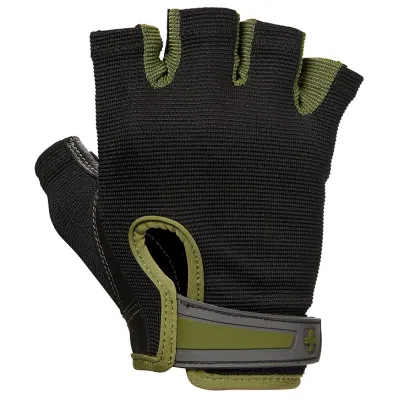
![[Harbinger] Mens Power Gloves - Black](https://img.lazcdn.com/g/p/5f7e6ddc93ee834f4e28f98cb733721e.jpg_400x400q80.jpg_.webp)
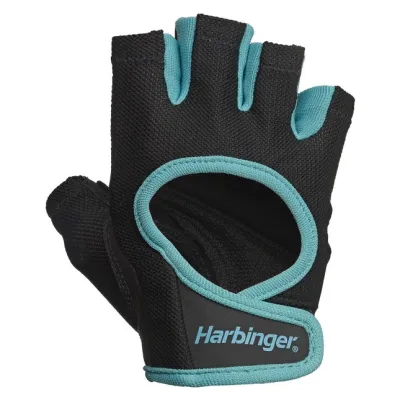
![[Harbinger] Mens Pro Gloves - Black & Blue](https://img.lazcdn.com/g/p/d7a6966df246fc4c85ecde72b9293c1f.jpg_400x400q80.jpg_.webp)
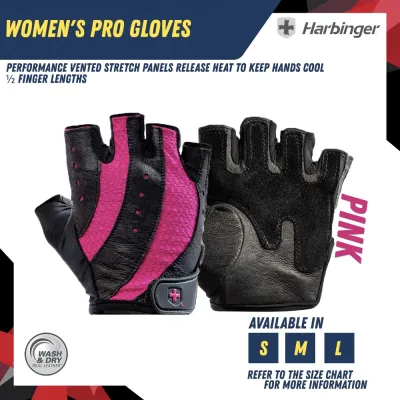
![[Harbinger] Womens Pro Gloves - Black / Pink](https://img.lazcdn.com/g/p/37062817463b522eea40aa7822a02b6a.jpg_400x400q80.jpg_.webp)
![[Harbinger] Train Grip Wrist Wrap Gloves](https://img.lazcdn.com/g/p/50302085f12e016fda3dc94bc18c06db.png_400x400q80.png_.webp)
Prices are valid at publication and may change. Please refer to the product page for the latest price.
To determine your dominant need, look at your training log over a typical fortnight. If more than sixty percent of your exercises involve heavy barbell work near your maximum capacity, your priority should be load-bearing protection and joint stability. If your routine is highly varied, focusing on high-repetition sets, cardiovascular conditioning, and machine-based resistance, you will benefit far more from a lightweight, flexible glove that emphasizes ventilation and tactile feel.
Key Harbinger Glove Features to Check Before Buying
When browsing the Harbinger lineup, you will encounter several distinct design features on product labels and specifications. Understanding what these features do allows you to verify whether a specific model aligns with your training demands.

The first and most critical feature to evaluate is the wrist closure mechanism. Harbinger gloves generally fall into two categories: those with integrated, adjustable wrist wraps and those with simple elastic or low-profile hook-and-loop cuffs. Integrated wrist wraps are wide, thick bands of fabric that wrap tightly around the wrist joint, mimicking the support of standalone powerlifting wraps. These are designed to limit excessive joint deviation under heavy loads. In contrast, simple elastic cuffs or short straps are designed solely to keep the glove secure on the hand, offering maximum wrist mobility for functional movements, push-ups, or kettlebell swings.
The second feature to inspect is the palm material and padding configuration. Heavy-duty gloves often utilize genuine leather or reinforced synthetic leather palms layered with dense foam or gel padding. This thick barrier is engineered to absorb shock and distribute the concentrated pressure of a heavy barbell. However, this thickness reduces your tactile connection to the bar. For general gym workouts, look for gloves featuring minimal, strategically placed padding or single-layer synthetic palms. Many of these models incorporate specialized grip patterns, such as silicone print or textured microfiber, which enhance friction against various handle materials without adding bulk.
Finally, consider the finger length and back-of-hand construction. Most gym gloves are half-finger designs, which keep your fingertips free for tactile tasks like using a smartphone or adjusting gym equipment. However, the materials used on the back of the hand vary significantly. Heavy lifting models often use thick leather or structured synthetics across the knuckles for durability. General gym models frequently employ open-mesh fabrics, perforated materials, or four-way stretch synthetics. These lightweight backings allow heat and sweat to escape rapidly, keeping your hands cool and dry during high-intensity, high-rep sessions.
How to Match Harbinger Glove Designs to Your Routine
Matching a glove design to your routine requires a conditional decision framework. No single glove can excel at both maximal powerlifting and high-speed functional fitness, so you must choose based on your primary training style or consider a multi-pair strategy.
If your routine prioritizes heavy barbell lifts, powerlifting movements, and training near your one-repetition maximum, you should choose a heavy-duty model featuring a wide, integrated wrist wrap and a padded leather palm. The wrist wrap provides the necessary mechanical reinforcement to help keep your wrists aligned during heavy pressing movements, while the padded palm protects your skin from the aggressive knurling of heavy bars. Verify that the wrap is fully adjustable so you can loosen it between sets to restore full circulation.
If your training focuses on high-repetition dumbbells, cable machines, functional fitness, or calisthenics, you should opt for a lightweight, highly flexible model with minimal padding and a breathable mesh back. These designs allow your hand to flex naturally, ensuring you can maintain a strong, active grip on pull-up bars or kettlebells. The lack of a bulky wrist wrap ensures complete freedom of movement for exercises like front squats or push-ups, where the wrist must flex deeply.
For those whose workouts are a true hybrid—such as moderate strength training combined with functional intervals—a mid-weight glove without an integrated wrist wrap but with moderate palm padding may offer the best balance. However, if you regularly transition from heavy, near-maximal lifting days to high-intensity cardio days, the safest and most effective approach is to purchase two separate pairs of gloves. Using a heavy, supportive glove on your lifting days and a light, breathable pair on your conditioning days ensures you always have the correct level of protection and mobility without compromising your safety or performance.
Sizing, Fit, and Pre-Lift Inspection
Even the most advanced glove will fail to protect your hands or support your joints if it does not fit correctly. To find your size, use a flexible measuring tape to measure the circumference of your flat hand just below the knuckles, excluding the thumb. Cross-reference this measurement directly with the manufacturer’s official sizing chart, as sizing can vary between different glove models and materials.
When trying on your gloves, pay close attention to how they feel when you make a tight fist. A properly fitting glove should feel snug but not constrictive. Watch out for signs of an improper fit: if you feel tingling or coldness in your fingers, the glove or wrist strap is restricting your blood flow. Conversely, if the glove slips when you mimic a pulling motion, or if there is excessive material bunching up in the palm when you grip a bar, the glove is too large. Excess material can pinch your skin, leading to the very calluses and blisters you are trying to prevent.
Before every workout, perform a quick pre-lift inspection of your gear. Check the hook-and-loop straps to ensure they grip firmly and do not pop open under tension. Inspect the seams, especially around the thumb and the base of the fingers, for any signs of fraying or splitting. Finally, feel the palm padding to ensure it has not compressed completely or shifted out of place. Remember that protective gear is a supportive tool and cannot replace proper lifting technique, grip training, or sound physical judgment. If you notice significant wear, torn stitching, or degraded padding, it is time to replace your gloves to ensure your grip remains secure and reliable during your next session.
Frequently Asked Questions (FAQ)
Do I need dedicated wrist wraps if I already use weightlifting gloves?
Integrated wrist wraps on weightlifting gloves are highly effective for general heavy lifting and moderate strength training, providing convenient, moderate support. However, they are not a complete substitute for dedicated, standalone powerlifting wrist wraps when training with maximal or near-maximal loads. Standalone wraps are typically much stiffer, longer, and designed specifically to cast the wrist in a rigid position for extreme lifts like heavy bench presses or low-bar squats. If you are performing competitive powerlifting movements or lifting near your absolute limit, dedicated wraps offer superior, customizable tension that integrated glove wraps cannot match.
How should I clean my Harbinger gloves to maintain grip and hygiene?
To preserve the materials and maintain a hygienic grip, you should clean your gloves regularly using gentle hand-washing methods. Avoid tossing them into a washing machine or using harsh chemical detergents, as these can strip the natural oils from leather palms and degrade synthetic fibers. Instead, submerge the gloves in cool water mixed with a small amount of mild soap. Gently squeeze the soapy water through the material, rinse thoroughly with clean water, and press the excess moisture out with a towel without wringing them. Always allow your gloves to air dry completely in a cool, well-ventilated area away from direct sunlight or direct heat sources, which can cause leather to crack and shrink.

Community discussion
Share your experience or ask a question. Comments are reviewed before publication.