
When organizing your climbing gear, efficiency and safety are paramount. The heroclip small is highly safe for hanging lightweight climbing accessories under strictly static conditions, but it is completely unsafe for any load-bearing, safety-critical, or human-support applications. While it resembles a climbing carabiner, its internal mechanics, material properties, and manufacturing standards are engineered solely for static gear organization, not for managing fall forces or securing human weight.
Using this utility tool correctly requires a clear understanding of its limits. In a sport where equipment failure can have severe consequences, confusing an organizational accessory with life-support gear is a critical mistake. Understanding exactly how to integrate this tool into your climbing routine ensures your expensive gear stays off the ground without compromising your safety.
Utility Hook vs. Climbing Carabiner: The Critical Safety Distinction
To use the heroclip small safely, you must first recognize that it is a utility organization tool, not a piece of personal protective equipment (PPE). True climbing carabiners are safety-critical links in your protection chain, manufactured under strict international standards to ensure they can catch a falling climber. The heroclip small, despite its carabiner-like gate, is designed for static gear storage and convenience.
Products mentioned in this guide
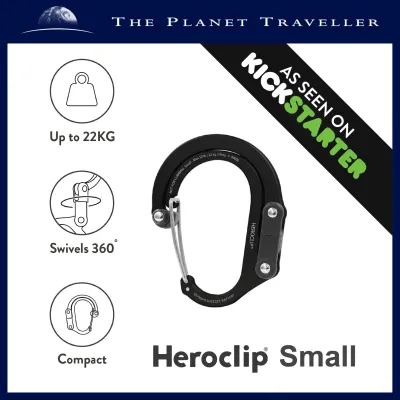
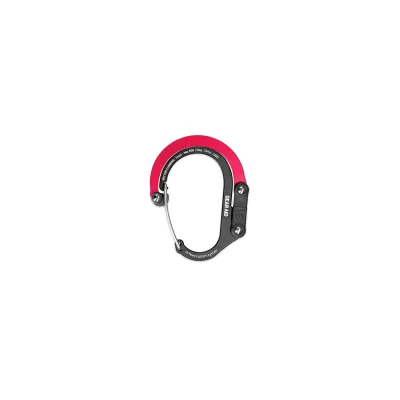
Prices are valid at publication and may change. Please refer to the product page for the latest price.
Climbing carabiners are certified by organizations such as the UIAA (Union Internationale des Associations d’Alpinisme) or carry CE EN 12275 certifications. These certifications guarantee that the carabiner can withstand massive dynamic forces—often rated at 20 kilonewtons (kN) or more along the major axis. The heroclip small does not carry these certifications and is not designed to absorb dynamic impact.
The design intent of a utility hook focuses on versatility and static suspension rather than high-impact energy absorption. While a climbing carabiner is forged from high-strength aluminum alloys designed to deform safely under extreme loads before failing, utility hooks use different manufacturing processes optimized for multi-axis rotation and compact folding. Using a utility hook in place of a certified carabiner in any fall-arrest, belay, or anchor system will result in catastrophic failure.
Understanding Weight Limits and Static Load Capacity
Before clipping any gear to your heroclip small, you must locate and verify the manufacturer’s official maximum static weight limit. According to the manufacturer’s specifications, the heroclip small is rated to support a maximum static load of 50 pounds, which is approximately 22 kilograms. This limit is printed clearly on the product packaging and must never be exceeded.

It is crucial to understand the physical difference between a static load and a dynamic shock load. A static load refers to a stationary object hanging quietly without movement. A dynamic load occurs when an object swings, drops, or is suddenly caught by the clip. For example, a water bottle weighing only 1 kilogram can easily exert a force equivalent to several times its weight if it slips and drops just a few centimeters before the clip catches it.
Exceeding the rated static limit or subjecting the hook to sudden jerks can lead to immediate structural failure. The wire gate can deform, preventing it from closing securely, or the plastic swivel joint can snap under lateral pressure. To maintain structural integrity, always calculate the total weight of the items you plan to hang, allowing a generous safety margin below the 22-kilogram limit.
Safe Applications: Organizing Lightweight Climbing Accessories
When kept within its rated limits, the heroclip small is an excellent tool for keeping your climbing environment tidy and efficient. It is particularly useful at outdoor crags like Dairy Farm Nature Reserve or inside humid indoor climbing gyms across Singapore, where keeping gear off dusty or damp floors is essential.
Safe items for static hanging include:
- Chalk bags and buckets: Keeps your chalk dry and upright at the base of the route.
- Climbing shoes: Allows them to air out between climbs, preventing odor buildup.
- Water bottles: Keeps hydration accessible when clipped to a gear loop or gym railing.
- Lightweight jackets or windbreakers: Keeps extra layers clean and off the ground.
- Small accessory pouches: Holds finger tape, nail clippers, and skin files.
Clipping these accessories to the outside of your climbing backpack, a gear sling, or a designated gear tarp keeps them organized and within arm’s reach. The hook’s 360-degree rotating swivel and folding hook design are highly beneficial here. They allow you to hang your gear flat against uneven rock surfaces, tree branches, or gym fences without twisting or straining the straps of your soft goods.
Strict Prohibitions: What You Must Never Hang or Anchor
To prevent dangerous gear drops or severe accidents, you must establish absolute boundaries for what the heroclip small is never allowed to hold. Under no circumstances should this utility hook be used to anchor climbing ropes, secure belay devices, attach yourself to an anchor, or build any part of a safety system. It is strictly an organizational accessory, not a safety link.
You should also avoid hanging heavy, sharp, or awkwardly balanced hardware racks. Large camming devices, heavy passive protection sets, and dense quickdraw collections can easily lever the wire gate open if they shift. If the gate is forced open, the load capacity drops dramatically, and the gear can slip out of the hook entirely.
A reliable safety guideline is the “drop test” rule: if the failure of the hook would result in a dangerous falling object, the loss of critical safety gear, or personal injury, the heroclip small is the wrong tool. For instance, hanging a heavy camera bag or a critical safety rack over a belayer’s head is an unacceptable risk. If a clip failure would cause a piece of gear to fall down a multi-pitch route and be lost forever, use a certified locking carabiner instead.
Precautions for Attaching to Harnesses, Helmets, and Slings
When integrating the heroclip small into your active climbing setup, you must pay close attention to how and where you attach it. Before attaching any utility hook to your climbing gear, always check your harness and helmet manufacturer’s instructions to verify compatibility and identify designated non-structural attachment points. If instructions conflict or are unavailable, do not attach the hook to that gear.
Only clip the utility hook to designated accessory loops or non-structural gear loops on your harness. Never clip it to your tie-in points, your belay loop, or any structural safety webbing, as this can lead to dangerous confusion during high-stress moments on the wall. The physical design of the hook presents minor risks to your soft climbing gear.
The metal edges of the aluminum body, the steel wire gate, and the swivel joint can snag on fine nylon webbing or abrade harness stitching over time. Additionally, clipping the hook directly to the vent holes of a climbing helmet can scratch or micro-fracture the protective polycarbonate shell if the helmet swings and knocks against hard surfaces.
To protect your equipment, establish a quick pre-climb inspection routine for the Heroclip itself:
- Check for metal fatigue: Look for hairline cracks along the aluminum body and swivel arm.
- Inspect for corrosion: Singapore's highly humid tropical climate and salty air can accelerate oxidation, so check for white powdery residue or rust on the steel wire gate.
- Test the gate spring: Ensure the gate snaps back quickly and aligns perfectly with the notch.
- Feel for sharp burrs: Rub your fingers along the edges to locate any sharp metal nicks that could abrade your ropes or harness webbing.
Frequently Asked Questions (FAQ)
Can I use the HeroClip Small to hang a coiled climbing rope?
While a standard 60-meter or 70-meter climbing rope might technically weigh under the 22-kilogram static limit when dry, hanging a coiled rope from a heroclip small is not recommended. The bulk and volume of a coiled rope create a wide center of gravity that can easily lever the wire gate open or twist the swivel joint at an awkward angle. Additionally, if the rope gets wet or dirty, its weight increases significantly. For transporting and storing climbing ropes, it is much safer to use dedicated rope bags, heavy-duty shoulder straps, or purpose-built rope tarps.
Will the metal hook damage my harness webbing or helmet shell?
Yes, repeated metal-on-fabric friction can cause localized abrasion on your harness webbing, and the hard edges of the hook can scuff or scratch a helmet’s polycarbonate shell. To prevent this, avoid leaving the utility hook attached to your harness or helmet during transport or long-term storage in your gear duffel. Always inspect the contact points on your harness gear loops for signs of fuzzing or broken threads, and retire any soft gear that shows deep structural abrasion.

Community discussion
Share your experience or ask a question. Comments are reviewed before publication.