
The choice between hexagonal and round dumbbell heads depends primarily on your specific training style and home gym storage constraints, rather than one design being universally superior. Hex heads offer anti-roll stability for floor-based movements and compact stacking, while round heads provide a symmetrical weight distribution that favors traditional pressing and rolling exercises. This guide breaks down the functional differences to help you select the right shape for your workout space and routine.
When setting up a home workout space, especially in compact residential layouts where every square meter counts, the physical footprint and safety of your equipment are paramount. A rolling dumbbell is not just an inconvenience; it can damage flooring, disrupt your training flow, or cause injury if stepped on unexpectedly. By understanding how the geometry of a dumbbell head influences its behavior on the floor, on the rack, and in your hands, you can make an informed investment that aligns with your fitness goals.
Core Differences Between Hex and Round Dumbbell Heads
The most obvious distinction between these two designs lies in their geometric profiles. A hexagonal dumbbell features six flat sides, creating a stable, multi-faceted perimeter. In contrast, a round dumbbell has a continuous, circular outer edge. This fundamental difference in shape dictates how the weight behaves when placed on a flat surface. While a round head is designed to roll smoothly, a hex head is engineered to remain stationary, utilizing its flat edges to resist lateral movement.
Products mentioned in this guide
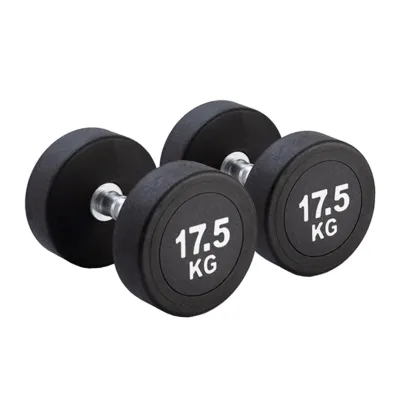
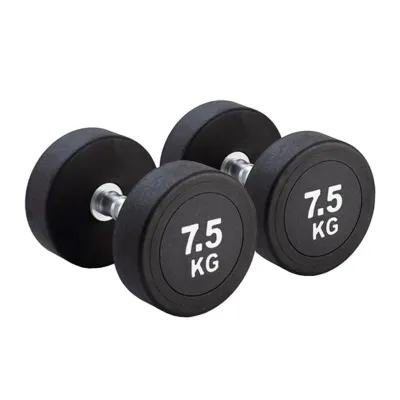
Prices are valid at publication and may change. Please refer to the product page for the latest price.
This geometric variance also influences weight distribution. In a round dumbbell, the mass is distributed symmetrically around the central axis of the handle. This creates a highly balanced feel during dynamic movements, as the center of gravity remains highly consistent regardless of how the dumbbell rotates in your hand. Hexagonal heads, while still balanced, have slight variations in mass distribution due to the corners of the hexagon, though this difference is rarely noticeable during standard lifting.
Another critical factor is the relationship between the head shape and the handle clearance. The transition from the handle to the head can vary significantly between designs. Hex dumbbells often feature a cast design where the head meets the handle at a sharp, distinct angle, which can sometimes limit hand clearance if you prefer to grip the dumbbell close to the edge. Round dumbbells, particularly those used in commercial settings or high-end home gyms, frequently employ a slightly tapered or recessed transition, allowing for a more uniform grip area across the entire length of the handle.
How Head Shape Affects Your Training Style
Your preferred exercise selection should be the primary driver behind your choice of dumbbell head shape. If your routine consists of traditional strength training, bodybuilding, or isolation movements, round dumbbells offer a classic feel. Exercises like bicep curls, shoulder presses, and lateral raises benefit from the symmetrical balance of a round head. Because there are no corners, the weight rotates smoothly in your hand during movements that require natural wrist pronation or supination, preventing any awkward weight shifts.

Conversely, if your training incorporates functional fitness, high-intensity interval training (HIIT), or calisthenics-style movements, hexagonal dumbbells are highly advantageous. Exercises such as renegade rows, dumbbell push-ups, and devil presses require you to place your body weight onto the dumbbells while they rest on the floor. The flat edges of a hex head provide a stable platform, preventing the dumbbell from rolling outward and causing wrist strain or loss of balance. Attempting these movements with round dumbbells is highly discouraged without specialized stands, as the risk of the weight rolling under pressure is significant.
The head shape also impacts range of motion during close-grip exercises. When performing movements like the close-grip dumbbell press or dumbbell chest flyes, the flat faces of hex dumbbells can be pressed flush against each other. This creates a stable, locked-in feeling that allows you to focus entirely on muscle contraction. Round dumbbells, when pressed together, touch only at a single point of contact along their curved surfaces, which can feel less stable and require more active stabilization from your forearms and wrists to keep them from sliding past one another.
Space, Storage, and Home Gym Layout Considerations
In a home gym environment, storage efficiency is often just as important as training functionality. Hexagonal dumbbells excel in tight spaces because they can be stacked directly on top of one another on the floor or on flat shelving. Their flat sides prevent them from rolling off a shelf, meaning you do not necessarily need a specialized rack with retaining lips to keep them secure. This makes them highly adaptable for temporary workout setups where equipment must be packed away into a closet or under a bed after use.
Round dumbbells, on the other hand, require dedicated storage solutions to prevent safety hazards. If you choose round heads, you must invest in a dumbbell rack specifically designed with cradles or angled rails that hold the round heads securely in place. Placing round dumbbells on a flat, open shelf or directly on a slightly uneven floor poses a constant risk of them rolling away, which can lead to damaged walls, cracked floor tiles, or stubbed toes.
The footprint of your storage rack is another variable to check. Standard horizontal dumbbell racks are often designed with specific depth measurements. Hex dumbbells, due to their flat edges, can sometimes sit more compactly on a multi-tier rack, allowing you to fit more pairs within a smaller horizontal width. If you are using an A-frame rack, which stores dumbbells vertically to save floor space, you must verify the spacing between the slots. Some A-frame racks are optimized for the angled profiles of hex heads, while others accommodate the circular profile of round heads more securely.
Durability, Material, and Maintenance Checks
Regardless of the shape you choose, the longevity of your dumbbells depends on material quality and construction methods. When evaluating options, always check the manufacturer’s specifications regarding the outer coating. Common options include raw cast iron, rubber, and urethane. Rubber-coated dumbbells are excellent for home gyms as they reduce noise and protect floors, but they can emit a strong odor initially. Urethane is highly durable, odorless, and resists chipping, making it a premium choice, though it often comes at a higher price point, sometimes costing an additional S$100 or more for a full set compared to basic rubber.
The structural integrity of the dumbbell relies heavily on the handle-to-head connection. High-quality dumbbells typically feature a solid steel handle that is securely welded or mechanically joined to the heads. For hex dumbbells, look for “pinned” or fully welded heads to ensure they do not loosen over time when dropped. For round dumbbells, check if they use a solid steel bolt or a single-piece cast design. Avoid cheap, threaded spin-lock designs if you plan to perform dynamic movements, as the collars can loosen mid-set.
Edge wear is another factor that differs by shape. Hexagonal dumbbells have distinct corners that are highly susceptible to wear and tear. When dropped or scraped against other weights, the coating on these sharp corners can chip or wear away faster than the smooth, continuous surface of a round dumbbell. Over time, chipped coating on cast iron hex dumbbells can expose the underlying metal to moisture, leading to rust if not maintained. Round dumbbells distribute the impact of a drop across a wider, curved surface area, which generally results in more even wear and fewer localized chips.
Decision Framework: Which Dumbbell Head Should You Choose?
To make the right choice for your home gym, evaluate your training habits and space constraints against these specific criteria:
- Choose hex heads if: Your workouts frequently include floor-based movements like renegade rows, plank variations, or dumbbell push-ups. They are also the ideal choice if you have limited space and need to store your weights on flat shelves, under furniture, or stacked on the floor without a dedicated rack.
- Choose round heads if: Your training is centered on traditional strength training, powerlifting, or bodybuilding movements where symmetrical balance and smooth wrist rotation are prioritized. They are also suitable if you already own a professional-grade dumbbell rack with cradles and prefer a classic, commercial-gym aesthetic.
- Verify compatibility first: Before purchasing, measure your existing storage rack. Ensure the distance between the support rails matches the handle length of the dumbbells you plan to buy. Additionally, check that the weight tiers can support the physical dimensions of the dumbbell heads, as larger hex weights can sometimes overlap or crowd adjacent slots on narrow racks.
Frequently Asked Questions (FAQ)
Can I mix hex and round dumbbells in the same home gym setup?
Yes, you can mix both shapes in a single home gym, but doing so requires careful planning regarding storage and exercise execution. If you store them on the same rack, ensure the rack has flat shelves that can accommodate both the flat edges of the hex weights and the curved profiles of the round weights safely. For paired exercises, such as chest presses or squats, always use matching pairs of the same shape and weight to maintain consistent balance, grip diameter, and range of motion across both sides of your body.
Do hex dumbbells damage floors more than round ones?
The shape of the dumbbell head is less important for floor protection than the outer coating material and your dropping habits. A raw cast iron hex dumbbell can dent wood or crack tiles easily due to its sharp corners concentrating the force of an impact. However, a rubber- or urethane-coated hex dumbbell is highly effective at absorbing impact. To protect your home gym floor, always use high-density rubber gym mats and avoid dropping weights from overhead, regardless of whether they are hex or round.

Community discussion
Share your experience or ask a question. Comments are reviewed before publication.