
Choosing the right dumbbell shape is one of the most critical decisions when building a home gym, as it directly impacts your safety, exercise variety, and storage options. While both hexagonal and round dumbbells serve the fundamental purpose of resistance training, their physical designs create distinct training experiences. For most home fitness enthusiasts, hexagonal dumbbells offer a practical, stable, and space-efficient solution that prevents hazardous rolling on uneven floors. Conversely, round dumbbells provide a classic feel and smooth balance that appeal to traditional lifters, though they require specific storage solutions to keep your workout area safe.
Evaluating your training environment, floor levelness, and preferred exercises will guide you to the correct choice. A home gym, for instance, often operates within compact living spaces or shared rooms where noise reduction, floor protection, and space efficiency are paramount. By understanding how the geometry of your weights interacts with your floor, racks, and hands, you can make an investment that supports your long-term fitness goals without compromising your living space.
Understanding the Core Differences Between Hex and Round Dumbbells
The primary distinction between these two styles lies in the geometric profile of the dumbbell heads. Hexagonal dumbbells feature six flat sides, creating a faceted structure that resists movement when placed on a flat surface. Round dumbbells, as the name suggests, have completely circular heads that allow the weight to roll freely unless obstructed. This basic geometric difference influences not only how the weights sit on the floor but also how the weight is distributed around the handle.
Products mentioned in this guide
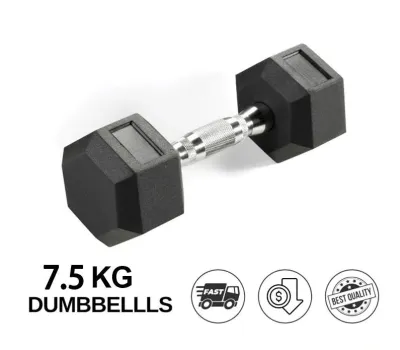
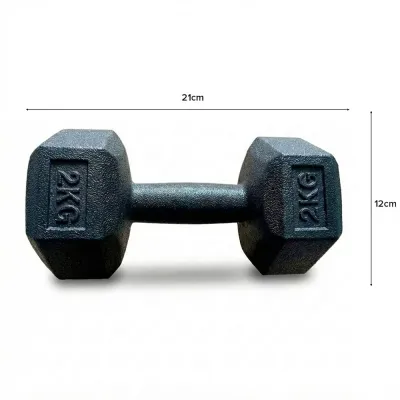
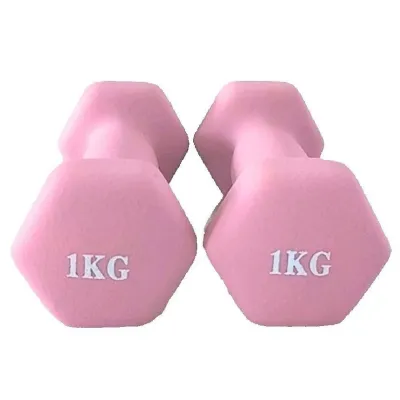
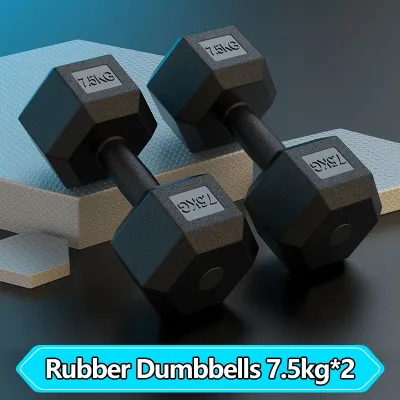
Prices are valid at publication and may change. Please refer to the product page for the latest price.
In terms of weight distribution, hexagonal dumbbells distribute their mass across the flat facets, which can slightly alter the center of gravity during dynamic movements. Because the weight is spread across distinct angles, some users notice a different rotational feel when transitioning between exercises. Round dumbbells, on the other hand, maintain a perfectly symmetrical weight distribution around the central axis of the handle. This symmetry ensures a consistent balance throughout the entire range of motion, making them highly predictable during complex lifts.
Material pairings also tend to differ between these two shapes, though these are general market observations rather than absolute rules. Hexagonal dumbbells are frequently constructed from cast iron and coated with rubber to protect floors and reduce noise during impact. Round dumbbells are often associated with premium materials, such as solid steel coated in high-grade urethane or finished with decorative chrome. While you can find rubber-coated round dumbbells and bare cast-iron hex weights, the material choice often aligns with the intended environment, with urethane round weights being a staple in commercial facilities and rubber hex weights dominating home setups.
Stability and Rolling Risk: Matching Dumbbells to Your Floor
Safety is a primary concern when training at home, and the stability of your equipment plays a major role in preventing accidents. Hexagonal dumbbells excel in this category because their flat edges act as natural brakes. When you set a hex dumbbell down between sets, it remains exactly where you placed it, even if your floor has a slight slope. This anti-roll property is particularly valuable if you train in a garage, balcony, or any area where the floor might not be perfectly level.

Round dumbbells present a continuous rolling hazard if they are not managed carefully. On a hard, smooth surface, a round dumbbell can easily roll away after a heavy set, potentially damaging baseboards, glass doors, or other gym equipment. To mitigate this risk, users of round dumbbells must invest in thick rubber gym mats that can absorb impact and create enough surface friction to hold the weights in place. Alternatively, you must remain highly disciplined about returning round weights directly to a secured rack after every single set.
Before purchasing either style, it is wise to check the levelness of your training floor. Even flat-sided hexagonal dumbbells can slide or shift if placed on a significant incline, while round dumbbells on a sloped floor will immediately roll toward the lowest point. You can verify your floor’s levelness using a standard spirit level or a leveling app on your smartphone. If your training space has a noticeable slope, hexagonal weights offer a much higher margin of safety, reducing the likelihood of runaway weights causing injury or property damage.
Storage and Space Efficiency for Home Gym Setups
Managing space is a constant challenge for home gym owners, and the shape of your dumbbells dictates how they must be stored. Hexagonal dumbbells are incredibly space-efficient because their flat sides allow them to be stacked directly on top of one another or lined up neatly on flat shelves. If you do not have room for a dedicated rack, a few pairs of hex dumbbells can be tucked away in a closet or under a bed without the risk of them shifting or rolling out of place.
When it comes to rack compatibility, hexagonal dumbbells are highly versatile. They sit securely on standard flat-shelf racks, multi-tiered angled racks, and compact A-frame racks. The flat facets rest flush against the support rails, preventing the weights from twisting or sliding. This stability allows you to maximize the capacity of your storage rack, as you can pack the dumbbells closely together without worrying about them bumping into each other and causing instability.
Round dumbbells require a more specialized and often more expensive storage setup. Because they roll easily, they cannot be safely stored on standard flat shelves without some form of containment. Most round dumbbell racks utilize specialized cradles, often called saddles, which are curved plastic or metal trays that hold each individual dumbbell in place. While these saddles provide excellent protection and make it easy to grab the weights, they limit the flexibility of the rack, as each saddle is sized for a specific weight range and prevents you from squeezing extra pairs onto the shelf.
Ergonomics and Exercise Versatility: How Shape Affects Your Grip
The physical shape of the dumbbell head directly influences how the weight interacts with your body during various exercises. Round dumbbells are highly regarded for their ergonomic comfort during movements that require smooth wrist rotation, such as bicep curls, shoulder presses, and clean-and-press variations. Because the weight is perfectly symmetrical and has no protruding corners, the dumbbell rotates smoothly in your hand without creating uneven torque or pressure points on your wrists.
In contrast, the bulky edges of some hexagonal dumbbells can occasionally interfere with your grip or body positioning during close-grip movements. For example, during a close-grip dumbbell bench press or a goblet squat, the flat corners of hex dumbbells may press against your chest or hands in a way that feels less natural than the smooth curve of a round dumbbell. Additionally, the overall length of a hex dumbbell is often slightly longer than a round dumbbell of equivalent weight, which can alter your path of motion on certain exercises.
However, hexagonal dumbbells offer a massive advantage for floor-based exercises where the dumbbell is used as a support base. Movements like renegade rows, dumbbell push-ups, and plank transfers are significantly safer and more comfortable with hex dumbbells. The flat sides provide a rock-solid platform that supports your body weight without wobbling. Attempting these exercises with round dumbbells is highly discouraged, as the weights can easily roll outward, leading to wrist strain or sudden falls.
Decision Guide: Which Dumbbell Shape Fits Your Workout Style?
To make the final decision for your home gym, you must weigh your training preferences against your physical space and budget constraints. Hexagonal dumbbells are generally the superior choice if your workouts frequently incorporate functional fitness, floor-based movements, or high-intensity interval training (HIIT). They are also the ideal option if you have limited space, prefer to store your weights on the floor or in a closet, or want to avoid the extra expense of specialized saddle racks.
You should opt for round dumbbells if your training is heavily focused on traditional bodybuilding, powerlifting, or isolation movements where smooth wrist rotation and perfect balance are your top priorities. Round dumbbells are also a great fit if you already have a dedicated gym room with a level floor, high-quality rubber matting, and the budget to invest in a proper saddle-style storage rack. This setup provides a premium, commercial-gym feel that many lifters find highly motivating.
Before finalizing your purchase, use this checklist to verify that your chosen dumbbells will fit your home environment:
- Measure your available floor space and check the levelness of the training area to ensure safe storage and use.
- Verify the handle diameter of the dumbbells, as some heavy hex weights feature thicker or contoured handles that may affect your grip comfort.
- Check the material specifications of the dumbbell heads to ensure they are compatible with your flooring; rubber or urethane coatings are highly recommended for protecting home floors.
- Review your existing storage solutions or plan for a new rack that matches the specific shape of the dumbbells you choose.
Frequently Asked Questions (FAQ)
Can I mix hex and round dumbbells in the same home gym?
Yes, you can absolutely mix hexagonal and round dumbbells in the same training space to get the best of both worlds. For example, you might choose hexagonal dumbbells for lighter weights used in floor exercises like renegade rows, while opting for round dumbbells for heavier pairs used in bench presses and squats. However, keep in mind that mixing shapes can make storage more complicated, as standard flat racks may not accommodate both shapes efficiently, and your gym’s aesthetic will be less uniform.
Do hex dumbbells damage floors more than round ones?
Hexagonal dumbbells do not inherently damage floors more than round ones, but they distribute weight differently upon impact. Because hex dumbbells have flat edges and sharp corners, dropping them can concentrate the force of the impact onto a smaller surface area, which can dent wood floors or puncture soft foam tiles. To protect your flooring, always use high-density rubber gym mats and avoid dropping cast-iron or rubber-coated weights directly onto unprotected home surfaces, regardless of their shape.

Community discussion
Share your experience or ask a question. Comments are reviewed before publication.