
Choosing an exercise mat thick enough for your workouts depends entirely on the type of movement you practice and the surface beneath you. If you select a mat that is too plush, you might sacrifice the stability needed for standing balance poses. Conversely, a mat that is too thin can leave your knees and spine bruised during floor exercises. Finding the perfect balance requires understanding how different thicknesses interact with your body weight and workout style.
Decoding Exercise Mat Thickness: What the Numbers Mean
To make an informed decision, you must first understand the three primary thickness tiers available on the market. Thin mats range from 1mm to 3mm, standard mats sit between 4mm and 5mm, and thick or extra-thick mats span from 6mm up to 15mm. Each tier serves a distinct physical purpose, and choosing the right one involves a fundamental trade-off between cushioning and stability.
Thicker mats provide excellent impact protection for your joints, making them ideal for sensitive knees or high-impact floor work. However, this extra cushioning comes at a cost: it reduces ground feedback, making it much harder to maintain your balance during standing poses. Thinner mats offer a firm, stable connection to the floor, allowing your feet and hands to root down securely, though they offer minimal protection against hard surfaces.
Products mentioned in this guide
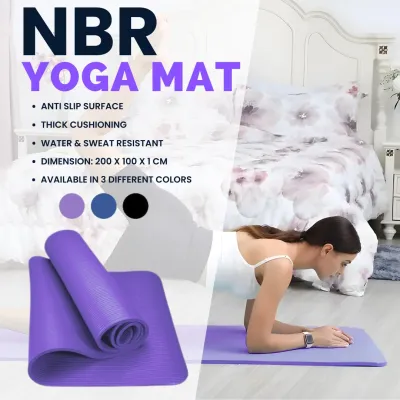
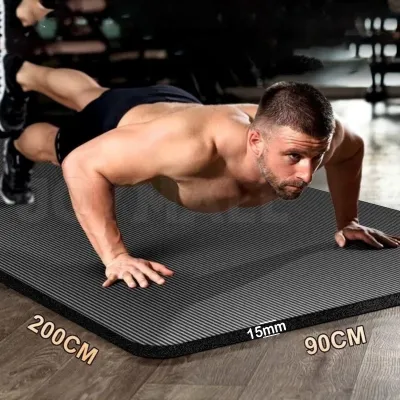

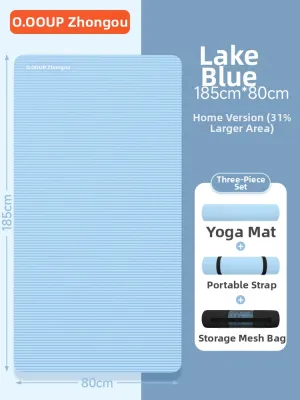
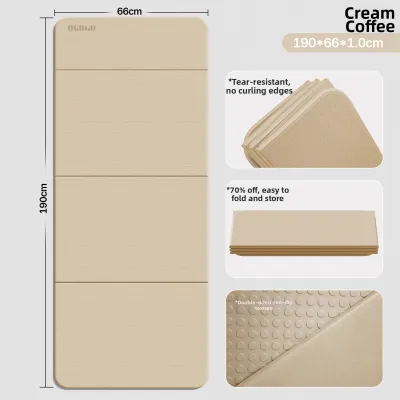

Prices are valid at publication and may change. Please refer to the product page for the latest price.
It is a common misconception that a thicker mat is inherently more premium or better designed. In reality, the ideal thickness is determined by the physical demands of your specific routine. A professional yogi may prefer an ultra-thin 2mm mat for its grounding capabilities, while a Pilates enthusiast might find that same mat completely unusable for rolling exercises.
How to Match Mat Thickness to Your Workout Routine
Matching your mat’s thickness to your specific movement style prevents discomfort and reduces the risk of minor injuries. Different physical disciplines require distinct levels of support, grip, and floor feedback to perform movements safely and effectively.

Yoga and Balance Poses: Prioritizing Stability
For traditional yoga practices, a mat thickness of 1mm to 4mm is generally recommended. Standing postures like Tree Pose or Warrior III require your ankle muscles to make micro-adjustments to keep you upright. A firm, thin surface prevents your feet from sinking, which keeps your ankles stable and helps prevent rolls or strains.
If you travel frequently or commute to a local studio, ultra-thin travel mats (1mm to 2mm) offer excellent portability. These lightweight options fold easily into a backpack, though they should ideally be layered over a studio mat if you require extra joint protection. For daily home practice, a standard 4mm mat offers the best balance of minimal cushioning and reliable stability.
Pilates and Floor Work: Protecting the Spine and Joints
Pilates and dedicated floor workouts demand a thicker surface, ideally in the 5mm to 8mm range. Many classical Pilates movements, such as the Hundred or rolling like a ball, involve rolling your entire body weight along your spine. A thin yoga mat is rarely sufficient to protect your vertebrae from pressing painfully into a hard floor.
Kneeling planks, side-lying leg lifts, and core sequences also place concentrated pressure on your tailbone, knees, and hip bones. A thicker mat distributes this pressure more evenly across the surface area. If your routine consists primarily of floor-based core conditioning, prioritizing a thicker mat will significantly improve your comfort and form.
HIIT and Cardio: Balancing Cushion and Grip
High-intensity interval training (HIIT) and cardio-focused floor workouts require a moderate thickness of 4mm to 6mm. These fast-paced routines involve rapid lateral movements, jumping jacks, burpees, and mountain climbers. You need a surface that absorbs the impact of landing without creating an unstable, squishy base.
Avoid using extra-thick mats (8mm or higher) for high-impact cardio routines. Soft, thick foam compresses unevenly under rapid footwork, which can easily destabilize your ankles during lateral jumps. For safety, always check the manufacturer’s instructions regarding athletic shoe compatibility, as some soft mats can tear easily when used with trainers.
Restorative Stretching and Joint Support: Maximizing Comfort
If your routine consists of slow, restorative stretching, Yin yoga, or physical therapy, an extra-thick mat ranging from 8mm to 15mm is highly beneficial. These practices involve holding static poses for several minutes at a time, which can place prolonged stress on your wrists, knees, and hips.
Extra-thick mats provide deep pressure relief, allowing your body to fully relax into the floor without experiencing painful pressure points. However, keep in mind that these mats are bulky and heavy. They are difficult to roll tightly and carry around, making them best suited for a dedicated home workout space rather than a daily commute.
Why Density Matters Just as Much as Thickness
While thickness is the most visible specification, density is the secret factor that determines how a mat actually performs under pressure. Density refers to how tightly packed the material is within the mat. A poorly constructed, low-density mat will feel soft to the touch but will compress completely under your weight, offering very little actual support.
This is known as the “bottoming out” effect. For example, a cheap 10mm low-density foam mat might compress down to a mere 1mm the moment you place your knees on it, leaving you feeling the hard floor anyway. Conversely, a high-density 4mm mat made of premium materials will compress only slightly, providing firm, consistent joint protection that outperforms thicker, cheaper alternatives.
The material composition directly dictates both density and grip:
- Natural Rubber: Extremely dense and heavy, offering superb joint protection even at thinner profiles (such as 3mm or 4mm), along with excellent natural grip. Always verify if you have a latex allergy before purchasing.
- Polyvinyl Chloride (PVC): Highly durable and can be manufactured in various densities. High-density PVC mats offer excellent longevity but may require a break-in period to achieve optimal grip.
- Thermoplastic Elastomer (TPE): Lightweight and moderately dense. TPE mats are highly portable and offer decent cushioning, though they may compress more quickly over years of heavy use.
Before purchasing, check the product specifications for weight or material density claims. A heavier mat of the same thickness generally indicates higher density and better long-term durability. Reading verified user reviews can also help you identify if a mat tends to flatten out permanently after a few months of use.
How to Test if a Mat's Thickness is Right for You
Before committing to a new mat, or immediately after unboxing it, you can perform a few simple, low-risk checks to ensure the thickness matches your physical needs. Start with the “Press Test”: press your knuckles or your knee firmly into the center of the mat. If you can easily feel the hard floor underneath with minimal pressure, the mat’s density or thickness may be insufficient for floor work.
You must also factor in your home flooring environment. In Singapore, many apartments feature hard ceramic tile, polished marble, or vinyl flooring over concrete. These surfaces have zero natural give, meaning you may need a slightly thicker or denser mat (such as a high-density 5mm or 6mm mat) to stay comfortable. If you practice on carpet or suspended timber floors, you can easily get away with a thinner 3mm mat because the subfloor already absorbs some impact.
Finally, always review the retailer’s return or exchange policy before buying. Testing the mat at home on your actual floor during a brief, low-risk stretching session is the best way to verify if it provides the right balance of support and stability before making a permanent commitment.
Frequently Asked Questions (FAQ)
Can I use a thick yoga mat for standing poses?
Using a very thick mat (6mm or more) for standing balance poses is generally not recommended. The soft, thick material compresses unevenly under your feet, which destabilizes your ankles and forces your stabilizing muscles to work twice as hard. This increases the risk of ankle strain and makes it significantly harder to hold poses like Tree Pose or Warrior III. If you must use a thick mat for floor comfort, consider stepping off the mat onto the hard floor when performing standing balance sequences.
Is a 6mm mat a good compromise for both yoga and Pilates?
A 6mm mat is a highly versatile middle ground if you practice a mix of general fitness, yoga, and light Pilates. However, as a compromise, it has limitations. It may feel slightly too soft and unstable for advanced, balance-heavy yoga practices, and it might still feel a bit too thin for intense, spine-heavy Pilates rolling exercises. If you do both regularly, a high-density 5mm or 6mm mat is your best all-around option.
Do I need a thicker mat if I have bad knees?
If you suffer from joint pain, you do not necessarily need to buy a bulky, extra-thick mat that ruins your standing stability. A highly effective alternative is to use a standard 4mm or 5mm high-density mat for overall stability, and pair it with a small, dedicated high-density knee pad or a folded towel specifically under your knees when kneeling. This protects your sensitive joints during floor poses while maintaining a firm, safe foundation for your hands and feet during standing movements.

Community discussion
Share your experience or ask a question. Comments are reviewed before publication.