
When selecting a climbing carabiner strap—commonly referred to in climbing as a quickdraw dogbone, sling, or runner—ensuring it carries the correct safety certifications and load ratings is a non-negotiable step for personal safety. A certified climbing strap must carry either a CE (Conformité Européenne) mark or a UIAA (International Climbing and Mountaineering Federation) label, indicating it has passed rigorous dynamic and static stress testing. For standard climbing applications, the strap itself should have a minimum tensile strength rating of 22 kilonewtons (kN), while the accompanying carabiners must meet specific major-axis, minor-axis, and open-gate strength thresholds.
In warm, humid tropical climates like Singapore’s, gear is subjected to intense moisture, sweat, and UV exposure, making the structural integrity of your soft goods even more critical. Understanding how to read these markings ensures you do not accidentally rely on general-purpose utility straps or unrated hardware that cannot withstand the forces generated during a lead fall. This guide outlines how to identify legitimate certifications, decode strength ratings, match gear to your specific climbing discipline, and recognize when a strap must be retired.
Understanding Safety Certifications for Climbing Gear
Climbing gear is classified as Personal Protective Equipment (PPE) and is subject to strict international safety standards. The two primary certification bodies you must look for are the European Committee for Standardization (which issues the CE mark) and the International Climbing and Mountaineering Federation (UIAA). A CE mark indicates that the gear complies with European safety directives, which are legally mandated for climbing equipment sold in many parts of the world. The UIAA mark, while voluntary, often requires even more stringent testing criteria and is highly respected within the global climbing community.
Products mentioned in this guide
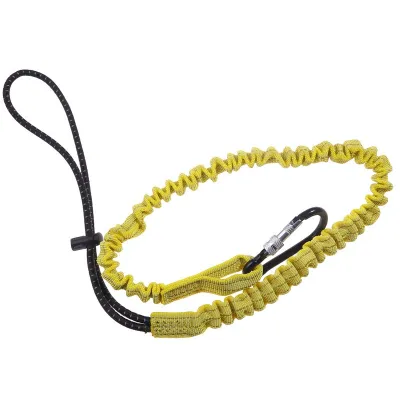
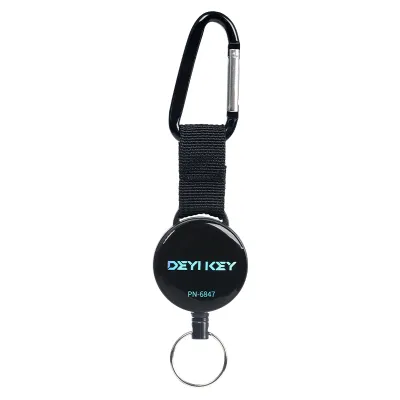
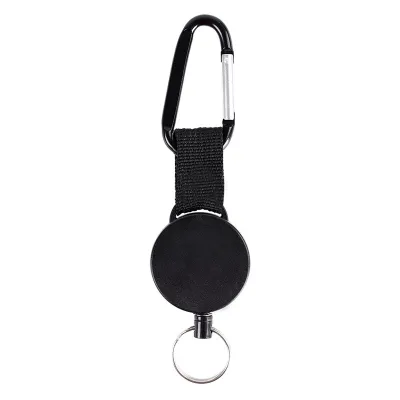
Prices are valid at publication and may change. Please refer to the product page for the latest price.
For climbing straps and slings, the specific standard to look for is EN 566 (or UIAA 104). This standard dictates that the sling must be able to withstand a static tensile force of 22 kN without breaking. For the carabiners attached to these straps, the relevant standard is EN 12275 (or UIAA 121), which classifies carabiners into different types (such as basic, locking, or HMS) and sets minimum strength requirements for each category. When purchasing gear, always look for these exact standard numbers printed alongside the CE or UIAA logos.
Distinguishing genuine climbing certifications from general industrial, lifting, or recreational ratings is vital for your safety. Industrial slings used for construction or cargo lifting may carry high static load ratings, but they are not designed to absorb dynamic shock loads or resist the sharp edges encountered on rock faces. Similarly, cheap utility straps and accessory carabiners sold at general hardware stores or outdoor lifestyle shops often look identical to climbing gear but lack any certified load-bearing capacity. These items are frequently marked “Not for Climbing” or, worse, carry no warning labels at all, making them highly dangerous if mixed with your active climbing rack.
To verify these certifications, you must know where to locate the physical labels on your gear. On a climbing strap or quickdraw dogbone, the certification details are printed on a durable fabric tag that is sewn directly into the structural joint of the webbing. This tag is often protected by a clear plastic sleeve to prevent abrasion from rock and ropes. On the carabiner hardware, the CE and UIAA marks, along with the manufacturer’s name, batch number, and strength ratings, are permanently laser-etched or stamped into the metal spine. If these markings are missing, illegible, or look like cheap stickers, do not use the gear.
Decoding Load Ratings and Strength Markings
The strength of climbing gear is measured in kilonewtons (kN) rather than kilograms or pounds. One kilonewton is a unit of force equivalent to approximately 100 kilograms (225 pounds) of static weight under normal gravity. However, because climbing involves dynamic falls where gravity accelerates a climber’s body weight, the force exerted on the gear during a catch is much higher than the climber’s static weight. A standard lead fall can easily generate forces between 4 kN and 8 kN on the top piece of protection, which is why climbing straps are engineered to a minimum static rating of 22 kN to provide a safe buffer.

When reading the markings on a carabiner, you will typically see three distinct strength ratings represented by icons on the spine. The first rating is the major axis strength, which applies when the carabiner is loaded end-to-end with the gate fully closed and locked. This rating must be at least 20 kN for basic climbing carabiners. The second rating is the minor axis (or cross-loaded) strength, which occurs when the carabiner is pulled sideways across the gate. The third is the open-gate strength, which measures the carabiner’s resistance when the gate is accidentally held open during a fall. Both minor axis and open-gate strengths are significantly lower, often ranging between 7 kN and 10 kN, highlighting the importance of proper gear orientation.
For the climbing strap itself, the rating is straightforward but highly dependent on how the strap is used. A standard EN 566 certified sling is rated to 22 kN when pulled end-to-end in a straight line. However, any knot tied into a sling—such as an overhand or figure-eight knot used to shorten it—can reduce its strength by 30 to 50 percent due to the tight bends introduced into the fibers. Tri-axial loading, where a sling is pulled in three directions simultaneously, or wrapping a sling around a sharp rock edge also drastically reduces its load capacity.
Always check the manufacturer’s technical specifications to ensure the gear meets the required safety thresholds for your intended use. Different climbing disciplines, such as big wall climbing, aid climbing, or industrial rope access, may require specialized straps with different load profiles. Never rely on assumed minimums or guess the strength of a strap based on its thickness or color. If you are ever in doubt about a strap’s rating, consult the manufacturer’s official user manual, which is often available online via the batch number printed on the gear’s tag.
Matching Strap Specifications to Your Climbing Activity
Selecting the right carabiner strap requires matching its material, length, and design to your specific climbing environment. For indoor gym climbing and outdoor sport lead climbing, pre-assembled quickdraws are the standard choice. These consist of two non-locking carabiners connected by a short, stiff polyester or nylon strap called a dogbone. The stiffness of the dogbone is intentional; it prevents the quickdraw from twisting, makes it easier to grab in an emergency, and keeps the bottom carabiner oriented correctly for quick rope clipping.
For traditional (trad) climbing, multi-pitch climbing, or alpine mountaineering, weight and packability become primary concerns. In these scenarios, climbers often use extendable quickdraws (alpine draws) made from thin, lightweight slings. These slings are typically constructed from Ultra-High-Molecular-Weight Polyethylene (UHMWPE), commonly known by brand names like Dyneema or Spectra. Dyneema slings are incredibly strong for their weight and absorb very little water, making them ideal for wet or icy conditions. However, Dyneema is highly static and has a lower melting point than nylon, meaning it cannot absorb dynamic energy and is highly sensitive to friction-induced heat.
Nylon (polyamide) remains the preferred material for anchor building, personal anchor systems (PAS), and general-purpose slings. Nylon is more elastic than Dyneema, allowing it to absorb a small amount of dynamic energy if you accidentally shock-load the system. It is also wider, thicker, and more resistant to abrasion from rough rock surfaces. When building anchors, a 120 cm or 240 cm nylon sling provides the versatility needed to connect multiple protection points while maintaining a high safety margin.
Finally, ensure that the strap width and the carabiner gate type are compatible with your harness and the specific task. Thick nylon straps are easier to handle but take up more space on your gear loops, whereas thin Dyneema slings can tangle easily if not organized properly. For personal anchors and master points, always pair your straps with locking carabiners (such as screwgates or triple-action auto-lockers) to prevent accidental gate opening. For quickdraws, wire-gate carabiners are excellent for alpine use as they resist freezing and reduce the risk of “gate flutter” during an impact.
Red Flags and When to Stop Using a Carabiner Strap
Soft goods like climbing straps degrade much faster than metal hardware, requiring vigilant inspection and strict retirement schedules. One of the most common red flags is physical wear on the webbing. Look closely for fuzzy fibers, fraying along the edges, or any cuts in the fabric. Pay special attention to the structural bar-tacks (the heavy-duty stitched sections that hold the strap loops together); if any threads are loose, broken, or worn thin, the strap must be retired immediately.
Environmental factors can severely compromise synthetic fibers without leaving obvious visual clues. UV degradation from prolonged exposure to sunlight weakens nylon and Dyneema over time. If a strap appears faded, feels stiff, or has lost its natural flexibility, its load-bearing capacity has likely dropped below safe limits. Chemical contamination is another hidden danger. Exposure to battery acid, gasoline, household solvents, or even certain insect repellents can chemically dissolve the synthetic fibers. If you suspect your strap has come into contact with any corrosive substance, destroy it immediately to prevent accidental use.
For the metal carabiners, inspect the body for deep grooves worn by the rope, sharp edges, cracks, or corrosion. The gate mechanism must operate flawlessly; if a gate sticks, does not snap shut instantly, or if the locking sleeve fails to engage, the carabiner is unsafe. Any gear that has been subjected to a severe dynamic fall, or has been dropped from a significant height onto a hard surface, should be retired. Even if there is no visible damage, internal micro-fractures can exist within the aluminum alloy, which can lead to sudden failure under load.
A fundamental rule of climbing safety is to never use gear with an unknown history. If you find an abandoned sling on a route, or if you are offered used gear with no verifiable log of its age and exposure, do not climb on it. Soft goods have a maximum shelf life of ten years from the date of manufacture, even if stored unused in perfect conditions, and a typical active lifespan of two to five years depending on usage frequency. When in doubt, always err on the side of caution: destroy the retired gear by cutting the webbing or disabling the carabiner gate so that no one else can mistakenly use it.
Frequently Asked Questions (FAQ)
Can I use a non-certified industrial strap or carabiner for climbing?
No, you must never use industrial or non-certified hardware for climbing. Industrial rigging straps and carabiners are designed for static lifting applications and are not tested to handle the dynamic, high-impact forces generated during a climbing fall. Industrial gear also lacks the specific design features required for climbing safety, such as lightweight construction, edge-abrasion resistance, and specialized gate-locking mechanisms that prevent accidental unclipping during active movement. Using uncertified hardware poses an extreme risk of catastrophic gear failure.
How do I properly inspect my carabiner strap before every climb?
Before every climbing session, perform a thorough visual and tactile inspection of your gear. Run your fingers along the entire length of the strap webbing to feel for any unusual stiff spots, internal bunching, or thinning of the material. Visually check the structural bar-tack stitching for any loose, cut, or frayed threads. For the carabiners, open and release the gate several times to ensure it snaps shut instantly and aligns perfectly with the nose, and verify that any locking sleeves rotate smoothly without sticking or binding.

Community discussion
Share your experience or ask a question. Comments are reviewed before publication.