
To find a beginner-friendly telescopic fishing rod in Singapore, you must look beyond flashy marketing and focus on how a rod’s design matches your commuting habits, local fishing spots, and target species. Telescopic rods offer unmatched portability for anglers navigating public transport or tight storage spaces, but selecting the right one requires evaluating material durability, joint construction, and local after-sales support. By understanding how to decode specifications and verify brand reliability, you can make a confident first purchase that stands up to Singapore’s unique saltwater and freshwater environments.
Whether you plan to cast from concrete jetties or target peacock bass in urban reservoirs, the key is knowing what to look for before you buy. This guide breaks down the essential criteria, technical specifications, and local verification steps to help you choose a reliable telescopic rod that fits your lifestyle and budget.
Quick Criteria for Choosing Your First Telescopic Rod
Before browsing any online marketplace or stepping into a local tackle shop, define where you plan to fish. Singapore offers diverse angling environments, from the concrete decks of Bedok Jetty and Woodlands Jetty to the calm waters of freshwater reservoirs and commercial payponds. A rod designed for casting heavy sinkers into strong coastal currents requires vastly different characteristics than one meant for dropping light lures near reservoir structures. Identifying your primary venue first prevents you from buying a rod that is either too delicate for the sea or too stiff for local ponds.
Products mentioned in this guide
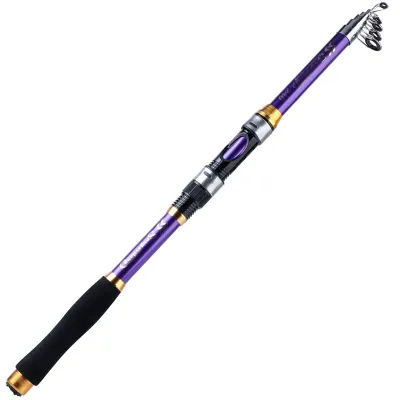
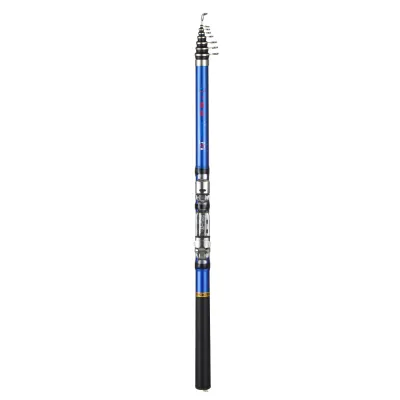
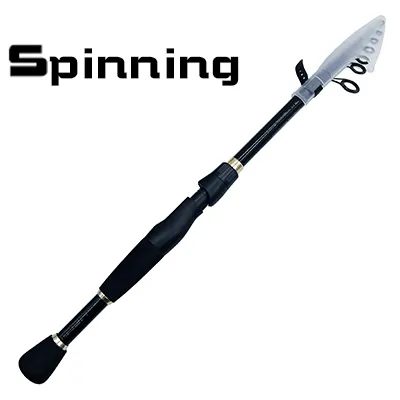
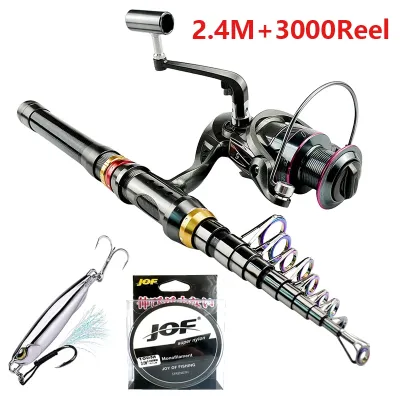
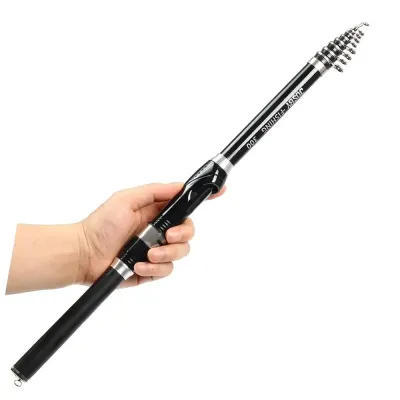
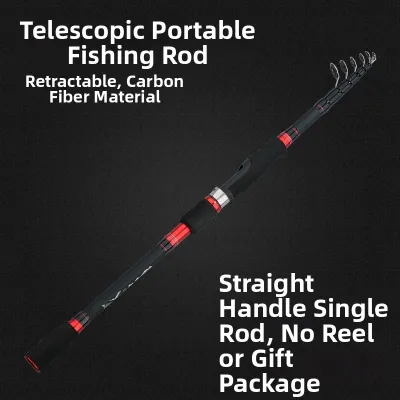
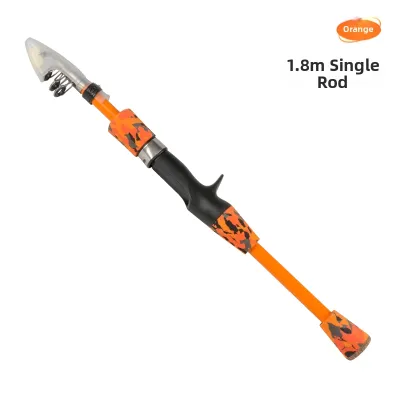
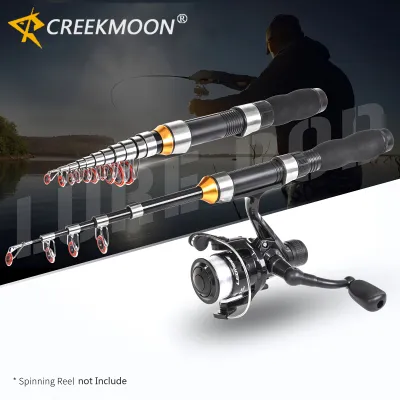
Prices are valid at publication and may change. Please refer to the product page for the latest price.
Transport and storage are the primary reasons to choose a telescopic fishing rod over a traditional multi-piece model. If you rely on public transport like the MRT or buses, or if you commute by bicycle or motorcycle, look for a rod with a collapsed length of under 60 centimeters. This compact size easily fits inside a standard backpack or commuter bag, keeping your hands free and preventing accidental damage during transit. The fully extended length should balance casting distance with your physical handling comfort; for beginners, an extended length between 1.8 meters (6 feet) and 2.4 meters (8 feet) provides excellent control without becoming unwieldy.
Match the rod’s power rating—which describes how much force is needed to bend the rod—to the typical size of local target species. In Singapore’s coastal waters, you might encounter small flower groupers, rabbitfish, or yellowstripe scads, while reservoirs host active peacock bass and snakeheads. A medium-light to medium power rating is highly versatile for beginners, offering enough flexibility to enjoy catching smaller fish while retaining the structural strength to handle unexpected larger catches without snapping.
Essential Specifications to Decode on Product Labels
The raw materials used to construct the rod blank dictate its weight, sensitivity, and durability. Graphite (often labeled as carbon fiber) is highly sensitive and lightweight, allowing you to feel subtle bites, but it can be brittle if subjected to sudden impacts or high-sticking. Fiberglass is incredibly tough, flexible, and forgiving of beginner mistakes, though it is significantly heavier and less sensitive. Composite blends combine both materials, offering a balanced middle ground that provides the durability of fiberglass with a portion of graphite’s lightweight responsiveness.

Because Singapore’s coastal fishing is entirely saltwater, guide rings and reel seats require careful inspection. Look for guide frames made of stainless steel or corrosion-resistant alloys, paired with ceramic inserts like aluminum oxide or silicon carbide to prevent line friction and wear. Ensure the reel seat features a heavy-duty nylon or metal locking nut that tightens securely without stripping its threads, keeping your spinning reel perfectly aligned during a fight. Cheap, unbranded guides will rust rapidly in tropical humidity and saltwater spray, leading to rough casting and damaged lines.
Telescopic rods consist of multiple nesting sections, and the number of joints directly impacts the rod’s overall action and structural integrity. More sections mean a shorter collapsed length but can result in a stiffer, less natural bending curve and more potential points of failure. Examine the locking mechanism of the sections; most telescopic rods use a friction-fit system where you pull and twist each section to lock it in place. High-quality brands design these joints with precise tolerances to prevent the sections from slipping, twisting, or seizing under load.
Verifying Brand Support and Local Availability in Singapore
A fishing rod is an investment, and beginners are more likely to experience accidental breakages as they learn proper casting and landing techniques. When evaluating brands, distinguish between international warranties and those backed by local Singaporean distributors. An international warranty might require you to ship the broken rod overseas at your own expense, which can cost more than the rod itself. A brand with an official local distributor or a dedicated service center in Singapore allows you to walk in, verify the damage, and secure a replacement or repair much faster.
The tip section of a telescopic rod is particularly vulnerable to snapping if it is accidentally retracted too quickly or struck against a hard surface. Before finalizing your purchase, ask the retailer if they stock individual replacement sections, guide rings, and tip tops for that specific brand. Brands that support their products with readily available spare parts save you from having to discard the entire rod over a single broken component, making them far more cost-effective in the long run.
While online marketplaces offer convenience and competitive pricing, visiting a physical tackle shop in Singapore is invaluable for a beginner. Areas like Beach Road, Changi, and various neighborhood estates host experienced tackle dealers where you can physically handle the gear. Inspecting a rod in person allows you to check the alignment of the guide rings, feel the weight and balance when paired with a reel, and ask the shop staff about the brand’s real-world track record among local anglers.
Building a Condition-Based Shortlist for Your First Purchase
When planning your initial purchase, avoid spending your entire budget on the rod alone. A complete, functional setup requires a balanced allocation of funds across the telescopic rod, a compatible spinning reel, fishing line, and essential terminal tackle like hooks, sinkers, and swivels. For a beginner in Singapore, allocating roughly 40% of your budget to a durable telescopic rod, 40% to a smooth, saltwater-resistant reel, and 20% to high-quality line and terminal tackle ensures a balanced setup where no single component bottlenecks your performance.
To narrow down your options, use this checklist to match your intended fishing environment to specific rod specifications:
- Reservoir and Pond Fishing: Select a light to medium-light composite rod, 1.8 to 2.1 meters in length, paired with a 1000 to 2000-sized reel and light monofilament or braided line for casting small lures or live bait.
- Jetty and Coastal Shore Casting: Choose a medium to medium-heavy rod, 2.4 to 2.7 meters in length, with corrosion-resistant guides, paired with a 3000 to 4000-sized reel to handle heavier sinkers and withstand strong currents.
- Casual Travel and Commuting: Prioritize an ultra-compact rod with a collapsed length under 50 centimeters that fits entirely inside a standard daypack, ensuring it meets public transport guidelines without protruding.
Once you have shortlisted a few models at a local shop, perform a thorough physical inspection before paying. Fully extend the rod section by section, starting from the tip, and gently twist each joint to ensure a snug, friction-fit lock. Hold the rod at the reel seat and shake it gently; any clicking sounds or noticeable play indicates loose joints or poorly fitted guides. Finally, look down the line of guides from the reel seat to the tip to verify they are perfectly aligned, as misaligned guides will cause uneven line wear and reduce your casting distance.
Frequently Asked Questions (FAQ)
Are telescopic fishing rods good for beginners?
Telescopic fishing rods are excellent for beginners who prioritize convenience, portability, and easy storage. They allow you to keep your gear fully rigged with line and lures while collapsed, meaning you can start fishing within seconds of arriving at your destination. However, beginners should be aware that telescopic designs generally offer less sensitivity and a less uniform bending curve than one-piece or two-piece rods. The multiple joints also require regular maintenance to prevent wear, making them a trade-off between ultimate performance and everyday practicality.
What length should a beginner's telescopic rod be?
For most beginners in Singapore, an extended length of 2.1 meters (7 feet) is the ideal starting point. This length is highly versatile, offering a great balance between casting distance at open jetties and maneuverability in tighter spots like reservoir banks or crowded payponds. Shorter rods (around 1.8 meters) are easier to handle for younger anglers or in heavily vegetated areas, while longer rods (2.4 meters and above) help cast heavier rigs further into the sea but require more physical effort and space to manage.
How do I maintain the joints of a telescopic rod?
Proper maintenance is crucial to prevent the sections of your telescopic rod from seizing or cracking. After every fishing trip—especially in saltwater environments—fully extend the rod and rinse it thoroughly with fresh, clean water to remove salt, sand, and grit. Wipe each section down with a soft microfiber cloth and allow the rod to dry completely in a shaded, well-ventilated area before collapsing and storing it. Never force the sections open or closed with excessive violence, and avoid using heavy oils or grease on the joints, as these attract abrasive dirt that can grind down the blank over time.

Community discussion
Share your experience or ask a question. Comments are reviewed before publication.