
To choose the right bicycle lock cable, look for a minimum cable thickness of 10mm to 12mm for basic deterrent security, paired with a braided steel core and a thick, weather-resistant protective coating. For high-risk areas, overnight parking, or long-term storage, a cable lock should never be your sole line of defense. Instead, use it as a secondary deterrent to secure your wheels and accessories while a robust U-lock or heavy-duty chain anchors the frame.
Whether you are navigating Singapore’s Park Connector Network (PCN) for a weekend ride or commuting through busy urban hubs, understanding how cable diameter, material construction, and environmental factors influence security will help you make an informed decision. Equipment alone cannot replace active vigilance, but choosing the correct specifications significantly reduces the risk of opportunistic theft.
Understanding Cable Thickness and Security Ratings
When evaluating a bicycle lock cable, the physical thickness of the steel core directly determines how well it resists manual cutting tools. Thin cables under 8mm can often be severed silently in seconds using basic hand-held wire cutters. Stepping up to a thickness of 10mm to 15mm forces opportunistic thieves to use larger, more conspicuous tools, which increases their risk of being spotted.
Products mentioned in this guide
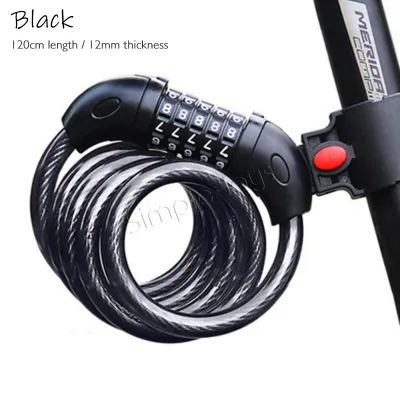
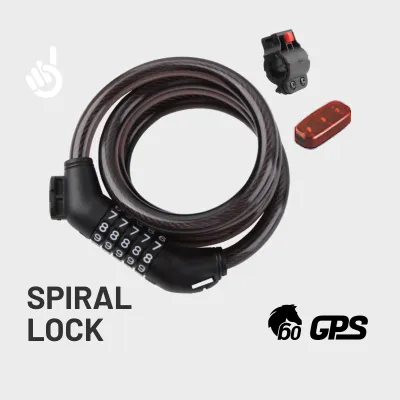
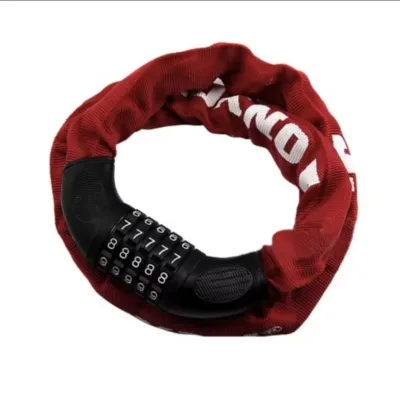
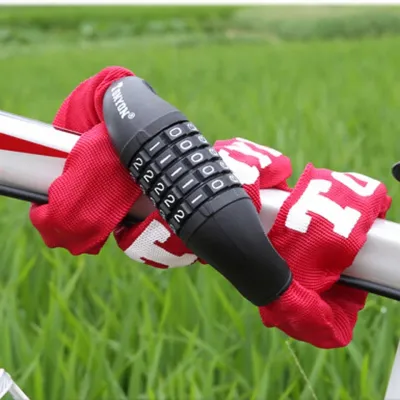
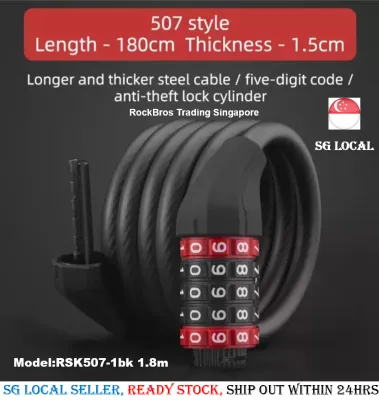
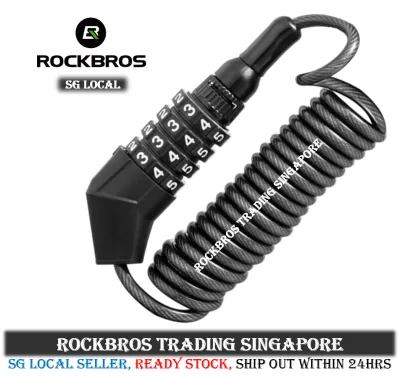
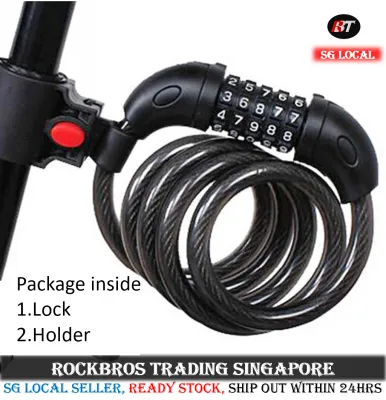
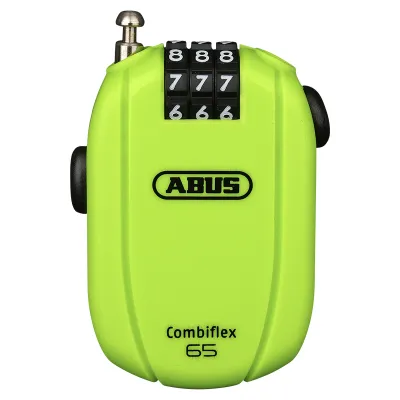
Prices are valid at publication and may change. Please refer to the product page for the latest price.
However, increased thickness comes with a clear trade-off in weight and flexibility. A very thick cable is heavier to carry and much harder to coil tightly around your seat post or fit inside a compact frame bag. If your riding style involves long-distance road cycling where every gram matters, you might opt for a thinner, lighter cable strictly for quick cafe stops, whereas daily commuters will benefit from the added security of a heavier, thicker cable.
To make an accurate comparison, learn to read manufacturer security labels rather than relying solely on the advertised millimeter measurements. Some brands include the thick outer plastic sleeve in their total diameter measurement, making a thin steel cable appear much more robust than it actually is. Always check the product specifications to verify the actual thickness of the inner steel core, and look for independent security ratings to gauge real-world cut resistance.
Evaluating Cable Materials and Protective Coatings
Inside the protective sleeve, the structural design of the steel core plays a major role in how the lock behaves under tension and cutting pressure. Most bicycle lock cables feature braided steel, where multiple thin steel wires are woven together into a complex rope. This braided structure offers excellent flexibility and makes cutting difficult because the individual strands shift and bind the blades of manual shearing tools.

In contrast, stranded steel cables consist of thicker, bundled wires that are stiffer and offer high tensile strength but less flexibility. For most cyclists, braided steel provides the best balance of portability and security. Regardless of the internal structure, the steel must be shielded from the elements to prevent premature wear and structural failure.
In humid, tropical environments like Singapore, a high-quality outer coating is essential to protect the steel core from rust. Look for a thick, durable polyvinyl chloride (PVC) or vinyl sleeve. This coating serves a dual purpose: it prevents moisture and sweat from corroding the internal steel wires, and it protects your bicycle’s paint or carbon fiber frame from scratches during daily use. Inspect the cable ends where they meet the lock housing to ensure the coating is tightly sealed, leaving no gaps for water to pool inside.
Matching Lock Specifications to Your Parking Environment
Your choice of cable lock specifications should align directly with your typical parking duration, location risk, and carrying method. For brief, daytime stops within your line of sight—such as grabbing a quick drink at a PCN pitstop—a lightweight 10mm cable lock is highly convenient and provides sufficient protection against quick-grab theft. It is easy to carry and quick to deploy.
For long-term parking, such as leaving your commuter bike at an MRT station or an outdoor rack for several hours, a cable lock should never be used as your primary security device. In these unmonitored, high-risk environments, a cable is easily bypassed by determined thieves equipped with heavy-duty bolt cutters. In these scenarios, stop relying on a cable alone and upgrade your setup.
Instead, use the cable lock as a secondary security measure to protect easily removable components. Loop the cable through your front and rear wheels, saddle, and accessories, and then secure the main frame to a solid anchor point using a hardened steel U-lock or folding lock. Many manufacturers offer dual-loop cables designed specifically to thread through themselves and lock directly into the shackle of your primary lock, streamlining your security setup.
Practical Features to Verify Before Purchase
Before finalizing your purchase, verify that the cable length matches your specific bicycle frame size and parking needs. A cable that is too short (under 1.2 meters) will make it difficult to secure both the frame and a wheel to standard bike racks. A length of 1.8 meters to 2.4 meters is generally ideal, providing enough slack to loop through both wheels and wrap around large public fixtures.
Next, compare key versus combination locking mechanisms based on your daily convenience. Keyed locks are highly reliable but require you to carry a physical key and keep a spare safely at home. Combination locks eliminate the risk of losing a key, which is highly convenient for multi-user family bikes, but you must verify that the dials are weather-sealed and rotate smoothly even when wet.
Finally, examine the locking mechanism housing and the manufacturer’s warranty terms. The housing surrounding the lock cylinder should be constructed from impact-resistant materials or encased in hardened steel to resist hammer strikes. Review the warranty to ensure it covers mechanical failures caused by environmental corrosion, ensuring your investment remains protected over seasons of daily riding.
Frequently Asked Questions (FAQ)
Can a cable lock be used as the primary lock for my bicycle?
No, a cable lock should not be used as your sole primary lock in high-risk, unmonitored, or long-term parking situations. Because steel cables can be cut relatively quickly with portable hand tools, they are best suited as secondary security to protect easily removable components like quick-release wheels and saddles, or as a temporary deterrent for brief, supervised stops.
How do I maintain the outer coating to prevent cracking?
To prolong the life of the protective PVC or vinyl sleeve, regularly wipe down the cable with a damp cloth to remove abrasive road grit, salt, and sweat. Avoid leaving the lock exposed to direct, intense sunlight for extended periods when not in use, as UV rays can dry out the plastic and cause it to crack. If you notice deep cracks that expose the inner steel core to moisture, replace the lock immediately to prevent internal rust and sudden structural failure.

Community discussion
Share your experience or ask a question. Comments are reviewed before publication.