
Quick Answer: Matching the Holder to Your Setup
Selecting the right dumbbell holder requires balancing three non-negotiable factors: total weight capacity, dumbbell shape compatibility, and structural stability. Calculate your current and future weight requirements, match the tray design to your specific dumbbell type, and choose a heavy-duty steel frame with a wide base.
Whether you are spending S$80 on a compact vertical stand or over S$300 on a heavy-duty multi-tier rack, verifying these specifications beforehand prevents equipment damage and ensures a safe workout environment. Prioritize thick-gauge steel and robust welding to guarantee your storage solution can handle the daily impact of heavy lifts.
Step 1: Assess Your Collection and Floor Space
To find your required load capacity, list every dumbbell pair you own. Multiply the weight of each dumbbell by two, then sum these values. For example, a set containing pairs of 5kg, 10kg, 15kg, and 20kg weights totals 100kg. Always add a safety buffer of at least 20% to 30% to accommodate future strength gains and heavier purchases. This prevents overloading the frame, which can lead to structural bowing or catastrophic joint failure over time.
Products mentioned in this guide
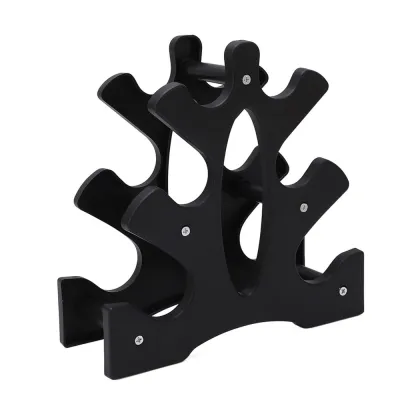
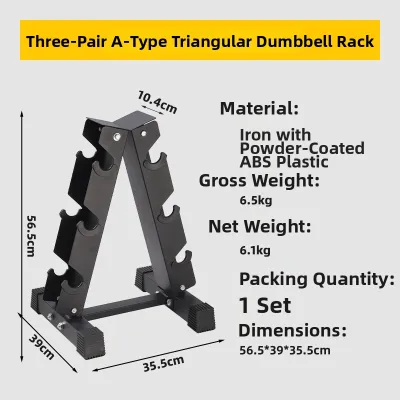
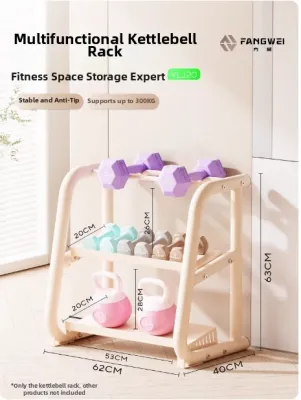
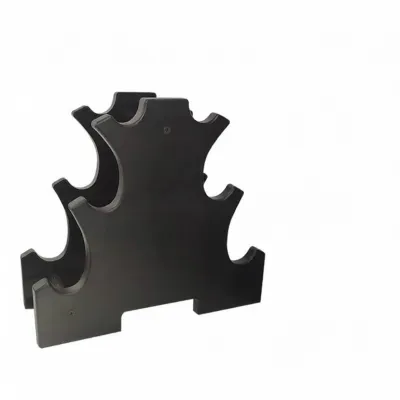
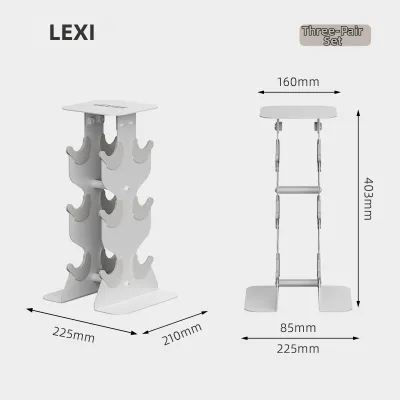
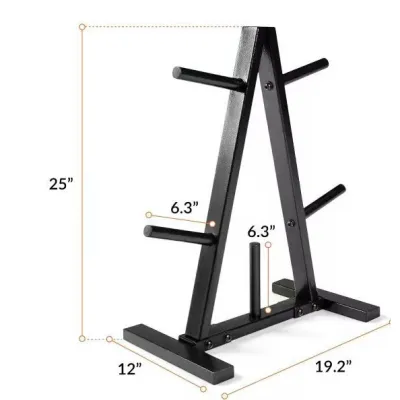
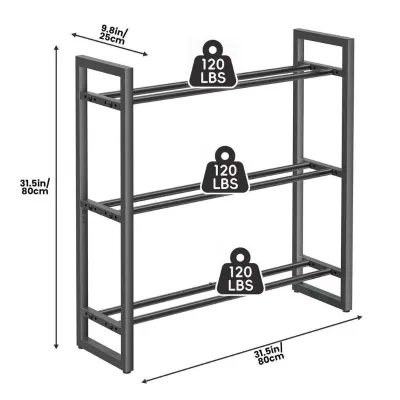
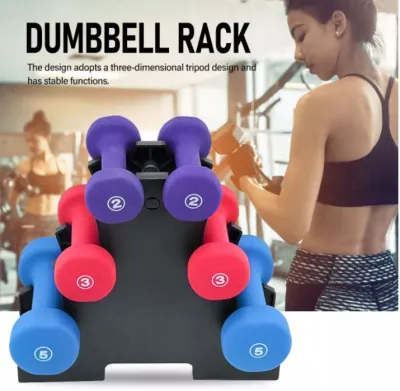
Prices are valid at publication and may change. Please refer to the product page for the latest price.

Dumbbells are not uniform. Traditional cast-iron hex dumbbells have flat edges that sit securely on flat steel trays without rolling. Round dumbbells, however, require contoured saddles or angled lips to prevent them from rolling off the front or back of the rack. Adjustable dumbbells present a unique challenge; their bulky dial mechanisms, elongated selector pins, and custom cradles often do not align with standard horizontal rails, requiring flat, wide shelving or dedicated brand-specific stands.
Home gyms in space-constrained environments, such as modern high-rise apartments or compact spare rooms, require careful spatial planning. A horizontal three-tier rack offers excellent accessibility but can easily consume over a meter of linear floor space. Conversely, vertical A-frame towers utilize overhead space, requiring a fraction of the floor area. However, vertical storage demands more physical effort to lift heavy weights to the top tiers and can restrict your ability to store dumbbells heavier than 15kg safely.
Step 2: Compare Holder Types for Home Gyms
Vertical holders are the ultimate space-savers for light to moderate weight collections. These structures typically feature a triangular or upright post design with plastic-lined hooks on either side to cradle the dumbbell handles. When evaluating an A-frame, pay close attention to the base-to-height ratio. A narrow base combined with heavy weights stored near the top creates a high center of gravity, making the tower prone to tipping if bumped. Look for models that feature extended, flanged base legs and limit your top-tier storage to your lightest pairs.
If you train with heavy weights or perform rapid drop sets, a horizontal multi-tier rack is the standard choice. These racks feature two or three tiers of angled steel rails. The angled design tilts the dumbbells slightly toward you, making it much easier to lift heavy weights off the rack without straining your wrists or lower back. Because these racks hold substantial weight, they require heavy-gauge steel crossbars and robust bolt connections. They are ideal for dedicated garage gyms or larger workout rooms where floor space is not at a premium.
For minimalist setups or single pairs of adjustable dumbbells, alternative storage solutions exist. Wall-mounted brackets can clear floor space entirely but demand absolute certainty in installation. You must anchor these brackets directly into solid concrete walls or structural timber studs using heavy-duty lag shields or masonry bolts; drywall anchors will fail under the sheer force of dropping a weight onto the holder. Bench-attached cradles keep your weights within arm’s reach during presses but can alter the bench’s balance and limit your range of motion around the equipment.
Step 3: Inspect Build Quality and Safety Features
The structural integrity of a dumbbell holder depends entirely on the quality of its steel and joints. Look for frames constructed from thick-gauge structural steel tubing, typically 12-gauge or 14-gauge. Thinner, sheet-metal alternatives will bend under heavy loads. Inspect the joints closely: continuous, clean welds that wrap entirely around the connection points are vastly superior to spot welds or cheap, thin bolts. A well-welded frame distributes weight evenly and resists the constant impact of heavy steel weights being placed on it day after day.
A stable base is critical for both safety and property preservation. The rack must feature a wide, stable footprint that resists wobbling when weights are loaded unevenly. Look for rubberized end caps or thick plastic feet on the base. These feet serve a dual purpose: they prevent the heavy steel rack from scratching or gouging your home gym flooring—whether you use rubber tiles, vinyl, or hardwood—and they provide essential friction to stop the rack from sliding when you re-rack a heavy dumbbell with force.
The environmental conditions of your home gym play a major role in the lifespan of your equipment. In humid climates, bare steel will rust rapidly, leading to structural weakness and unsightly flaking. Prioritize dumbbell holders finished with a durable, electrostatically applied powder coating. This finish creates a thick, scratch-resistant barrier that protects the underlying steel from sweat, moisture, and the inevitable scrapes of metal-on-metal contact. If storing equipment in a damp garage or outdoor utility area, look for galvanized or rust-resistant hardware.
Step 4: Build Your Shortlist and Verify Specs
Before finalizing your purchase, perform a rigorous specification check. Compare your calculated total weight (including your future buffer) against the manufacturer’s certified maximum weight capacity. Never run a rack at 100% of its rated capacity; aim to keep your total load under 80% of the limit to ensure a safe structural margin. Be wary of unbranded, low-cost options on online marketplaces that claim high weight capacities without structural testing or clear steel specifications.
Do not rely on visual estimates. Use a tape measure to record the exact dimensions of your dumbbells. Measure the handle length—the distance between the inner faces of the weight plates—to ensure it is wider than the rack’s support rails. If the handle is too short, the dumbbell will not sit on the rails; if it is too long, the weight plates may rub against the frame, making retrieval difficult. Additionally, check the depth of the trays to ensure your largest, heaviest dumbbells will not overhang excessively or interfere with the tier above them.
Consider the practicalities of delivery and setup. Dumbbell holders are heavy, dense items that are often shipped flat-packed. Verify if the package requires specialized tools for assembly, such as socket wrenches or heavy-duty spanners, and check if these are included. Review the manufacturer’s warranty terms, focusing specifically on structural frame coverage. Because returning a heavy steel rack via freight can be incredibly expensive, double-checking all dimensions and compatibility details beforehand is essential to avoid costly return shipping fees.
Frequently Asked Questions (FAQ)
Can I use a standard horizontal rack for adjustable dumbbells?
Standard horizontal racks are generally not suitable for adjustable dumbbells without modification. Adjustable dumbbells feature complex selector dials, elongated base plates, and custom cradles that require a completely flat, continuous surface to sit safely. Standard racks often have open parallel rails or angled lips designed to catch the heads of traditional dumbbells; these lips can interfere with the adjustment mechanisms or cause the dumbbell to sit unevenly, risking damage to the delicate internal gears. If you own adjustable dumbbells, look for flat-shelf utility racks or dedicated stands designed specifically by the manufacturer to hold their exact cradle shape.
How do I prevent a tall dumbbell tower from tipping over?
Preventing a vertical dumbbell tower from tipping requires strict adherence to proper loading physics and structural checks. Always load your heaviest dumbbells on the lowest slots of the tower to keep the center of gravity as close to the floor as possible. As you work your way up the rack, place progressively lighter weights on the higher hooks. When unloading, avoid removing all the bottom weights while leaving heavy pairs at the top. Additionally, ensure the tower is placed on a perfectly level, hard surface; soft, uneven carpets or thick, squishy foam tiles can cause the rack to lean. For maximum safety, choose a tower with an extra-wide, H-shaped base, or position the rack directly against a wall to limit potential tipping paths.

Community discussion
Share your experience or ask a question. Comments are reviewed before publication.