
Selecting the right badminton racket for regular practice is a balancing act between durability, user-friendly specifications, and structural integrity. Unlike professional tournament rackets designed for single-match peak performance, a practice racket must endure thousands of repetitions, occasional frame clashes, and off-center hits. Choosing a racket that matches your current skill level and physical strength is essential for supporting long-term development while minimizing the risk of arm fatigue and equipment breakage.
By focusing on key specifications such as frame materials, weight, balance, and shaft flexibility, you can find a reliable training partner that helps refine your technique. A well-chosen practice racket not only protects your joints from repetitive strain but also ensures that your training sessions remain productive and enjoyable.
Key Specifications for a Durable Practice Racket
Understanding the technical specifications of a badminton racket is crucial for identifying a model that can withstand the rigors of high-volume training. The materials used in construction, the weight of the frame, the distribution of that weight, and the flexibility of the shaft all play vital roles in how the racket performs and how long it lasts.
Products mentioned in this guide
Prices are valid at publication and may change. Please refer to the product page for the latest price.
Frame materials and construction quality are the primary determinants of a racket’s lifespan. Most modern practice rackets are constructed from carbon fiber or graphite composites, which offer an excellent strength-to-weight ratio. When evaluating a racket for regular practice, look for reinforced joint areas, particularly around the T-joint where the shaft meets the frame. A built-in T-joint or a reinforced carbon composite joint enhances torsional stability, preventing the racket from twisting during off-center hits and reducing structural stress over time.
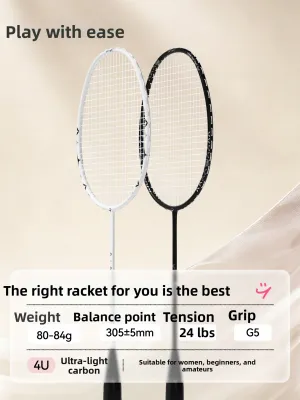
Weight categories are standardized using the “U” classification system, which is typically printed on the racket cone or shaft. A lower number indicates a heavier racket: 3U rackets weigh between 85 and 89 grams, while 4U rackets weigh between 80 and 84 grams. For regular practice, 3U and 4U rackets are generally preferred. A 3U racket provides more momentum and power for drills, but can cause arm fatigue during extended sessions. A 4U racket offers a balanced compromise, providing sufficient speed and maneuverability while reducing the physical toll on your shoulder and wrist.
The balance point of a racket determines how the weight is distributed along its length and is measured in millimeters from the handle butt. Head-heavy rackets (balance point above 295mm) concentrate weight in the frame, assisting in power generation for smashes but slowing down defensive recovery. Head-light rackets (balance point below 285mm) place more weight in the handle, offering rapid maneuverability and quick defense at the net. Even-balance rackets (balance point between 285mm and 295mm) distribute weight evenly, making them highly versatile and ideal for practice sessions that cover a wide range of offensive and defensive drills.
Shaft flexibility ranges from flexible to medium, stiff, and extra stiff. A flexible shaft bends easily during a swing, acting like a whip to generate power with less physical effort, which is highly forgiving for developing players. A stiff shaft bends very little, requiring fast swing speeds and precise timing to generate power, but offering superior control and tactile feedback for advanced players. For regular practice, a medium-flex shaft is often the most practical choice, as it provides a balanced combination of power assistance and control without placing excessive shock on the elbow joint.
Matching Racket Profiles to Your Skill Level
Selecting the correct racket profile requires an honest assessment of your current technique, physical conditioning, and training goals. Using a racket that does not align with your physical capabilities can hinder your skill development and increase the risk of repetitive strain injuries.

The relationship between your swing speed and the shaft stiffness is a critical factor in energy transfer. When you swing, the shaft bends and stores potential energy, which is released as kinetic energy when the racket impacts the shuttlecock. If your swing speed is relatively slow, a stiff shaft will not bend sufficiently, resulting in a weak shot and sending harsh vibrations directly into your hand and arm. Conversely, if you have a fast, explosive swing, a flexible shaft will over-flex, causing the racket face to twist and reducing shot accuracy.
Physical strength also dictates the maximum manageable racket weight. While a heavier racket can generate more powerful shots due to increased momentum, it requires greater muscular endurance to swing repeatedly during a two-hour practice session. If the racket is too heavy for your current conditioning, your stroke mechanics will deteriorate as you tire, leading to poor habits and potential joint strain in the wrist, elbow, and shoulder.
Profiles for Beginners and Developing Players
For players who are still building fundamental strokes, timing, and arm strength, the ideal practice racket should be forgiving and easy to maneuver. At this stage, the focus is on developing consistent contact with the shuttlecock and mastering basic footwork and stroke mechanics.
Flexible shafts and lighter weights, such as 4U or 5U, are highly recommended for beginners. The flexible shaft acts as a natural power generator, helping players clear the shuttlecock from baseline to baseline without needing perfect technique or explosive wrist speed. Lighter frames reduce the physical strain on undeveloped muscles, allowing for longer practice sessions without premature fatigue or soreness.
Even-balance or slightly head-light frames are highly beneficial for developing players. These configurations allow for faster defensive reactions and make it easier to learn basic racket control, such as net drops and quick drives. A head-light racket is also more forgiving during rapid defensive drills, where quick recovery of the racket head is essential.
Lower string tension ranges, typically between 18 and 22 pounds (approximately 8 to 10 kilograms), are ideal for beginners. Lower tension creates a “trampoline effect” on the string bed, which provides a larger sweet spot and absorbs more impact vibration. This larger sweet spot is highly forgiving during mishits, protecting both the player’s arm from harsh vibrations and the racket frame from localized stress that can cause cracking.
Profiles for Intermediate and Advanced Players
Intermediate and advanced players who have established consistent stroke mechanics and physical conditioning require a racket that offers greater precision, feedback, and power. At this level, practice sessions often involve high-intensity drills, rapid multi-shuttle feeding, and aggressive attacking play.
Stiffer shafts and standard to heavier weights, such as 3U, provide the tactile feedback and stability needed for advanced play. A stiffer shaft ensures that the racket head responds instantly to subtle wrist movements, allowing for precise placement and deceptive shots. The added mass of a 3U racket provides the necessary momentum to drive the shuttlecock deep into the opponent’s court with minimal effort during fast-paced rallies.
Head-heavy balances are often favored by intermediate and advanced players who focus on aggressive attacking play and smashing drills. The extra weight in the head assists in maintaining shuttlecock momentum, allowing for steeper and more powerful smashes. However, players must ensure they have the shoulder strength and wrist flexibility to handle a head-heavy frame during extended defensive drills.
Advanced players typically adjust their string tension to higher ranges, between 24 and 28 pounds (approximately 11 to 13 kilograms) or more, to enhance control and feel. While higher tension offers a crisp response and precise shuttle placement, it significantly shrinks the sweet spot. This increased tension puts immense stress on the racket frame, making it highly vulnerable to breakage if a mishit occurs near the outer edge of the frame during high-intensity practice.
Building Your Shortlist and Verifying Purchases
When you are ready to purchase a practice racket, building a shortlist of reputable brands and verifying the authenticity of your choice is essential for ensuring you receive a durable, high-quality product.
In Singapore, established sports brands offer reliable manufacturer warranties and accessible after-sales support. Purchasing from recognized brands ensures that the materials used meet strict quality control standards. Authorized sporting goods retailers, often located in dedicated sports hubs like Queensway Shopping Centre or Bras Basah Complex, as well as official online brand stores, are the safest places to buy authentic equipment. Typical price ranges for reliable, mid-range practice rackets in Singapore span from S$50 to S$150, offering an excellent balance of durability and performance without the premium cost of professional-grade models.
Before finalizing your purchase, performing a visual and physical inspection of the racket is highly recommended. Check the frame carefully for any micro-cracks, paint chips, or unevenness in the carbon fiber layup. Verify the stated weight and grip size, which are usually printed on the cone above the handle. You can feel the actual balance point by balancing the shaft on your index finger; a head-heavy racket will tilt quickly toward the frame, while a head-light racket will tilt toward the handle.
Understanding the manufacturer’s warranty terms is crucial for protecting your investment. Most reputable brands offer warranties that cover structural defects, such as internal frame voids or shaft delamination, for a specific period (typically 3 to 6 months). However, these warranties strictly exclude damage caused by stringing errors, exceeding the recommended maximum string tension, frame-to-frame collisions during doubles play, or hitting the floor. Always keep your purchase receipt and ensure the stringer adheres to the manufacturer’s recommended tension limits.
Extending Racket Lifespan During Frequent Practice
Regular practice sessions subject your racket to significant wear and tear. Implementing a consistent maintenance routine and practicing proper handling can significantly extend the lifespan of your equipment, saving you money and ensuring consistent performance.
Proper storage conditions are vital for preventing graphite deformation and string degradation. Singapore’s tropical climate is characterized by high humidity and high temperatures. You should never leave your rackets in the trunk of a car or in direct sunlight, as extreme heat can soften the resin binding the carbon fibers, leading to frame warping or structural failure under tension. Always store your rackets in a padded, thermal-lined racket bag inside an air-conditioned or well-ventilated room.
Routine inspection of the grommets and strings is essential for preventing localized frame stress. Grommets are the small plastic eyelets that protect the strings from the sharp edges of the carbon frame. Over time, these grommets can split or wear down, allowing the string to cut into the frame or causing the string to snap prematurely. Inspect your racket before every practice session; if you notice split or missing grommets, have them replaced by a professional stringer during your next restringing.
Replacing the base grip and overgrip regularly is important for maintaining hygiene, ensuring a secure hold, and protecting the racket handle. During intense practice sessions in humid weather, sweat can easily saturate the grip. If left unchecked, this moisture can seep through the overgrip and base grip, eventually rotting the internal wooden handle and causing it to snap during a swing. Using a high-quality polyurethane overgrip or towel grip and replacing it when it loses its tackiness or becomes discolored will prevent sweat corrosion.
Knowing when to stop using a damaged racket is critical for safety. If you notice a visible crack in the frame, even a small hairline fracture, stop using the racket immediately. The immense tension of the strings can cause a cracked frame to collapse violently during a hit. This sudden collapse can send sharp carbon shards flying, risking serious eye or facial injury to you or your practice partner.
Frequently Asked Questions (FAQ)
How often should I restring my racket for regular practice?
The frequency of restringing depends on your playing volume, hitting power, and the type of shuttlecocks used. For regular practice (two to three times a week), a general rule of thumb is to restring your racket as many times a year as you play per week—meaning at least two to three times a year. However, you should restring immediately if you notice visible fraying, deep notching where the strings intersect, or a significant loss of tension (which makes the string bed feel mushy and reduces control). Using nylon shuttlecocks during practice tends to wear down strings faster than feather shuttlecocks due to the heavier impact.
Can I use a professional tournament racket for daily practice?
While it is tempting to use a high-end, professional tournament racket for daily practice, it is generally not recommended due to the elevated risk of damage and physical fatigue. Professional rackets are often designed with ultra-thin frame walls to maximize swing speed, making them highly fragile and susceptible to catastrophic cracking during accidental frame clashes or off-center hits. Furthermore, the extreme stiffness of professional rackets requires flawless technique and explosive power; using them for high-volume, repetitive practice drills can quickly lead to joint fatigue, muscle strain, and chronic injuries like tennis elbow.

Community discussion
Share your experience or ask a question. Comments are reviewed before publication.