
Finding a single bike pump that seamlessly transitions from inflating high-pressure road bike tires to high-volume pool floats and sports equipment is a practical priority for many households in Singapore. With limited storage space in typical HDB apartments, owning multiple dedicated air compressors or manual pumps is often impractical. A versatile, multi-purpose bike pump serves as a central utility tool, but not all brands or models are engineered to handle such diverse tasks safely and efficiently. Furthermore, Singapore’s tropical climate, characterized by high humidity and ambient heat, can accelerate the wear of rubber seals and plastic components. To make an informed choice, cyclists must look beyond basic tire inflation and evaluate valve compatibility, pressure capacities, adapter storage, and long-term build quality.
Quick Guide: What Defines a True Multi-Purpose Bike Pump?
A true multi-purpose bike pump must accommodate different valve types without requiring complex disassembly. Most bicycles use either Presta valves (common on road bikes) or Schrader valves (standard on utility and mountain bikes). A high-quality pump features a dual-valve head that automatically adjusts to either type. When evaluating a pump, check the locking lever mechanism; a robust, metal-reinforced lever ensures an airtight seal and prevents the head from slipping off under high pressure. While some brands use thread-on heads, these can occasionally unscrew removable Presta valve cores, making press-on heads with locking levers a more user-friendly choice.
An integrated pressure gauge is indispensable for multi-purpose utility. Without a clear gauge, you risk over-inflating delicate sports balls or under-inflating high-pressure road tires. Look for a gauge with high-contrast markings and a dual-scale display showing both PSI and bar. Gauges mounted near the top of the pump barrel or those featuring large, high-visibility faces are much easier to read from a standing position, reducing eye strain during use.
Products mentioned in this guide
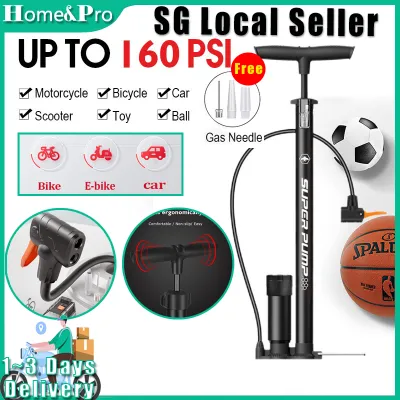
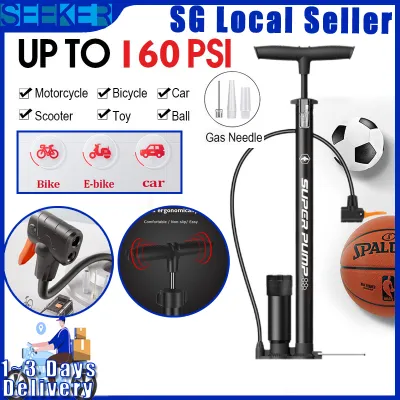
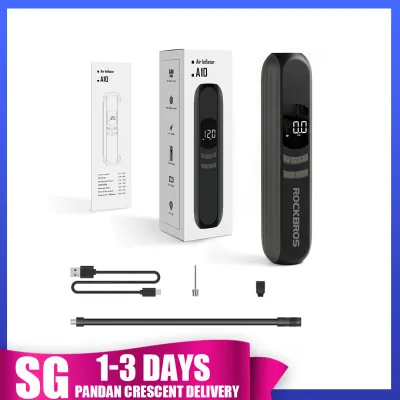
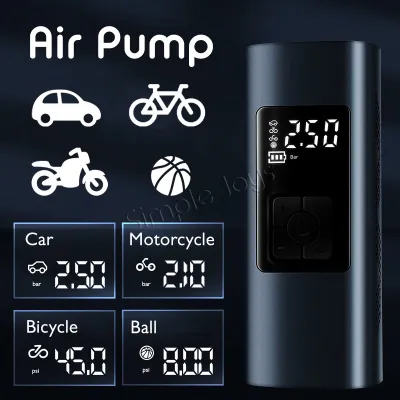
![[SG Stock] Air Pump Car Inflator Compressor Portable Ball Bike Bicycle Rechargeable Basketball Soccer Volleyball Tyre Wheel Tire 12V LED Fast Auto Shut-off Emergency](https://img.lazcdn.com/g/p/cc7d92c566c3860fbbfa1d535cc6f3bb.jpg_400x400q80.jpg_.webp)
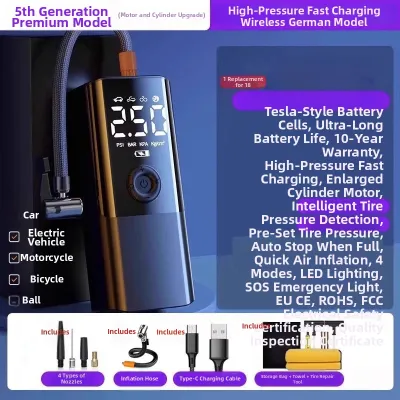
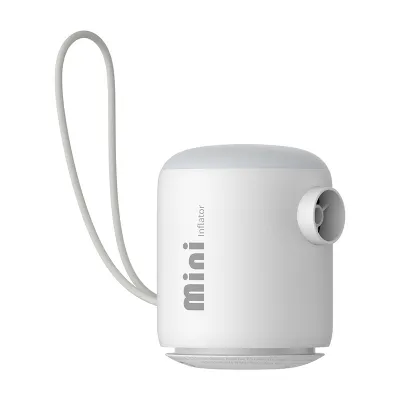
Prices are valid at publication and may change. Please refer to the product page for the latest price.
The choice of build materials directly impacts the pump’s durability and performance over years of varied household tasks. While budget-friendly pumps often utilize plastic barrels and bases, these components can flex or crack under heavy use, especially in Singapore’s warm, humid climate which can accelerate plastic degradation. Steel or high-grade aluminum barrels offer superior structural integrity, ensuring smooth piston strokes and consistent air delivery. A heavy, wide steel base provides the necessary stability to keep the pump upright on tiled balcony floors or concrete corridors.
Ergonomics should not be overlooked, particularly when inflating high-volume items that require hundreds of strokes. A wide, contoured handle with rubberized grips prevents hand fatigue and slippage when your hands are sweaty. The physical effort required to pump increases significantly as pressure builds, so a handle designed to distribute force evenly across your palms is essential. Additionally, a stable base allows you to use your body weight effectively, making the inflation process much more efficient and less physically demanding.
Valve Compatibility and Pressure Requirements
Understanding the distinction between high-pressure/low-volume and low-pressure/high-volume inflation is key. Road bike tires require high pressure (often 80 to 110 PSI) but contain a small volume of air, meaning the pump must be optimized to push air against high resistance. Conversely, mountain bike tires and pool toys require low pressure but demand a massive volume of air. A pump designed solely for high pressure will take an exhausting number of strokes to fill a large pool float, while a high-volume pump may struggle to reach the high pressures needed for road cycling.

To navigate these differences, check the pressure gauge markings and the maximum pressure rating. Most multi-purpose floor pumps are rated up to 120 or 160 PSI, which comfortably covers almost all household needs. When reading the gauge, ensure the increments are small enough to allow precise adjustments; mountain bike tires often require fine-tuning within a 2 to 3 PSI range. If your primary use involves low-pressure items, a pump with a gauge optimized for lower ranges (0 to 60 PSI) will provide much better readability.
Reversible or dual-chamber pump heads are highly effective at preventing air loss during the connection and disconnection process. When you release the locking lever, a poorly designed pump head can let a significant amount of air escape, forcing you to over-inflate slightly to compensate. High-quality multi-purpose pumps utilize internal check valves that seal the air path instantly upon release. This feature is especially critical for high-pressure road tires, where even a brief second of air leakage can drop the pressure by 10 PSI or more, compromising your ride quality and safety.
In Singapore’s climate, moving a bicycle from an air-conditioned apartment to the hot outdoors causes the air inside the tires to expand, slightly increasing pressure. A pump with an integrated bleed valve allows you to release micro-amounts of air easily without disconnecting the pump, ensuring you achieve the exact pressure required for safe riding.
Essential Adapters for Sports Balls and Pool Toys
A bike pump’s utility is severely limited without the proper adapters to connect to non-cycling valves. Standard sports balls, such as footballs, basketballs, and netballs, utilize a narrow bladder valve that requires a metal inflation needle. When choosing a pump brand, verify that the included needle features standard threading that matches the pump’s hose nozzle. Cheap, non-standard needles can easily strip the threads inside the pump head, rendering the adapter connection useless and potentially damaging the pump itself.
For recreational items like pool toys and air mattresses, you will need plastic cone or nozzle adapters. These adapters come in various diameters to fit different utility valves. A good multi-purpose pump package includes a selection of these nozzles, which should fit securely into the pump head. Because these small plastic pieces are easily misplaced, look for brands that offer integrated storage solutions, such as clip-on holders on the hose or dedicated compartments built directly into the base or handle.
Before attaching any adapter, always consult the manufacturer’s instructions to ensure correct installation. Forcing a needle or plastic nozzle into the pump head at an angle can cross-thread the connection, leading to permanent air leaks. When inflating sports balls, always moisten the needle slightly before inserting it into the ball’s valve; this reduces friction, prevents the needle from damaging the internal rubber bladder, and ensures a smooth seal. Taking these small precautions extends the lifespan of both your inflation accessories and your sports equipment.
Additionally, check if the brand offers replacement adapter kits. Since needles can bend and plastic nozzles can get lost during trips to the beach, sourcing a cheap, brand-compatible accessory kit ensures your pump remains fully functional.
Floor Pumps vs. Portable Pumps for Versatile Use
When deciding on the form factor of your multi-purpose pump, the primary choice lies between a stationary floor pump (track pump) and a portable mini-pump. Floor pumps are the undisputed champions of home utility. Their large barrels allow them to move a substantial volume of air with each stroke, making quick work of large inflatables and high-pressure tires alike. The stable base and long, flexible hose allow you to place the pump securely on the ground while reaching valves on bikes mounted on repair stands or large pool toys resting on a table.
Portable mini-pumps, while convenient for emergency roadside repairs, have severe limitations as multi-purpose household tools. Their small chamber volume means you must pump hundreds of times more to achieve the same volume as a floor pump, which quickly becomes exhausting when inflating a sports ball or a pool float. Furthermore, mini-pumps typically lack a flexible hose, meaning you must hold the pump body directly against the valve stem, putting significant stress on the valve and increasing the risk of damage.
Hose length and flexibility are critical usability factors that are often overlooked. A short, stiff hose forces you to position the pump extremely close to the target object, which can be awkward when dealing with bulky items like inflatable pools or cargo bikes. A hose that measures at least 1 meter in length and is made of flexible, crack-resistant rubber allows for much greater freedom of movement. This flexibility is particularly useful in tight storage spaces or when inflating tires on a bike locked to a crowded public rack.
For households frequently inflating large recreational items, an electric inflator can serve as a supplement to a manual floor pump. While manual pumps are highly reliable and require no charging, an electric inflator handles high-volume, low-pressure items without physical effort. However, for daily bicycle maintenance, a manual floor pump remains the most reliable and precise tool.
When storing a floor pump in a compact Singapore home, models with integrated hose clips prevent the hose from dangling. A pump that stands neatly in a utility closet without taking up valuable floor space is ideal for urban living.
How to Evaluate Brand Reliability and After-Sales Support
In the absence of specific model reviews, evaluating a brand’s commitment to after-sales support is the best way to ensure a long-lasting purchase. High-quality bike pump brands treat their products as serviceable tools rather than disposable items. Before buying, check if the manufacturer offers official rebuild kits, replacement O-rings, and spare hoses. Over years of use, the rubber seals inside any pump head will inevitably wear out; being able to purchase a cheap replacement seal kit instead of throwing away the entire pump is a hallmark of a sustainable brand.
Warranty terms provide a strong indication of a manufacturer’s confidence in their product’s durability. Look for brands that offer multi-year warranties on structural components like the barrel and base. In Singapore, verify whether the brand has an active local distributor or a strong presence in local bike shops (LBS). A brand with local representation makes it much easier to honor warranty claims, source replacement parts quickly, and get professional advice without waiting weeks for international shipping.
User feedback on online marketplaces and cycling forums can reveal valuable insights into long-term performance. Pay close attention to comments regarding gauge accuracy over time and the durability of the hose-to-barrel connection under high pressure. A pump that loses its calibration after a few months of use can lead to dangerous under- or over-inflation. Choosing a brand with a consistent track record of positive user experiences in tropical climates is highly recommended, as high humidity and ambient temperatures can test the limits of adhesives and rubber compounds.
Finally, purchasing from an established local bike shop rather than overseas sellers on online marketplaces ensures you receive genuine products and direct access to local customer support if any defects arise.
Frequently Asked Questions (FAQ)
Can I use a standard bike pump for an air mattress or pool toy?
Yes, you can use a standard bike pump to inflate an air mattress or pool toy, provided you have the correct plastic cone adapter to fit the item’s wide utility valve. However, because bike pumps are designed to move relatively small volumes of air at higher pressures, inflating a large recreational item manually will require significant physical effort and time. Additionally, you must monitor the firmness of the mattress or toy manually by feeling it, as standard bike pump pressure gauges are calibrated for much higher pressures and will not register the very low pressures (often under 1 or 2 PSI) typical of large inflatables.
Do sports balls require a specific pressure setting on the pump gauge?
Yes, sports balls have specific pressure requirements to ensure proper bounce and performance, which are typically printed directly on the ball near the inflation valve (usually ranging from 4 to 15 PSI depending on the sport). Standard bike pump gauges, which often scale up to 120 or 160 PSI, can be difficult to read accurately at these very low pressures. Over-inflating a sports ball can permanently stretch its outer casing or damage the internal rubber bladder, so it is best to pump slowly, check the firmness frequently, or use a dedicated low-pressure gauge if precise inflation is required.
How can I maintain the pump seals when switching between different valves?
To preserve the airtight seals of your pump during frequent multi-purpose use, regularly inspect the rubber O-rings and gaskets inside the pump head for dirt, sand, or wear. Dust and debris from outdoor use can act as abrasives, quickly degrading the rubber seals. Periodically apply a small amount of silicone-based lubricant to the internal gaskets to keep the rubber pliable and prevent it from drying out or cracking in Singapore’s humid climate. Avoid using petroleum-based lubricants, as these can chemically degrade the rubber and ruin the seals permanently.

Community discussion
Share your experience or ask a question. Comments are reviewed before publication.