
Finding the right walking pad for a Housing & Development Board (HDB) flat requires a careful balance between active workout space and storage convenience. Because HDB layouts prioritize efficient space utilization, the ideal walking pad must feature a compact footprint—typically under 120 to 140 centimetres in length—and a reliable folding mechanism that fits your specific storage layout. Additionally, selecting a model with robust noise-dampening capabilities is essential for maintaining a peaceful environment in high-density residential blocks. By measuring your space accurately and verifying key product specifications, you can enjoy convenient home cardio without cluttering your living area.
Measuring Your HDB Space for Walking Pad Dimensions
Before purchasing any fitness equipment, you must map out where the machine will operate. Measure the exact floor area where you plan to use the walking pad. Manufacturers specify the physical footprint of the machine, but you must add safety clearances. A safe setup requires at least 0.5 metres of clear space on both sides of the walking pad and at least 1 to 1.5 metres of unobstructed space behind the belt to prevent injury in case of a slip or sudden stop.
Do not overlook the journey the walking pad takes to reach your room. Measure the width of your HDB main door, bedroom door frames, and the internal dimensions of your estate’s passenger lift. Bulky packaging can add significant bulk to the product’s shipping dimensions. Ensure the boxed unit can clear tight corridor corners and fit inside the lift without requiring vertical tilting that could damage the internal motor components.
Products mentioned in this guide
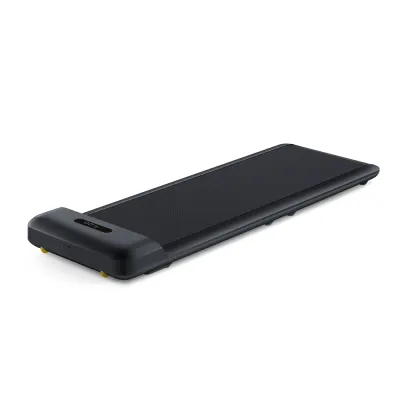
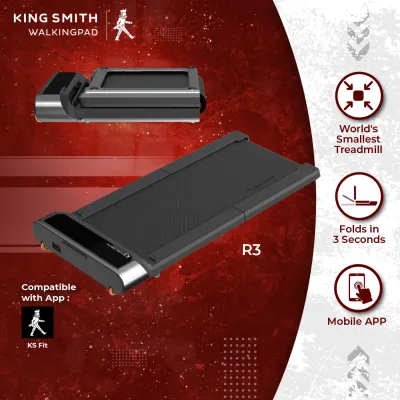
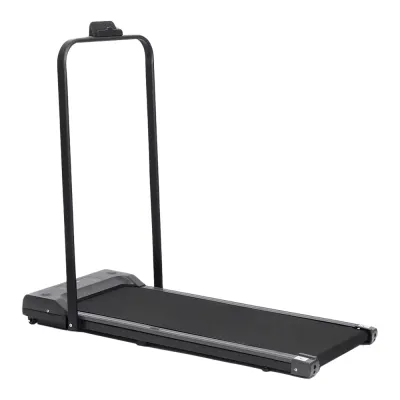
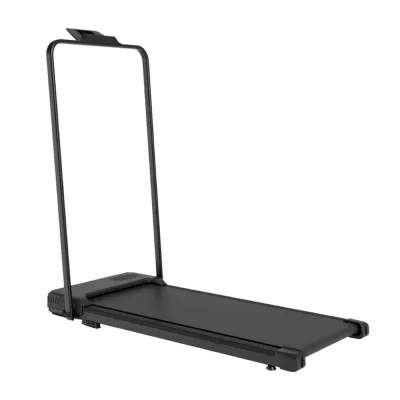
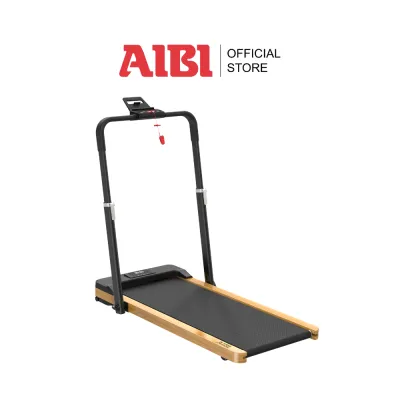
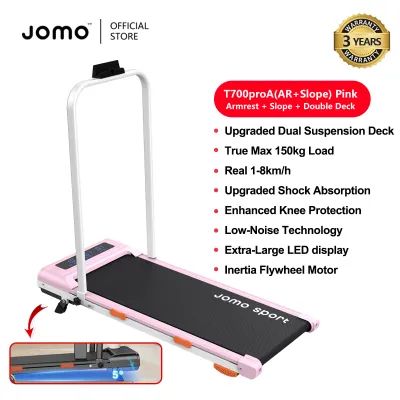
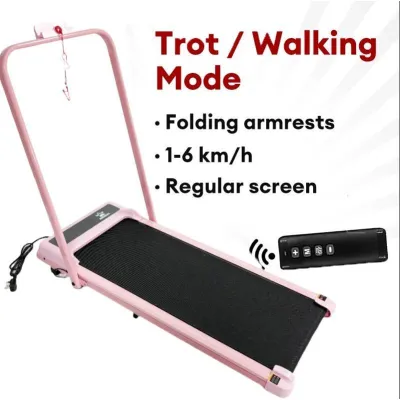
![[INSTOCK] Home Manual Treadmill / Belt Treadmill / Walking Pad](https://img.lazcdn.com/g/p/252e9cdd1aff5e5f5ac7bf3fc98134c9.png_400x400q80.png_.webp)
Prices are valid at publication and may change. Please refer to the product page for the latest price.
Ceiling height is another critical factor, particularly if you are considering a walking pad with an incline feature or a raised handrail. Standard HDB ceiling heights typically range from 2.6 to 2.8 metres. To calculate your overhead clearance, add your own height to the step-up height of the walking pad, which is usually between 10 and 15 centimetres from the floor. If the model has an incline function, add the maximum deck height at full incline to ensure you will not hit your head against ceiling fans or light fixtures during a workout.
Evaluating Folding Mechanisms and Storage Options
Storage efficiency defines how well a walking pad integrates into an HDB flat. Walking pads generally fall into two categories: fully foldable and flat-storing. Fully foldable designs feature a patented hinge in the middle of the running deck, allowing the machine to fold 180 degrees. This reduces the storage length by half, making them ideal for tight closets or small corners. Flat-storing models do not fold in half but lie completely flat, requiring a longer but much thinner storage clearance.

Measure the clearance under your sofa or bed frame before choosing a model. Many flat-storing walking pads require a clearance height of at least 15 centimetres to slide underneath furniture smoothly. If your bed frame sits lower to the ground, a fully foldable model that can stand upright in a wardrobe or behind a door might be a more practical choice.
Moving the walking pad daily requires functional transport wheels. Check the product specifications for the placement and maneuverability of these wheels. Some models only feature two-way wheels that roll forward and backward, which can make lateral adjustments difficult in narrow HDB corridors. Look for multi-directional wheels or lightweight frames if you plan to move the machine between your living room and bedroom frequently.
If you plan to store your walking pad vertically, stability is paramount. Some models are designed to stand upright without support, but this can pose a safety hazard in homes with children or pets. Verify whether the manufacturer provides a dedicated standing base, or consider using wall anchors to secure the upright machine. If a model is not explicitly rated for vertical storage, storing it upright can strain the internal motor mounts or cause the belt lubricant to pool unevenly.
Selecting Apartment-Friendly Performance Features
In high-density HDB blocks, structural noise can easily travel through concrete floors to the unit below. To minimize friction and impact sound, look for walking pads equipped with multi-layered running belts and built-in shock absorption layers. These layers help cushion your steps, reducing both joint impact and the thudding noise transmitted through the floor. Adding a high-density EVA or rubber anti-vibration mat underneath the machine is highly recommended to further isolate sound.
Motor specifications directly influence both noise levels and performance. Walking pads typically use direct current (DC) motors, which are quieter than alternating current (AC) motors. Check the continuous horsepower (CHP) rating rather than the peak horsepower. A motor with a rating of 1.0 to 1.5 CHP is generally sufficient for walking speeds up to 6 km/h and operates quietly. If you plan to use the machine for light jogging up to 10 km/h, look for a motor rated around 2.0 CHP to prevent the motor from straining and generating excessive high-pitched noise.
Safety features are crucial when operating fitness equipment in compact living spaces. Ensure the walking pad includes an automatic stop function, which is often triggered by a safety clip attached to your clothing. Child lock features, either via a physical switch or a mobile application, prevent accidental activation. Additionally, look for models that offer a dedicated storage slot on the frame for the remote control, reducing the risk of losing the controller or having it stepped on.
Building Your Space-Optimized Walking Pad Shortlist
To finalize your decision, map your primary usage habits to the physical constraints of your home. If your main goal is to walk while working at a standing desk, prioritize a low-profile, flat-storing model without a raised handrail that can slide easily under your desk. If you intend to use the machine for dedicated cardio sessions, a model with a foldable handrail and a slightly wider belt width of at least 40 centimetres will provide better stability and safety at higher speeds.
Create a verification checklist before making your purchase. Confirm the exact voltage and power requirements of the machine to ensure compatibility with standard Singapore three-pin power outlets (230V, 50Hz) without needing heavy-duty step-down transformers. Review the manufacturer’s warranty terms, specifically checking if the warranty covers home servicing or if you must transport the bulky unit to a service centre yourself.
Watch out for common red flags when browsing online marketplaces. Be cautious of listings that omit the folded dimensions or fail to specify the maximum weight capacity. Avoid models that do not clearly state their decibel (dB) ratings during operation, as cheap motors can produce disruptive noise levels exceeding 65 dB, which is highly likely to cause friction with your neighbors.
Frequently Asked Questions (FAQ)
How to protect HDB flooring from walking pad damage?
Before placing a walking pad on your floor, consult your flooring manufacturer’s guidelines regarding weight limits and point-load restrictions, especially if you have vinyl, laminate, or parquet flooring. The concentrated weight of the machine combined with the impact of your steps can cause indentations or scratches over time. To prevent this, place a high-density EVA foam or heavy-duty rubber mat under the entire footprint of the walking pad. This mat distributes the weight evenly, absorbs vibrations, and prevents the machine from sliding during use.
Are there noise restrictions for using cardio equipment in HDB flats?
While there are no specific laws banning cardio equipment, HDB community guidelines encourage residents to keep noise levels low, particularly during designated quiet hours from 10:30 PM to 7:00 AM. To maintain good relations with your neighbors, avoid using the walking pad during these hours. You can also minimize operational noise by regularly lubricating the running belt according to the user manual, keeping your walking speed moderate, and placing the machine on a carpeted area or a dedicated sound-dampening mat.

Community discussion
Share your experience or ask a question. Comments are reviewed before publication.