
Selecting the right ankle support socks requires matching the garment’s structural design and compression level to the physical demands of your sport and your personal joint history. Rather than acting as a generic accessory, a proper support sock serves as a functional piece of athletic equipment that stabilizes the foot, manages moisture, and enhances spatial awareness during movement. By evaluating key technical specifications—such as targeted compression zones, material blends, and integrated structural elements—you can find a pair that protects your joints without restricting your natural range of motion.
Understand Your Activity Level and Support Needs
To choose the right ankle support socks, you must first evaluate the physical demands of your primary sport or activity. Different movements place distinct stresses on the ankle joint, which moves across multiple planes including flexion, extension, inversion, and eversion. Matching the sock’s structural reinforcement to these specific movement patterns ensures you receive adequate protection without unnecessary bulk.
Low-impact activities, such as walking, yoga, or pilates, involve controlled, predictable movements with minimal sudden lateral shifts. For these activities, your primary goals are comfort, light arch support, and basic moisture management. A sock with mild, uniform compression is usually sufficient to promote circulation and keep the foot feeling energized without restricting the natural flexibility required for balance poses or steady strides.
Products mentioned in this guide
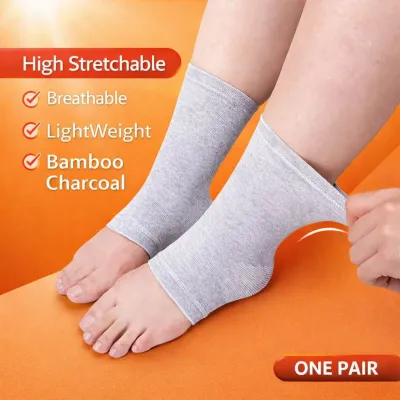
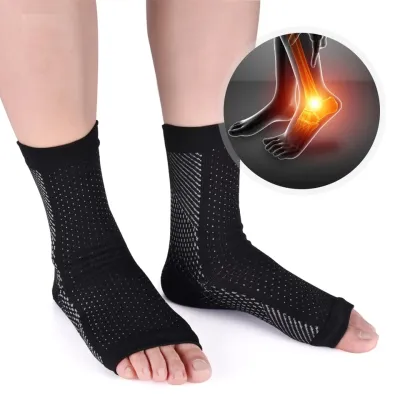
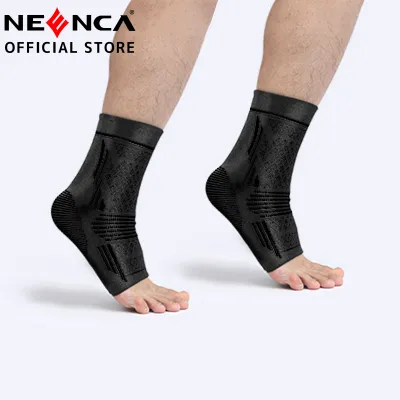
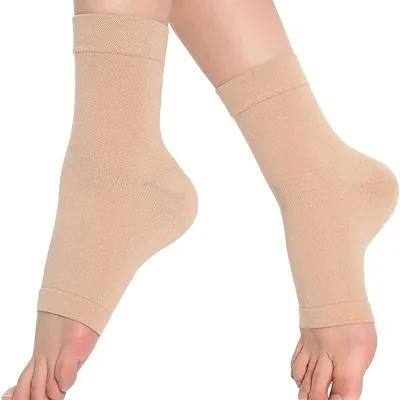
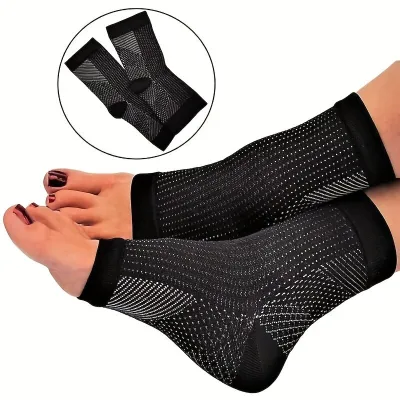
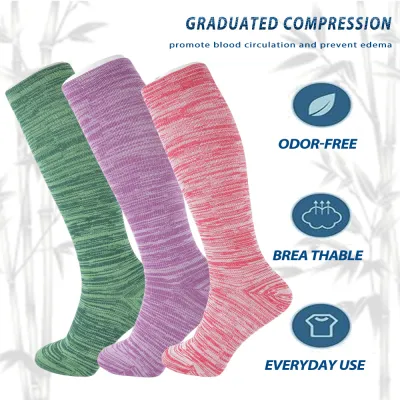
Prices are valid at publication and may change. Please refer to the product page for the latest price.
Moderate-impact activities, including jogging, cycling, and power walking, subject the feet to repetitive, linear impacts over extended periods. Here, the ankle joint experiences continuous vertical stress, making shock absorption and sustained arch support critical. Socks designed for moderate impact typically feature targeted compression around the midfoot to support the plantar fascia, along with medium-density cushioning under the heel and metatarsals to absorb repetitive ground forces.
High-impact sports, such as basketball, tennis, trail running, and football, demand rapid acceleration, sudden deceleration, and frequent lateral cutting movements. These actions subject the ankle to extreme shearing forces and increase the risk of inversion sprains. For these activities, you require highly structured ankle support socks that feature reinforced elastic bands, high-density padding in high-impact zones, and non-slip grip patterns to prevent the foot from sliding inside the shoe.
Personal physical factors also dictate your support needs. If you have a history of ankle sprains, chronic joint instability, or experience rapid muscle fatigue during workouts, your joints require more active stabilization. In these cases, look for socks that incorporate integrated tension straps or figure-eight knit patterns that mimic athletic taping. If your joints are healthy and you simply want to prevent fatigue during long training sessions, standard compression socks that focus on promoting blood flow will suffice.
It is important to distinguish between basic compression and structured support. Basic compression socks apply even pressure across the entire foot and ankle to improve blood circulation and enhance proprioception—the body’s subconscious awareness of joint position. Structured support socks, on the other hand, combine this compression with physical reinforcements, such as anatomical padding, silicone grip zones, and high-tension elastic bands woven directly into the fabric to physically limit excessive joint movement.
Key Features to Evaluate in Ankle Support Socks
When comparing different ankle support socks, understanding technical specifications and material compositions will help you identify high-performing options. Manufacturers use specialized knitting techniques and synthetic fibers to achieve specific performance characteristics, which are typically detailed on product labels and specifications.

Compression zones are the foundation of a high-quality support sock. Unlike standard socks that apply uniform pressure, technical support socks utilize targeted compression. This means the knitting density varies across different areas of the foot. High-density knit zones are placed around the arch and the ankle joint to provide structural reinforcement, while lower-density, highly elastic zones are positioned over the top of the foot to allow unrestricted dorsiflexion. When reviewing product labels, look for terms like “anatomical compression zones” or “targeted joint stabilization” to ensure the sock offers localized support where it is needed most.
Material composition is a critical factor for comfort and skin health, particularly in hot and humid climates like Singapore. High temperatures and humidity cause rapid sweat accumulation, which can lead to skin maceration, severe chafing, and friction blisters if moisture is not managed effectively. Avoid socks made of 100% cotton, as cotton fibers absorb and retain water, losing their shape and becoming abrasive when wet. Instead, prioritize synthetic blends that combine nylon, polyester, and elastane.
| Material | Primary Function in Support Socks |
|---|---|
| Nylon | Provides high tensile strength, durability, and resistance to abrasion in high-wear areas like the heel and toe. |
| Polyester | Offers excellent moisture-wicking properties, drawing sweat away from the skin to the outer layer of the fabric for rapid evaporation. |
| Elastane (Spandex) | Delivers the necessary stretch, recovery, and compression retention, ensuring the sock maintains its supportive fit over time. |
In addition to the fiber blend, look for socks that feature integrated breathable mesh panels. These panels are typically located on the instep or top of the foot, allowing heat and moisture vapor to escape continuously during intense physical exertion. This ventilation is essential for maintaining a dry, cool microclimate inside your athletic footwear.
Structural elements woven into the sock’s design further enhance its performance and stability. A deep, anatomically knitted heel cup is essential to prevent the sock from slipping down or bunching up inside the shoe during movement. An elasticated arch band wraps securely around the midfoot, keeping the sock aligned and providing mild upward lift to the plantar fascia. Finally, reinforced toe boxes with seamless closures protect the toes from repetitive impact against the front of the shoe while eliminating the bulky seams that cause painful friction blisters.
Matching Sock Features to Specific Sports
To maximize the benefits of your ankle support socks, you should align their technical features with the specific biomechanical demands of your chosen sport. No single sock design is ideal for every activity, as different sports place unique stresses on the feet and ankles.
Running and Endurance Sports
For road running, trail running, and long-distance walking, your primary requirements are lightweight construction, seamless interiors, and moderate arch support. Because running involves thousands of repetitive, linear strides, even minor friction points can quickly develop into debilitating blisters. Look for socks made from ultra-fine synthetic yarns with seamless toe closures to eliminate rubbing. The sock should offer moderate compression around the arch to support the foot’s natural shock-absorbing mechanism, along with targeted, low-profile cushioning under the heel and forefoot to absorb impact without adding excessive bulk inside your running shoes.
Court and Field Sports
Sports such as basketball, tennis, badminton, and football require constant lateral movements, rapid pivoting, and sudden stops. These actions place immense lateral stress on the ankle joint, increasing the risk of rolling the ankle. Socks designed for court and field sports must prioritize lateral stability and high-impact cushioning. Look for options with reinforced lateral bands that wrap around the ankle joint to resist excessive inversion. High-density cushioning should extend up the Achilles tendon and around the ankle bones to protect against impact from shoes or external contact. Additionally, integrated silicone grip patterns on the sole of the sock can help lock your foot inside the shoe, preventing sliding during quick changes of direction.
Weightlifting and Gym Training
Gym training, powerlifting, and functional fitness workouts require a stable, solid connection to the ground. When performing heavy squats, deadlifts, or overhead presses, excessive cushioning underfoot can compromise your balance and alter your joint alignment. For these activities, select ankle support socks that offer firm, high-level compression to maximize proprioceptive feedback, helping you maintain proper knee and ankle alignment. The sock should have a thin, non-cushioned sole to allow your foot to make direct contact with the shoe’s insole, and it must feature highly flexible knit zones over the ankle crease to allow for unrestricted dorsiflexion during deep squats.
Recovery and Daily Wear
Post-workout recovery and long periods of standing or sitting require a different compression profile. Recovery socks utilize graduated compression, where the pressure is highest at the ankle and gradually decreases as it moves up the calf. This design assists the calf muscle pump in returning deoxygenated blood and metabolic waste products back toward the heart, reducing muscle soreness and preventing fluid retention or swelling in the lower extremities. For recovery purposes, look for socks with a comfortable, non-restrictive top band and a softer material blend that can be worn comfortably for several hours after training.
Sizing, Fit, and Comfort Checks
An ankle support sock can only perform effectively if it fits your foot and ankle precisely. A sock that is too loose will fail to provide any meaningful compression or structural support, while a sock that is too tight can restrict blood circulation and cause discomfort. To ensure a proper fit, you must perform several checks before and during your initial try-on.
First, do not rely solely on your standard shoe size when purchasing support socks. Because compression garments must fit the contours of your joints precisely, reputable manufacturers provide sizing charts based on physical ankle and calf measurements. Use a flexible measuring tape to measure the circumference of your ankle at its narrowest point (just above the ankle bone) and the circumference of your calf at its widest point. Compare these measurements to the manufacturer’s specific sizing guide to select the correct size.
When trying on the socks, monitor your feet for any warning signs of an improper fit. A sock that is too tight may cause numbness, tingling, cold toes, or a loss of sensation in your foot, indicating that the compression is restricting arterial blood flow. You should also check for deep, painful skin indentations or red welts left by the elastic bands after a short period of wear. Conversely, if the sock rolls down, bunches up around the ankle, or feels easy to pull on without any resistance, it is too loose and will not provide adequate support.
Finally, always test your ankle support socks with the specific athletic shoes you intend to wear during your workouts. Technical support socks with high-density cushioning can add significant volume to your foot, which may make your standard athletic shoes feel uncomfortably tight. Put on both the socks and your shoes, then walk, jog, or perform a few lateral movements. Ensure that your toes have enough room to wiggle, that the instep does not feel compressed, and that the heel of your shoe does not slip when you walk. If the combination feels too tight, you may need to adjust your shoe lacing or opt for a lower-profile support sock.
Building Your Shortlist: What to Verify Before Buying
Before finalizing your purchase, take the time to verify several product specifications and retailer policies to ensure you are making a safe and practical investment. This verification process helps prevent purchasing ineffective products or items that cannot withstand regular athletic use.
Start by reviewing the product packaging or online specifications for explicit compression ratings. Compression levels are measured in millimeters of mercury (mmHg). Mild support socks typically range from 8 to 15 mmHg, which is suitable for daily wear and low-impact activities. Moderate support socks range from 15 to 20 mmHg, offering a balance of stabilization and comfort for most sports. Firm support socks range from 20 to 30 mmHg and are designed for high-impact sports or recovery. If you require medical-grade compression above 20 mmHg to manage chronic joint instability, severe swelling, or post-injury recovery, consult a healthcare professional or physiotherapist to obtain a personalized recommendation.
Next, check the retailer’s return and exchange policy. Because socks are classified as intimate apparel or hygiene-restricted items, many physical stores and online marketplaces prohibit returns or exchanges once the original packaging has been opened or the tags have been removed. If you are purchasing a new brand or are between sizes, look for retailers that offer clear sizing guarantees or allow exchanges for unopened items, ensuring you are not left with unusable gear if the fit is incorrect.
Finally, verify the care and maintenance instructions for the socks. High-performance compression fibers, particularly elastane, are sensitive to heat and harsh chemicals. Check the label to confirm that the socks can be washed easily within your regular laundry routine. Most technical support socks require machine washing in cold water on a gentle cycle and air drying. Avoid using fabric softeners, as they coat the synthetic fibers and destroy their moisture-wicking capabilities, and never tumble dry them on high heat, as this will melt the elastane fibers, causing the sock to lose its elasticity and supportive properties within a few wash cycles.
Frequently Asked Questions (FAQ)
Can I wear ankle support socks all day?
Active ankle support socks designed with moderate to high compression levels are intended for use during exercise and should not be worn continuously all day, especially during prolonged periods of sitting or sleeping. When you are sedentary, high compression can restrict blood flow rather than assist it. If you experience skin irritation, excessive sweating, or signs of restricted circulation such as tingling, numbness, or cold toes, remove the socks immediately. For extended daily wear, opt for lower-compression socks specifically rated for all-day comfort.
Do ankle support socks replace medical braces?
No, ankle support socks are not a substitute for rigid medical braces or orthotic devices. Support socks provide mild to moderate compression and enhance proprioception—your brain’s awareness of your joint’s position—which helps you actively stabilize the joint during movement. However, they do not offer the mechanical, rigid stabilization required to protect a severely injured or structurally compromised joint. If you are recovering from an acute sprain, have severe joint instability, or are undergoing post-surgical rehabilitation, consult a physiotherapist or orthopedic specialist to determine if a structured medical brace is necessary.

Community discussion
Share your experience or ask a question. Comments are reviewed before publication.