
Establishing a consistent home pilates practice in Singapore requires a thoughtful approach to selecting your equipment. Unlike a commercial studio equipped with large reformer machines, a home setup relies heavily on the versatility of resistance bands and straps to replicate spring-based tension and support proper alignment. Choosing the right gear is not about finding a generic best-seller list; instead, it involves matching the physical specifications of the bands and straps to your current fitness level, the structural limits of your living space, and the specific demands of your training routine. By focusing on material durability, tension accuracy, and safety mechanisms, you can build a highly effective, space-saving pilates environment that delivers studio-quality results.
Assessing Your Fitness Level and Space Constraints
Before purchasing any pilates accessories, you must evaluate your current physical capabilities and the structural features of your home. Pilates relies on controlled, precise movements where core engagement and joint stability take precedence over lifting heavy loads. Beginners should prioritize light to medium resistance bands that allow them to master foundational movements, such as the hundred or single-leg stretches, without compromising their spinal alignment. Intermediate and advanced practitioners, who have developed stronger deep stabilizing muscles, can transition to heavier bands or multi-band setups to simulate the progressive resistance of reformer springs. Selecting a resistance level that is too high prematurely often leads to compensation patterns, where larger muscle groups take over and defeat the purpose of pilates.
Your physical workout environment in Singapore—whether a cozy HDB flat, a condominium, or a landed property—directly dictates the types of bands and straps you can safely use. Exercises that require overhead pulling or lateral extensions demand a clear floor area of at least two by two meters, free from low-hanging light fixtures or furniture. If your routine involves anchoring bands to a door, you must inspect the door frame and construction. Solid timber doors with robust frames can easily support the pulling forces of resistance tubes, whereas hollow-core doors or sliding glass balcony doors are highly unsuitable and present significant safety hazards. Always verify that your door opens away from you when using a door anchor, ensuring that your body weight pulls the door shut against the frame rather than pulling it open.
Products mentioned in this guide
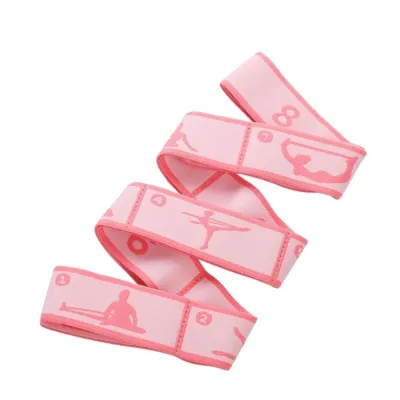
![[RECEIVE IN 3 DAYS] Looped Resistance Exercise Yoga Bands](https://img.lazcdn.com/g/p/478c71011ff76f1dc2636e7c42012a8d.jpg_400x400q80.jpg_.webp)
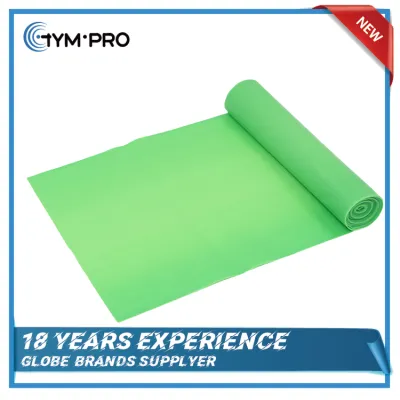
![[Ships From SG] Resistance Band Power Stretch Band Sports Fitness Recovery Warm-Up Muscle Strength Pull Up Gym Yoga](https://img.lazcdn.com/g/p/41f91314a296be8807bf5f66c3355de4.jpg_400x400q80.jpg_.webp)
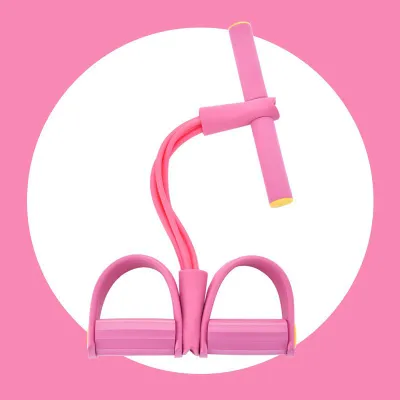
Prices are valid at publication and may change. Please refer to the product page for the latest price.
Matching the equipment type to your spatial and skill constraints prevents frustration and injury. Continuous loop bands, often called booty bands or mini-loops, are exceptionally space-efficient and require no anchoring, making them perfect for small rooms and floor-based lower body work. Tube bands with detachable handles and door anchors offer the greatest versatility for upper body and core exercises, mimicking tower or cadillac equipment, but they require a dedicated, secure anchor point. For flexibility, alignment, and static stretching, non-elastic multi-loop straps are the ideal choice, as they provide stable support without requiring any spatial clearance beyond your exercise mat.
Evaluating Resistance Bands for Home Pilates
The material composition of your resistance bands is a critical factor influencing both performance and durability. Natural latex bands are highly favored in pilates for their smooth, linear resistance curve, which closely mimics the feel of metal springs on a reformer. They stretch smoothly and provide consistent tension throughout the entire range of motion. However, Singapore’s tropical climate, characterized by high humidity and ambient warmth, can accelerate the degradation of natural latex, causing it to become sticky, brittle, or prone to microscopic cracking over time. If you prefer latex, you must commit to regular maintenance and proper storage to preserve its structural integrity.

Fabric and cotton-blend resistance bands offer an excellent alternative, particularly for lower body exercises. These bands are woven with elastic latex or synthetic threads encased in a soft, durable fabric sleeve. Fabric bands provide superior skin comfort, as they do not pinch, roll up, or slide down during dynamic movements like lateral band walks or bridge pulses. They are also highly resistant to sweat, providing a secure grip even during intense, humid home workouts. The trade-off is that fabric bands generally offer less stretch range and a steeper resistance curve compared to pure latex, making them less suitable for long-range upper body movements.
Understanding how to interpret resistance levels is essential for a safe progression. Manufacturers often use color-coding systems to denote resistance levels, but these systems are not standardized across the industry; a heavy band from one brand might feel like a medium band from another. Instead of relying on color, look for technical specifications that state the tension equivalent in kilograms or pounds at specific elongation levels, such as 5 to 10 kilograms of resistance at double the resting length. This allows you to make an informed decision based on your actual strength requirements rather than marketing labels.
Safety features should never be overlooked when selecting elastic bands. For tube-style bands, prioritize designs that feature an anti-snap inner safety cord, which prevents the band from whipping backward toward your face or body if the outer latex tube ruptures. Examine the connection points where the elastic material meets the plastic or metal hardware; reinforced double-stitching on fabric sleeves and heavy-duty metal carabiners are indicators of high-quality construction. Avoid bands that rely on thin plastic clips or simple glued joints, as these are common failure points under high tension.
Selecting the Right Pilates Straps and Handles
Pilates straps and handles serve as the primary interface between your body and the resistance source, making their design crucial for comfort and alignment. It is important to distinguish between static stretching straps and adjustable elastic strap systems. Static stretching straps, typically made of high-strength nylon or cotton webbing, feature multiple fixed loops along their length. These loops allow you to easily adjust your grip or foot placement to modify the intensity of a stretch or support your limbs during alignment exercises, without the unpredictable rebound of elastic bands.
Adjustable strap systems with detachable handles, on the other hand, are designed for dynamic strength and stability work. When evaluating handles, pay close attention to the ergonomics and grip materials. High-density foam grips offer comfortable cushioning for your hands and feet, but they tend to absorb sweat and moisture, which can lead to hygiene issues and material degradation in Singapore’s humid climate. Textured rubber or thermoplastic elastomer (TPE) grips provide a non-slip, hygienic surface that is easy to wipe clean after each session, though they offer less cushioning. Additionally, look for straps that feature wide, padded loops or cuffs, which can be worn around the ankles or thighs for lower body exercises without causing painful chafing or pressure points.
The adjustability mechanisms of your straps must be robust and easy to operate. Look for systems that utilize heavy-duty metal D-rings or cam buckles to secure the strap length. These mechanisms allow for precise adjustments to accommodate different body heights and exercise requirements, ensuring that you can maintain the correct angle of pull during your movements. Avoid plastic adjustment sliders, which can slip under tension or crack over time, compromising your safety during exercises that require you to suspend a portion of your body weight.
Building Your Shortlist: Pre-Purchase Checks
Before finalizing your purchase from an online marketplace or a local sports retailer, conducting a thorough pre-purchase check will save you time and prevent potential injuries. Start by verifying the manufacturer’s technical specifications for maximum stretch capacity and weight limits. A high-quality pilates band should safely stretch to at least three to four times its resting length without structural failure. If you plan to use a door anchor, ensure the anchor strap is wide enough to distribute the load evenly across the door frame and features a soft, non-marring foam stopper to protect your home’s woodwork.
Review the retailer’s return policies and material warranties carefully. Because elastic components are subject to mechanical fatigue and environmental degradation, reputable brands often provide a warranty covering manufacturing defects, premature snapping, or loss of elasticity within a specific timeframe, such as six months to a year. Be cautious of products sold without any warranty or clear return policy, as these are often made from lower-grade synthetic elastomers that degrade rapidly under regular use.
Cross-referencing user feedback is an invaluable step in the selection process. Look for reviews from verified buyers who use the equipment in tropical climates, paying close attention to comments regarding long-term elasticity retention, seam durability, and handle comfort. If multiple reviews mention that the bands lose their tension after a few weeks of use or that the stitching on the fabric loops begins to unravel, it is a clear indication that the product may not withstand the rigors of regular home workouts.
Safety, Inspection, and Maintenance
To ensure a safe workout environment and maximize the lifespan of your pilates equipment, you must establish a strict routine for inspection and maintenance. Before every single workout, perform a quick visual and tactile check of your bands and straps. Run your hands along the entire length of latex bands, stretching them slightly to look for micro-tears, nicks, discoloration, or dry patches. For fabric bands and straps, inspect the stitching along the edges and around the connection loops for any signs of fraying or loose threads. Check all metal carabiners, D-rings, and plastic buckles for cracks, rust, or deformation.
Proper storage is vital to protecting your investment from environmental damage. Always store your resistance bands and straps in a cool, dry place away from direct sunlight, heat sources, and moisture. Exposure to ultraviolet (UV) light from windows or balconies rapidly breaks down both natural latex and synthetic elastics, making them brittle and highly susceptible to sudden snapping. Avoid storing your bands in a tightly coiled or stretched state, as this places continuous stress on the material; instead, hang them loosely over a smooth hook or store them flat in a breathable mesh bag.
Knowing when to retire your equipment is the most critical safety rule of home pilates. You must immediately stop using and replace any band or strap that exhibits signs of structural compromise. These stop-conditions include visible cracks, deep nicks, permanent deformation (where the band remains stretched out and does not return to its original length), sticky surfaces on latex, or severely frayed stitching on fabric components. Attempting to use a damaged band poses a severe risk of sudden snap-back, which can cause painful bruising, joint strain, or eye injuries.
Frequently Asked Questions (FAQ)
Can I combine multiple resistance bands for a heavier workout?
Yes, you can combine or stack multiple resistance bands to increase the overall tension of your workout, provided you follow strict safety protocols. When stacking tube bands, ensure that all carabiners are securely clipped to the same handle or anchor ring, and verify that your door anchor is rated to handle the combined pulling force. Avoid overlapping flat latex loop bands directly on top of each other during dynamic movements, as the friction generated between the rubbing surfaces can cause rapid wear, heat buildup, and premature tearing of the latex. Always ensure that the combined resistance does not exceed your ability to maintain proper pilates form and joint alignment.
How do I clean fabric and latex resistance bands without damaging them?
To clean natural latex bands, wipe them down gently with a damp cloth using mild soap and lukewarm water. Avoid using harsh chemical disinfectants, alcohol-based wipes, or abrasive cleaners, as these substances strip the moisture from the latex, causing it to dry out and crack. Allow the bands to air dry completely in a shaded, well-ventilated area, then apply a very light dusting of cornstarch or unscented talcum powder to prevent the latex from sticking to itself during storage. For fabric resistance bands, hand wash them in cold water with a mild laundry detergent, rinse thoroughly, and gently squeeze out excess water without wringing. Lay them flat to dry away from direct sunlight or heat sources to preserve the elasticity of the woven internal threads.

Community discussion
Share your experience or ask a question. Comments are reviewed before publication.