
To find the right dumbbell storage for a compact home, you must balance floor footprint, structural safety, and the specific dimensions of your weight set. In a typical apartment or HDB flat, space is at a premium, meaning bulky commercial racks are rarely practical. The ideal solution keeps your weights organized, easily accessible, and securely stored without obstructing daily foot traffic or exceeding the structural load limits of your floors. By matching your dumbbell type—whether fixed hex weights or adjustable systems—to specialized vertical stands, under-bed trays, or low-profile racks, you can maintain a fully functional home gym without sacrificing valuable living space.
Assess Your Space and Weight Capacity
Before purchasing any storage solution, you must evaluate the physical boundaries of your workout area. In compact apartments, every square centimeter of floor space impacts your daily comfort. Measure the exact footprint where you plan to place the weights, ensuring there is enough clearance to safely lift and return them. Map out your daily walking paths to ensure the storage unit does not block access to doors, wardrobes, or balconies.
Vertical clearance is another critical factor, especially if you plan to store weights inside closets or beneath existing furniture. If you are considering a vertical A-frame rack, measure the height of the top tier when fully loaded with your heaviest dumbbells. This ensures you have enough overhead clearance to lift the weights off the rack without hitting shelves or low ceilings.
Products mentioned in this guide
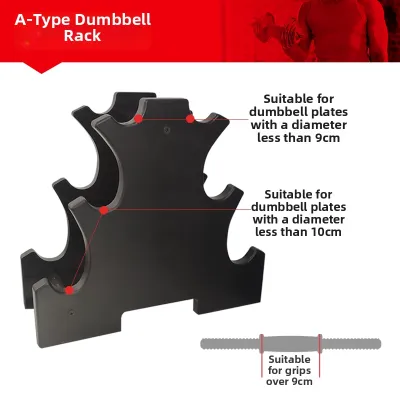
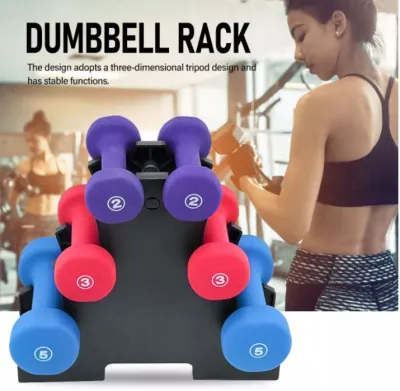
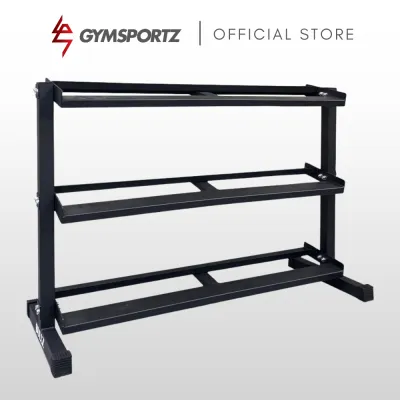
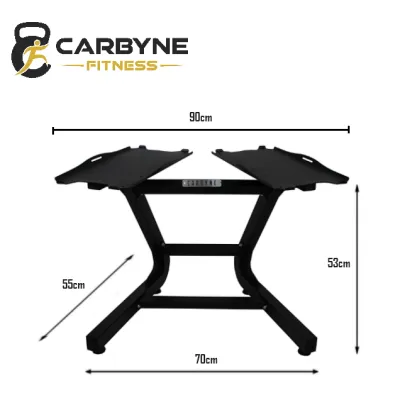
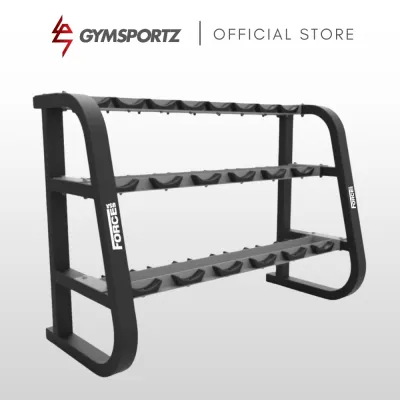
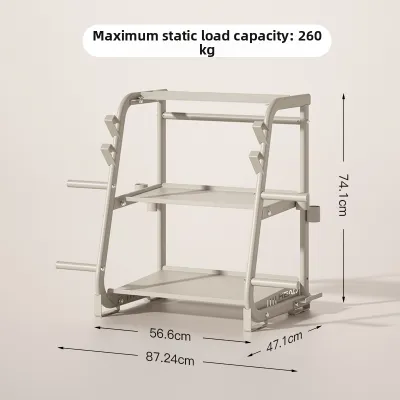
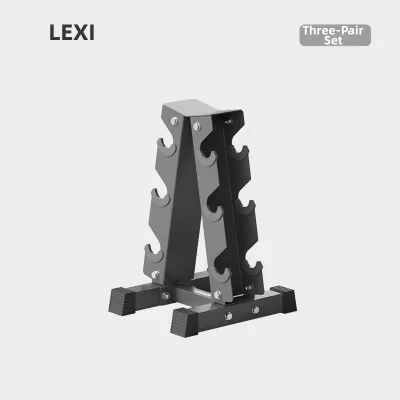
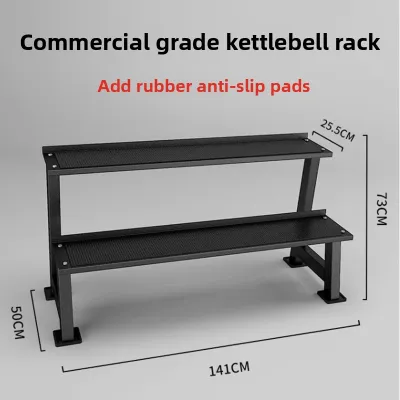
Prices are valid at publication and may change. Please refer to the product page for the latest price.
Wall composition is a major structural consideration in Singapore apartments. Many modern HDB flats utilize a mix of structural concrete walls and lightweight internal partition walls, such as drywall or hollow core panels. Solid concrete walls can support substantial shear weight when paired with the correct masonry anchors. Conversely, lightweight partition walls have strict load limits and require finding internal studs for any wall-mounted installation. Attempting to mount heavy weight racks directly onto unsupported drywall can lead to structural damage and safety hazards.
If you plan to use multi-functional furniture, such as a storage bench or a reinforced cabinet, you must verify the maximum load capacity of the unit. Standard household furniture is rarely engineered to support the concentrated, dense weight of iron dumbbells. Check the manufacturer’s specifications to confirm the static load limit of the shelves. Placing a heavy dumbbell set onto a shelf rated for only a fraction of that weight can cause the structure to bow, crack, or collapse over time.
Evaluate Dumbbell Storage Types for Compact Living
Selecting the right storage configuration depends on how you prioritize floor space, accessibility, and aesthetic integration.

Vertical and tiered stands are highly popular for small rooms because they stack weights upward rather than outward. An A-frame or vertical tree rack occupies a minimal floor footprint, often requiring less than 0.2 square meters of space. To maintain stability and prevent tipping, you must place your heaviest dumbbells on the bottom tiers and lighter weights on top. When removing a heavy dumbbell, the sudden shift in the center of gravity can cause a lightweight frame to wobble, so look for models with a wide, flared base.
Wall-mounted racks save space by lifting your entire dumbbell collection off the floor, keeping it clear for exercise mats. However, wall-mounted systems depend heavily on the structural integrity of your wall and the quality of your installation hardware. They are generally limited to lighter weight sets unless anchored securely into solid concrete or load-bearing timber studs. If you rent your apartment, drilling heavy-duty anchors into the walls may also violate your tenancy agreement.
Under-bed or low-profile trays utilize the dead space beneath your furniture. These flat, horizontal trays or rolling bins slide easily under bed frames, sofas, or low TV consoles. To make this work, measure the exact clearance height between your floor and the bottom of your bed frame, factoring in the height of your largest dumbbell head. Opting for trays with heavy-duty caster wheels makes retrieval much easier, though you must ensure the wheels are suitable for your flooring type—such as vinyl, laminate, or parquet—to avoid leaving deep scratches.
Multi-functional furniture represents a seamless way to hide fitness equipment in plain sight. Storage ottomans, reinforced benches, or custom-built cabinets can house your dumbbells while serving as everyday seating. This approach is excellent for maintaining a clean home aesthetic. The primary trade-off is accessibility; retrieving weights from inside a deep chest or beneath a seat cushion requires extra steps, which might add friction to your workout routine. Additionally, these pieces must be constructed from robust materials like solid wood or steel-reinforced frames to handle the dense load.
Key Safety and Stability Checks
Safety must be your primary concern when storing heavy metal objects in a residential environment. A falling dumbbell can cause serious injury or permanently damage your flooring.
Always verify the manufacturer’s stated weight capacity on the product label before loading a rack. This limit should comfortably exceed the total combined weight of your current dumbbell collection, with some margin for future upgrades. Do not assume a rack is safe just because it has enough slots; a five-pair rack might only be rated for a total of 80kg, which can easily be exceeded if you store heavier dumbbells.
In households with children or pets, stability is paramount. Look for storage units that feature anti-tip designs, rubberized non-slip feet, or integrated wall-tethering brackets. A vertical rack can easily be pulled over, so securing the top of the rack to a wall stud using a safety strap is a highly recommended precaution. Additionally, rubber feet help distribute the weight evenly, prevent the rack from sliding, and protect delicate flooring materials from being gouged by steel frames.
When installing wall-mounted racks or tethering straps, you must match your wall anchors and drilling methods to the specific wall composition of your home. Standard plastic wall plugs included in retail packaging are often insufficient for heavy fitness equipment. Solid concrete walls require expansion bolts or heavy-duty masonry anchors, while drywall requires toggle bolts anchored directly into structural studs. If you are unsure of your wall type, or if you observe any cracking or bowing during drilling, stop immediately and consult a qualified professional installer.
Matching Storage to Your Dumbbell Collection
Not all dumbbell racks are compatible with every style of weight. The physical shape, handle length, and adjustment mechanism of your dumbbells will dictate the type of storage shelf or cradle you need.
If you use adjustable dumbbells, which consolidate multiple weight plates into a single handle using a dial or pin system, standard tiered racks are rarely suitable. Adjustable dumbbells typically require their own proprietary docking trays to hold the unused plates in place. When choosing a stand for adjustable weights, look for flat-shelf utility stands or specialized cradles designed specifically to hold the wide, flat bases of these systems. Ensure the stand features a lip or locking mechanism to prevent the heavy docking trays from sliding off.
For fixed-weight dumbbells, you must match the handle length and head diameter to the rack’s dimensions. Standard horizontal tiered racks feature two parallel rails that support the dumbbell heads. If the distance between the rails is wider than your dumbbell’s handle length, the weights will not sit securely and could fall through. Conversely, if your dumbbells have exceptionally large heads, they may crowd each other on the shelf, preventing you from utilizing every slot. Measure your dumbbells’ handle clearance and head width before selecting a rack.
The shape of the dumbbell heads also plays a major role in storage safety. Hexagonal dumbbells are highly stable and can be stored on flat shelves, vertical racks, or even stacked directly on the floor without risk of movement. Round dumbbells, however, will roll easily if placed on a flat surface. If your collection consists of round weights, you must use a rack with contoured cradles, sloped shelves with a front retaining lip, or dedicated dividers to keep the weights securely locked in place.
Frequently Asked Questions (FAQ)
Can I mount a dumbbell rack on HDB partition walls?
Internal partition walls in HDB flats are typically made of lightweight concrete panels or gypsum drywall boards. These walls are not designed to support heavy, concentrated loads like a fully loaded dumbbell rack. Mounting a heavy rack directly onto the drywall surface using standard plugs can cause the wall material to tear or collapse. If you must use a partition wall, locate the internal metal or timber studs using a stud finder and anchor the rack directly into those structural members. For safety, limit wall-mounted storage on partition walls to very light weights, and use floor-standing vertical racks for your heavier dumbbells.
How do I prevent round dumbbells from rolling in a small space?
To keep round dumbbells stationary in a tight apartment, avoid storing them on flat, open shelves or smooth floors. Instead, choose storage racks that feature curved cradles or individual saddle slots that match the contour of the dumbbell heads. If you are using flat shelves or storing weights on the floor, you can use rubber wedge blocks, dedicated dumbbell cups, or non-slip silicone mats to create physical barriers. Another simple solution is to place the dumbbells inside a low-profile tray lined with a high-friction rubber mat, which prevents any lateral movement.

Community discussion
Share your experience or ask a question. Comments are reviewed before publication.