
Selecting a 40kg kettlebell in Singapore requires moving past basic fitness standards to industrial-grade specifications. At this weight class, often referred to as the “Bulldog” in traditional strength circles, the physical forces exerted on both the lifter and the equipment are immense. A single structural failure or a slippery handle can lead to severe injury or property damage. To find the best 40kg kettlebell, you must prioritize single-piece casting, precise handle geometry, reliable local delivery logistics, and robust rust-resistant coatings that can withstand Singapore’s high relative humidity.
Why Heavy Kettlebells Require Strict Quality Standards
At a mass of 40kg, a kettlebell is no longer just a piece of conditioning equipment; it is a high-mass projectile that exerts immense kinetic force on your body, floor, and the bell’s own structure. When performing ballistic movements like swings, cleans, or snatches, the effective load at the end of the arc is significantly higher than the static 40kg weight. This extreme force demands exceptional structural integrity. Standard fitness equipment designed for lighter weights often utilizes multi-piece construction, where the handle is welded to the body. Under the repeated, high-impact stress of heavy training, these weld points can develop micro-fractures, leading to sudden and catastrophic failure.
To mitigate this risk, advanced lifters must look for single-piece gravity-cast iron or steel kettlebells. Single-piece casting ensures there are no weak joints or seams that can split under load. Furthermore, manufacturing tolerances become critical at this weight class. While a small weight variance on a light bell is negligible, a minor percentage variance on a 40kg bell means a discrepancy of several kilograms, which can severely disrupt your movement mechanics and asymmetrical loading patterns. High-quality heavy-duty strength equipment should guarantee a weight tolerance of within 1% to 2% of the stated 40kg.
Products mentioned in this guide
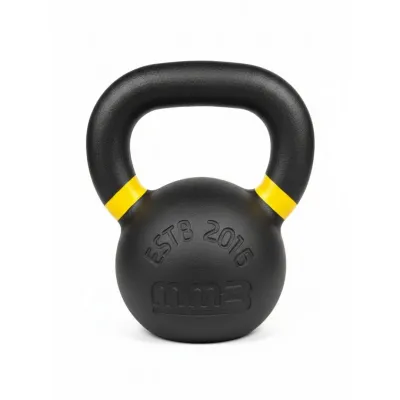
Prices are valid at publication and may change. Please refer to the product page for the latest price.
Additionally, the durability of the coating and the flatness of the base are paramount. Under heavy use, cheap enamel coatings chip easily, exposing the raw iron beneath to ambient moisture. In Singapore’s humid climate, this exposure leads to rapid oxidation and rust, which degrades the surface texture and compromises your grip. An uneven base is equally hazardous; a wobbly 40kg bell can easily tip over during floor-based exercises like renegade rows or floor presses, risking severe wrist strain or crushed fingers.
Core Specifications to Evaluate for Advanced Training
When stepping up to a 40kg load, you cannot rely on generic product descriptions or aesthetic appeal. You must carefully evaluate the physical dimensions and material specifications of the kettlebell to ensure it aligns with your physical proportions and training methodology.

Handle Geometry and Grip Clearance
The handle is your sole point of contact with a 40kg load, making its geometry the most critical factor for safety and performance. For cast-iron bells of this weight, handle diameters typically range from 38mm to 40mm. A thicker handle challenges your grip strength and forearm endurance, but it also distributes the massive downward pressure more evenly across your palm during overhead presses and rack holds. Conversely, competition-style kettlebells maintain a standardized handle diameter of 33mm to 35mm, which is preferable for lifters with smaller hands or those focusing on high-repetition ballistic sets.
The texture of the handle directly dictates your control over the weight. Powder-coated finishes are highly favored for heavy lifting because they provide a textured, matte surface that holds chalk exceptionally well, reducing slippage from sweat. Machined or bare steel handles offer a very direct, tactile feel but require meticulous maintenance to prevent rust. Avoid glossy enamel or vinyl-coated handles entirely; these surfaces become incredibly slick when wet, making a 40kg bell highly dangerous to swing.
You must also verify the horn width and window height. The window—the open space between the handle and the bell body—must be wide enough to accommodate both hands comfortably if you plan to perform two-handed swings. However, it should not be so tall that the bell sits too far down your forearm in the rack position, as this alters the leverage and increases the strain on your wrists. Finally, inspect the underside of the handle for casting seams or metal burrs. Under a 40kg load, even a tiny imperfection can act like a blade, tearing open calluses and causing painful hand injuries.
Base Flatness and Coating Durability
A perfectly flat, stable base is non-negotiable for any kettlebell used in floor-based strength routines. Exercises such as renegade rows, push-ups on the bells, and floor presses require the kettlebell to remain completely stationary under your body weight plus the load of the bell. A machined flat bottom ensures the bell has a wide, stable contact patch with the floor. Avoid bells with raw, unmachined cast bottoms, as they often feature slight protrusions or rounded edges that can cause the bell to tip unexpectedly.
The coating of the kettlebell serves as its primary defense against environmental wear and tear. In Singapore, where high relative humidity is constant, rust is a persistent threat to strength equipment. E-coat (electrodeposition coating) is one of the most durable finishes available. It uses an electrical current to apply a thin, uniform, and highly adhesive protective layer over the entire metal surface, offering superior corrosion resistance and a consistent texture. High-quality powder coating is also excellent, provided it is applied over a properly prepared, sandblasted iron surface.
To verify these claims, look for manufacturers that explicitly state their coating process and base machining standards. Avoid products that simply list “painted finish” without further detail, as these are often cheap spray-painted coatings that will chip, peel, and rust within a few months of use in a tropical environment.
Sourcing and Verifying Availability in Singapore
Acquiring a 40kg kettlebell in Singapore involves navigating unique logistical and purchasing challenges. Because a single 40kg item exceeds the standard weight limits of typical residential courier services, shipping costs can heavily influence the final price. When purchasing online, always check the delivery terms and look for potential freight surcharges. A kettlebell that appears reasonably priced can quickly become uneconomical once heavy-goods shipping fees are added at checkout.
Furthermore, because 40kg kettlebells are niche items catering to advanced lifters, local fitness retailers rarely maintain large quantities in stock. Before placing an order on any e-commerce platform or specialty fitness site, contact the seller directly to verify real-time local stock. Avoid the trap of “backorder” or “pre-order” listings unless you are willing to wait several weeks or months for the next sea freight container to arrive in Singapore.
It is also vital to verify the seller’s authorization and warranty policies. A reputable local distributor should offer a clear warranty covering structural defects, such as casting voids or handle separation. Ensure there is a straightforward return or exchange policy in place. If your kettlebell arrives with a warped base or a cracked handle, shipping a 40kg block of iron back to an international seller is financially prohibitive; having a local warehouse or distributor to handle exchanges is a crucial safeguard for your investment.
Pre-Use Inspection and Safety Boundaries
Before integrating a new 40kg kettlebell into your training routine, you must perform a thorough physical inspection to ensure it is safe to lift. Begin with a visual and tactile audit. Run your hands carefully over the entire handle, horns, and window area. Feel for any sharp ridges, metal burrs, or rough casting seams that could compromise your grip or damage your skin. If you detect any sharp imperfections, do not use the bell. While minor burrs can sometimes be smoothed down with fine-grit emery cloth, doing so may damage the protective coating and void your warranty, so contacting the seller for an exchange is always the safest first step.
Next, test the stability of the base. Place the kettlebell on a completely flat, hard surface, such as a concrete floor or a heavy-duty rubber gym mat. Press down firmly on different sides of the handle, attempting to rock the bell. A high-quality, properly machined base should remain completely stable and show no signs of wobbling or tipping under downward pressure.
When you begin lifting the bell, start with slow, controlled movements. Perform basic deadlifts, suitcase carries, and goblet squats before attempting ballistic swings, cleans, or snatches. Listen closely for any unusual clicking, rattling, or metallic ringing sounds during the lift, which can indicate internal casting voids or structural micro-fractures.
Establish strict stop conditions for your equipment. If you ever observe hairline cracks developing near the horns, feel any flex or movement in the handle, or notice large sections of the coating peeling away, immediately stop using the kettlebell. Heavy strength training requires absolute trust in your equipment; never attempt to use a compromised 40kg load, as the consequences of a failure mid-lift can be severe.
Frequently Asked Questions (FAQ)
Is a competition-style or cast-iron kettlebell better for a 40kg load?
The choice between competition-style and traditional cast-iron kettlebells at 40kg depends entirely on your training goals and hand size. Competition kettlebells maintain identical external dimensions across all weight increments, utilizing a hollow core or internal steel plates to adjust the mass. This means a 40kg competition bell will feel exactly the same against your forearm and in the rack position as a 16kg bell, allowing you to maintain highly consistent movement mechanics. However, competition handles are typically thinner (33mm to 35mm) and made of bare steel, which demands high grip endurance and regular maintenance to prevent rust.
Traditional cast-iron kettlebells, on the other hand, grow larger as their weight increases. A 40kg cast-iron bell is physically massive, featuring a thick handle (often 38mm to 40mm) and a wide window. If your training focuses on hardstyle strength, two-handed swings, and heavy presses, the thick handle and robust, solid-cast construction of a cast-iron bell are highly advantageous. For high-repetition kettlebell sport lifts (such as snatches and jerks) where technical consistency is paramount, a competition bell is generally preferred.
How should I maintain a heavy kettlebell in a humid environment?
Singapore’s tropical climate, characterized by high relative humidity and ambient salt air, accelerates the oxidation of iron and steel. To protect your 40kg kettlebell from rust and preserve its grip texture, you must establish a consistent post-workout maintenance routine. After every training session, wipe down the handle and bell body with a dry microfiber cloth to remove sweat and moisture, as the salts in sweat are highly corrosive.
If you use chalk, use a stiff nylon brush to scrub out packed chalk from the handle’s textured surface. Avoid using wire brushes on powder-coated or e-coated surfaces, as they can scratch the protective layer and expose the raw metal.
Periodically apply a very light coat of protective oil, such as mineral oil or a specialized fitness equipment lubricant, to any exposed metal or machined areas. Buff the handle thoroughly with a clean, dry cloth after application to ensure no slippery residue remains. Always store your kettlebell indoors in a dry, well-ventilated space, away from open windows or damp balconies. If you notice early signs of pinpoint rust, gently scrub the area with a fine abrasive pad and reapply a rust-inhibiting paint or protective oil.

Community discussion
Share your experience or ask a question. Comments are reviewed before publication.