
Setting up a home gym in Singapore requires balancing fitness goals with the realities of compact residential spaces like HDB flats and condominiums. Choosing the right dumbbell set depends on your training style, available floor area, and floor protection needs. While adjustable dumbbells offer unmatched space efficiency, fixed-weight hex dumbbells provide superior durability for dynamic movements. By evaluating your current strength levels, progression plans, and storage options, you can select a setup that maximizes your workout variety without cluttering your living space.
Essential Criteria for Choosing Home Dumbbells
Singaporean apartments, particularly newer HDB flats and compact condominiums, demand highly efficient space planning. A full rack of fixed dumbbells can easily consume several square meters of floor space, which may not be practical in a multi-use living room or spare bedroom. Consider the physical footprint of your storage solution. Vertical A-frame racks can minimize floor usage for fixed sets, while adjustable dumbbell trays can sit neatly in a closet or under a bed when not in use.
Progressive overload is the cornerstone of strength training. To continue making progress, you must gradually increase the resistance. This means your dumbbell set must offer a wide enough weight range to accommodate different exercises. For example, lower-body movements like squats and lunges typically require much heavier loads than upper-body exercises like lateral raises or bicep curls. Assess your current strength levels and choose a set that allows for small, incremental weight steps—ideally 1 kg to 2.5 kg increments—to facilitate safe progression.
Products mentioned in this guide
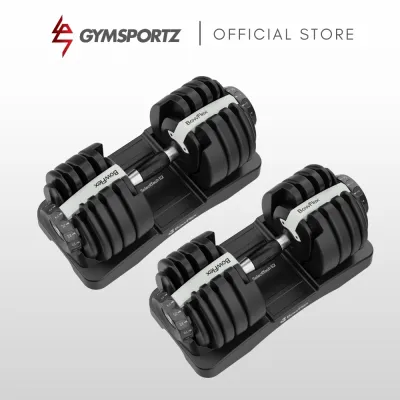
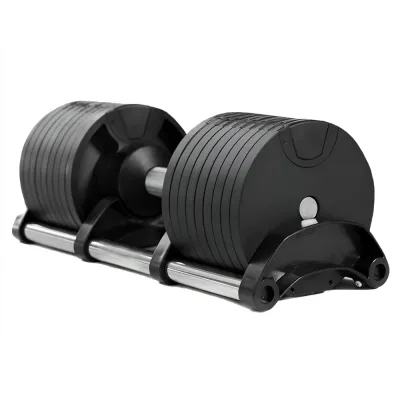
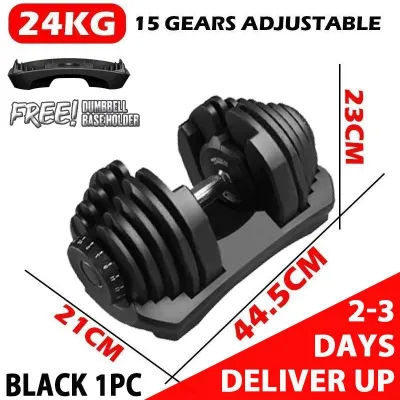
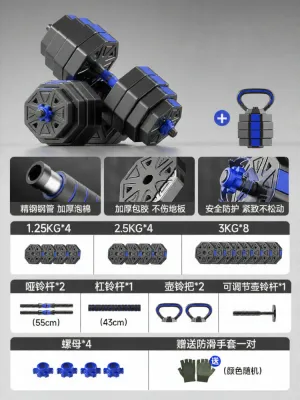
![[BULKY] Pure Steel Dumbbell Set Adjustable Exercise Weight Plates Dumbbell Barbell Convertible Gym Set](https://img.lazcdn.com/g/p/89d6083b2bdfcd92bcc80722bf1208b9.jpg_400x400q80.jpg_.webp)
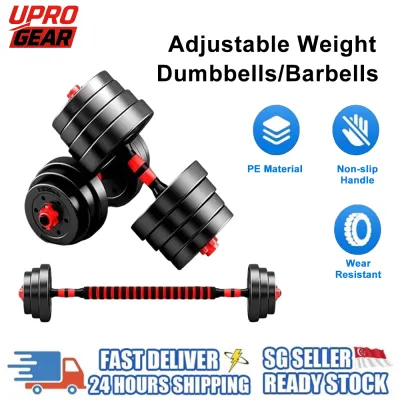
![[BULKY] Dumbbell Set Adjustable Exercise Weight Plates Dumbbell Barbell Convertible Gym Set](https://img.lazcdn.com/g/p/084fbf90618f02a1a89eb8fb30f8a31e.jpg_400x400q80.jpg_.webp)
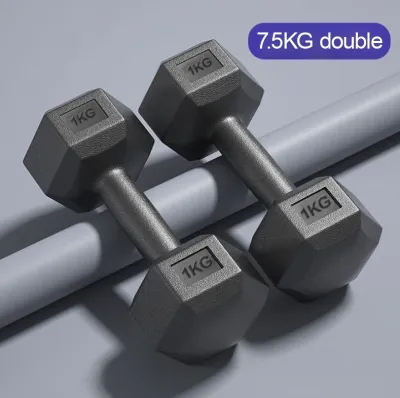
Prices are valid at publication and may change. Please refer to the product page for the latest price.
Floor protection is a critical consideration in high-density residential buildings. Dropping bare cast iron dumbbells on tiled, vinyl, or parquet flooring can cause expensive structural damage and generate significant noise that disturbs neighbors. Rubber-coated or polyurethane (PU) dumbbells are highly recommended for home use. Polyurethane is particularly durable, odorless, and resistant to degradation, though it carries a higher price tag. Rubber coatings provide excellent impact absorption but can sometimes emit a strong odor initially. If you opt for bare cast iron, investing in high-density rubber gym mats is essential to safeguard your floors and dampen sound.
The handle design directly impacts your control, comfort, and safety during heavy lifts. Look for handles with a contoured shape that fits naturally in the palm of your hand. Knurling—the cross-hatched pattern cut into the metal handle—provides the friction necessary to maintain a secure grip when your hands are sweaty. Deep, aggressive knurling is excellent for heavy pulling movements but can be harsh on unconditioned hands, whereas light knurling might feel slippery during intense sessions. Verify the handle diameter as well; standard handles are typically around 28 mm to 32 mm, with thicker handles placing more demand on your grip strength and forearms.
Comparing Dumbbell Types for Limited Spaces
The structural design of your dumbbells dictates not only how much space they occupy but also the flow and efficiency of your workouts. Different mechanisms offer distinct trade-offs between transition speed, durability, and versatility. Understanding these differences allows you to choose a system that aligns with your specific training environment and routine.

Adjustable Dumbbells
Adjustable dumbbells are the ultimate space-saving solution for home fitness enthusiasts. By consolidating an entire rack of weights into a single pair, they occupy a fraction of the space. These systems typically utilize either a dial-select, twist-lock, or spin-lock mechanism to change weights. Dial-select and twist-lock systems allow you to change resistance in seconds simply by turning a dial or rotating the handle while the dumbbell sits in its cradle. This rapid transition is highly beneficial for workouts that require quick weight changes between sets.
However, these mechanical systems require careful handling. The internal gears, selector pins, and external cradles are often made of a combination of metal and high-impact plastics. Over time, these moving parts can wear out or become misaligned if subjected to rough treatment. Unlike traditional dumbbells, mechanical adjustable models must never be dropped, as the impact can shatter the locking tabs or damage the internal alignment, rendering the adjustment mechanism useless. Additionally, their physical length remains constant regardless of the weight selected, which can feel bulky or awkward during certain close-body movements like chest presses or bicep curls. Spin-lock dumbbells, which use threaded collars to secure individual weight plates, offer a more durable and cost-effective alternative, though changing weights takes significantly longer and can disrupt the momentum of your workout.
Fixed-Weight Dumbbells and Sets
Fixed-weight dumbbells are the gold standard for durability and simplicity. Because they have no moving parts, they can withstand years of heavy use, including dynamic movements and high-impact drops, without any risk of mechanical failure. For home gyms with dedicated space, a set of fixed-weight dumbbells arranged on a sturdy rack offers unparalleled convenience. You can transition from one weight to another instantly, making them ideal for drop sets, supersets, and fast-paced training styles.
The primary drawback of fixed-weight sets is their spatial and financial footprint. A comprehensive set ranging from 2.5 kg to 25 kg in 2.5 kg increments requires ten pairs of dumbbells, demanding a substantial multi-tier rack that can take up a significant portion of a room. To optimize safety and floor preservation in a home setting, look for hexagonal designs. Hexagonal dumbbells feature flat sides that prevent them from rolling across the floor when placed down, reducing the risk of injury or damage to nearby furniture. They also provide a stable base for floor-based exercises like renegade rows or push-ups.
Selectorized and Smart Dumbbells
Selectorized and smart dumbbells represent the premium tier of home strength equipment, integrating technology to streamline your training. Some advanced systems feature automated weight adjustment, where you input your desired weight on a digital console or a connected device, and the system automatically configures the dumbbell. Many of these smart systems also include built-in sensors to track your repetitions, sets, lifting speed, and estimated power output, syncing this data directly to a proprietary mobile application.
While these technological features offer a highly interactive and guided training experience, they introduce several dependencies. Smart dumbbells often require a reliable power source to operate their charging bases or digital consoles, and they rely heavily on stable Bluetooth or Wi-Fi connectivity. If the proprietary app experiences software bugs or is discontinued, you may lose access to tracking features or even basic adjustment functionalities. Furthermore, the premium price tag of these systems must be weighed against their actual training utility. For many lifters, the core value of a dumbbell lies in its physical resistance, and the added cost of digital tracking may not translate to faster strength gains compared to manual tracking with a simple notebook or a free workout app.
Aligning Your Equipment with Fitness Goals
Your choice of dumbbell configuration should directly reflect your primary training modalities and long-term fitness objectives. Different workout styles place unique demands on weight increments, transition speeds, and maximum load capacities.
If your primary goal is building maximum strength or muscle hypertrophy, your training will require heavier loads and fine weight increments. Hypertrophy training relies on progressive overload, which is safest and most effective when you can increase the weight in small, manageable steps. For these goals, an adjustable dumbbell set that offers a high maximum weight capacity (such as 24 kg or 40 kg per dumbbell) with small increments (1 kg to 2 kg) is highly advantageous. This allows you to fine-tune the resistance for both smaller muscle groups, like the shoulders, and larger compound movements, like deadlifts and chest presses.
Conversely, if your routine focuses on high-intensity interval training (HIIT), metabolic conditioning, or endurance work, your priorities will shift toward speed and agility. These workouts often utilize lighter weights and require seamless transitions between exercises with minimal rest. In this scenario, a few pairs of fixed-weight hexagonal dumbbells are often superior to a single adjustable set. You can quickly drop one pair and pick up another without pausing to turn dials or spin collars, keeping your heart rate elevated. Additionally, fixed dumbbells are much better suited for the dynamic, explosive movements common in HIIT, such as dumbbell snatches, cleans, and thrusters, where the risk of dropping or bumping the weights is higher.
For beginners starting their fitness journey, it is wise to plan for future progression without overinvesting upfront. A common mistake is purchasing a very light, non-expandable dumbbell set that is quickly outgrown within a few months of consistent training. When searching for a quality dumbells set for home use, look for modular systems or adjustable sets that allow you to purchase add-on weight plates later. This approach keeps your initial investment low while ensuring your equipment can grow alongside your physical capabilities.
Purchasing Safely from Local and Online Retailers
Acquiring heavy fitness equipment in Singapore requires careful consideration of logistics, warranties, and seller credibility. Because dumbbells are exceptionally heavy, shipping costs can quickly inflate the total price, and returning a defective item can be a logistical challenge.
When purchasing adjustable dumbbells, pay close attention to the warranty terms. Because these systems contain intricate moving parts, they are more prone to wear and tear than solid metal weights. Ensure the warranty explicitly covers the adjustment mechanism, selector pins, and dial components, rather than just the structural integrity of the weight plates. A reputable local distributor will typically offer a one- to two-year warranty with local repair or replacement services, saving you from the exorbitant costs of shipping a heavy item back to an overseas manufacturer.
Evaluate the delivery logistics and assembly services offered by the retailer. Many online marketplaces list low prices but charge high shipping fees based on weight, or deliver the items only to the ground floor of your building. Confirm whether the delivery service includes transport to your doorstep, especially if you live in a high-rise apartment with lift access. For complex equipment like multi-tier dumbbell racks or high-end smart systems, check if the retailer provides professional assembly services to ensure the structures are safely and correctly put together.
Whenever possible, visit a physical showroom in Singapore before making your final purchase on an e-commerce platform. Testing the dumbbells in person allows you to evaluate critical tactile factors that cannot be assessed online, such as the depth and comfort of the handle knurling, the balance of the weight distribution, and the smoothness of the adjustment mechanism. Be cautious of unauthorized third-party sellers on online marketplaces who offer significantly lower prices. These sellers often lack official authorization from the manufacturer, meaning any warranty claims may be denied, and you may receive counterfeit products that pose safety risks during heavy lifting.
Frequently Asked Questions (FAQ)
Can I use adjustable dumbbells for fast-paced circuit training?
While adjustable dumbbells are highly versatile, their suitability for fast-paced circuit training depends on the specific mechanism and the nature of your exercises. Dial-select and twist-lock systems allow for relatively quick weight changes, but they still require you to return the dumbbell to its cradle, align the plates, and select the new weight. This process can take anywhere from 5 to 15 seconds, which may disrupt the flow of a high-intensity circuit that demands instant transitions. Furthermore, circuit training often involves rapid, explosive movements and a higher likelihood of dropping the weights when fatigued. Because adjustable dumbbells contain delicate internal locking mechanisms, dropping them can cause permanent damage. For intense, rapid-fire circuits, a few pairs of fixed-weight hex dumbbells are generally safer and more practical.
How much floor weight capacity do I need to check for my apartment?
Residential buildings in Singapore, including HDB flats and private condominiums, are engineered to support substantial structural loads. Standard HDB floor slabs are typically designed to withstand a minimum static load of 150 kg per square meter. A standard home dumbbell set, even a heavy adjustable pair or a small rack of fixed weights, is highly unlikely to exceed this structural limit. However, the primary concern is concentrated static load and impact force. Placing a heavy dumbbell rack directly on bare tiles or parquet can cause localized cracking or indentation. To safely distribute the weight, always place your dumbbell rack or storage trays on high-density rubber gym mats. These mats help spread the load across a wider surface area and absorb the impact of placing the weights down, protecting both your floor’s finish and the structural slab underneath. If you plan to install an exceptionally heavy setup exceeding several hundred kilograms in a concentrated area, it is advisable to consult your building’s management or structural guidelines first.

Community discussion
Share your experience or ask a question. Comments are reviewed before publication.