
Choosing the right fishing rod hard case in Singapore depends on matching the case’s physical dimensions to your rod’s collapsed length, ensuring the construction materials can withstand local tropical humidity, and selecting a form factor that fits your primary mode of transport. While soft fabric bags offer basic dust protection, a dedicated hard case is the most reliable way to prevent costly damage to fragile rod tips and guides during transit on public transport or while stored in compact residential spaces. For beginners, navigating the wide variety of options requires focusing on practical design features, ease of transport, and straightforward maintenance rather than complex locking systems or premium brand names.
By understanding what makes a hard case effective, you can make an informed purchase that keeps your gear safe for years to come. This guide breaks down the essential factors to consider, from material durability and transport compatibility to precise measurement techniques and post-purchase inspections.
Why Beginners Need a Hard Case for Fishing Rods
Modern fishing rods, particularly those designed for beginners, are often constructed from graphite, carbon fiber, or fiberglass composites. While these materials are incredibly strong and flexible when fighting a fish, they are highly vulnerable to localized side impacts. A sharp knock against a concrete pillar, a car door, or a metal railing can create microscopic fractures in the rod blank, leading to sudden breakage the next time the rod is bent under load.
Products mentioned in this guide
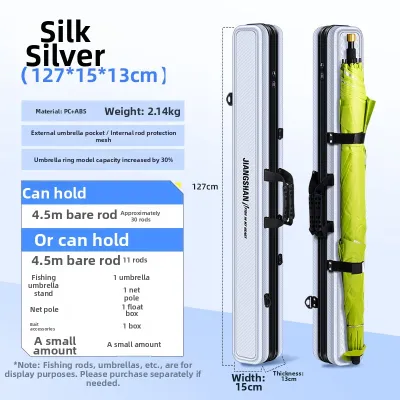
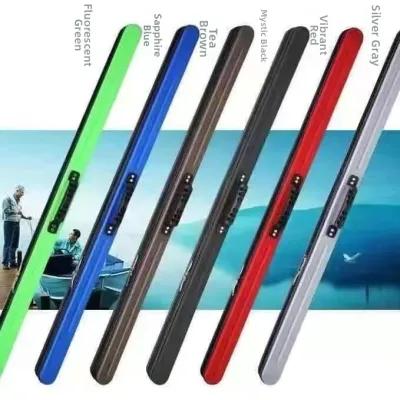
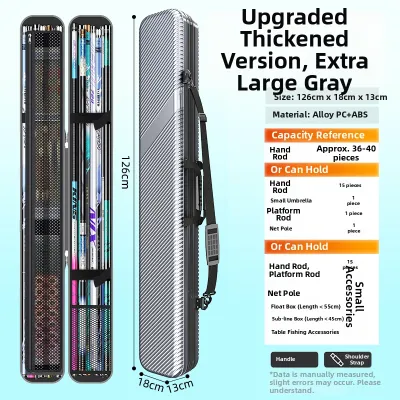
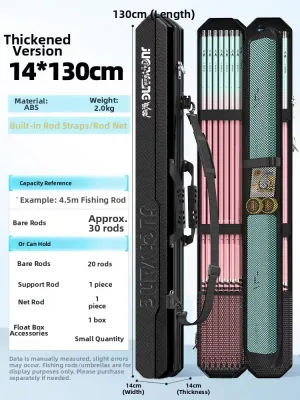
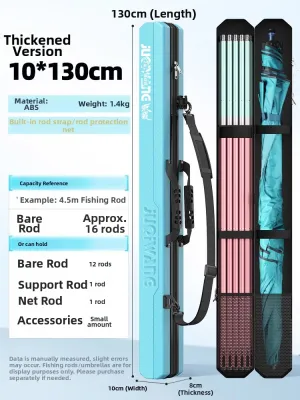
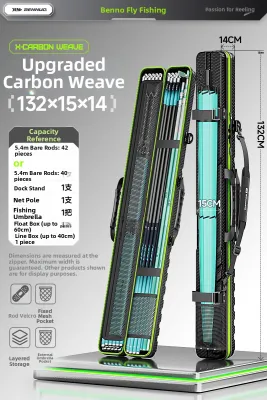
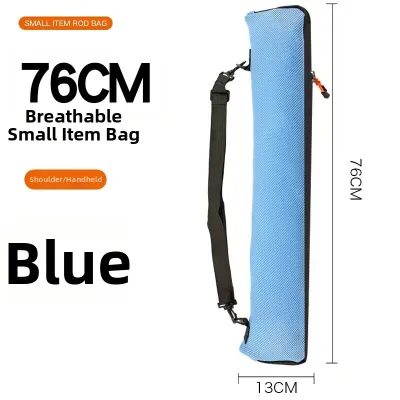
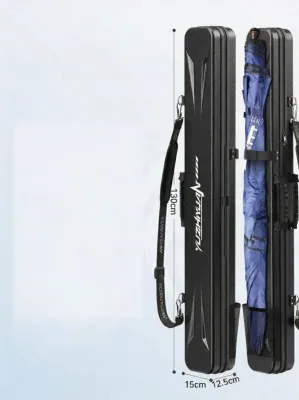
Prices are valid at publication and may change. Please refer to the product page for the latest price.
Beyond the rod blank itself, the guide rings are highly susceptible to damage. Most rods feature ceramic guide inserts held in place by metal frames. A minor drop or a squeeze in a crowded space can easily crack these ceramic rings or bend the frames out of alignment. Once a ceramic insert is cracked, its sharp edges will quickly fray and cut your fishing line, resulting in lost fish and wasted tackle. A hard case provides a rigid, crush-resistant barrier that absorbs these external forces completely.
Commuting to fishing spots in Singapore presents unique hazards for unprotected gear. Whether you are navigating busy MRT stations during off-peak hours, boarding public buses, or packing gear into a shared car boot, your rods are constantly exposed to bumps and jostles. A hard case transforms your fragile, awkward-to-carry rods into a single, robust package that can easily withstand the rough-and-tumble of public transit.
At home, space is often at a premium in typical residential layouts like HDB flats. Unprotected rods leaning against a wall or tucked into a closet are easily knocked over, stepped on, or damaged by household pests. Storing your rods inside a hard case not only keeps them organized and dust-free but also allows you to store them vertically in a corner or horizontally under a bed without worrying about heavy items shifting and crushing them.
Key Features to Look for in a Beginner-Friendly Rod Hard Case
When evaluating different hard cases, the exterior material is your first line of defense. Acrylonitrile Butadiene Styrene (ABS) is a highly popular choice because it offers an excellent balance of impact resistance, rigidity, and lightweight performance. Polyvinyl Chloride (PVC) is another common material, often used in cylindrical rod tubes; it is exceptionally tough and highly water-resistant, though it tends to be slightly heavier than ABS. High-Density Polyethylene (HDPE) is also used in premium designs, offering superior crack resistance even under heavy impacts.

Inside the case, the quality of the protective lining is just as important as the outer shell. Look for cases that feature dense egg-crate foam or customizable foam inserts at both ends to absorb longitudinal shocks during transport. Adjustable velcro straps or integrated tie-down points are crucial features, as they prevent the rods from sliding back and forth inside the case, which can cause the delicate rod tips to repeatedly strike the end caps.
Weight and portability are critical factors that directly impact how often you will actually use the case. A heavy, cumbersome case will quickly become a chore to carry, especially if you plan to walk long distances along coastal spots or reservoir banks. Beginners should look for cases that offer robust protection without excessive bulk, ideally featuring comfortable, padded shoulder straps or ergonomic carry handles that distribute the weight evenly.
Finally, pay close attention to the latch and locking mechanisms. While heavy-duty metal latches provide a highly secure mechanical seal, they must be treated to resist corrosion in humid environments. High-quality, oversized plastic zippers are also common and offer excellent resistance to salt air, though they must glide smoothly without catching. For beginners, simple and reliable closure systems are preferable to complex, multi-dial combination locks, which can jam or rust over time.
Matching the Case to Your Transport and Fishing Style in Singapore
Your primary method of commuting to your favorite fishing spots should heavily influence the shape and size of the hard case you choose. If you rely on public transport like the MRT or public buses, maneuverability is key. A slim, cylindrical rod tube with a shoulder strap is highly recommended, as it allows you to keep the case close to your body, minimizing the risk of bumping into other commuters or blocking narrow walkways during your journey.
For those who travel by private vehicle or ride-hailing services, the main constraint is the physical width of the car boot. Many standard sedan boots cannot accommodate a long, one-piece rod case horizontally, which may force you to fold down the rear seats or place the case diagonally, reducing passenger space. In this scenario, a shorter, multi-piece rod case designed for two-piece or telescopic rods is highly advantageous.
Consider your current gear setup and your potential for future expansion. If you only own a single spinning rod and plan to keep it that way for a while, a slim, single-rod tube is the most efficient and cost-effective choice. However, if you anticipate buying a second rod—such as a baitcasting setup or a heavier shore-casting rod—it is wiser to invest in a slightly wider multi-rod hard case from the start to avoid having to purchase a second case later.
Singapore’s tropical climate, characterized by high temperatures and relative humidity levels often exceeding 80 percent, can take a toll on outdoor gear. Cheap plastics can warp when exposed to intense sunlight, and low-grade adhesives used to secure interior foam linings can melt or degrade. When selecting a case, check the manufacturer’s care labels or product specifications to ensure the materials are UV-resistant and designed to withstand high-temperature environments, especially if you plan to leave the case in a car boot during the day.
How to Measure and Verify Size Compatibility
To ensure your fishing rods fit perfectly inside a hard case, you must take precise physical measurements rather than relying on the nominal rod length listed by the manufacturer. A rod labeled as “6 feet” may actually measure slightly longer or shorter depending on the design of the tip and the butt cap. Always use a standard measuring tape to find the exact physical length of your rod sections.
For multi-piece rods, disassemble the rod completely and lay the sections side by side on a flat surface. Measure the longest single section from the very bottom of the female ferrule or butt cap to the very tip of the guide ring. In many two-piece rods, the tip section is slightly longer than the butt section, so measuring both sections individually is essential to ensure you do not buy a case that is too short.
If you prefer to transport your rod with the reel attached, you must look for a specialized hard case that features an expanded reel pouch or a wider cross-section. Measure the maximum width and height of your reel while it is mounted on the rod, taking into account the handle and the bail arm. Compare these measurements against the internal dimensions of the case’s reel compartment to ensure a snug fit that does not put lateral pressure on the reel handle.
Do not forget to check the internal diameter and cross-section shape of the case. The largest guide ring on a spinning rod (the stripping guide) stands out significantly from the rod blank. Ensure the internal diameter of the tube or the depth of the hard case is wide enough to accommodate this guide without bending or compressing it against the outer shell. If you plan to pack multiple rods into a single case, nest them together top-to-tail and measure the widest combined point to verify they will fit comfortably.
Building Your Shortlist: What to Check Before Buying
Before making your final purchase, compile a shortlist of potential hard cases and systematically verify their specifications. Start by cross-referencing the manufacturer’s listed internal dimensions—not the external dimensions—against your physical rod measurements. Always allow a safety buffer of at least 3 to 5 centimeters in length to accommodate the protective foam padding at both ends of the case.
Investigate the warranty terms and coverage offered by the manufacturer. A reliable hard case should come with a warranty that covers structural defects, such as cracked shells, broken hinges, or failing latches under normal usage conditions. While budget-friendly beginner cases may offer shorter warranty periods, a clear policy indicates the manufacturer’s confidence in the product’s durability.
When purchasing from online marketplaces or local e-commerce platforms, pay close attention to the seller’s return and exchange policies. Because physical fit is so critical, you want the flexibility to return or exchange the case if you discover your rod does not fit as expected upon delivery. Ensure the seller offers buyer protection and clear instructions on how to initiate a return for oversized items.
Once your chosen hard case arrives, perform a thorough physical inspection before taking it out into the field. Open and close the latches or zippers multiple times to ensure they operate smoothly without binding. Check the alignment of the hinges to ensure there are no gaps where dust or moisture could enter, and inspect the interior for any strong chemical or adhesive odors, which may require you to leave the case open in a well-ventilated area for a few days before storing your gear.
Frequently Asked Questions (FAQ)
Can I leave my fishing rod inside the hard case for long-term storage?
Storing a fishing rod inside a sealed hard case for extended periods is only safe if the rod and the case interior are completely dry. If you store gear that is even slightly damp from rain, dew, or saltwater spray, the trapped moisture will create a high-humidity microclimate inside the sealed case. This environment rapidly promotes the growth of mold and mildew, which can ruin cork handles, degrade EVA foam grips, and accelerate the corrosion of metal guide frames and reel seats.
To prevent this, always wash your rod with fresh water after every outing, wipe it down thoroughly with a clean microfiber cloth, and allow it to air-dry completely in a well-ventilated room before placing it in the case. If you suspect any moisture has entered the case, leave the case open in a dry, air-conditioned room for 24 hours to ensure all residual humidity has evaporated before closing it for long-term storage.
How do I clean and maintain the exterior of a hard rod case?
Maintaining the exterior of your hard rod case is straightforward and helps extend its lifespan. After a fishing trip, especially to coastal areas where salt spray is common, wipe down the outer shell with a soft cloth dampened with lukewarm water and a mild dish soap. This removes salt deposits, dirt, and mud that can degrade the plastic over time or cause the latches to stick.
Avoid using harsh chemical solvents, gasoline, or abrasive scrubbing pads, as these can strip away protective UV coatings, scratch the plastic shell, or weaken the structural integrity of the material. Once clean, dry the exterior thoroughly with a towel, paying close attention to the hinges, metal rivets, and zipper tracks. Applying a light spray of silicone lubricant to metal hinges and zipper teeth once or twice a year will keep them operating smoothly and prevent rust.

Community discussion
Share your experience or ask a question. Comments are reviewed before publication.