
Living in a high-density housing development (HDB) flat in Singapore requires a smart approach to space management, especially when setting up a home gym. While cardiovascular health remains a priority, bulky fitness equipment can quickly overwhelm a living room or study. A foldable or compact exercise bike offers a practical compromise, allowing you to maintain an active lifestyle without permanently sacrificing valuable floor space.
Choosing the right space-saving exercise bike involves more than simply picking the smallest model available. You must balance the physical dimensions of your home with your personal fitness goals, the structural integrity of the machine, and the comfort of everyone in your household. By evaluating key design features, storage mechanisms, and stability factors, you can find a machine that integrates seamlessly into your daily routine and your living space.
Measuring Your HDB Space and Storage Constraints
Before browsing online marketplaces or visiting local fitness showrooms, you must establish the exact physical boundaries of your workout and storage areas. Start by measuring the active workout footprint, which is always larger than the static dimensions of the exercise bike. You need to account for the full range of motion, including the sweep of the pedals, the extension of the handlebars, and the space required to safely mount and dismount the machine. Leaving a clearance of at least fifty centimeters on all sides is a practical safety standard to prevent bumping into walls or furniture during a workout.
Products mentioned in this guide
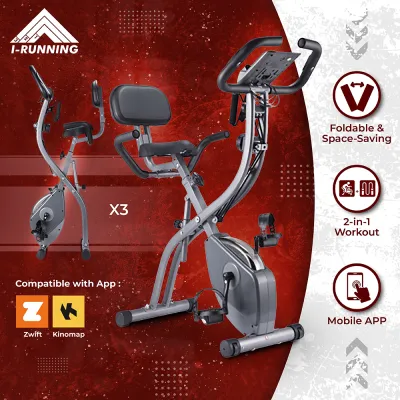
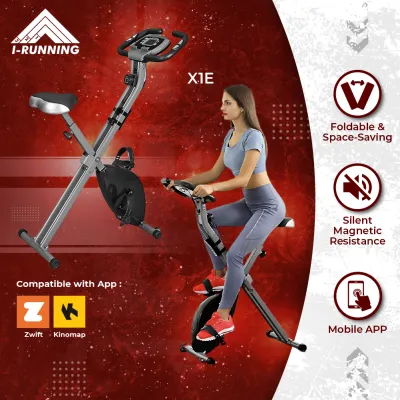
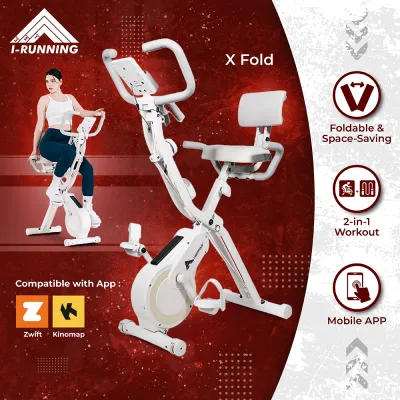

Prices are valid at publication and may change. Please refer to the product page for the latest price.
Next, measure your intended storage location with equal precision. Whether you plan to tuck the bike into a utility closet, slide it under a bed, or park it in a corner of the balcony, you must verify the height, width, and depth of the folded unit against these spaces. Do not overlook the path the bike must travel to reach its storage spot. Check the width of your doorways, the clearance of narrow hallways, and even the dimensions of your HDB estate’s elevator to ensure you can easily transport the equipment from the delivery point to your living room.
Finally, consider the vertical height of the bike when folded. Many X-frame models fold into an upright position that can stand over 1.5 meters tall. If you plan to store the bike behind a door or inside a built-in wardrobe, ensure the ceiling or shelving clearance accommodates this height. Taking these measurements beforehand prevents the frustration of purchasing a compact machine that ultimately blocks your main walkways.
Comparing Compact Exercise Bike Designs and Resistance Types
Compact exercise bikes generally fall into three design categories: upright, recumbent, and mini pedal exercisers. Upright folding bikes are the most common choice for HDB flats because they mimic the geometry of a traditional road bicycle, keeping the footprint highly concentrated. Recumbent folding bikes feature a reclined seating position with a backrest, which is excellent for individuals requiring lumbar support or low-impact joint exercise, though they naturally require a slightly longer floor footprint. Mini pedal exercisers lack a frame, seat, or handlebars entirely; they sit directly on the floor while you pedal from your own chair, making them the ultimate space-savers, albeit with a more limited workout intensity.

The resistance mechanism of the bike directly impacts both your workout quality and the peace of your household. Magnetic resistance is highly recommended for apartment living because it operates almost silently. It uses magnets adjusted closer to or further from a metal flywheel to change difficulty, resulting in zero physical contact, minimal wear, and virtually no noise. Friction resistance, which uses felt or leather pads pressing against the flywheel, is often more affordable but produces a noticeable whirring sound and requires periodic pad replacements as the material wears down.
Adjustability is another critical factor, especially in a multi-user household. Compact frames often have shorter seat posts and limited handlebar adjustments compared to commercial gym bikes. Before purchasing, verify that the seat height can be adjusted to accommodate the inseam lengths of all intended users. Proper leg extension is vital to prevent knee strain, so a bike that cannot adjust to your height will quickly become an uncomfortable and unused piece of furniture.
Evaluating Folding Mechanisms for Daily or Weekly Storage
The ease with which an exercise bike folds determines how often you will actually use and store it. The most prevalent design is the X-frame, which uses a central pivot point to fold the front and rear frames together like a pair of scissors. This design significantly reduces the floor footprint, though it increases the vertical height. Other models feature a vertical folding mechanism where the rear stabilizer folds upward toward the main frame, keeping the center of gravity lower and making the folded unit easier to roll.
Portability features are essential if you plan to move the bike after every workout. Look for models equipped with built-in transport wheels on the base stabilizers, which allow you to tilt and roll the bike across your flat rather than lifting its entire weight. Quick-release locking pins and spring-loaded pull knobs are also crucial; they should feel sturdy and lock securely into place to prevent the bike from accidentally unfolding while being moved.
Consider the physical effort required to operate these mechanisms. A bike that weighs over twenty kilograms can be challenging to fold and maneuver, particularly for older adults or those recovering from injuries. If possible, test the folding mechanism in a showroom to assess whether you can comfortably lift, lock, and roll the machine without straining your back. If the process is too cumbersome, the bike is likely to remain permanently unfolded, defeating the purpose of buying a space-saving model.
Verifying Stability, Safety, and Weight Limits
While lightweight materials make a bike easier to store, they can compromise stability during active use. To ensure a safe workout, always check the manufacturer’s specified maximum user weight limit. A higher weight capacity generally indicates a more robust frame construction, thicker steel tubing, and more durable joints. Compare this limit against the net weight of the bike itself; an ultra-lightweight bike weighing under fifteen kilograms may feel unstable or flex excessively under a heavier rider.
Examine the design of the base stabilizers, which are the horizontal bars at the front and rear of the bike. Wider stabilizers provide a broader base of support, reducing the risk of the bike tipping sideways during a workout. Look for adjustable leveling feet or non-slip rubber end caps on these stabilizers. These caps help level the bike on slightly uneven HDB tiles or vinyl flooring, preventing rocking motions that can disrupt your rhythm and damage your floors.
Be realistic about the trade-offs of a compact frame. Lightweight, foldable bikes are engineered for moderate, steady-state cardio rather than high-intensity training. If you plan to perform vigorous workouts, stand up on the pedals, or engage in rapid sprint intervals, a standard folding bike may wobble. For these activities, a heavier, non-folding compact bike with a solid frame is a safer and more stable choice, even if it occupies a permanent spot in your room.
Optimizing Placement and Maintenance in Small Apartments
To protect your home and maintain good relations with your neighbors, proper placement and maintenance are essential. Always place a high-density, non-slip equipment mat beneath your exercise bike. This mat serves two critical purposes: it protects your HDB flooring—whether it is vinyl, laminate, or ceramic tile—from scratches and sweat, and it dampens the low-frequency vibrations and structural noise that can travel through the concrete floor to the apartment below.
Ensure your workout spot has adequate ventilation, especially if you are positioning the bike in a tight corner or a small study. Keep a clear space of at least thirty centimeters around the flywheel and resistance housing to allow heat to dissipate during long sessions. If you are using the bike in a room with air conditioning or a ceiling fan, position it to maximize airflow, helping you stay cool and reducing the amount of sweat dripping onto the machine and floor.
Regular maintenance is vital to keep a folding bike operating safely and quietly. Because these bikes feature moving joints and folding hinges, the bolts connecting these parts can gradually loosen over time due to vibration. Establish a monthly routine to inspect and tighten all major bolts, pedal threads, and seat adjustments using the tools provided in the manufacturer’s manual. Keeping the moving parts clean and occasionally lubricating the folding hinges will prevent squeaks and ensure the folding mechanism remains smooth for years to come.
Frequently Asked Questions (FAQ)
Are foldable exercise bikes stable enough for high-intensity workouts?
Foldable exercise bikes are generally designed for moderate, steady-state cardiovascular exercise rather than high-intensity interval training (HIIT) or out-of-the-saddle riding. The central folding hinge and lighter frame materials can introduce a slight flex or wobble when you pedal at high speeds or apply heavy downward force. Always check the manufacturer’s guidelines regarding intended use and weight limits. If your primary fitness goal involves intense sprints or standing climbs, a compact, non-folding spin bike with a heavy flywheel and a solid, welded frame will provide the necessary stability and safety.
What is the best way to protect HDB flooring from exercise bike damage?
The most effective way to safeguard your HDB flooring is to place a thick, high-density PVC or rubber equipment mat directly under the bike. This mat prevents the metal stabilizers from scratching vinyl, laminate, or tile surfaces and catches any sweat that drips during your workout. To minimize noise transmission to your downstairs neighbors, position the bike away from shared structural walls and avoid placing it directly over quiet areas like bedrooms. Regularly lift the mat to clean the floor underneath, as trapped dust and grit can act like sandpaper under the weight of the bike, causing micro-scratches over time.

Community discussion
Share your experience or ask a question. Comments are reviewed before publication.