
Selecting a resistance band set for a home gym in Singapore requires balancing space constraints, fitness goals, and environmental factors. Unlike bulky dumbbells or barbells, a high-quality resistance band set offers a highly compact, versatile, and cost-effective strength training solution. However, finding the right set involves evaluating band types, material durability under tropical conditions, and safety features to ensure a productive and injury-free workout routine. By understanding the key specifications and matching them to your living space, you can build an effective home workout setup that lasts.
Understanding Resistance Band Types for Your Routine
Selecting the right style of resistance band is the first step in building an effective home workout routine. Different band designs target distinct muscle groups and suit specific exercise mechanics.
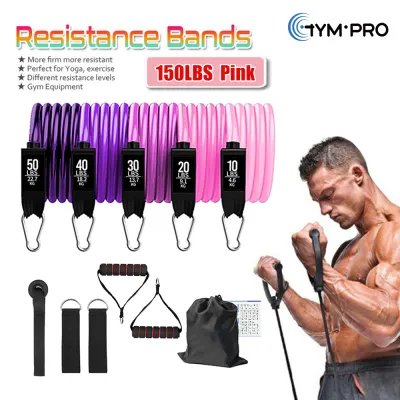
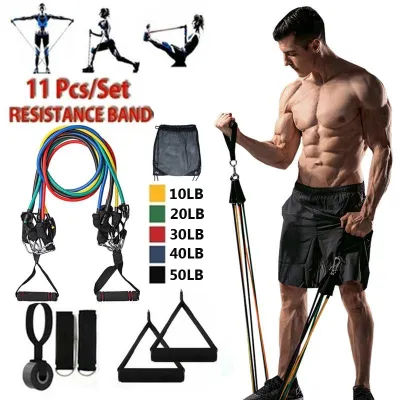
Tube bands with handles are hollow rubber tubes featuring metal carabiners at each end. These carabiners clip onto foam-padded handles, ankle straps, or door anchors, allowing you to perform a wide range of upper-body pulling and pushing movements. They closely mimic the constant tension of cable machines found in commercial gyms, making them excellent for chest presses, rows, and bicep curls. Because you can clip multiple bands onto a single handle, they offer highly customizable resistance levels.
Products mentioned in this guide
![[FAST DISPATCH] Resistance Band / Mini Band / Yoga Band / Exercise Band / Resistance Band Set](https://img.lazcdn.com/g/p/6a15b95a59e51bb49b2d0b5f23e8e2ec.jpg_400x400q80.jpg_.webp)
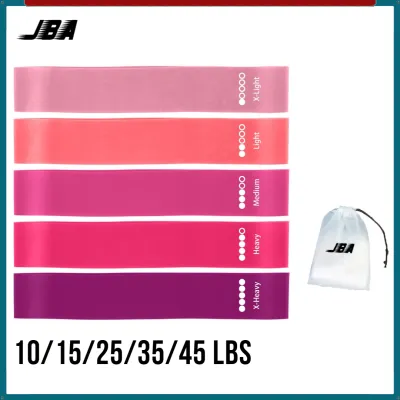
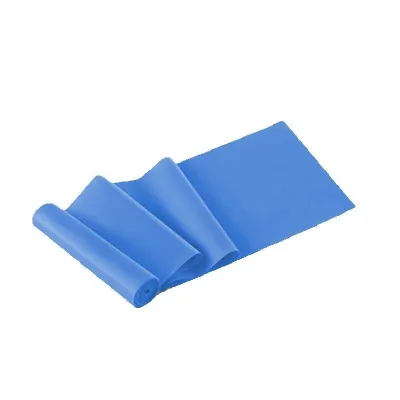
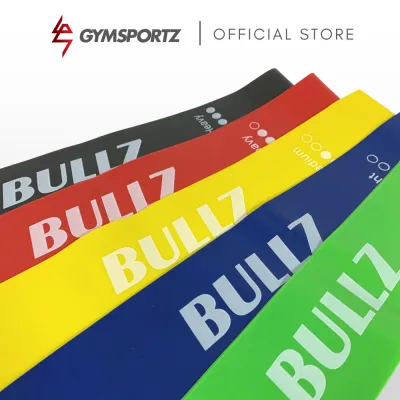
Prices are valid at publication and may change. Please refer to the product page for the latest price.
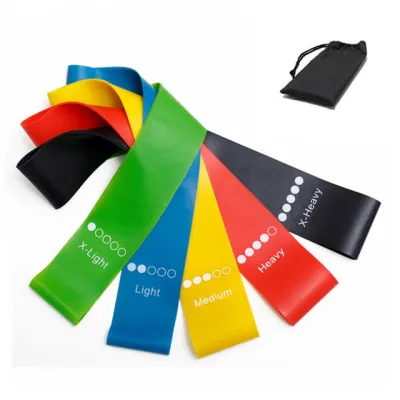
Mini loop bands are short, flat bands designed to be placed around the thighs, calves, or ankles. They are primarily used for lower-body isolation, glute activation, and physical therapy. These bands are highly effective for lateral band walks, clamshells, and adding extra resistance to bodyweight squats. Because they are compact, they are incredibly easy to pack for travel or outdoor workouts.
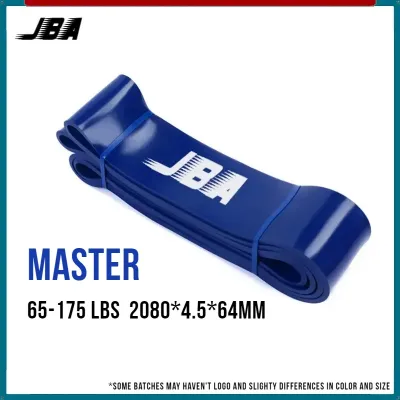
Long loop bands, often called pull-up assist bands, are continuous loops measuring about one meter in length. They are highly versatile, offering heavy resistance for compound movements like squats, deadlifts, and overhead presses. They also provide assistance for bodyweight exercises like pull-ups and dips by taking some of your body weight off the bar. Their flat, wide design makes them comfortable to loop around your feet or shoulders.
Material composition plays a critical role in how a band performs and feels. Natural latex is the industry standard due to its exceptional elasticity, smooth resistance curve, and ability to stretch up to several times its original length. However, natural latex can degrade quickly in warm, humid environments and may trigger allergic reactions in sensitive individuals.
Thermoplastic Elastomer (TPE) is a synthetic alternative that is hypoallergenic and more resistant to UV light. While TPE bands are a safe choice for those with latex allergies, they generally have a shorter lifespan and less elastic snap than natural latex.
Fabric or textile blend bands combine latex threads with woven fabric. These are incredibly durable, comfortable against bare skin, and do not roll up or slide during lower-body movements. However, they offer less stretch range and are harder to clean when saturated with sweat.
Key Specifications to Evaluate Before Buying
To ensure you invest in a safe and durable resistance band set, you must evaluate several critical product specifications before making a purchase.

Resistance levels are typically rated in weight equivalents, such as 5 kilograms to 25 kilograms of tension. It is crucial to understand that these numbers represent peak resistance when the band is stretched to its safe limit, not the starting tension. A comprehensive set should include a range of bands—such as light, medium, heavy, and extra-heavy—to allow for progressive overload across different muscle groups. Color-coding systems help identify resistance levels quickly, but because there is no universal standard, users must verify the specific weight ratings printed on the bands or packaging.
Material durability and safety features are paramount when selecting a set. Look for anti-snap technology, which is particularly important for tube bands. High-quality tube bands often feature a layered latex construction or an internal safety cord made of high-strength nylon. If the outer latex tube snaps, the internal cord prevents the band from whipping backward toward the user. For flat loop bands, consistent thickness and smooth edges are indicators of good manufacturing quality.
A versatile set is defined by its accessories. Look for door anchors with a large, soft foam core that won’t slip through door gaps or scratch the wood finish. Ankle straps should feature thick neoprene padding and heavy-duty steel D-rings to prevent chafing and handle high tension. Carabiners should be made of solid steel or high-grade aluminum with secure spring gates; avoid thin, wire-gate clips that can easily bend under load.
Every band has a maximum stretch threshold, typically specified as 3 times its resting length. Exceeding this limit dramatically increases the risk of sudden structural failure. Always check the manufacturer’s guidelines to understand the safety limits of your specific set.
Matching the Set to Your Fitness Goals and Living Space
Your training objectives and home environment should dictate the specific resistance band set you choose.
To build muscle and strength, you need progressive tension. A stackable tube band set—where multiple bands can be clipped onto a single pair of handles—allows you to increase resistance incrementally up to 70 kilograms or more. Long loop bands are also excellent for adding heavy resistance to compound lifts.
For high-repetition endurance training, active recovery, or physical rehabilitation, lighter mini loops and single light tube bands are ideal. They allow for precise, controlled movements that target smaller stabilizing muscles without overloading joints.
In typical Singaporean apartments, such as HDB flats, space is at a premium. A full set of dumbbells can take up significant floor space and risk damaging tiled or vinyl flooring if dropped. A resistance band set can be stored in a small drawer or hung on a hook, requiring zero dedicated floor space.
Finding safe anchoring points is critical in a home environment. Standard HDB internal doors are often hollow-core doors, which may not withstand heavy pulling forces. It is safest to anchor bands on solid timber main doors or structural frames. Always ensure the door closes toward the direction of the pull, locking the door frame into place, rather than pulling against the latch mechanism alone.
Verification Checklist for Buying in Singapore
When shopping for a resistance band set in the local market, use this practical checklist to verify product quality and seller reliability.
When purchasing a set, inspect the packaging for clear material disclosures (e.g., “100% natural latex” or “hypoallergenic TPE”) and explicit safety warnings. Avoid generic unbranded sets that lack clear weight ratings or manufacturer contact details.
When shopping on local e-commerce platforms, prioritize sellers with high ratings, positive customer reviews detailing long-term durability, and clear return policies. Look for local distributors who offer a warranty (typically 3 to 12 months) against manufacturing defects or premature snapping, as this indicates confidence in product quality.
Be wary of sets that emit a strong, pungent chemical or petroleum odor upon opening, as this suggests low-grade synthetic materials or improper chemical curing, which leads to rapid degradation. Inspect the bands for uneven thickness, bubbles, or tiny nicks along the edges. Flimsy, lightweight plastic carabiners or unpadded ankle straps are clear signs of a low-quality set that may compromise safety.
A set advertised as a “15-piece kit” for an incredibly low price may seem like a bargain, but if the carabiners are weak, the door anchor is unpadded, and the bands are thin, the set is both unsafe and poor value. It is better to invest S$30 to S$80 in a high-quality 5-band set with robust metal hardware and reinforced stitching.
Safety Checks and Maintenance for Longevity
Proper maintenance and regular safety checks are essential to prevent equipment failure and extend the lifespan of your resistance bands.
Before every workout, perform a quick visual and tactile check. Stretch each band slightly and look for micro-tears, hairline cracks, discoloration, or dry, brittle patches. Run your fingers along the length of the band to detect any thinning areas. If any defects are found, discard the band immediately.
Never anchor bands to sharp metal edges, rough concrete pillars, or abrasive surfaces, as these will quickly cut through the material. Use a dedicated door anchor or wrap the band around a smooth, rounded structural post. Always double-check that the door is fully latched and locked before beginning any exercise.
Singapore’s high humidity and ambient heat can accelerate the breakdown of natural latex, causing it to become sticky or brittle. After a sweaty workout, wipe the bands down with a soft, damp cloth to remove sweat and skin oils, which can degrade the material. Do not use harsh detergents, alcohol, or bleach. Allow the bands to air-dry completely in a cool, shaded indoor area. Store them in a dark drawer, closet, or the provided carrying bag, away from direct sunlight, balcony areas, or heat sources. Applying a light dusting of cornstarch or talcum powder every few months can prevent the latex from sticking together.
Resistance bands are consumable fitness tools with a finite lifespan. Even with meticulous care, they will eventually lose elasticity and develop micro-tears. Replace your bands immediately if you notice any loss of tension, permanent stretching, or surface cracking.
Frequently Asked Questions (FAQ)
Can resistance bands completely replace free weights for muscle growth?
Resistance bands provide variable resistance, meaning the tension increases as the band stretches. This differs from the constant gravitational load of free weights, where the resistance remains the same throughout the movement. While bands can effectively stimulate muscle growth by providing sufficient mechanical tension, tracking precise progressive overload is more challenging than simply adding weight plates. Bands are best used as a highly effective home alternative or a supplement to free weights rather than a total replacement for heavy compound lifting.
How do I safely anchor a resistance band to a standard household door?
To safely anchor a band, first check the stability of the door frame and hinges. Always place the door anchor on the pull-side of the door, ensuring that your exercise pulls the door shut against the frame rather than pulling it open against the latch. Position the anchor near the hinges or at the top of the door for maximum structural support. Finally, lock the door to prevent anyone from opening it mid-set and causing a sudden release of tension.
What is the typical lifespan of a latex resistance band set?
A high-quality latex resistance band set typically lasts between 6 to 24 months, depending on usage frequency, stretch intensity, and storage conditions. In Singapore’s humid climate, latex degrades faster if exposed to sweat, heat, and UV light. Following the manufacturer’s specific care instructions, avoiding overstretching, and performing regular safety inspections are essential to maximize the lifespan of your bands.

Community discussion
Share your experience or ask a question. Comments are reviewed before publication.