
Finding the right badminton racket is not about picking the most expensive model on the shelf or copying what professional players use. Instead, a successful choice depends on matching the physical specifications of the racket to your current physical capabilities, technical skill level, and tactical approach on the court. The correct racket acts as an extension of your arm, enhancing your natural strengths while providing forgiveness for technical limitations. Conversely, an ill-suited racket can hinder your development, lead to early fatigue, and even cause chronic injuries like tennis elbow or shoulder strain. By understanding how weight, balance, flexibility, and grip size interact with your swing, you can make an informed decision that elevates your game and keeps you playing comfortably.
Assessing Your Skill Level and Playing Style
Before looking at specific racket models, you must honestly evaluate your current abilities and on-court preferences. Players generally fall into three skill categories: beginner, intermediate, and advanced. Beginners are still developing consistent contact with the shuttlecock, learning basic footwork, and mastering the fundamental overhead swing. At this stage, swing speed is typically slower, and clean hits on the sweet spot are less frequent. Intermediate players have established reliable footwork, can hit deep clears consistently, and are beginning to vary their shots with drops, slices, and smashes. Advanced players possess rapid footwork, high swing speeds, precise wrist control, and the ability to generate explosive power from compact movements.
Your playing style is another critical factor that dictates the ideal racket profile. Attacking players rely on powerful smashes, steep angles, and aggressive baseline play to force errors. Defensive players focus on quick reactions, control, and maneuverability, using rapid blocks, lifts, and flat drives to neutralize opponent attacks. All-around players prefer a balanced approach, transitioning fluidly between offense and defense depending on the flow of the rally.
Products mentioned in this guide
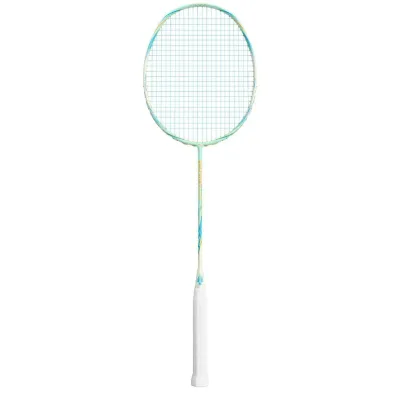
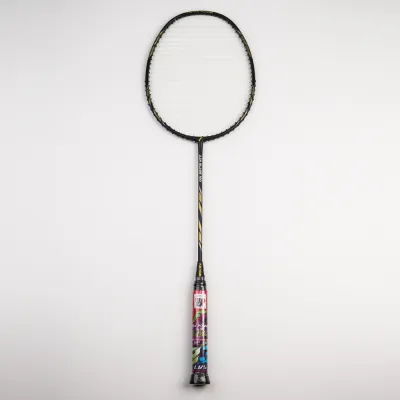

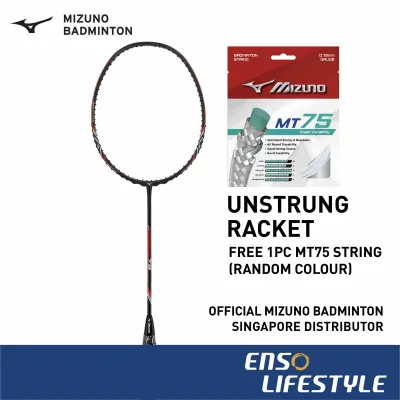

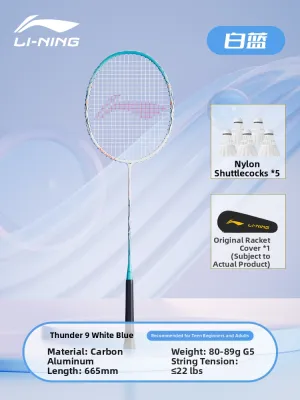

Prices are valid at publication and may change. Please refer to the product page for the latest price.
Choosing a racket that does not align with your skill level or style can severely limit your progress. For instance, a beginner using an ultra-stiff, head-heavy racket designed for advanced attackers will struggle to generate power and will likely experience wrist or shoulder discomfort. On the other hand, an advanced player using a highly flexible, head-light racket may find their smashes lacking power and their control compromised. Identifying your baseline profile ensures you select a tool that supports your growth rather than working against your body.
Decoding Badminton Racket Specifications
Every badminton racket features technical specifications, usually printed on the shaft or cone, that define its physical behavior. Understanding these codes allows you to predict how a racket will feel and perform on the court before you play.

Weight, Balance, and Shaft Flexibility
Racket weight is categorized using a standard “U” classification system, where a higher number denotes a lighter racket. Common weights include 3U (typically 85 to 89 grams), 4U (80 to 84 grams), and 5U (75 to 79 grams). Lighter rackets, such as 4U and 5U models, offer rapid maneuverability and quick defensive reactions, making them highly popular in doubles play. Heavier rackets, like 3U models, provide more mass behind the shuttlecock, which naturally translates to greater momentum and power for deep clears and heavy smashes.
The balance point of a racket determines how that weight is distributed along its length. Head-heavy rackets concentrate weight toward the top of the frame, acting like a hammer to generate extra momentum during overhead swings. Head-light rackets distribute more weight toward the handle, allowing for lightning-fast frame manipulation during quick net exchanges and defensive blocks. Even-balance rackets distribute weight uniformly, offering a versatile middle ground that does not heavily favor either power or speed.
Shaft flexibility refers to how much the racket bends during a swing and is rated from flexible to stiff. A flexible shaft bends easily, acting like a slingshot to help players with slower swing speeds generate depth and power with minimal effort. A stiff shaft requires a fast, explosive swing and precise wrist action to bend, but it rewards advanced players with instantaneous energy transfer and exceptional control. Medium-flex shafts offer a balanced compromise, providing decent power assistance without sacrificing too much shot precision.
Grip Size and String Tension Limits
Grip size is indicated by a “G” rating, where a larger number represents a smaller handle circumference. For example, G5 is a very common small grip size, while G4 is slightly larger. Choosing the correct grip size is essential for maintaining a relaxed hand position and preventing finger fatigue. If a grip is too small, you can easily build it up using inexpensive overgrips to achieve a custom fit. However, if a grip is too large from the start, it is very difficult to reduce its size, which can restrict your wrist mobility during quick shots. In Singapore’s humid climate, choosing a durable overgrip is essential to manage sweat and maintain a secure hold on the handle.
Every racket frame has a maximum string tension limit specified by the manufacturer, usually measured in pounds (lbs). This limit indicates the maximum pressure the graphite frame can withstand during the stringing process and subsequent play. Exceeding this recommended limit voids the manufacturer’s warranty and significantly increases the risk of the frame warping or cracking upon impact with the shuttlecock or a partner’s racket.
While string tension is a personal preference that you customize when getting a racket strung, it must always remain within the frame’s structural limits. Beginners generally benefit from lower tensions, which create a resilient “trampoline effect” for easier power and a larger sweet spot. Advanced players often prefer higher tensions for a crisp feel and precise control, but this requires a highly developed technique to avoid arm strain and frame damage.
Recommended Racket Profiles for Different Players
Once you understand the technical specifications, you can map them to specific racket profiles that match your current development stage and tactical preferences on the court.
Beginners and Defensive Styles
For beginners and players who prioritize a defensive, control-oriented game, the primary goals are ease of use, rapid maneuverability, and arm protection. A highly suitable profile consists of a 4U weight class combined with a flexible shaft and a head-light or even-balance distribution. This combination ensures that the racket is easy to swing repeatedly without causing shoulder fatigue, while the flexible shaft assists in clearing the shuttlecock from baseline to baseline.
Defensive players benefit greatly from a head-light balance because it allows them to position the racket quickly to block fast smashes or engage in rapid flat drives. The lighter frame weight reduces reaction time, helping you keep up with fast-paced rallies. Additionally, keeping the string tension relatively low—typically between 20 to 24 lbs—creates a forgiving sweet spot that absorbs shock and minimizes the vibrations transmitted to your wrist and elbow.
Intermediate and All-Around Styles
Intermediate players who have developed consistent swing mechanics and play an all-around game require a versatile racket that does not lock them into a single tactical role. An ideal profile for this stage is a 4U or 3U weight class with an even-balance distribution and a medium-flex shaft. This setup provides a balanced blend of power for attacking clears and speed for defensive recovery.
The medium-flex shaft offers enough stiffness to provide accurate tactile feedback on drop shots and net play, while still offering some whip-like assistance for smashes. As your technique refines, you can experiment with slightly higher string tensions, generally in the range of 24 to 26 lbs, to enhance control without sacrificing too much power. This is also the stage to pay close attention to grip customization, using different overgrip materials to find the exact texture and thickness that maximizes your control.
Advanced and Attacking Styles
Advanced players with fast swing speeds and an aggressive, smash-heavy playing style require high-performance equipment that can handle explosive forces. The recommended profile for this category is a 3U or 4U weight class with a head-heavy balance and a stiff or extra-stiff shaft. This configuration maximizes the momentum of the racket head during a smash, allowing for steep angles and devastating power.
The stiff shaft ensures that the racket frame does not twist or lag during high-speed swings, providing immediate feedback and pinpoint accuracy for tight net shots and precise placement. However, using a stiff, head-heavy racket places significant physical demands on your forearm, wrist, and shoulder. Without proper foundational technique and physical conditioning, attempting to play with this setup can quickly lead to joint fatigue or repetitive strain injuries. Advanced players typically string these rackets at higher tensions, from 27 lbs and above, to achieve maximum shuttle control.
Pre-Purchase Checks and In-Store Testing
Before purchasing a badminton racket, performing a thorough physical inspection and verifying its authenticity can save you from buying counterfeit goods or defective equipment. Start by examining the frame and shaft for any hairline cracks, uneven paint finishes, or misaligned decals, which are common indicators of poor manufacturing or shipping damage. Check the grommets—the small plastic eyelets that protect the strings from the sharp edges of the frame holes—to ensure they are intact, smooth, and not split.
If you are shopping at a physical sporting goods store, you can perform a couple of simple, non-destructive tests to assess the racket’s physical characteristics. To check the shaft flexibility, hold the handle firmly with one hand and gently flex the top of the frame with your other hand to feel the resistance. To check the structural integrity and balance, perform a gentle shake test by holding the racket at the grip and swinging it side-to-side in a small, rapid motion. The racket should feel stable, without any rattling noises inside the handle or frame, and the weight distribution should feel natural in your hand.
When purchasing online or from a local retailer, always verify that you are buying from an authorized dealer to ensure the product is genuine. Check the manufacturer’s warranty terms, as most reputable brands offer a warranty against manufacturing defects, provided the racket has not been strung above its maximum tension limit. Keep your purchase receipt and avoid removing any official holographic stickers or serial numbers on the cone, as these are essential for verifying authenticity and processing future warranty claims.
Frequently Asked Questions (FAQ)
Does a more expensive badminton racket automatically improve my game?
No, a more expensive racket does not guarantee better performance on the court. Premium rackets often use high-modulus graphite and advanced materials designed to reduce vibration and maximize energy transfer, but these high-end models are typically engineered with stiff shafts and head-heavy balances meant for advanced players. If a beginner or intermediate player uses a highly stiff, expensive racket, they will likely struggle to generate power and may experience arm discomfort. A more affordable, flexible racket (often costing under S$100) that matches your current skill level will actually help you play better and develop proper technique much faster than a costly, unforgiving model.
How often should I upgrade my badminton racket?
You should consider upgrading your racket when your physical equipment shows signs of structural wear or when your skill level outgrows your current specifications. Physical signs that indicate it is time for a replacement include deep groove marks on the frame from repeated stringing, cracked or missing grommets that cause frequent string breakage, or a noticeable loss of stiffness in the shaft. From a skill perspective, if you find that your swing speed has increased and your flexible racket is causing your shots to fly out of bounds, or if you are consistently breaking strings at your racket’s maximum tension limit, it is time to transition to a stiffer frame that can support higher tensions and match your evolved playing style.

Community discussion
Share your experience or ask a question. Comments are reviewed before publication.