
Choosing the right Bowflex adjustable dumbbell for your home gym in Singapore requires balancing your current strength levels, long-term fitness goals, and the physical constraints of your workout space. Instead of purchasing a full rack of traditional dumbbells, an adjustable system consolidates multiple weight increments into a single pair. To make the correct choice, you must evaluate whether a lighter, highly versatile set or a heavier, strength-focused model aligns with your training trajectory, while also considering the mechanical and digital features that fit your lifestyle.
Quick Guide: Identifying Your Bowflex Dumbbell Needs
Before investing in a set of adjustable dumbbells, you must assess your current lifting capacity and project your future progression. If your training primarily consists of high-rep endurance work, lateral raises, bicep curls, and mobility exercises, your weight requirements will differ significantly from someone focusing on heavy compound lifts like chest presses, squats, and deadlifts. A beginner may find that a lighter weight range provides ample room for growth, while an experienced lifter will quickly outgrow standard entry-level limits.
Your primary training focus dictates the ideal model category. For hypertrophy and muscle building, progressive overload is essential, meaning you need a system that allows you to gradually increase resistance over time. If your goals are centered on cardiovascular conditioning and metabolic circuit training, rapid weight adjustments and a more compact form factor are highly beneficial. By defining these parameters early, you can avoid purchasing a set that either limits your progress or remains underutilized.
Products mentioned in this guide
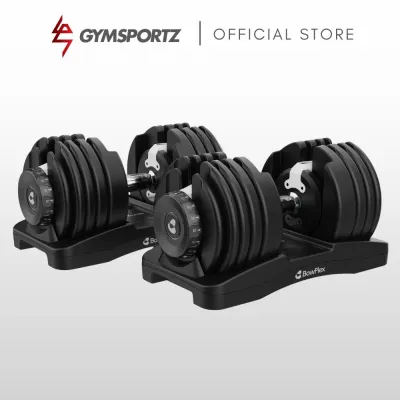
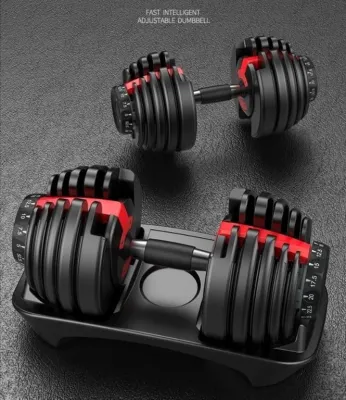
Prices are valid at publication and may change. Please refer to the product page for the latest price.
Core Selection Criteria for Bowflex Adjustable Dumbbells
When evaluating different adjustable dumbbell models, the mechanism of progressive overload should be your first consideration. Different models offer varying weight increment steps. Some systems allow for micro-adjustments of 1 kg or 2.5 lbs at the lower end of the scale, which is crucial for smaller muscle groups like the deltoids and rotators. Larger increment jumps are more common at heavier weights, but sudden increases can stall progress if your body is not yet ready for the jump. Verify the specific increment steps on the manufacturer’s specification sheet to ensure they support a smooth progression.

Handle design and ergonomics directly impact your safety and comfort during high-intensity workouts. Look closely at the grip material and shape. Some models feature contoured, textured rubber grips that provide a secure hold even when your hands are sweaty, which is particularly important in Singapore’s warm and humid climate. Other models utilize traditional metal knurling. Ensure the handle diameter fits your hand size comfortably, as an improper grip can lead to premature forearm fatigue or slippage during overhead movements.
Space efficiency is a primary reason to choose adjustable equipment, but you must still plan for the physical footprint of the dumbbells and their storage cradles. Unlike traditional dumbbells that get shorter as they get lighter, adjustable dumbbells maintain a fixed maximum length because of the selector dial and plate alignment system. This means that even when set to a light weight, the dumbbell remains its full physical length. Verify that this fixed length does not interfere with your range of motion during exercises like hammer curls or chest flyes.
Build materials and structural durability are critical for long-term home use. High-quality adjustable dumbbells typically feature thermoplastic molding over steel plates to minimize noise and prevent rust. The selector dial mechanism is the most complex part of the system; it must turn smoothly and lock into place with a distinct, audible click. Inspecting these materials and verifying the quality of the locking tabs will help ensure the plates remain securely attached to the handle during use.
Evaluating Bowflex Weight Ranges and Model Categories
Bowflex offers distinct weight tiers designed to accommodate different fitness levels and training styles. The lighter to mid-range adjustable models, such as the SelectTech 552 series, are highly popular for beginners, rehabilitation purposes, and high-rep endurance training. These models typically adjust from a low starting weight up to a moderate maximum weight, making them exceptionally versatile for family members with varying fitness levels. They allow for precise, small weight increments at the lower end, which is ideal for mastering form before moving to heavier loads.
For advanced lifters and those focusing on low-rep strength building, heavyweight adjustable models like the SelectTech 1090 series are more appropriate. These models offer a much higher maximum weight limit, allowing you to perform heavy compound movements without running out of resistance. However, because they accommodate more plates, these dumbbells are physically larger and heavier even at their starting weight. This added bulk requires greater control and stabilization, making them better suited for experienced trainees.
Specialty adjustable options, such as the SelectTech Kettlebell, cater to dynamic, functional, and swing-based movements. A single adjustable kettlebell replaces multiple traditional kettlebells by utilizing a central dial mechanism to add or remove internal weight plates. When choosing a specialty option, verify that the handle design allows for comfortable two-handed grips and that the weight distribution remains balanced during high-velocity movements like swings and cleans.
To find your optimal match, always read the manufacturer’s specification labels carefully. Do not rely solely on the model name to determine the weight range. Check the exact minimum and maximum weight limits, the total number of weight settings, and the specific increments available. This verification step ensures you do not accidentally purchase a model that lacks the specific micro-adjustments needed for your training routine.
Standard vs. Smart Dumbbells: Assessing Connectivity Features
As home gym technology evolves, you must decide between standard mechanical dial-adjustment models and smart-tracking versions. Standard models rely entirely on manual dials located at each end of the dumbbell. This mechanical system is highly reliable, requires no power source, and is ready to use at any time. Smart-tracking models, on the other hand, incorporate electronic sensors and Bluetooth connectivity to sync your workouts with a smartphone or tablet.
Smart features often include built-in rep counters, velocity tracking, and automatic workout logging. These tools can be highly beneficial for personal accountability, allowing you to track your volume and progress over time without manual data entry. Some companion apps also offer guided workout programs and real-time form coaching. If you appreciate data-driven training and enjoy interactive workouts, these features can add significant value to your routine.
However, before purchasing a smart version, you must check device compatibility and app support requirements. Verify if the companion app requires a paid monthly subscription to access its full features, as this can significantly increase the long-term cost of ownership. Additionally, ensure the app is compatible with your specific mobile operating system and that your workout space has a stable internet connection to prevent syncing issues.
There are also practical trade-offs involving battery life, charging needs, and electronic maintenance. Smart dumbbells require regular charging or battery replacements to keep the sensors functioning. Electronic components are also more sensitive to environmental factors like dust, sweat, and high humidity. If you prefer a low-maintenance, plug-and-play setup that will last for years without software updates or battery worries, a standard mechanical model remains the more practical choice.
Purchasing, Warranty, and Pre-Delivery Verification
To ensure you receive an authentic, fully supported product, always purchase your adjustable dumbbells from authorized retailers or official brand stores. Avoid buying from unverified third-party sellers on online marketplaces, as counterfeit or refurbished units are sometimes packaged and sold as new. Purchasing through official channels guarantees that you are covered by the manufacturer’s warranty and have access to genuine replacement parts if needed.
Verifying the warranty terms and local after-sales support is especially important in Singapore. Because adjustable dumbbells are heavy and contain complex mechanical parts, shipping them internationally for repairs is highly impractical and expensive. Confirm that the local distributor offers a comprehensive warranty that covers both the selector mechanism and the weight plates, and check their policy on home service or local drop-off centers for repairs.
Upon delivery, perform a thorough physical inspection before using the equipment. Check the selector dials on both ends of each dumbbell to ensure they rotate smoothly and lock firmly into every weight setting. Inspect the plastic molding on the weight plates for any cracks or chips that may have occurred during transit. Examine the storage cradles as well, as any damage to the base can prevent the dial mechanism from aligning correctly.
For your initial setup, place the cradles on a completely flat, level, and stable surface. When inserting the dumbbells into the cradles, ensure all plates are perfectly aligned and seated before attempting to turn the dials. Never force a dial if it feels stuck; instead, lift the handle, realign the plates in the cradle, and try again. Proper handling from day one prevents mechanism jamming and ensures safe, smooth transitions during your workouts.
Frequently Asked Questions (FAQ)
Can I drop Bowflex adjustable dumbbells on the floor?
No, you should never drop adjustable dumbbells on the floor. Unlike solid cast-iron or rubber-hex dumbbells, adjustable models contain intricate internal locking mechanisms, plastic selector tabs, and gear systems. Dropping them can crack the plastic components, misalign the dial gears, or bend the selector shaft. This damage can cause the weight plates to fall off unexpectedly during an exercise, posing a severe safety risk. Always lower the dumbbells to the floor or onto their cradles in a controlled manner.
Do I need to buy a specific stand or rack for Bowflex dumbbells?
While a specific stand is not strictly mandatory, it is highly recommended for safety and ergonomics. The dumbbells must always be stored in their original plastic cradles, as the selector dials will not function without them. Placing these cradles on a dedicated stand positions the weights at waist height, reducing strain on your lower back when lifting and returning the dumbbells. If you choose a third-party stand, verify that its weight capacity and footprint are compatible with your specific dumbbell model and cradles.
How do I clean and maintain the dial mechanism?
To maintain the dial mechanism, regularly wipe down the exterior of the dumbbells and the inside of the cradles with a dry or slightly damp microfiber cloth to remove sweat, dust, and hair. In Singapore’s humid climate, avoid using harsh chemical cleaners, solvents, or spraying liquid lubricants directly into the dial mechanism, as this can attract dust and cause the internal gears to gum up. Keep your workout area well-ventilated to prevent moisture buildup inside the mechanical components.

Community discussion
Share your experience or ask a question. Comments are reviewed before publication.