
Selecting the right kettlebell is a foundational decision that directly impacts the safety, efficiency, and longevity of your strength training journey. Unlike dumbbells, a kettlebell’s off-center center of gravity demands active stabilization, making the choice of weight and physical design critical to preventing injury and ensuring proper movement mechanics. Whether you are looking to build explosive power through ballistic swings or develop raw strength with overhead presses, matching the equipment to your current physical capacity is paramount. This guide provides a structured framework to help you navigate the Bullz kettlebell selection by focusing on stable training principles, design differences, and practical pre-purchase checks. By understanding how different weights and styles align with specific exercises, you can make an informed investment that supports your long-term fitness progression.
Understanding Kettlebell Types: Cast Iron vs. Competition
When exploring the Bullz range, you will primarily encounter two distinct styles of kettlebells: classic cast iron and competition-style steel. While they may appear similar to the untrained eye, their physical dimensions, structural designs, and ergonomic profiles cater to entirely different training methodologies. Understanding these differences is essential for selecting a tool that matches your grip preferences, hand size, and primary workout environment.
Cast iron kettlebells, often referred to as fitness or classic kettlebells, scale in physical size as they increase in weight. A lighter cast iron bell is physically smaller with a thinner handle, whereas a heavier bell is much larger with a thicker grip. The handles on cast iron models are typically wider and slightly curved, allowing ample space for two-handed exercises like the basic kettlebell swing. The base of a quality cast iron bell is machined flat to provide a stable foundation for floor-based movements. These characteristics make cast iron options highly versatile for general strength training, metabolic conditioning, and multi-joint movements where two-handed grips are frequently utilized.
Products mentioned in this guide
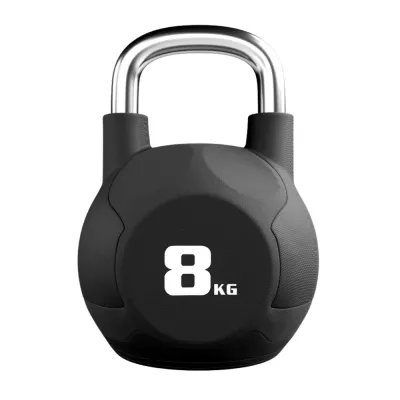
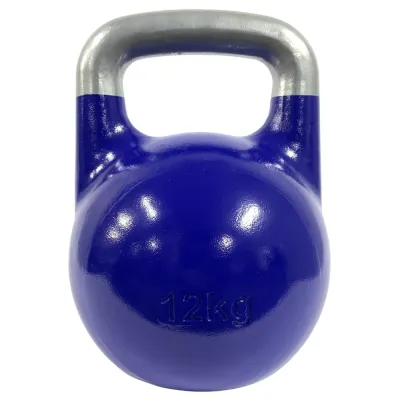
Prices are valid at publication and may change. Please refer to the product page for the latest price.
In contrast, competition kettlebells maintain a uniform physical size regardless of their weight. A 12-kilogram competition bell has the exact same outer dimensions, bell diameter, and handle size as a 32-kilogram competition bell. This consistency is achieved by using a steel shell and adjusting the internal core material to reach the target weight. The handles of competition kettlebells are narrower, straighter, and designed specifically for one-handed overhead lifts, such as the snatch, clean, and jerk. Because the dimensions never change, your technique, forearm clearance, and muscle memory remain identical as you progress to heavier weights.
To choose between these two styles, evaluate your primary training goals and physical setup. If your routine consists of high-repetition, technical, one-handed ballistic lifts, the uniform dimensions of a competition bell offer significant advantages for skill acquisition. If your workouts are centered on general fitness, two-handed swings, and varied strength movements, a classic cast iron bell is typically more practical and accommodating. Before finalizing your choice, verify the specific dimensions, handle diameters, and style availability currently offered in the Bullz product lineup to ensure they align with your physical requirements.
How to Select the Right Weight for Your Training Level
Selecting the appropriate weight requires a clear understanding of how different exercises load your body. A common mistake is purchasing a single kettlebell and expecting it to work perfectly for every movement in your routine. In reality, your lower body can handle significantly more resistance than your upper body due to the larger muscle groups involved.

For ballistic, lower-body-dominant movements like the kettlebell swing or clean, you will require a moderate to heavy weight to properly engage the glutes and hamstrings. Conversely, strict upper-body movements like the overhead press or Turkish get-up demand a much lighter weight to protect the delicate shoulder joint and maintain perfect alignment. When browsing the Bullz selection, check the manufacturer labels and product listings for the exact weight increments available. Having a clear picture of the available steps allows you to plan a safe progression path without making dangerous jumps in resistance.
Beginner Starting Points
For those new to kettlebell training, safety and movement quality must take precedence over lifting heavy loads. The unique shape of the kettlebell introduces rotational forces that can easily compromise your form if the weight is too high. Starting with a conservative weight allows you to master foundational movement patterns, such as the hip hinge, before adding significant load.
As a general industry reference point, adult beginners starting with upper-body presses or technical movements often find success with weights ranging from 6 kilograms to 12 kilograms, depending on prior strength levels. For lower-body exercises like swings and goblet squats, starting weights typically range from 12 kilograms to 16 kilograms. These reference points are designed to challenge your muscles without overwhelming your grip or core stability. Before attempting ballistic movements, perform a simple check: if you cannot hold the kettlebell with a straight wrist or maintain a neutral spine during a basic deadlift, the weight is too heavy.
Grip strength and core stability are often the limiting factors for beginners. A weight that feels manageable for your legs might cause your grip to fail prematurely, leading to a loss of control. It is highly recommended to cross-reference these general guidelines with the actual weight steps available from Bullz. Selecting a starting weight that allows you to complete three sets of ten clean repetitions with perfect form ensures a safe and productive entry into kettlebell training.
Intermediate and Advanced Progressions
Transitioning to heavier weights should be a deliberate process guided by objective performance markers rather than arbitrary timelines. Moving up too quickly increases the risk of joint strain, particularly in the wrists, elbows, and shoulders. You must establish clear criteria for when your body is truly ready to handle an increased load.
Technical proficiency is the primary indicator of readiness for a weight upgrade. If you can perform high-repetition sets of swings, snatches, or presses without losing your balance, experiencing joint discomfort, or compromising your posture, you are likely ready to progress. Another key indicator is grip endurance; if your hands and forearms no longer feel excessively fatigued at the end of your standard working sets, your grip has adapted to the current load. When upgrading, it is wise to transition in small increments, typically moving up by 2-kilogram or 4-kilogram steps to allow your connective tissues time to adapt.
The nature of the exercise also dictates how you should adjust the weight. Slow, grinding movements like the strict press or front squat require a highly controlled progression where even a small weight increase feels substantial. Explosive, ballistic movements like the swing can tolerate slightly larger jumps, provided your hip drive remains powerful and snappy. Always verify the availability of heavier options within the Bullz range to ensure you can maintain a consistent training stimulus as your strength and technical skills advance over time.
Matching Kettlebell Features to Your Training Objectives
Beyond weight and basic style, the specific design features of a kettlebell play a massive role in how it feels during a workout. Small variations in handle texture, clearance, base design, and surface coating can significantly alter your training experience and the longevity of the equipment.
Handle texture and clearance are critical for maintaining a secure grip during high-repetition ballistic work. A handle that is too rough can cause painful blisters and tears on your palms, while a handle that is too smooth or slick can easily slip out of sweaty hands. Look for a finish that offers a balanced, matte texture that holds chalk well without being overly abrasive. Handle clearance—the distance between the underside of the handle and the bell body—must be sufficient to allow your hand to pass through comfortably during cleans and snatches without pressing painfully against your wrist or forearm.
The design of the base is another crucial factor, especially if you plan to perform floor-based exercises. Kettlebells with a perfectly flat, wide machined base provide a stable platform for movements like renegade rows, push-ups, and planks. A rounded or uneven base can wobble or tip over under pressure, posing a serious risk of wrist injury. When selecting a Bullz kettlebell, inspect the base specifications to ensure it is designed to sit flat and secure on your gym flooring.
Surface coatings are highly influential in protecting the kettlebell from environmental wear, particularly in humid climates like Singapore. High humidity accelerates the oxidation process, leading to rust on exposed iron or steel. Powder-coated finishes are highly regarded for their durability, rust resistance, and excellent grip texture. Enamel or vinyl coatings can also protect the metal, but they may chip over time if the kettlebells impact one another during double-kettlebell work. To prevent rust, store your kettlebells indoors in a dry environment, wipe away sweat after every session, and periodically check the surface for any chips or scratches that might expose the raw metal to moisture.
What to Check Before Buying a Bullz Kettlebell
Purchasing a kettlebell is a long-term investment in your physical health, making a thorough pre-purchase inspection essential. Whether you are buying in person at a local fitness retailer or ordering online, knowing what details to look for can save you from receiving a defective or uncomfortable product.
First, inspect the physical casting of the kettlebell. Run your hands along the handle and the window—the space inside the handle—to check for any rough casting seams, sharp metal burrs, or ridges. These imperfections are common in low-quality manufacturing and can easily cut your hands during dynamic movements. The handle should be smooth and uniform across its entire surface. Additionally, place the kettlebell on a completely flat surface to verify that the base is level and does not rock or wobble when lateral pressure is applied.
Second, verify the structural integrity and markings of the bell. A quality kettlebell should feel solid, with no loose internal components or rattling sounds when lifted. Check that the weight markings are clearly stamped or molded into the body of the bell in both kilograms and pounds, ensuring you can easily identify the correct weight during fast-paced workouts. If you are purchasing online, review the product specifications carefully to confirm the exact dimensions and weight tolerances guaranteed by the manufacturer.
Finally, consider the logistics of your purchase, especially when dealing with heavy strength equipment. Shipping costs can escalate quickly based on weight, so it is wise to review the delivery terms, shipping surcharges, and return policies of authorized online sports stores. Ensure the retailer offers a clear return policy in case the product arrives damaged or does not match the advertised specifications. If you are located in Singapore, look for local distributors that offer reasonable delivery rates or self-collection options to minimize overall costs.
Frequently Asked Questions (FAQ)
Can I use a competition kettlebell for general fitness?
Yes, you can absolutely use a competition kettlebell for general fitness routines. The uniform size of competition kettlebells is highly beneficial for developing consistent muscle memory, as the bell will always rest against your forearm in the exact same position regardless of the weight you are lifting. This consistency can make your training feel more predictable and comfortable as you progress. However, there are a few drawbacks to consider. The narrower handle of a competition bell is designed strictly for one-handed grips, making two-handed exercises like the standard kettlebell swing difficult or uncomfortable for users with larger hands. If your routine relies heavily on two-handed movements, a classic cast iron kettlebell may be a more practical choice.
How do I know if my kettlebell handle is too thick?
You can identify if a kettlebell handle is too thick by monitoring your grip performance and forearm fatigue during a workout. If your forearms burn intensely or your grip begins to fail long before your cardiovascular system or primary muscle groups are tired, the handle diameter may be too large for your hand size. A handle that is too thick prevents you from wrapping your fingers securely around the bar, forcing your forearm muscles to work excessively hard to maintain control. To avoid this issue, check the manufacturer’s handle diameter specifications before purchasing, or visit a local sporting goods store to test different handle sizes in person to find a comfortable fit.
Do I need to buy pairs of kettlebells or just one?
For the vast majority of fitness enthusiasts, a single kettlebell is more than sufficient to build a highly effective and versatile home workout routine. Foundational exercises such as swings, Turkish get-ups, goblet squats, and single-arm presses only require one kettlebell and offer immense physical benefits. Investing in a matched pair of kettlebells only becomes necessary when you transition to advanced, bilateral training programs. Double-kettlebell exercises, such as double cleans, double snatches, and double front squats, significantly increase the loading on your core and nervous system, but they require a high level of technical proficiency and baseline strength before they can be performed safely.

Community discussion
Share your experience or ask a question. Comments are reviewed before publication.