
Selecting your first crab net in Singapore requires balancing portability, reach, and durability against a demanding tropical marine environment. Whether you plan to walk the sandy flats of Changi at low tide or peer down from the high railings of Bedok Jetty, the right net prevents the frustration of a dropped catch or a tangled, ruined gear setup. Rather than relying on a single universal design, beginners should evaluate how a net’s physical specifications match their intended fishing environment and handling comfort.
By understanding the mechanics of hoop sizes, handle materials, and mesh types, you can select a tool that fits your budget—typically ranging from S$15 to S$40 for entry-level models—and matches your physical capabilities. This guide breaks down the essential selection criteria, necessary companion gear, and maintenance routines to help you make an informed purchase and prepare for a successful coastal outing.
Key Features to Look for in a Beginner Crab Net
When evaluating a crab net, the hoop diameter and net depth are your primary considerations for securing a catch. For beginners, a hoop diameter between 30 and 50 centimeters offers a forgiving target area without becoming too heavy or unwieldy to sweep through the water. The depth of the net bag should be at least 1.5 times the hoop diameter; this creates a deep pocket that prevents active crabs from crawling back up and escaping over the rim before you lift the net clear of the water.
Products mentioned in this guide
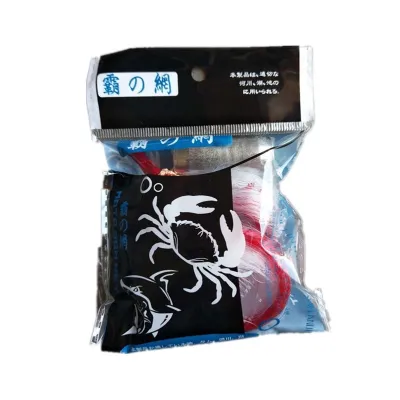
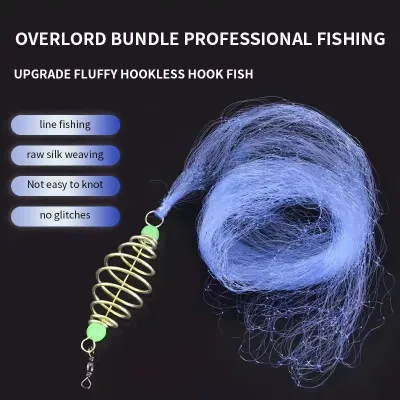
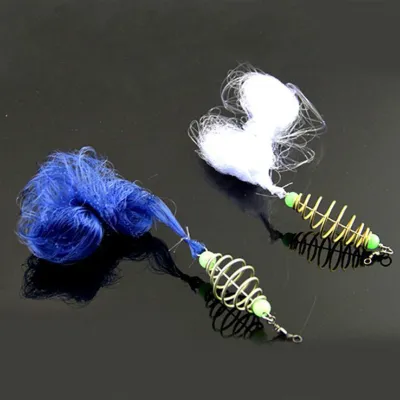
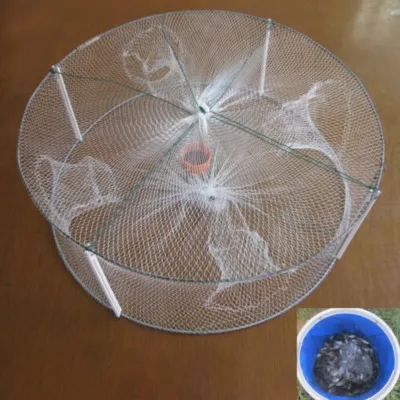
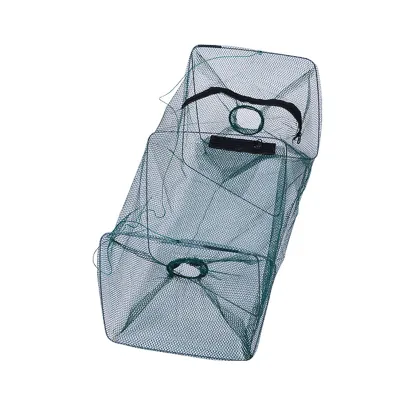
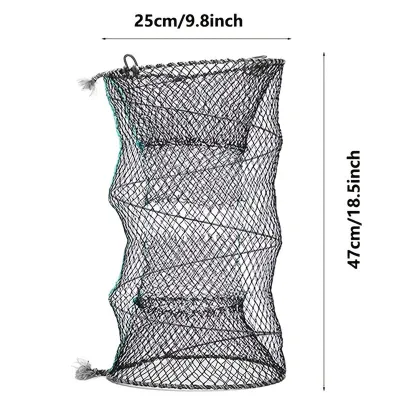
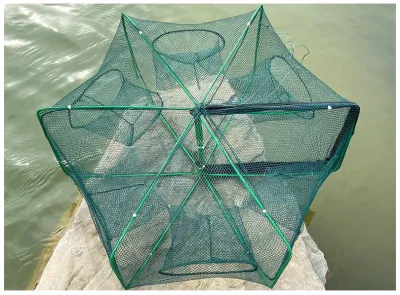
Prices are valid at publication and may change. Please refer to the product page for the latest price.
Mesh size and material significantly affect how the net behaves in the water. Fine mesh (less than 1 centimeter) is excellent for preventing small crabs or bait from slipping through, but it creates substantial water resistance, making the net heavy and slow to lift. Conversely, a larger mesh (2 centimeters or more) allows water to drain instantly for a fast, clean lift, but it increases the risk of a crab’s legs and claws getting tangled in the strands. For beginners, a rubber-coated nylon mesh strikes the best balance, as it resists tangles, drains quickly, and does not absorb fish odors.
The handle’s length, weight, and grip material directly impact your physical comfort during long hours by the water. Aluminum handles are highly favored for their excellent strength-to-weight ratio, while fiberglass handles offer superior resistance to saltwater corrosion at the expense of added weight. Look for handles equipped with textured EVA foam or non-slip rubber grips, which ensure a secure hold even when your hands are wet, slimy, or covered in bait oils.
Portability is a crucial factor for beginners in Singapore, especially if you rely on public transport to reach coastal parks. Telescopic handles that collapse down to under a meter, or frames that fold into halves or thirds, can easily fit into a standard backpack or carryall. When choosing a collapsible net, inspect the locking mechanisms—twist-locks offer infinite adjustability but can slip if sand gets inside, while push-button locks provide fixed, secure extension points that are highly reliable in sandy environments.
Matching the Crab Net to Your Fishing Environment
Your choice of crab net must align with the specific coastal terrain you plan to visit, as different environments demand vastly different handle lengths and frame designs. High seawalls, jetties, and elevated boardwalks require a net with a long, sturdy telescopic handle, often extending between 3 and 5 meters. Lifting a heavy crab from several meters above the water puts immense leverage on the handle; a thin, low-quality frame can easily bend or snap under this stress, so look for reinforced joints and thicker aluminum walls if you frequent these elevated spots.

In contrast, shallow mudflats, sandy beaches, and mangrove edges call for a completely different approach. When wading during low tide, a long handle is a major liability that gets caught in low-hanging branches, mangrove roots, and coastal vegetation. For these shallow, highly maneuverable environments, a short, fixed handle of 1 to 1.5 meters is far more effective, allowing you to quickly scoop up crabs spotted in shallow pools or near rocky crevices.
Nighttime crabbing is highly popular because many local crab species are nocturnal scavengers that move into shallower waters under the cover of darkness. Operating a net in the dark requires managing a light source simultaneously, making one-handed net deployment a key safety and convenience feature. Look for nets with simple, one-handed push-button extension systems and consider adding high-visibility reflective tape or bright neon accents to the handle so you can easily locate your gear on a dark beach.
Finally, weigh the trade-offs between rigid and collapsible frames based on your transport options. Rigid, one-piece metal frames offer unmatched structural integrity and durability because they lack moving joints that can rust or fail under load. However, they are highly inconvenient to transport on buses or MRT trains. Collapsible frames offer excellent convenience for commuters but require meticulous cleaning and care to prevent the folding hinges from seizing up after exposure to saltwater.
Essential Gear to Pair With Your Crab Net
To ensure a safe, efficient, and legally compliant crabbing trip, your net must be paired with several supporting tools. Protective gloves are the single most important safety accessory for any beginner. Local crab species, such as mud crabs and flower crabs, possess incredibly powerful claws capable of inflicting deep cuts and painful pinches; a pair of thick, puncture-resistant rubber or heavy-duty canvas gloves will protect your hands during handling and unhooking.
Reliable illumination tools are indispensable for safety and visibility, especially during evening or early morning sessions. A hands-free headlamp with a high IPX water-resistance rating is highly recommended, as it keeps both of your hands free to operate the net and handle the catch. Opt for a headlamp with a red-light mode, which preserves your night vision and is less likely to startle crabs in shallow water than a bright white beam.
Once caught, crabs must be stored in a secure container that prevents escape and keeps them alive. A deep, heavy-duty plastic bucket equipped with a secure, ventilated lid is ideal, as crabs are adept climbers that can easily scale the walls of an open container. Adding a small battery-operated portable aerator to your bucket will keep the water oxygenated, ensuring your catch remains fresh throughout your trip.
Lastly, always carry a precise measuring tool, such as a plastic caliper or a waterproof pocket ruler. Singapore’s coastal waters are shared, delicate ecosystems, and keeping undersized or egg-bearing crabs harms local populations. Measuring the carapace width of your catch against local conservation guidelines before placing them in your bucket ensures you practice sustainable, responsible crabbing.
Care and Maintenance for Tropical Climates
Singapore’s high humidity and salty marine air create a highly corrosive environment that can rapidly degrade outdoor gear if proper maintenance is neglected. The most critical step in preserving your crab net is a thorough freshwater rinse immediately after every outing. Saltwater leaves behind highly corrosive salt crystals that eat away at aluminum anodization, rust steel screws, and degrade nylon mesh fibers; spray the entire net with clean tap water, paying close attention to telescopic joints, folding hinges, and mesh knots.
After rinsing, dry the net completely in a shaded, well-ventilated outdoor area before storing it. Avoid leaving the net to dry in direct, harsh tropical sunlight, as prolonged ultraviolet (UV) exposure breaks down nylon and plastic components, making them brittle and prone to snapping during your next trip. Hanging the net in a breezy corridor or balcony is the ideal way to prevent mold, mildew, and structural rot.
Regularly inspect all metal hoops, joints, and connection points for early signs of structural weakness or corrosion. If you notice telescopic sections starting to stick or hinges becoming difficult to fold, apply a light coating of marine-grade silicone spray or multi-purpose lubricant to the moving parts. Avoid heavy petroleum-based greases, which attract sand and grit that can grind down and damage the locking mechanisms over time.
Proper long-term storage will protect your net from environmental damage and pests. Store the net indoors in a cool, dry closet or utility room rather than leaving it exposed on an open balcony. Ensure the net is completely free of organic debris or bait residue before storing, as the scent of dried fish or chicken can attract rodents and insects that may chew through the nylon mesh, leaving you with a useless, hole-riddled net.
Frequently Asked Questions (FAQ)
Do I need a license or permit to use a crab net in Singapore?
In Singapore, recreational crabbing using hand-held nets or simple crab traps does not generally require a paid license or permit in most public coastal areas, such as East Coast Park or Changi Beach Park. However, strict regulations govern where you can fish. All crabbing and fishing activities are strictly prohibited in designated conservation zones, nature reserves, and marine parks, such as the Sisters’ Islands Marine Park and Sungei Buloh Wetland Reserve. Always consult the National Parks Board (NParks) official website before your trip to verify current zoning maps, restricted areas, and any temporary conservation closures.
What type of bait works best when using a crab net?
Crabs are highly active scavengers with a keen sense of smell, making strong-scented, oily baits the most effective choice. Raw chicken parts (such as necks or wings) and oily fish (such as sardines, mackerel, or herring) work exceptionally well in local waters. To prevent crabs from simply grabbing the bait and swimming away, secure the bait tightly to the center of the net using a dedicated bait cage, a zip tie, or a weighted bait line. This forces the crab to climb fully into the center of the net to feed, giving you ample time to lift the net and secure the catch.

Community discussion
Share your experience or ask a question. Comments are reviewed before publication.