
Selecting the right dumbbell set is a foundational step in establishing a sustainable home strength-training routine. For women in Singapore, this decision involves balancing specific physiological needs—such as grip comfort and joint safety—with practical home constraints like limited floor space and high tropical humidity. Rather than relying on generic recommendations, finding the ideal equipment requires a systematic evaluation of weight increments, mechanical formats, material durability, and local retail protections. This guide provides a structured framework to help you navigate these choices, ensuring your investment supports your long-term fitness progression safely and effectively.
Determining the Right Weight Range for Your Training Goals
Selecting the appropriate weight range requires an understanding of how different muscle groups respond to resistance. Your body consists of diverse muscle structures that require vastly different loads to stimulate adaptation. Smaller, isolated muscles—such as the deltoids during lateral raises or the triceps during kickbacks—have a lower force-production capacity and require lighter, highly precise weights to maintain proper form. Conversely, large compound muscle groups—such as the glutes, hamstrings, and quadriceps during squats or deadlifts—are built for power and require significantly heavier loads to experience any meaningful training stimulus.
To establish a safe and effective starting point, avoid relying on arbitrary baseline numbers or generic gender-based recommendations. Instead, utilize a functional assessment based on your current physical capability. A suitable starting weight for any given exercise is one that allows you to complete 10 to 12 repetitions with strict, controlled form, where the final two repetitions feel challenging but do not cause your posture or movement path to break down. If you can easily complete 15 repetitions without losing form, the weight is too light to stimulate muscle growth; if you cannot reach 8 repetitions without compensating with other muscle groups, the weight is too heavy and increases your risk of joint strain.
Products mentioned in this guide
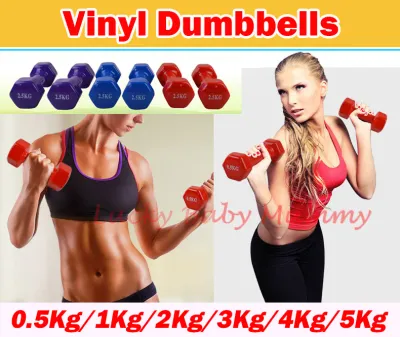
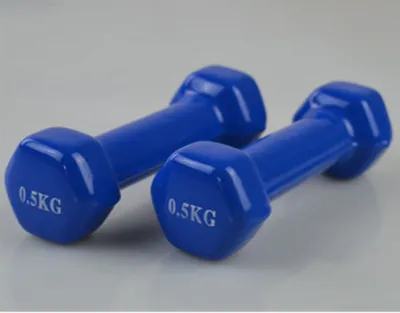
![[SG Stock]Neoprene Dumbbell Weight Strength Training Neoprene Dumbell Set 1kg 2kg 3kg suitable for home and gym exercise](https://img.lazcdn.com/g/p/15509c2888b8e8dae4efd080518cd81f.png_400x400q80.png_.webp)
![[SG In Stock]Neoprene Dumbell Set for Weight Strength Training 1/2/3KG Suitable for Home Gym Exercise Small Dumbbell Set](https://img.lazcdn.com/g/p/923f27057110e9aadae3d93d3c8f3495.jpg_400x400q80.jpg_.webp)
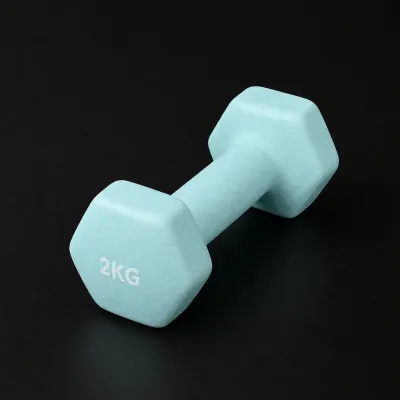
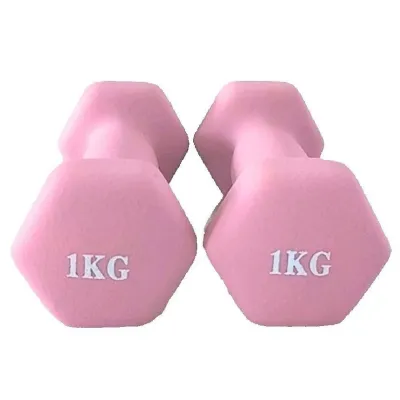
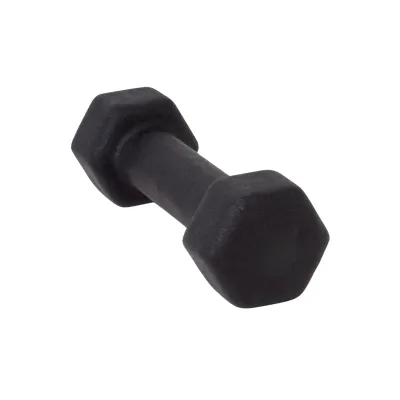
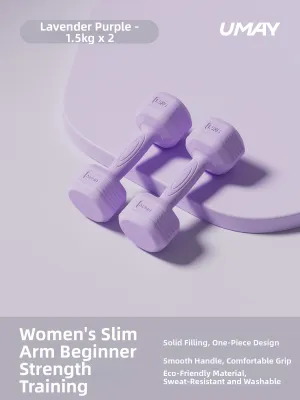
Prices are valid at publication and may change. Please refer to the product page for the latest price.
As your body adapts to the resistance, continuing with the same weight will lead to a plateau in your fitness journey. Progressive overload—the gradual increase of stress placed upon the body during exercise—is essential for continued strength development. For women, particularly those new to strength training, the ability to progress in small, manageable increments is critical. This is where the concept of micro-loading becomes invaluable.
Micro-loading involves increasing the weight by small increments, such as 0.5kg or 1kg, rather than making large jumps like moving directly from 2kg to 5kg. A 3kg jump represents a 150% increase in load, which can instantly compromise form and lead to acute injuries in the shoulders or wrists. Smaller increments allow your tendons, ligaments, and muscle fibers to adapt gradually, ensuring you can consistently challenge your body while maintaining the precise biomechanics necessary for injury prevention.
Fixed vs. Adjustable Dumbbells: Choosing the Right Format
Deciding between fixed-weight dumbbells and adjustable systems is a critical decision that impacts your workout flow, budget, and living space. In Singapore, where residential properties like HDB flats and condominiums often prioritize compact layouts, space efficiency is a primary consideration. A comprehensive set of fixed dumbbells requires a dedicated multi-tier rack to store pairs ranging from 2kg to 15kg, which can quickly overwhelm a living room or bedroom corner. Adjustable dumbbells, by contrast, consolidate an entire rack of weights into a single pair of handles resting on a compact base tray, making them highly suitable for apartment living.

From a financial perspective, the choice involves balancing immediate upfront costs against long-term value. Fixed dumbbells have a lower entry price per pair, making them highly accessible if you only need one or two specific weights to start. However, as your strength progresses and you require a wider variety of resistance for different exercises, purchasing multiple individual pairs becomes increasingly expensive. Adjustable dumbbell systems require a substantial initial investment, but they often provide a much lower cost-per-kilogram over time because a single purchase can replace up to ten or fifteen individual pairs, covering your progression needs for years.
Mechanical reliability and workout style also play a major role in this decision. Fixed dumbbells are constructed as solid, single-piece units with no moving parts, making them virtually indestructible. This structural simplicity is ideal for fast-paced workouts, circuit training, or supersets, where you need to transition from one exercise to another instantly without pausing to adjust equipment. Furthermore, fixed dumbbells can be placed down quickly or dropped onto protective matting without risk of mechanical failure.
Adjustable dumbbells rely on internal selector dials, pins, or spin-lock collars to secure the weight plates to the handle. While highly convenient, these mechanical components represent potential wear points that require careful handling. Dial-and-pin systems can jam or suffer internal damage if they are dropped or subjected to sudden impacts. Spin-lock collars are highly durable but require manual unscrewing and tightening during transitions, which can slow down your workout momentum. Understanding these mechanical trade-offs allows you to choose a format that aligns with your training style and willingness to maintain the equipment.
Evaluating Materials, Coatings, and Ergonomic Grips
The materials and coatings of your dumbbells directly influence their durability, hand comfort, and the safety of your home environment. Neoprene and rubber are two of the most common protective coatings used in home fitness equipment. Neoprene offers a soft, matte, slightly textured surface that provides an excellent grip, even when your hands are sweaty. It is highly comfortable for high-repetition cardio-sculpt workouts, though the coating can wear down or tear if scraped against rough surfaces.
Rubber-coated dumbbells are highly durable and offer excellent impact resistance, protecting your tiled or vinyl flooring from scratches and dampening the noise of impacts. However, low-grade rubber can emit a strong, persistent chemical odor that is highly unpleasant in enclosed, air-conditioned rooms. For sensitive indoor environments, high-quality urethane is an excellent, albeit more expensive, alternative that offers superior durability and drop resistance without any chemical smell.
Beyond the outer coating, the design of the handle and grip is paramount to preventing hand fatigue and maintaining control during heavy lifts. Standard dumbbell handles are often designed with a uniform thickness that may feel bulky or difficult to secure for women with smaller hands. A handle diameter of 25mm to 28mm is generally ideal, as it allows for a secure, full-finger wrap.
Contoured handles, which are thicker in the middle and taper toward the ends, naturally conform to the shape of a closed fist, reducing localized pressure points. Additionally, look for steel handles with a knurled pattern—a crosshatched texture etched into the metal. Knurling provides mechanical friction against the palm, preventing the dumbbell from slipping out of wet hands without requiring an excessively tight, fatiguing grip. The aggressiveness of the knurling should feel secure but not sharp enough to cause painful calluses or skin tears.
Maintaining your equipment is particularly important in Singapore’s tropical climate, where high relative humidity can accelerate material degradation. Sweat contains salt and acids that can corrode exposed metal handles and seep into the seams of rubber or neoprene coatings, leading to rust or adhesive failure. Developing a habit of performing routine maintenance checks is essential. Inspect your dumbbells regularly for hairline cracks in plastic dial housings, loose bolts on adjustable plates, or peeling sections on coated weights. Keeping your equipment clean and dry is the simplest way to ensure its safety and longevity.
Building Your Shortlist: Vetting Brands and Retailers in Singapore
When you are ready to purchase, vetting local retailers and understanding consumer protections will help you avoid counterfeit products and low-quality manufacturing. Begin by researching the warranty terms and return policies offered by local sporting goods stores and authorized online distributors. A reputable seller should provide a clear warranty period—typically ranging from six months to a year—covering manufacturing defects such as cracked welds, faulty selector mechanisms, or premature coating failure. Ensure the retailer has a physical presence or a reliable local customer service channel, as returning heavy iron weights via international shipping can be prohibitively expensive and logistically challenging.
Establish a realistic budget in S$ based on the format and quality level you require. Entry-level neoprene fixed pairs generally cost between S$15 and S$50 depending on the weight, while high-quality adjustable dumbbell sets can range from S$150 to over S$600. While it may be tempting to opt for the cheapest available option on online marketplaces, extremely low prices often correlate with poor quality control, inaccurate weight calibration, or fragile plastic components in adjustable models. Investing slightly more upfront in a certified, well-reviewed brand ensures that the weights you lift are accurately calibrated and structurally secure.
Before finalizing your purchase, cross-reference user reviews across multiple independent platforms, paying close attention to feedback regarding long-term durability. Look for specific mentions of common manufacturing defects, such as loose internal plates that rattle during movement, peeling rubber coatings, or dial mechanisms that stick or fail to lock securely. If multiple reviews highlight that a specific adjustable model has a history of plates slipping out of the collar during overhead exercises, treat this as a critical safety red flag and eliminate that option from your shortlist. Prioritizing structural integrity and mechanical safety over aesthetic appeal will ensure your home gym remains a safe space for physical progression.
Frequently Asked Questions (FAQ)
Can I use the same dumbbell weight for all exercises?
No, using a single dumbbell weight for every exercise is highly inefficient and can limit your physical progress. Your body consists of muscle groups with vastly different strength capacities. For example, your lower body muscles, such as the glutes and quadriceps, are large and powerful, requiring heavier resistance to stimulate muscle growth and bone density. Conversely, smaller upper body muscles, like the deltoids and triceps, require much lighter weights to perform movements safely without compromising your form or straining your joints. To target your entire body effectively, you should utilize a multi-pair set or an adjustable dumbbell system that allows you to match the resistance to the specific strength of each muscle group.
How do I clean and maintain rubber or neoprene dumbbells?
To preserve the appearance and structural integrity of rubber or neoprene dumbbells, wipe them down after every workout with a soft, damp microfiber cloth. Use a mild, non-abrasive soap diluted in warm water to remove sweat, skin oils, and chalk residue. Avoid using harsh household chemicals, bleach, or alcohol-based sanitizers, as these substances can dry out rubber, cause neoprene to peel, and degrade the underlying adhesives. Pay close attention to the textured grip areas where grime tends to accumulate. Once cleaned, dry the dumbbells thoroughly with a clean towel and store them in a cool, well-ventilated indoor area away from direct sunlight, which can cause the coatings to fade, crack, and become brittle.
Are hex-shaped dumbbells better than round ones for home use?
Hexagonal dumbbells are generally superior for home use due to their flat, six-sided edges, which prevent them from rolling across the floor. This anti-roll design is a significant safety benefit in compact home environments, preventing accidental foot injuries or damage to walls and furniture. Furthermore, the flat sides of hex dumbbells provide a highly stable base for floor-based exercises, such as renegade rows, push-ups, or planks, allowing you to transition smoothly between movements. While round dumbbells are excellent for traditional lifting and are easier to store on specific curved racks, they can pose a rolling hazard on uneven floors and cannot support your body weight safely during floor-based exercises.

Community discussion
Share your experience or ask a question. Comments are reviewed before publication.