
Selecting the ideal dumbbell weight is a balancing act between safety and physical challenge. The right weight allows you to complete your target repetitions with strict form while leaving your muscles feeling fatigued by the final rep. To find this sweet spot, you must evaluate your current physical baseline, understand the demands of different exercises, and align your equipment choice with your specific fitness goals.
Assess Your Current Strength Baseline at Home
Before purchasing any equipment, you can conduct a simple strength assessment using common household items. A standard 1.5-litre water bottle weighs approximately 1.5 kilograms, while a larger laundry detergent bottle can serve as a heavier test weight. Use these items to perform basic movements like a bicep curl or an overhead press to observe your joint stability and movement control.
During these test movements, pay close attention to the difference between true muscular fatigue and a breakdown in your physical form. Muscular fatigue feels like a deep burn or a slow down in your movement speed, whereas form breakdown involves compensation, such as arching your lower back or swinging your shoulders.
Products mentioned in this guide
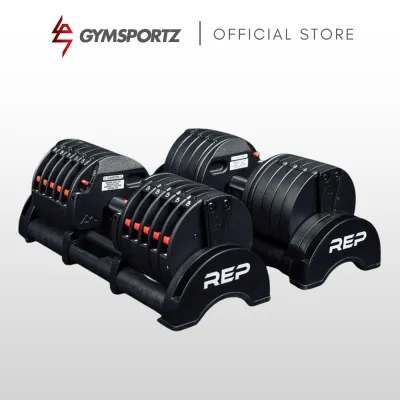
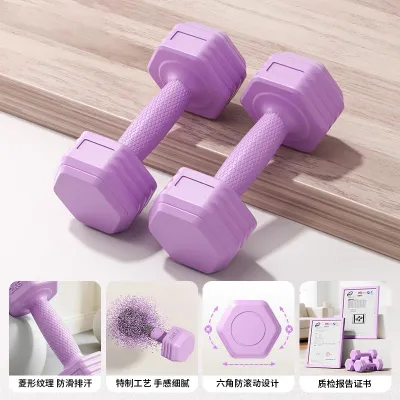

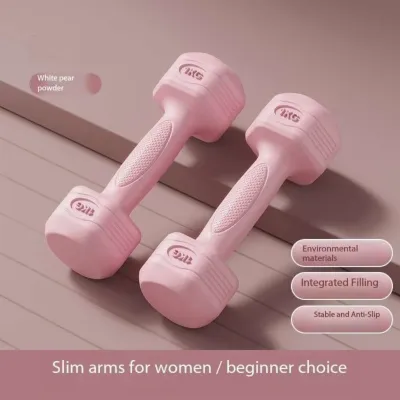
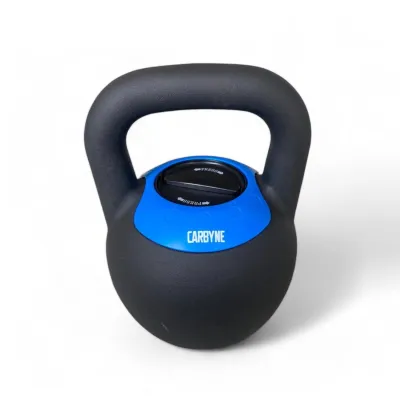
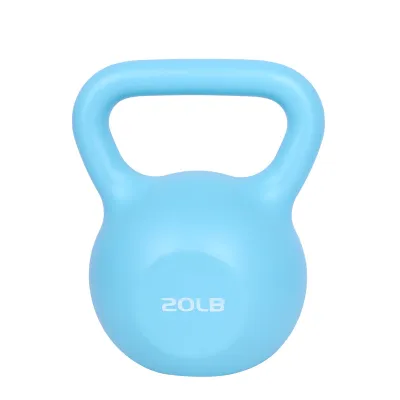
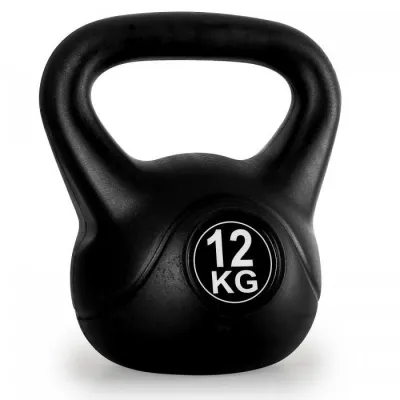
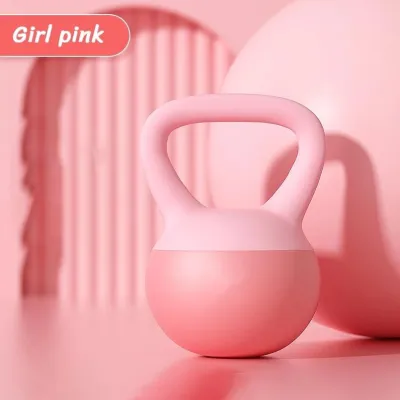
Prices are valid at publication and may change. Please refer to the product page for the latest price.
To establish a reliable baseline, select a light weight and perform a single set of an exercise until you can no longer maintain strict form. Record the exact number of repetitions completed before your posture or control began to waver. If you can easily complete more than twenty repetitions without any loss of control, the test weight is too light to serve as a primary training load, indicating you need a heavier starting option.
Match the Weight to Your Target Exercises
Your body consists of diverse muscle groups with vastly different load capacities, meaning a single dumbbell weight cannot serve every exercise. Large, multi-joint muscle groups perform compound movements, which involve multiple joints working in unison. Exercises like goblet squats, lunges, and chest presses recruit major muscles in your legs, glutes, and chest, allowing you to lift significantly heavier loads safely.

Conversely, isolation movements target a single joint and a specific, smaller muscle group. Exercises such as lateral raises for the shoulders or triceps kickbacks require much lighter dumbbells. Attempting to use heavy weights for isolation movements often forces larger muscles to take over, which reduces the effectiveness of the exercise and increases the risk of joint strain.
Relying on a single pair of fixed-weight dumbbells severely limits your home workout routine. A weight that is challenging enough for a chest press will likely be too heavy for a lateral raise, while a weight suited for your shoulders will fail to stimulate your legs. To build a balanced routine, you need access to a range of weights that accommodate both compound and isolation patterns.
Align Your Dumbbell Choice With Specific Fitness Goals
Your training objectives dictate the repetition ranges you should target, which in turn determines the weight of the dumbbells you need. If your primary goal is muscular endurance, you should focus on higher repetition ranges, typically fifteen or more reps per set. This approach requires lighter weights that gradually fatigue the muscles over an extended period without causing sudden joint strain.
For muscle growth, also known as hypertrophy, a moderate repetition range of eight to twelve reps is generally standard. You will need a moderate weight that makes the final two or three repetitions of each set feel highly challenging. This level of resistance creates the necessary mechanical tension to stimulate muscle adaptation and growth over time.
If you aim to develop maximal strength, you will eventually transition to lower repetition ranges of one to six reps using heavier loads. However, lifting heavy weights requires a well-established foundation of movement mechanics and joint stability. Beginners should avoid jumping straight into maximal strength training until they have mastered strict form with lighter loads to prevent acute injuries.
Use the "Reps in Reserve" Rule to Test Your Selection
The Reps in Reserve (RIR) framework is a practical, self-monitoring tool that helps you gauge whether a dumbbell weight is appropriate without training to complete failure. RIR measures how many more repetitions you could honestly complete with perfect form before your muscles give out. For example, an RIR of two means you stop the set when you feel you could only manage two more clean repetitions.
The ideal zone for safe and effective strength training is typically between one and three RIR. If you finish a set of ten repetitions and feel you could have easily completed five more, the dumbbell is too light to stimulate progress. If you cannot reach your target repetition range without your form breaking down, the weight is too heavy and should be reduced immediately.
As your body adapts to the resistance, you will notice that exercises feel progressively easier, a sign that it is time to apply progressive overload. When you can consistently complete your target sets at a lower RIR than planned, you should gradually increase the weight. For home workouts, making small, incremental increases ensures your joints and connective tissues adapt safely alongside your muscles.
Fixed vs. Adjustable Dumbbells for Your Home Gym
When setting up a home gym, especially in space-constrained environments like Singapore HDB apartments, choosing between fixed and adjustable dumbbells is a critical decision. Fixed dumbbells are highly durable, have no moving parts, and are ready to use instantly. However, storing a full rack of fixed dumbbells requires significant floor space and can quickly clutter a living area.
Adjustable dumbbells solve the space problem by combining multiple weight increments into a single pair of handles. These systems allow you to change weights using a dial, pin, or selector lock, making them highly compact. Before purchasing, check the product specifications to ensure the weight increments are small enough—ideally one to two kilograms per step—to support a smooth, gradual progression.
When budgeting in S$ for your home fitness setup, investing in a versatile adjustable set is generally more cost-effective in the long run than purchasing five or six separate pairs of fixed dumbbells. Additionally, in Singapore’s humid tropical climate, look for dumbbells with rust-resistant coatings, such as polyurethane, rubber casing, or high-quality chrome plating, to ensure the adjustment mechanisms remain smooth and functional over years of use.
Frequently Asked Questions (FAQ)
Do I need different dumbbell weights for different exercises?
Yes, you will need different weight increments because your lower-body muscles are naturally much stronger than your upper-body muscles. A weight that challenges your legs during a squat will be far too heavy for your shoulders during a lateral raise. To ensure a safe and effective full-body workout, it is highly recommended to start with an adjustable dumbbell set or a selection of at least three fixed pairs representing light, medium, and heavy ranges.
What are the signs that my dumbbell is too heavy?
The most common signs that a dumbbell is too heavy include joint pain, the need to swing your body or use momentum to lift the weight, and an inability to control the lowering phase of the movement. If you find yourself arching your back, shrugging your shoulders excessively, or dropping the weight quickly without control, stop the set immediately. Continuing with a weight that is too heavy compromises your form and significantly increases the risk of acute joint or muscle injury.

Community discussion
Share your experience or ask a question. Comments are reviewed before publication.