
Selecting the right exercise bands requires matching the band’s material, shape, and tension to your physical capabilities and training objectives. Rather than buying a single band based on color alone, a systematic approach involves evaluating your current strength, understanding how different band designs interact with your body, and selecting a progression pathway. Whether you are looking to tone your upper body, activate your glutes, or assist your pull-ups, the right equipment ensures your home workouts remain both challenging and safe.
For ladies starting their fitness journey in Singapore, where space-saving home gym equipment is highly valued, exercise bands offer a versatile alternative to bulky dumbbells. However, choosing the wrong type can lead to frustrating issues like bands rolling down your thighs, snapping during a stretch, or providing too little resistance. By understanding the mechanical differences between fabric loops, latex tubes, and long pull-up bands, you can make an informed purchase that aligns with your personal fitness goals.
Assess Your Fitness Baseline and Target Muscle Groups
Before purchasing any fitness equipment, you must establish a clear understanding of your current physical baseline. Ask yourself several key questions: Do you currently perform bodyweight exercises like squats and lunges with ease, or do you experience joint discomfort? Are you recovering from a recent shoulder or knee injury? If you are a beginner, your joints and stabilizing muscles will require lighter, highly controllable tension to build foundational strength and mobility. Conversely, if you already lift weights or attend regular fitness classes, you will need higher resistance levels to stimulate further muscle adaptation.
Products mentioned in this guide
Prices are valid at publication and may change. Please refer to the product page for the latest price.
Your specific fitness goals dictate the movement patterns you will perform, which in turn determines the style of band you need. For instance, if your primary goal is glute activation and lower-body shaping, your workouts will focus heavily on hip abduction and lateral movements. These patterns require lateral resistance that stays securely in place around your thighs or ankles. If your goal is upper-body toning, such as strengthening your back, shoulders, and arms, you will rely on pulling and pressing movements that require a longer range of motion and comfortable hand grips.
Identifying whether your routine will focus on the lower body, upper body, or full-body workouts helps narrow down your options. Lower-body training targets larger, stronger muscle groups like the glutes, demanding substantial resistance. Upper-body training targets smaller muscles like the shoulders, requiring lighter, precise tension to prevent injury. If you plan to perform full-body workouts, you will likely need a combination of different band styles to accommodate these varying strength capacities.
Choose the Right Band Type: Loop, Tube, or Fabric
Mini loop bands are short, flat bands typically made of latex, designed to fit around your calves, thighs, or wrists. They are highly effective for lower-body activation exercises like glute bridges and lateral walks. Because they are thin and elastic, they provide immediate tension to fire up stabilizing muscles. However, thin latex loops can roll up, bunch, or pinch the skin when worn directly over bare legs, which can disrupt your workout flow.

Tube bands with handles are hollow rubber tubes equipped with grips at each end, often accompanied by door anchors. These are ideal for upper-body pulling and pressing exercises, allowing you to mimic cable machine movements like chest presses and rows. The handles provide a secure grip, reducing hand fatigue and preventing slippage. When verifying tube bands, check the connection points where the tube meets the handle webbing, as these areas experience the highest stress.
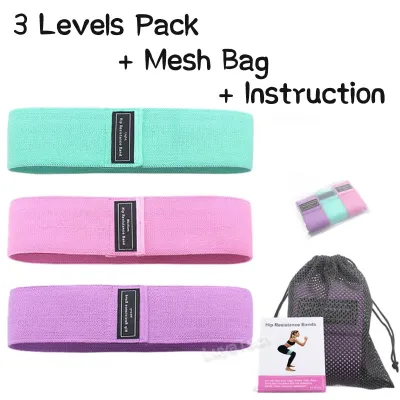
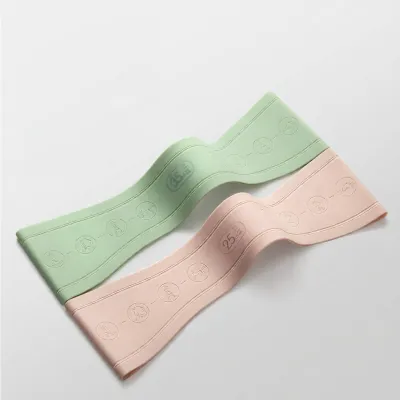
Fabric bands, woven from elastic fibers and cotton, are highly popular for lower-body workouts. Their thick, textured surface provides excellent grip against clothing or bare skin, preventing the band from rolling or sliding during squats. However, fabric bands have a much stiffer stretch profile and a shorter range of motion compared to latex. This makes them excellent for heavy lower-body resistance but unsuitable for upper-body exercises requiring a long, smooth stretch.
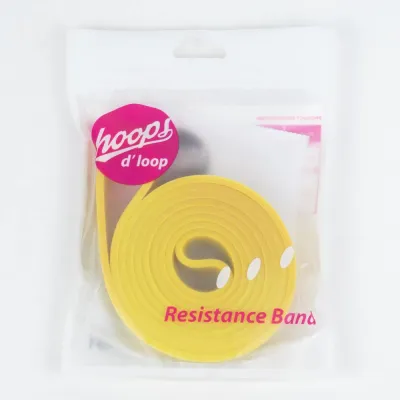
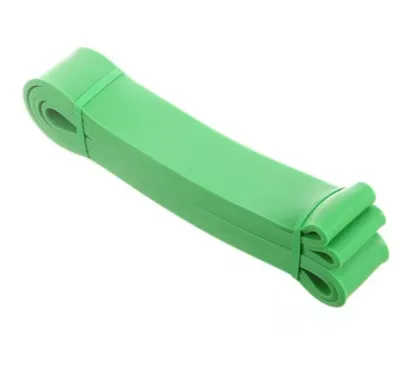
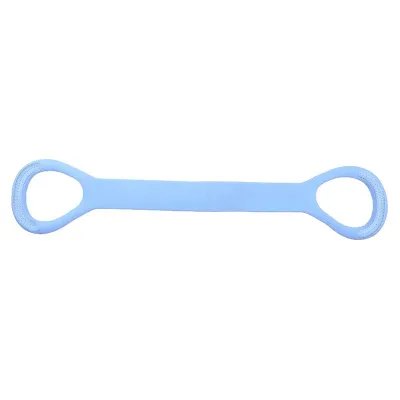
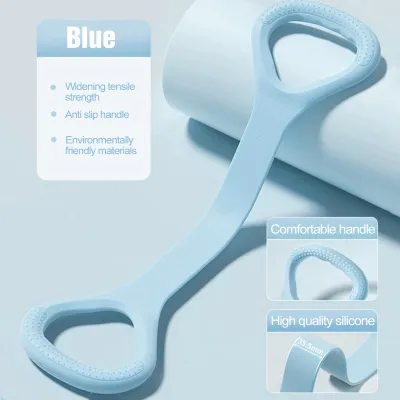
Long loop bands, or pull-up assist bands, are large, continuous rubber loops. These versatile bands are designed for full-body stretching, assisted pull-ups, and heavy compound resistance movements. By looping one end over a pull-up bar and placing your foot in the other, you can offset a portion of your body weight to build pull-up strength. They are also highly useful for deep mobility stretches, helping to open up tight shoulders and hips.
Select the Proper Resistance Level for Progressive Overload
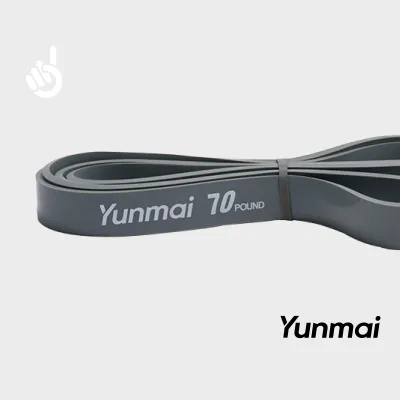
When shopping for exercise bands, understand that there is no universal color-coding system for resistance levels. A red band from one manufacturer might represent light tension, while another’s is heavy. Always check the product packaging or online specifications for the estimated tension range, typically measured in kilograms or pounds. Relying solely on color without verifying actual tension specifications can lead to purchasing a band that is either too light or too stiff to use safely.
To determine if a band provides the correct resistance level, apply the “two-rep rule.” The resistance should challenge your muscles sufficiently so that the final two repetitions of your set are difficult to complete with perfect form. If you easily breeze through your target repetitions without feeling a muscle burn, the band is too light. If your form breaks down or you must use momentum, the resistance is too heavy and increases joint strain risk.
Investing in a set containing multiple resistance levels is far more practical than purchasing a single band. Your muscles adapt to resistance over time, requiring progressive overload to continue making progress. Furthermore, different exercises require different resistance levels. You might need a heavy fabric band for glute bridges, a medium tube band for rows, and a light mini loop for shoulder rotations. Having a complete set, which typically costs between S$15 and S$40 on online marketplaces, allows you to transition smoothly between exercises as your strength improves.
If you have limited equipment, you can make mechanical adjustments to alter the tension of your existing bands. To increase resistance on a loop band, widen your stance to pre-stretch the band. For tube or long loop bands, shorten your grip or step on the band with both feet instead of one, reducing the active length of the rubber. Conversely, narrowing your stance or lengthening your grip will decrease the tension, allowing you to complete your sets when fatigue sets in.
Pre-Purchase Inspection and Safety Boundaries
Before purchasing, perform a thorough material inspection to ensure the bands are durable and safe. Look for bands with reinforced, double-stitched seams, especially on fabric loops and the attachment points of tube bands. If you have a sensitive skin profile or a known latex allergy, verify whether the product is made from natural latex, thermoplastic elastomer (TPE), or hypoallergenic fabric. Smooth edge finishing is also essential, as rough edges on rubber bands can create weak points prone to tearing.
Once you own the bands, check them for wear and tear before every workout session. Inspect the entire length for micro-tears, small punctures, discoloration, or dry, cracked areas. Latex bands are particularly susceptible to degradation from sweat, body oils, and environmental factors. If you notice any loss of elasticity or visible structural damage, discard the band immediately; attempting to stretch a compromised band can result in it snapping violently, causing painful welts or injuries.
When using tube bands or long loops that require anchoring, always select safe, stable anchoring points. Avoid wrapping your bands around sharp metal edges, rough wooden posts, or abrasive surfaces that can friction-cut the rubber. Do not anchor bands to lightweight or unstable furniture, such as plastic chairs, which can tip over during your exercise. The safest method is to use a dedicated door anchor placed on the hinge side of a solid, fully closed, and locked door.
Knowing when to stop an exercise is critical for preventing acute injuries and chronic joint strain. Stop your workout immediately if you hear any faint cracking or snapping sounds coming from the band, or if you feel a sudden, unexpected drop in tension. Additionally, listen to your body: if you experience sharp joint pain, particularly in your shoulders, elbows, or knees, stop the movement and check your form. Equipment is a tool to enhance your fitness, but it should never replace personal judgment.
Frequently Asked Questions (FAQ)
How do I clean and store fabric and latex exercise bands?
To maintain hygiene and extend the lifespan of your bands, clean them according to their material properties. Fabric bands can generally be hand-washed with mild detergent in cool water and left to air-dry completely away from direct heat. For latex or silicone bands, wipe them down with a damp cloth after each use to remove sweat and body oils, which can degrade the material. Avoid using harsh chemical cleaners or alcohol-based sprays. Store all bands in a cool, dry place away from direct sunlight, as ultraviolet rays and high humidity can cause latex to become brittle and crack over time.
Can I use the same resistance band for both upper and lower body workouts?
While it is physically possible to use a single long loop band for various exercises, it is rarely optimal due to the vast difference in strength between your upper and lower body. Your glutes and thighs are much larger and stronger than your shoulders and arms, meaning a band that challenges your lower body will likely be too stiff for safe upper-body movements. However, if you only have one long band, you can adjust your mechanics to make it work. For lower-body exercises, step on the band with both feet wide apart to maximize tension; for upper-body movements, step on it with a single foot and use a wider grip to reduce the resistance.

Community discussion
Share your experience or ask a question. Comments are reviewed before publication.