
To choose the right fishing swivel for your first few trips, you must match the swivel’s rated breaking strain to your fishing line’s strength, select the correct design based on your presentation, and choose a physical size that is small enough to avoid spooking fish but large enough to handle your knots. A swivel is a small but critical piece of terminal tackle that acts as a pivot point between your main fishing line and your leader or lure. By allowing the lower portion of your rig to spin freely without twisting the line above it, this simple device can save you from frustrating tangles and lost fish.
For a beginner, walking into a tackle shop can be overwhelming due to the sheer variety of swivels available. They come in different shapes, sizes, materials, and weight ratings, each designed for specific fishing techniques. Understanding how to select the right one ensures your lure moves naturally in the water, your knots hold secure, and your line remains free of twists during a long day on the water.
Why Your Fishing Setup Needs a Swivel
The primary purpose of a fishing swivel is to prevent line twist, a common issue that occurs when your bait or lure rotates in the water. When you cast and retrieve certain lures, or when live bait swims in circles, they naturally spin. This rotational force travels up the fishing line, causing it to twist tightly on itself. Over several casts, this accumulated twist creates loops, knots, and tangles on your reel spool, which can ruin your casting distance and lead to severe bird’s nests.
Products mentioned in this guide
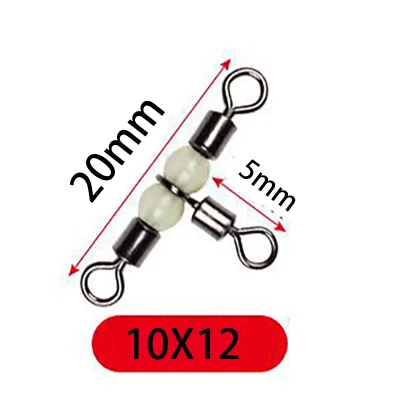
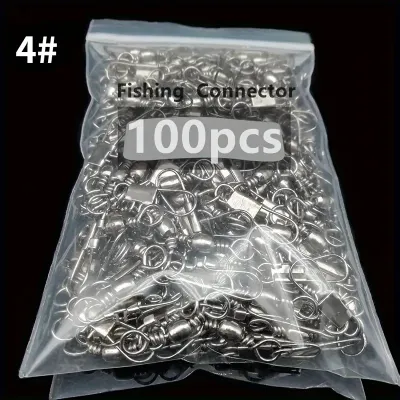
![[SG FREE ] 5Pcs Eight Ring Stainless Steel Snap - Fishing Connector - Swivel Reinforced Pin - With Linkage Action High](https://img.lazcdn.com/g/p/9353b75adec6bf005f3f092960c3cfaa.jpg_400x400q80.jpg_.webp)
Prices are valid at publication and may change. Please refer to the product page for the latest price.
A swivel solves this problem by decoupling the rotation of the lure or bait from the main line. The lower eyelet of the swivel spins with the rotating tackle, while the upper eyelet remains relatively stable, keeping your main line straight and untwisted. This is particularly important when fishing in moving water, such as tidal estuaries, fast-flowing rivers, or coastal surf, where natural currents constantly push and spin your rig.
However, a swivel is not a universal addition to every fishing setup. In some situations, adding a swivel can actually hinder your presentation. For example, when using lightweight topwater lures or delicate finesse soft plastics, the added weight of a metal swivel can pull the nose of the lure downward, ruining its designed swimming action. Furthermore, in clear water or highly pressured fishing spots, a bulky metal swivel can act as a visual deterrent, scaring away wary fish that might otherwise strike your bait.
Before rigging up, it is also essential to check local fishing regulations for the specific waters you plan to fish. Some managed reservoirs, marine parks, or freshwater streams have strict rules regarding terminal tackle. These regulations may limit the number of swivels you can use on a single line, restrict the use of snap swivels, or require specific rigging configurations to protect the local fish population.
Understanding the Main Types of Fishing Swivels
To make an informed choice, you need to understand the three primary types of swivels you will encounter on tackle shop shelves: barrel swivels, ball bearing swivels, and snap swivels. Each design has distinct mechanical properties, price points, and ideal use cases.

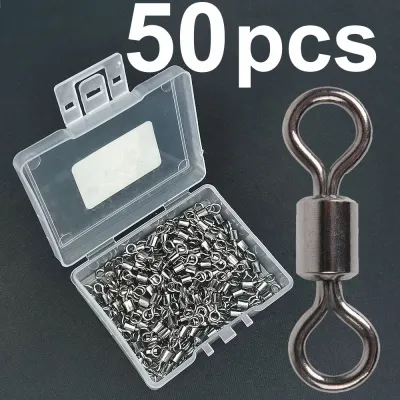
Barrel swivels are the most common and cost-effective option available. They consist of a hollow metal barrel with a wire loop extending from each end. While they are excellent for basic bottom fishing, static bait rigs, and general recreational angling, they have a mechanical limitation. Under heavy tension—such as when a large fish is pulling line or when retrieving a heavy sinker—the internal friction of a barrel swivel increases significantly, which can cause the swivel to stop rotating. This makes them well suited for scenarios where extreme rotational speed is not required.
Ball bearing swivels are engineered to overcome the friction issues of barrel swivels. Inside the metal housing, tiny, polished stainless steel ball bearings allow the two halves of the swivel to rotate independently with minimal friction, even under heavy loads. This smooth, high-speed rotation makes ball bearing swivels a common choice for fast-retrieving lures, trolling, and handling heavy twisting forces. Although they are more expensive than barrel swivels, their reliability under pressure makes them a valuable investment for active lure fishing.
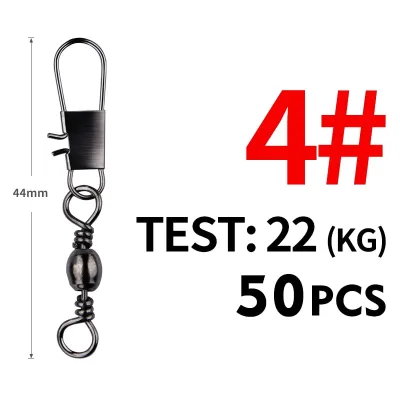
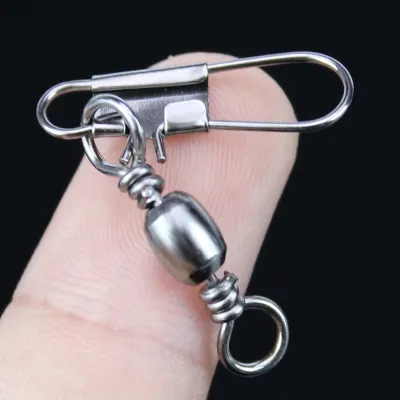
Snap swivels combine a standard swivel (either barrel or ball bearing) with a metal snap link at one end. This design offers unmatched convenience for beginners, allowing you to swap out lures, hooks, or sinkers in seconds without having to cut your line and tie a new knot. However, this convenience comes with trade-offs. The added metal snap increases the overall size and weight of the connection, which can negatively affect the balance and action of smaller lures. Additionally, the snap link introduces another potential point of failure if it is not closed securely or if a powerful fish manages to bend the wire open.
How to Match Swivel Size and Breaking Strain to Your Line
Selecting the correct swivel requires balancing physical size with structural strength. The most reliable way to do this is by checking the manufacturer’s packaging for the rated breaking strain, which is typically listed in pounds or kilograms. As a fundamental rule, your swivel’s breaking strain should match or slightly exceed the breaking strain of your leader or main line. For example, if you are fishing with a 15-pound monofilament line, your swivel should be rated for at least 15 pounds to ensure it does not become the weakest link in your system.
Physical size is another critical factor that requires careful consideration. Swivel sizing can be confusing for beginners because it follows an inverse numbering system. Larger numbers, such as size 10, 12, or 14, represent very small, lightweight swivels. Conversely, smaller numbers, such as size 1 or 2, represent much larger, heavier swivels. Beyond size 1, swivels transition into “aught” sizes, such as 1/0, 2/0, and 3/0, which are massive components used for heavy saltwater or offshore fishing.
When choosing a size, aim for the smallest swivel that still meets your required breaking strain. A smaller swivel is less visible to fish, adds less weight to your rig, and collects less floating debris or weed from the water. However, you must also ensure that the swivel is not so small that it becomes difficult to handle or tie.
Finally, always inspect the eyelet diameter of the swivel before purchasing. The eyelet must be large enough to accommodate the thickness of your chosen fishing line. If you are using thick monofilament or fluorocarbon leader material, a tiny eyelet will make it extremely difficult to thread the line and seat your knots correctly. A poorly seated knot can slip or create excessive friction, leading to a sudden line break when you hook a fish.
Selecting Swivels for Common Beginner Scenarios
To help you build your first tackle kit, let us look at how to apply these selection criteria to three common beginner fishing scenarios.
For light freshwater setups—such as targeting panfish, trout, or small bass in local ponds and reservoirs—your primary goal is subtlety. You should prioritize small, low-profile barrel swivels or micro swivels in sizes 10 to 14. These tiny swivels provide enough rotation to prevent line twist from small spinning lures while remaining virtually invisible in clear water. Pair them with light lines, typically between 4-pound and 8-pound test, to maintain a natural, delicate presentation that will not spook cautious fish.
If you are planning a trip to a coastal estuary, jetty, or saltwater beach, you will need to account for harsher environmental conditions and stronger fish. For general saltwater setups, focus on identifying corrosion-resistant materials. Look for swivels made from high-grade stainless steel or brass, ideally with a black nickel or dark finish to reduce underwater glare. Since saltwater species often fight harder and utilize structure to escape, select swivels in sizes 4 to 8, with breaking strains ranging from 20 to 50 pounds, depending on your target species and line strength.
For active lure fishing with spinning baits, such as inline spinners, spoons, or buzzing surface lures, a high-quality ball bearing swivel is essential. These lures are designed to spin rapidly throughout the entire retrieve, which will quickly twist your line into a tangled mess if your swivel fails to rotate. A size 8 or 10 ball bearing swivel attached a few feet ahead of your lure will keep your line running smoothly cast after cast, allowing you to focus on your retrieval technique rather than untangling knots.
Tying and Inspecting Your Swivel Before Casting
Once you have selected the right swivel, proper rigging and regular maintenance are vital to ensure it performs correctly on the water. A swivel is only as strong as the knots connecting it to your line.
For securing your line to a swivel eyelet, two of the most reliable and beginner-friendly knots are the Palomar Knot and the Improved Clinch Knot. The Palomar Knot is exceptionally strong and works well with braided, monofilament, and fluorocarbon lines. The Improved Clinch Knot is a classic choice for monofilament and fluorocarbon. Regardless of the knot you choose, always moisten the line with water or saliva before pulling it tight. This lubrication reduces friction heat, which can weaken the line material and cause it to snap under tension.
Before making your first cast, perform a quick visual and physical inspection of the swivel. Hold the swivel between your fingers and rotate it to ensure it spins smoothly without any catching, grinding, or resistance. Run your fingernail along the metal loops and edges to check for any sharp burrs or manufacturing defects. A sharp edge on a swivel eyelet can easily slice through your fishing line under the pressure of a cast or a fighting fish.
Finally, establish clear stop conditions for your gear. Over time, exposure to water, salt, and sand will wear out even the highest-quality swivels. Inspect your swivel periodically during your trip and replace it immediately if you notice any signs of rust, stiffness in rotation, physical deformation of the wire loops, or cracked metal. Spending a few moments to swap out a compromised swivel is a small price to pay to prevent losing the fish of a lifetime.
Frequently Asked Questions (FAQ)
Do I need a swivel for every type of lure?
No, you do not need a swivel for every type of lure, and in many cases, omitting it is highly beneficial. Hard baits like minnow plugs, crankbaits, and topwater lures, as well as soft plastic swimbaits, are designed to swim with a specific wobbling or darting action. Tying these lures directly to your line or using a lightweight, plain snap preserves their natural movement and prevents the nose of the lure from dipping. Swivels should be reserved for lures that actively spin, such as inline spinners and spoons, or for live bait rigs where the bait’s movement would otherwise twist your line.
Can I use a snap swivel instead of tying knots every time?
While snap swivels offer great convenience for quick lure changes, using them constantly is not recommended. The added bulk and weight of a snap swivel can alter the delicate balance of lightweight lures, dampening their action and making them less appealing to fish. Additionally, the extra metal creates a highly visible profile in the water, which can deter fish in clear or heavily fished areas. For the most natural presentation, use snap swivels primarily when actively searching for fish with fast-moving search baits, and switch to direct knots or plain snaps when presentation and subtlety are critical.

Community discussion
Share your experience or ask a question. Comments are reviewed before publication.