
Selecting the correct dumbbell set for a home gym requires balancing your available space, current fitness level, and specific workout goals. Rather than relying on a single universal recommendation, this guide provides a structured framework to help you evaluate dumbbell formats, determine the appropriate weight ranges, and verify essential safety specifications before making a purchase. In compact living environments, such as Singapore’s high-rise apartments, making an informed decision prevents spatial clutter while ensuring your strength training remains safe, progressive, and highly effective. By focusing on the structural differences between fixed and adjustable models, you can select a configuration that supports your fitness progression safely and efficiently.
Evaluate Your Space and Training Goals
Before browsing specific dumbbell models, you must carefully assess the physical environment of your home gym. Start by measuring the exact floor area where you plan to perform your exercises, as well as the storage space available when the equipment is not in use. If you reside in an apartment or condominium, floor loading limits and noise transmission to downstairs neighbors are critical considerations. Utilizing thick rubber gym mats can help protect your flooring and dampen the sound of weights being set down, but the physical footprint of the weight set itself remains the primary spatial constraint. You must ensure there is a clear perimeter around your workout zone to prevent accidental collisions with furniture or walls during dynamic movements.
Next, define your primary training objectives, as your goals directly dictate the type of resistance you require. If your focus is on muscle hypertrophy or building absolute strength, you will need a system that supports progressive overload with a wide range of weight increments. Conversely, if your routine centers on muscular endurance, high-intensity interval training (HIIT), or general cardiovascular conditioning, you may only require a few lighter pairs that allow for rapid, fluid movements. Your training style also influences the physical design of the weights, as some exercises require a flat-edged dumbbell to prevent rolling on the floor.
Products mentioned in this guide
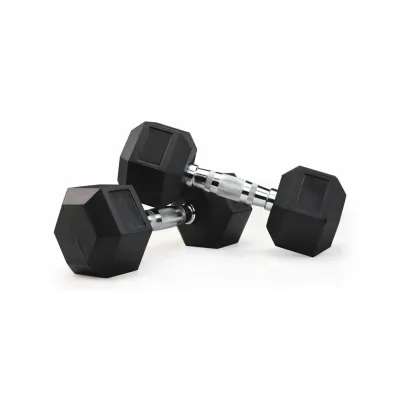
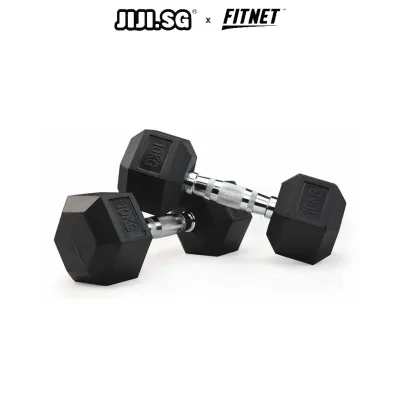
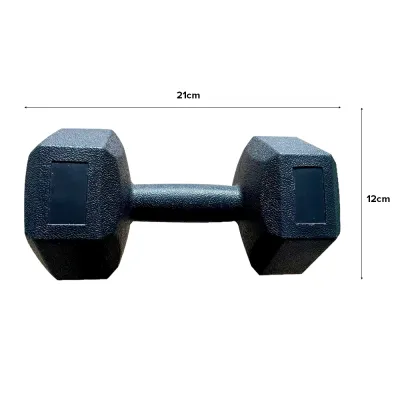
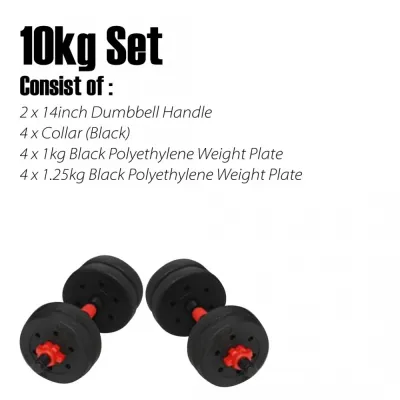
Prices are valid at publication and may change. Please refer to the product page for the latest price.
Finally, consider the flow of your typical workout routine and how frequently you need to change weights. Programs that rely on supersets, drop sets, or fast-paced circuits require immediate transitions between different resistance levels. If your equipment forces you to stop for extended periods to adjust the load, it can lower your heart rate and disrupt the momentum of your session. Understanding these spatial and training dynamics ensures you select a dumbbell format that integrates seamlessly into your daily workouts without causing unnecessary frustration or safety hazards.
Compare Fixed and Adjustable Dumbbell Formats
Dumbbells generally fall into two primary categories: fixed-weight models and adjustable systems. Each format has distinct structural designs, operational mechanisms, and material compositions that cater to different training styles and home environments. Choosing between them requires weighing the convenience of instant weight transitions against the space-saving benefits of a consolidated multi-weight system. There is no single superior option; rather, the right choice depends entirely on how you balance these competing priorities in your daily routine.

When evaluating these formats, consider the trade-offs between setup speed, space efficiency, and long-term durability. Fixed-weight dumbbells are highly durable because they have no moving parts, but they require a dedicated rack to store multiple pairs. Adjustable dumbbells consolidate an entire rack of weights into a single pair, making them incredibly space-efficient, though they require more careful handling due to their internal locking mechanisms. If you plan to perform exercises where the dumbbells are dropped frequently, such as Olympic lifts or high-intensity functional fitness, fixed models are generally more resilient.
Before purchasing, always check the manufacturer’s product labels to verify the build materials and locking mechanisms. Look for high-quality materials such as cast iron, rubber encasements, or polyurethane coatings, which protect both the weights and your floors. Understanding these fundamental differences allows you to choose the format that aligns with your space constraints and training preferences, ensuring a safer and more productive home workout experience.
Fixed-Weight Dumbbells
Fixed-weight dumbbells are solid, single-piece units where the weight heads are permanently welded or bolted to the handle. This design is the standard in commercial gyms because of its extreme durability and simplicity. For a home gym, fixed dumbbells are ideal if you have a dedicated workout room, a garage, or a spacious balcony with enough room for a multi-tier storage rack. They offer a highly stable feel, with no rattling or shifting of weight during complex movements.
The primary advantage of fixed dumbbells is the speed of transition during workouts. You can drop one pair and immediately pick up another without any mechanical adjustments, which is perfect for fast-paced training styles. However, accommodating progressive overload with fixed weights requires purchasing multiple pairs over time. This not only increases the overall financial investment but also demands a continuously expanding physical footprint in your home, which may not be feasible in smaller living spaces.
Adjustable Dumbbell Sets
Adjustable dumbbell sets are engineered to provide multiple weight options within a single, compact footprint. These systems typically use a central handle equipped with a dial, pin, or collar lock that engages different weight plates resting in a specialized storage tray. This design is highly suitable for compact home gyms, study rooms, or multi-purpose living spaces where a full rack of weights is impractical. By consolidating up to fifteen different weight increments into a single pair, they maximize your training variety while minimizing clutter.
While adjustable dumbbells offer unmatched space efficiency, they require a more deliberate approach to safety and handling. Because these systems rely on moving parts, selector gears, or threaded collars to secure the plates, you must strictly verify that the locking mechanism is fully engaged before lifting the weights. Dropping adjustable dumbbells can damage the internal components, so they must be handled with care and placed gently back into their trays after each set. This makes them less suitable for high-impact workouts but excellent for controlled strength training.
Select the Right Weight Range for Your Fitness Level
Selecting the appropriate weight range is crucial for ensuring steady athletic progression while minimizing the risk of joint strain or acute injury. To establish a safe starting point, you must evaluate your current strength baseline across different movement patterns. Upper body exercises that isolate smaller muscle groups, such as lateral raises or bicep curls, require significantly lighter weights to maintain proper form and shoulder joint stability. In contrast, compound lower body movements like squats, deadlifts, or lunges utilize larger muscle groups and can safely tolerate much heavier loads. Therefore, a single pair of light or heavy dumbbells is rarely sufficient for a comprehensive full-body routine.
To determine your baseline without professional testing equipment, you can perform a simple practical assessment. Find a weight that allows you to complete 10 to 12 repetitions of a specific exercise with perfect control, maintaining a neutral spine and smooth tempo throughout. If your form begins to break down, or if you experience joint discomfort before reaching the eighth repetition, the weight is too heavy for your current baseline. Conversely, if you can complete 15 repetitions without feeling any muscular fatigue, the weight is likely too light to stimulate adaptation.
Once you have established your starting weights, plan for progressive overload by selecting a dumbbell set that offers manageable, incremental steps. For beginners, increments of 1 kg to 2 kg are ideal, as they allow your muscles, tendons, and ligaments to adapt gradually to increased resistance. Avoid purchasing a set where the minimum weight is too heavy for your weakest lift, or where the maximum weight is so high that you cannot control it safely. Your chosen set should challenge your muscles while always allowing you to prioritize movement quality over the absolute number on the plate.
Pre-Purchase Safety and Specification Checks
Before finalizing your purchase of a dumbbell set, it is essential to conduct a thorough review of the product’s physical specifications and safety features. The handle is your primary point of contact with the weight, so pay close attention to its ergonomics and grip texture. Knurled steel handles provide a textured surface that enhances friction, helping to prevent the dumbbell from slipping out of your hands when they become sweaty—a common occurrence in warm or humid home environments. Check the handle diameter as well, ensuring it matches your hand size comfortably to prevent premature forearm fatigue or grip failure during heavy lifts.
Next, verify the structural limits and maximum weight capacity explicitly stated by the manufacturer. For adjustable dumbbell sets, inspect the materials used in the selector dials, plates, and locking collars. Metal gears and heavy-duty nylon components generally offer greater wear resistance and structural integrity over time compared to thin plastic alternatives. Ensure that the locking mechanism operates smoothly and clicks or locks securely into place without any play or loose movement, as any instability can compromise safety during overhead exercises.
Finally, review the warranty terms, return policies, and maintenance guidelines provided by the manufacturer or retailer. A reliable warranty protects your investment against manufacturing defects, especially for adjustable models with complex mechanical parts. Understanding the recommended maintenance steps—such as periodically tightening bolts, checking collar alignment, or using specific non-corrosive cleaning agents—ensures your equipment remains safe to use for years to come. Taking the time to verify these specifications prevents buyer’s remorse and ensures your home gym setup is both safe and durable.
Frequently Asked Questions (FAQ)
Can I use Fitnet dumbbells for both cardio and strength training?
Yes, dumbbells are highly versatile tools that can be adapted for both cardiovascular conditioning and traditional strength training, provided you adjust the weight and execution accordingly. For cardio-focused workouts, such as dumbbell complexes, thrusters, or weighted lunges, you should select lighter weights that allow you to maintain a high heart rate and complete high-repetition ranges (typically 15 to 20 repetitions) with perfect control. For strength training, where the goal is muscle hypertrophy or absolute strength, you should use heavier weights for lower repetition ranges (typically 6 to 12 repetitions) to stimulate muscle fiber recruitment. Regardless of the training modality, maintaining strict form and joint alignment is critical, especially during fast-paced, dynamic movements where momentum can easily compromise your control and increase the risk of injury.
How do I maintain the grip and coating on my dumbbells?
Proper maintenance is essential to preserve the hygiene, grip texture, and protective coatings of your dumbbells, particularly in humid climates where moisture can accelerate wear and corrosion. After every workout, use a clean, dry microfiber cloth to wipe down the handles and weight heads, removing sweat, skin oils, and chalk residue. Store your dumbbells in a dry, well-ventilated indoor space away from direct sunlight, as prolonged exposure to UV rays and extreme heat can cause rubber, neoprene, or polyurethane coatings to dry out, crack, or become sticky. Always consult the manufacturer’s product label for specific cleaning restrictions, and avoid using harsh chemical solvents or abrasive scrubbers that could strip the protective finish or corrode the underlying metal components.

Community discussion
Share your experience or ask a question. Comments are reviewed before publication.