
Selecting the correct ankle support is critical for both athletic performance and injury recovery. The ideal choice depends on matching the severity of your ankle condition—whether it is mild swelling, moderate instability, or a severe post-sprain recovery—with the physical demands of your specific activity. By understanding how different structural features and compression levels align with your daily routine or sport, you can find a support that protects your joint without unnecessarily restricting your movement.
Assess Your Ankle Condition and Activity Needs
Before choosing an ankle support, you must evaluate whether your primary goal is injury prevention or active recovery. Preventive support is designed for structurally sound joints that are subjected to high-impact forces or rapid directional changes, such as during basketball, badminton, or trail running. Recovery support, on the other hand, focuses on stabilizing a joint that has been weakened by a recent sprain, chronic laxity, or ongoing tendon issues.
Identifying observable physical signals in your joint will help determine the level of stabilization required. Note whether you experience swelling after activity, stiffness in the morning, or localized pain when turning your foot inward or outward. If your ankle feels like it might “give way” during normal walking, you are dealing with joint instability that requires structural reinforcement rather than simple compression.
Products mentioned in this guide
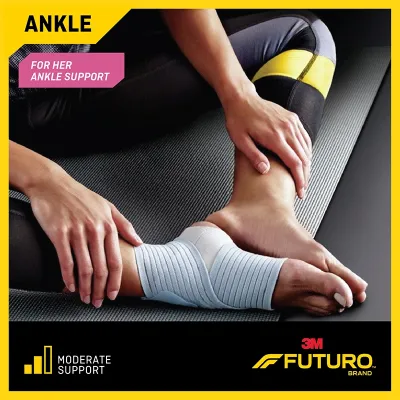
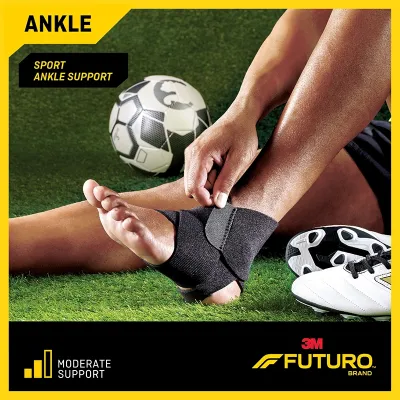
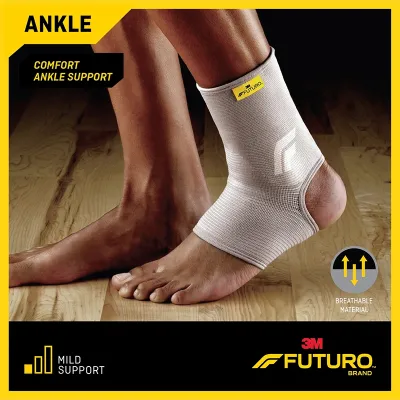
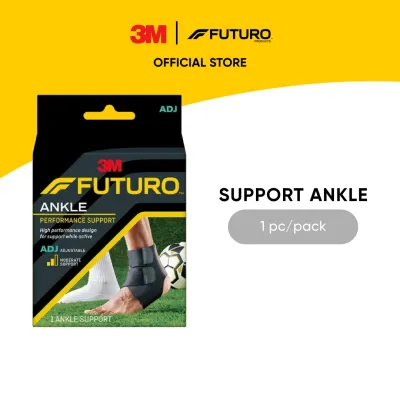
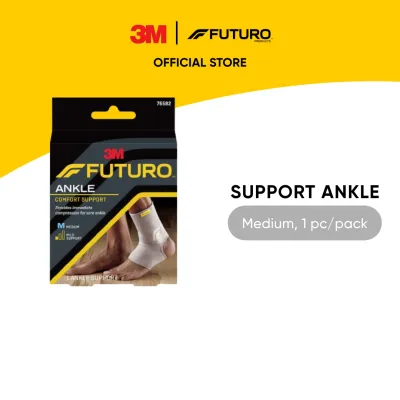
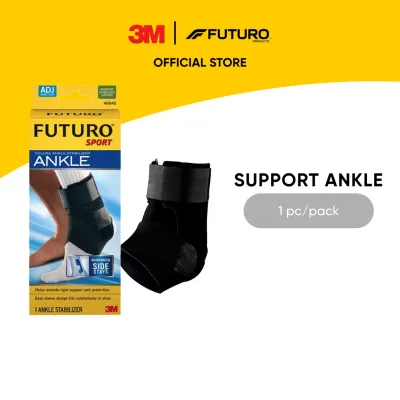
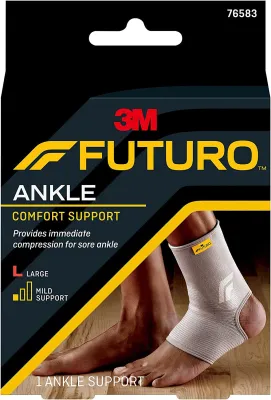
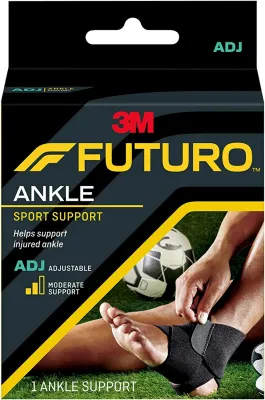
Prices are valid at publication and may change. Please refer to the product page for the latest price.
Consider your footwear and the environmental conditions of your activity. In warm, humid climates, heavy or non-breathable materials can trap sweat, leading to skin irritation and slipping inside your shoe. Your chosen support must fit comfortably within your standard athletic or everyday footwear without altering your natural gait or causing painful pressure points.
Understanding Futuro Ankle Support Features
Ankle supports utilize several distinct structural designs to provide varying degrees of stabilization. Compression sleeves are elastic or knit tubes that slide over the foot, offering uniform pressure and warmth. Adjustable strap systems allow you to customize the tension across the arch and ankle joint, often mimicking the figure-eight pattern used in professional athletic taping.

For higher levels of support, look for designs incorporating lace-up systems or rigid lateral stabilizers. Lace-up models provide a highly secure, adjustable fit that limits overall joint movement. Rigid lateral stabilizers feature plastic or metal stays embedded along the sides of the ankle, specifically engineered to block the lateral rolling movements that cause common inversion sprains.
When examining product packaging, check the manufacturer’s labels for material specifications and compression ratings. Look for breathable, moisture-wicking fabrics if you plan to wear the support during intense exercise or for extended periods. These materials help manage sweat and maintain comfort during prolonged wear.
To ensure the support functions correctly, you must verify your size using the manufacturer’s measurement guidelines. This typically involves using a flexible measuring tape to measure the circumference of your leg just above the ankle bone. An improperly sized brace will either restrict circulation if too small, or fail to provide adequate stabilization if too large.
Matching Support Levels to Your Use Case
Aligning your physical needs with the correct category of ankle support ensures you receive the right balance of protection and mobility. Mild support models, such as basic compression sleeves, are best suited for daily wear, minor swelling management, or low-impact activities like walking and light yoga. They provide gentle pressure that enhances proprioception—your body’s awareness of joint positioning—which helps improve natural stability.
Moderate support models feature adjustable straps or wrap-around designs that allow you to increase tension as needed. These are ideal for moderate joint weakness, post-sprain recovery phases, and dynamic sports that require agility, such as tennis or gym workouts. The adjustable straps let you target compression to the areas that feel most vulnerable.
Maximum support models utilize rigid inserts, hinged stabilizers, or heavy-duty lace-up systems. These are reserved for severe joint instability, recovery from major sprains, or high-risk sports where lateral ankle rolling is common. By physically restricting inversion and eversion movements, these braces protect the ligaments while still allowing the forward and backward flexion necessary for running and jumping.
| Activity Intensity | Injury/Instability Level | Recommended Support Category | Key Structural Features |
|---|---|---|---|
| Low (Walking, Daily Wear) | None to Mild (Minor Swelling) | Mild Support | Elastic or knit compression sleeves |
| Moderate (Jogging, Gym Workouts) | Mild to Moderate (Weakness) | Moderate Support | Adjustable wrap-around strap systems |
| High (Court Sports, Running) | Moderate (Post-Sprain Recovery) | Moderate to Maximum Support | Figure-8 straps and flexible side stabilizers |
| High (Lateral Movements, Impact) | Severe (Chronic Instability) | Maximum Support | Rigid lateral stays or lace-up designs |
Fitting, Care, and Safety Boundaries
Proper application is essential to ensure the ankle support functions as intended without causing secondary issues. Begin by slipping the support over your foot, ensuring your heel sits squarely within the designated heel pocket or opening. Fasten any straps or laces from the bottom up, maintaining even tension that feels secure but comfortable.
Always check your circulation immediately after fitting the brace. You should be able to slide one finger under the edge of the support, and your toes should remain warm and retain their natural color. If the brace feels restrictive or pinches when you walk, loosen the straps and readjust the fit.
To preserve the elastic integrity and structural materials of your support, follow standard care instructions. Hand wash the brace in cold water using a mild soap, avoiding bleach or fabric softeners which can degrade the fibers. Do not wring or twist the material; instead, lay it flat to air dry away from direct sunlight or heat sources.
Be aware of critical safety boundaries when using any joint support. If you experience increased pain, numbness, tingling, cold toes, or skin discoloration while wearing the brace, remove it immediately. Ankle supports are designed to assist recovery and prevention, but they cannot replace professional medical evaluation for severe injuries or persistent pain.
Frequently Asked Questions (FAQ)
Can I wear an ankle support all day for prevention?
Continuous, all-day wear for preventive purposes is generally not recommended unless specifically advised by a healthcare professional. Relying on a support constantly can lead to muscle dependency, where the muscles and ligaments surrounding the ankle weaken because the brace is doing the work for them. It is best to wear the support during active periods or high-stress tasks, and remove it during rest to allow your muscles to engage and strengthen naturally.
How do I know if my ankle support is too tight?
Your ankle support is too tight if you experience physical indicators of restricted blood flow or nerve compression. These signs include a throbbing sensation in your foot, tingling or numbness in your toes, cold skin temperature, or deep, painful indentations left in your skin after removal. If you observe any of these signs, loosen the adjustable straps immediately or re-measure your ankle to ensure you are using the correct product size.

Community discussion
Share your experience or ask a question. Comments are reviewed before publication.