
Selecting your first kettlebell weight is a balancing act between safety, biomechanics, and long-term utility. Unlike dumbbells, a kettlebell’s center of mass extends beyond your hand, which amplifies the perceived load and demands active stabilization from your core and grip. To find the right starting weight, you must evaluate your current physical baseline, categorize the movements you intend to perform, and align your choice with your space and training goals.
Choosing too heavy a load can lead to compromised form and potential injury, while choosing a weight that is too light won’t provide enough resistance to learn the essential hip-hinge mechanics of ballistic movements. By taking a systematic approach to your selection, you can invest in a tool that challenges your muscles, fits your living space, and supports your progression over time.
Assess Your Current Strength Baseline
Before purchasing a kettlebell, you must evaluate your foundational strength and grip capacity to establish a safe starting point. Your bodyweight performance is an excellent indicator of how your joints and stabilizing muscles will handle external resistance. If you can perform ten to fifteen controlled bodyweight push-ups, a thirty-second plank, and fifteen deep squats with perfect form, your joints and core are likely ready to manage a moderate external load.
Products mentioned in this guide
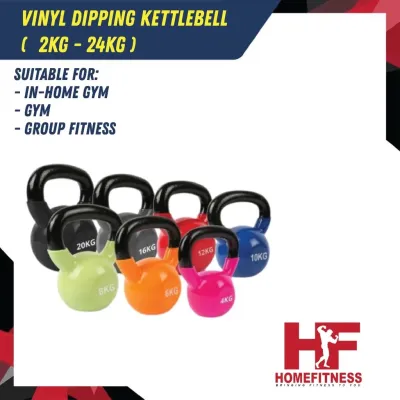
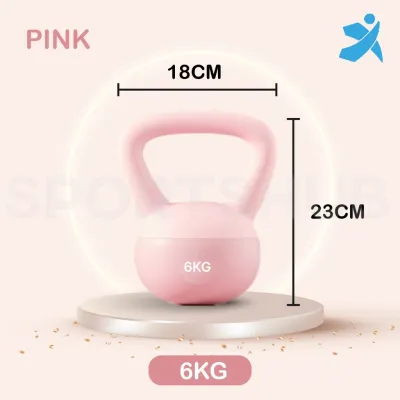
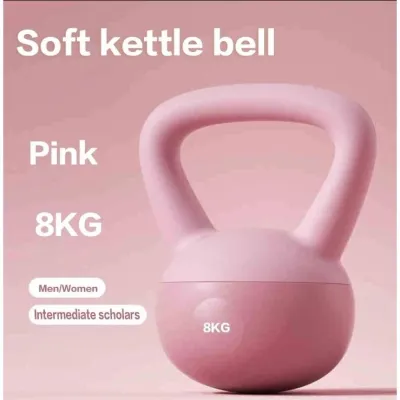
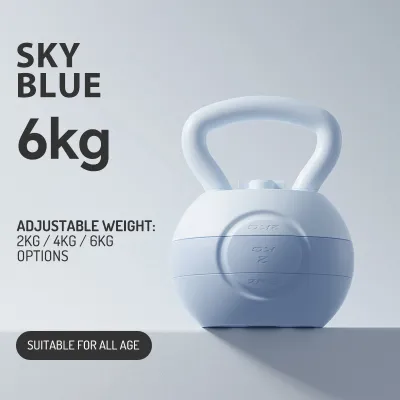


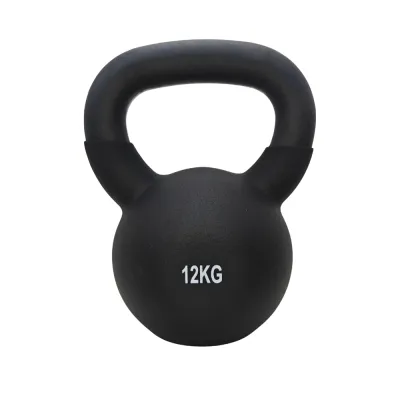
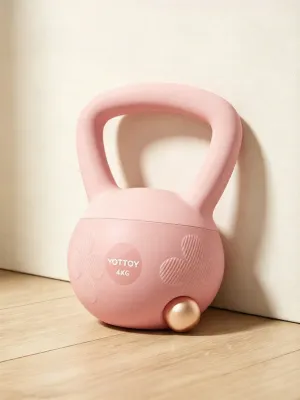
Prices are valid at publication and may change. Please refer to the product page for the latest price.
Your starting parameters will vary significantly based on your athletic background. Absolute beginners who are new to resistance training should prioritize learning movement patterns without joint strain; for this group, a lighter weight that allows for high-repetition practice is ideal. If you have experience in calisthenics or bodyweight training, you likely possess the necessary core stability and body awareness to start with a slightly heavier bell. Those transitioning from traditional barbell or dumbbell training may have high absolute strength, but they must still respect the unique demands of the kettlebell. Traditional lifts often move in linear paths, whereas kettlebell training requires managing dynamic, off-center forces that challenge the body in multiple planes.
Core stability and grip endurance play a prerequisite role in safely managing these off-center loads. When you swing or press a kettlebell, the weight constantly pulls you off-balance, forcing your deep core stabilizers, glutes, and forearm muscles to work continuously. If your grip tires quickly or your lower back begins to arch during basic movements, the load is too heavy for your current stabilizing capacity. Prioritizing a weight that matches your grip strength ensures you maintain control throughout the entire range of motion.
Match the Weight to Your Primary Exercises
Your starting weight must match the specific biomechanics and leverage demands of your intended exercises. Kettlebell movements generally fall into two distinct categories: ballistic movements and grind movements. Each category places different demands on your muscles and joints, meaning a single weight may not perform optimally for every exercise.

Ballistic movements, such as swings, cleans, and snatches, are fast, explosive exercises that rely on momentum generated by your hips and glutes. To perform a proper kettlebell swing, the bell must have sufficient mass to act as a counterweight; if the kettlebell is too light, you will likely pull it up using your arms and shoulders rather than driving the movement with your posterior chain. However, the load must still remain within your grip and shoulder stability limits to prevent the bell from pulling your shoulders out of alignment at the peak of the movement.
Grind movements, such as goblet squats, overhead presses, and Turkish get-ups, are slow, deliberate exercises where the muscle is under tension for a longer duration. In these movements, your lifting capacity is restricted by the weakest link in your kinetic chain, which is typically the shoulder joint or the wrist. While your legs can easily squat a heavy load, your shoulders may struggle to press that same weight overhead safely. For grinds, a lighter, highly controllable weight is necessary to protect the delicate rotator cuff muscles and ensure your wrist remains straight and locked under the load.
Because lower-body dominant exercises naturally accommodate heavier loads than upper-body isolation or pressing movements, you must decide which exercises will form the core of your routine. If you plan to focus primarily on two-handed swings and goblet squats, you can opt for a heavier starting weight. If your goals include overhead pressing, single-arm snatches, or complex rotational movements like the Turkish get-up, a lighter, more manageable bell is the safer and more effective choice.
Align the Load With Your Training Goals
Your fitness objectives will dictate both your starting weight and your long-term progression strategy. Whether you are training for cardiovascular conditioning, muscular endurance, or absolute strength, the weight you select must reflect the physiological adaptations you want to trigger.
If your primary goals are muscular endurance and cardiovascular conditioning, you should focus on weights that allow for sustained, high-repetition sets. Training for endurance requires keeping your heart rate elevated while performing fifteen to twenty-five repetitions per set without form breakdown. A lighter to moderate kettlebell is ideal here, as it allows you to focus on fluid breathing, rhythmic movement, and cardiovascular output without premature muscular fatigue cutting your workout short.
For those targeting absolute strength and muscle hypertrophy, the selection criteria shift toward heavier loads that bring you closer to muscular failure within a lower repetition range, typically five to ten repetitions. To stimulate strength gains, the resistance must be high enough to challenge your neuromuscular system. This requires a weight that feels heavy during the final reps of a set but still allows you to maintain a neutral spine and stable shoulders.
Your progression strategy will also influence your purchasing decisions. If you prefer a minimalist approach, starting with a single versatile weight that serves as a compromise between your upper-body and lower-body strength is a practical option. Alternatively, you can plan a two-bell strategy: purchasing one lighter bell for upper-body grinds and technical practice, and a heavier bell for lower-body ballistics. For those living in compact spaces, such as apartments or HDB flats in Singapore, investing in a high-quality adjustable kettlebell can be an exceptionally space-efficient solution, allowing you to increase the resistance in small increments without cluttering your home.
Practical Testing and Purchasing Checks
When shopping for a kettlebell, performing a few physical checks in-store can prevent injuries and ensure you buy a tool that matches your anatomy. A hands-on evaluation is the most reliable way to verify how a specific weight feels in motion.
To safely test a kettlebell in-store, start by performing a few deadlifts to gauge how the weight feels when lifted directly from the floor. Next, bring the kettlebell into the “rack position”—holding it against your chest with your elbow tucked close to your ribs. Observe how the body of the bell rests against your forearm; it should sit comfortably on the muscular part of your arm without pressing directly against your wrist bone or forcing your wrist to bend backward. Finally, perform a slow, controlled overhead press to ensure you can stabilize the weight at the top of the movement with a straight arm and a locked wrist.
Beyond the weight itself, you must inspect several physical attributes of the kettlebell:
- Handle Diameter: The handle should be thick enough to challenge your grip but not so thick that your fingers cannot wrap securely around it.
- Surface Texture: In warm, humid climates, sweaty hands can make smooth enamel or painted finishes incredibly slippery and difficult to control. A matte powder-coated finish is highly recommended, as it provides excellent natural grip and holds gym chalk effectively. Avoid rough cast iron handles with visible seams or burrs, as these can easily tear your calluses during high-repetition swings.
- Base Flatness: Flip the kettlebell over or place it on a flat floor to ensure the base is completely machined flat. A stable, flat bottom is essential for safety if you plan to perform floor-based exercises like renegade rows or push-ups on the kettlebell handles.
When comparing types of kettlebells, consider your budget, space, and training style. Classic cast iron kettlebells increase in physical size as they get heavier, and they often feature wider handles that easily accommodate two-handed swings. Competition kettlebells maintain the exact same external dimensions and handle diameter regardless of their weight, which is excellent for building consistent technique in single-handed movements, though the narrower handle can make two-handed swings tight for some users. Adjustable kettlebells offer the ultimate space efficiency by combining multiple weight increments into a single shell, though you should verify that the internal locking mechanism is secure and does not rattle during fast, ballistic movements.
Frequently Asked Questions (FAQ)
Should I buy one kettlebell or a set to start?
Starting with a single, versatile kettlebell is highly practical for most beginners. A single middle-ground weight allows you to master the fundamental hip hinge and basic swing mechanics without a large financial or space commitment. For those with a flexible budget, a two-bell setup consisting of one lighter bell for overhead presses and technical movements, and one heavier bell for swings and squats, offers a more complete training stimulus. If space is your primary constraint, a single adjustable kettlebell is often the most cost-effective and compact alternative to buying a full set of fixed weights.
How do I know when it is time to move up to a heavier kettlebell?
You are ready to progress to a heavier kettlebell when your current weight no longer challenges your form or cardiovascular system, and you can complete your target sets with perfect control. Specifically, if you can perform three sets of twenty high-quality swings with minimal rest and no lower back fatigue, or five sets of ten overhead presses with perfect alignment and zero wrist deviation, your body has adapted to the load. Another clear indicator is speed: if the kettlebell feels so light during a swing that you are easily controlling its height with your arms rather than your hips, it is time to increase the weight to maintain training efficiency.

Community discussion
Share your experience or ask a question. Comments are reviewed before publication.