
Selecting the right kids skipping rope involves matching the cable length to your child’s height and choosing a material that aligns with their current coordination level. For an immediate starting point, a beginner benefits most from a heavier beaded rope that reaches up to their armpits when they stand on the center of the cord. This setup provides the physical feedback and slower rotation speed necessary to master basic timing.
As your child’s skills progress, transitioning to a lighter PVC rope adjusted to chest height allows for faster speeds and more advanced footwork. Prioritizing lightweight, slim handles with simple adjustment mechanisms ensures the equipment can grow alongside your child without causing hand fatigue or awkward jumping postures.
Measure the Correct Rope Length for Your Child's Height
An improperly sized skipping rope is one of the most common reasons children become frustrated and give up on the activity. To find the ideal starting length, have your child stand flat-footed on the exact center of the rope with one foot. Pull the handles straight up along the sides of their body; for beginners, the tips of the handles should reach comfortably to their armpits. This length provides a generous loop that clears the head and feet with a reasonable margin of error.
Products mentioned in this guide
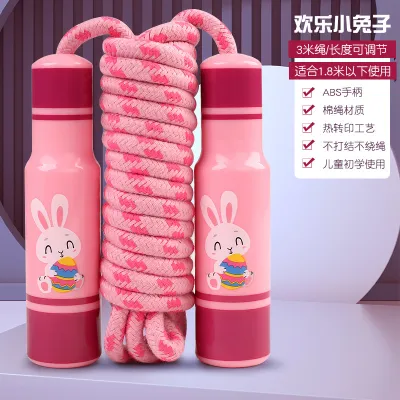
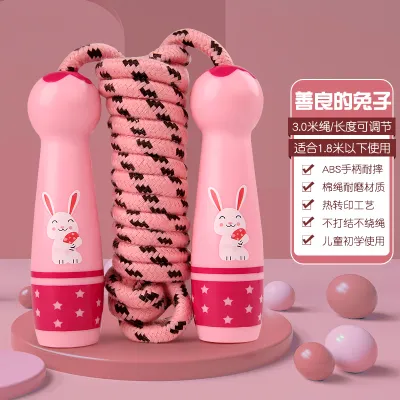
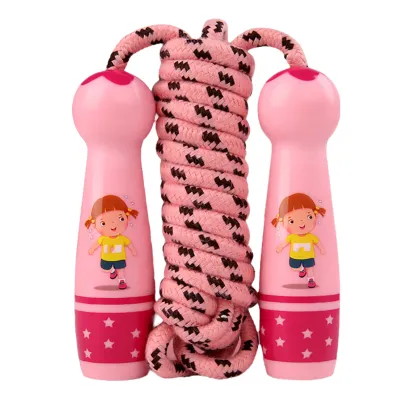
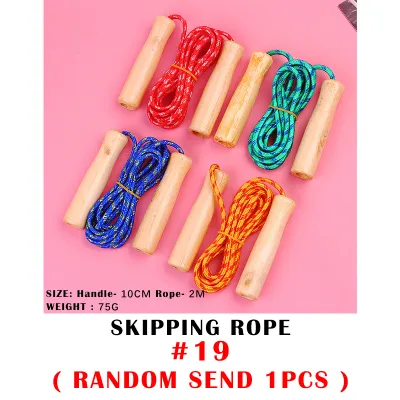
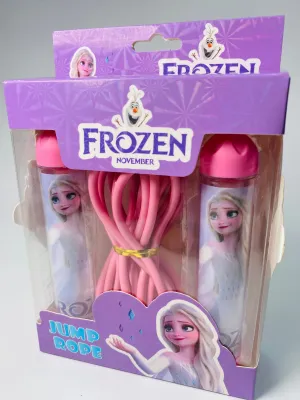
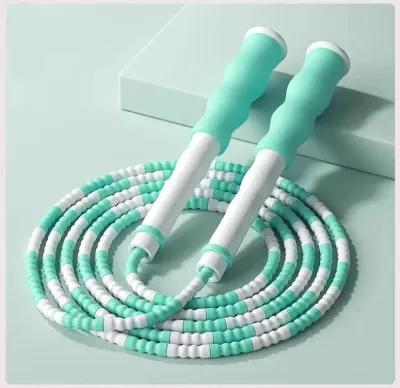
![🇸🇬 [READY STOCK] Speed Skipping Rope PVC Fitness Weight Loss Portable Jump Unisex Children Adult Fitness Crossfit Boxing Jumping Rope](https://img.lazcdn.com/g/p/02cf9944198f7f859b56bd41a5e472c2.jpg_400x400q80.jpg_.webp)
Prices are valid at publication and may change. Please refer to the product page for the latest price.
As your child gains confidence and transitions to intermediate or advanced jumping, you can gradually shorten the rope. For experienced jumpers, the handles should reach the mid-chest or nipple line. A shorter rope reduces excess slack, which minimizes air resistance and allows for faster rotation speeds and tighter, more controlled hand movements. This tighter loop is essential for learning advanced tricks, double-unders, or speed steps.
Parents should actively observe their child during practice to spot signs of an incorrect fit. If the rope is too long, you will notice it slapping the ground heavily far in front of their feet, which destroys momentum and causes the cord to bounce unpredictably. To compensate, children often flare their elbows out wide, leading to poor form and rapid shoulder fatigue. Conversely, if the rope is too short, the child will frequently clip their toes or the back of their head, or they may instinctively hunch their shoulders and tuck their knees high to clear the cable.
Match the Rope Material and Weight to Their Skill Level
Choosing the right material is not about finding the fastest option, but rather selecting the one that provides the appropriate level of physical feedback for your child’s developmental stage.

Beaded Ropes for Beginners
Beaded ropes consist of a series of hollow plastic segments threaded over a durable nylon inner cord. These are highly recommended for young children and absolute beginners because the added weight of the beads keeps the rope in a consistent, open arc even at very slow speeds. Furthermore, the beads make a distinct clicking sound when they strike the floor. This audible cue is incredibly valuable, helping children develop a natural rhythm and time their jumps without needing to look down at their feet. As an added benefit, the segmented design makes these ropes highly resistant to kinking and tangling when tossed into a school bag.
PVC and Vinyl Ropes for Intermediate Jumpers
Solid PVC or vinyl cords are the standard choice for school physical education classes and recreational jumpers who have mastered basic timing. These ropes are lighter than beaded models, allowing for quicker rotations and less arm fatigue during longer sessions. They offer a balanced middle ground, providing enough tactile feedback for the jumper to feel where the rope is in space while supporting faster paces and basic freestyle tricks. In warm, humid climates, look for high-quality, low-kink PVC formulations, as cheaper plastics can become overly flexible or sticky when exposed to heat and sweat.
Speed Cables and Wire Ropes for Advanced Users
Thin metal wire cables coated in a protective vinyl layer are designed strictly for speed and competitive skipping. Because they are incredibly light and aerodynamic, they turn with minimal effort, making them ideal for advanced jumpers practicing rapid double-unders. However, they are highly unsuitable for beginners. They offer almost no physical feedback, making timing difficult to learn, and they can sting painfully when they strike bare skin during a missed jump. Additionally, these thin cables wear out rapidly if used directly on rough outdoor surfaces.
Evaluate Handle Ergonomics and Rotation Mechanics
The handles of a kids skipping rope must be scaled to fit smaller hands to prevent grip fatigue and support proper wrist-driven rotation. Adult handles are often too thick and heavy, forcing children to grip them tightly with their entire fists, which locks up their wrists and forces them to rotate the rope using their entire arms. Look for slim, lightweight handles made of durable plastic or composite materials, ideally measuring between 10 and 12 centimeters in length. This size allows a child to maintain a relaxed, secure grip using their fingers, which is key to developing efficient wrist rotation.
Active play quickly leads to sweaty hands, which can cause smooth plastic handles to slip out of a child’s grasp. To prevent this, prioritize handles with textured surfaces, molded finger ridges, or non-slip foam wraps. These features help children maintain control without needing to squeeze the handles excessively hard, reducing hand cramps and wrist strain during extended play sessions.
Rotation mechanics also play a significant role in how a rope behaves. Basic ropes often feature a fixed-axis design where the cord passes directly through a hole in the handle. This simple construction is highly durable and naturally limits rotation speed, which is beneficial for beginners who need a slower pace. For intermediate and advanced jumpers, handles equipped with ball-bearing swivels are highly advantageous. The bearings allow the rope to spin smoothly and independently of the handle, preventing the cord from twisting or tangling during fast-paced jumping and complex footwork.
Verify Adjustability and Surface Compatibility Before Purchase
Because children grow rapidly, investing in a rope with a reliable, user-friendly adjustment mechanism is highly practical. Look for designs that feature internal snap-locks, sliding plastic collars, or adjustable screw clamps housed inside the handles. These mechanisms allow you to quickly shorten the rope as needed without permanently cutting the cord. This flexibility is excellent for sharing the rope between siblings of different heights or adjusting the length as your child’s jumping technique improves. If you do choose a rope that requires cutting, always leave a few centimeters of excess cord inside the handle to allow for future adjustments.
Additionally, examine the structural durability of the connection point where the cord exits the handle. This area experiences constant bending and friction during use. High-quality ropes often feature reinforced plastic collars, rubber strain-relief sleeves, or spring guards at this junction to distribute the stress and prevent the cord from snapping prematurely.
Finally, consider where your child will be practicing. Skipping on rough concrete, asphalt pavements, or tiled void decks can quickly abrade and tear PVC or wire ropes. Check the manufacturer’s guidelines regarding surface compatibility before buying. To protect both the skipping rope and your child’s joints, encourage them to practice on shock-absorbing surfaces. If practicing outdoors on hard ground is unavoidable, look for ropes with protective center sleeves or consider using a dedicated rubber jump rope mat to extend the lifespan of the equipment.
Frequently Asked Questions (FAQ)
Can a child use an adult-sized adjustable skipping rope?
While it is technically possible to shorten an adult-sized adjustable rope to fit a child, it is generally not recommended for younger beginners. Adult ropes typically feature much longer, thicker, and heavier handles that can cause rapid hand fatigue and awkward wrist mechanics in smaller hands. Furthermore, the heavier weight of an adult-grade PVC or steel cable can overwhelm a child’s shoulder and arm strength, leading to poor jumping posture and a higher risk of tripping. If you must use an adult rope, ensure the handles are exceptionally lightweight and that the excess cable can be tucked away safely inside the handles rather than leaving a dangerous loop hanging out.
What is the best surface for a child to practice skipping?
The ideal surfaces for skipping are those that offer shock absorption to protect growing joints while providing a flat, even plane for consistent rope clearance. Excellent options include rubberized playground flooring, indoor wooden sports courts, flat grass, or a dedicated rubber jump rope mat placed over a flat surface. You should generally avoid rough concrete, asphalt, and tiled floors with deep grout lines. These hard, unforgiving surfaces increase the impact on your child’s knees and ankles, and their abrasive texture will rapidly wear down, fray, or snap the outer protective coating of the skipping rope.

Community discussion
Share your experience or ask a question. Comments are reviewed before publication.